几
| ||||||||
| ||||||||
Translingual
| Stroke order | |||
|---|---|---|---|
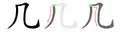 | |||
| Stroke order | |||
|---|---|---|---|
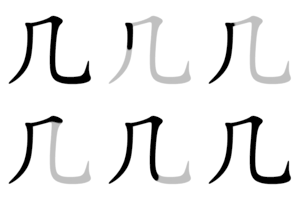 | |||
Han character
几 (Kangxi radical 16, 几+0, 2 strokes, cangjie input 竹弓 (HN), four-corner 77210, composition ⿰丿㇈)
- Kangxi radical #16, ⼏.
- Shuōwén Jiězì radical №493
Usage notes
This character is not to be confused with 𠘧 (U+20627) which is another radical in Shuōwén.
Derived characters
- Appendix:Chinese radical/几
- 仉, 叽, 𡚫, 㞦, 𢁒, 𢎪, 𢖯, 𢩫, 㲹, 𤜝, 𨸔, 机, 𭭙, 𣦽, 𣬠, 玑, 肌, 矶, 𥘌, 𬓠, 竌, 䘛, 籶, 𥾊, 𰭗, 𫇔, 虮, 𮗸, 𧺋, 𧾾, 䡄, 𨱙, 釠(𰽕), 𮓟, 𩉜, 飢(饥), 𩨒, 𮬥, 𪊋, 𣽳, 𧇔, 𧶹, 𪗗
- 亢, 𡯂, 冗, 𭅠, 宂, 𫵳, 𭙍, 芁, 𣱻, 𠫞, 𤴪, 𥃯, 秃, 𥤤, 𥩕, 𦒲, 虎, 𧘊, 𧟣, 咒, 壳, 𢆻, 亮, 𩁸, 𣑽, 𧦕, 髠, 焭, 𪎑, 麂, 𨳋, 𭍚
- 䢳, 𧆡, 𩑏, 𬺲, 𧦔, 斻, 𣃲
- 讥, 机 (Simplified from 譏, 機 in traditional Chinese)
- See also 𠘧#Derived characters
- See also 𠘨#Derived characters
Related characters
- 幾 (Traditional form of 几)
References
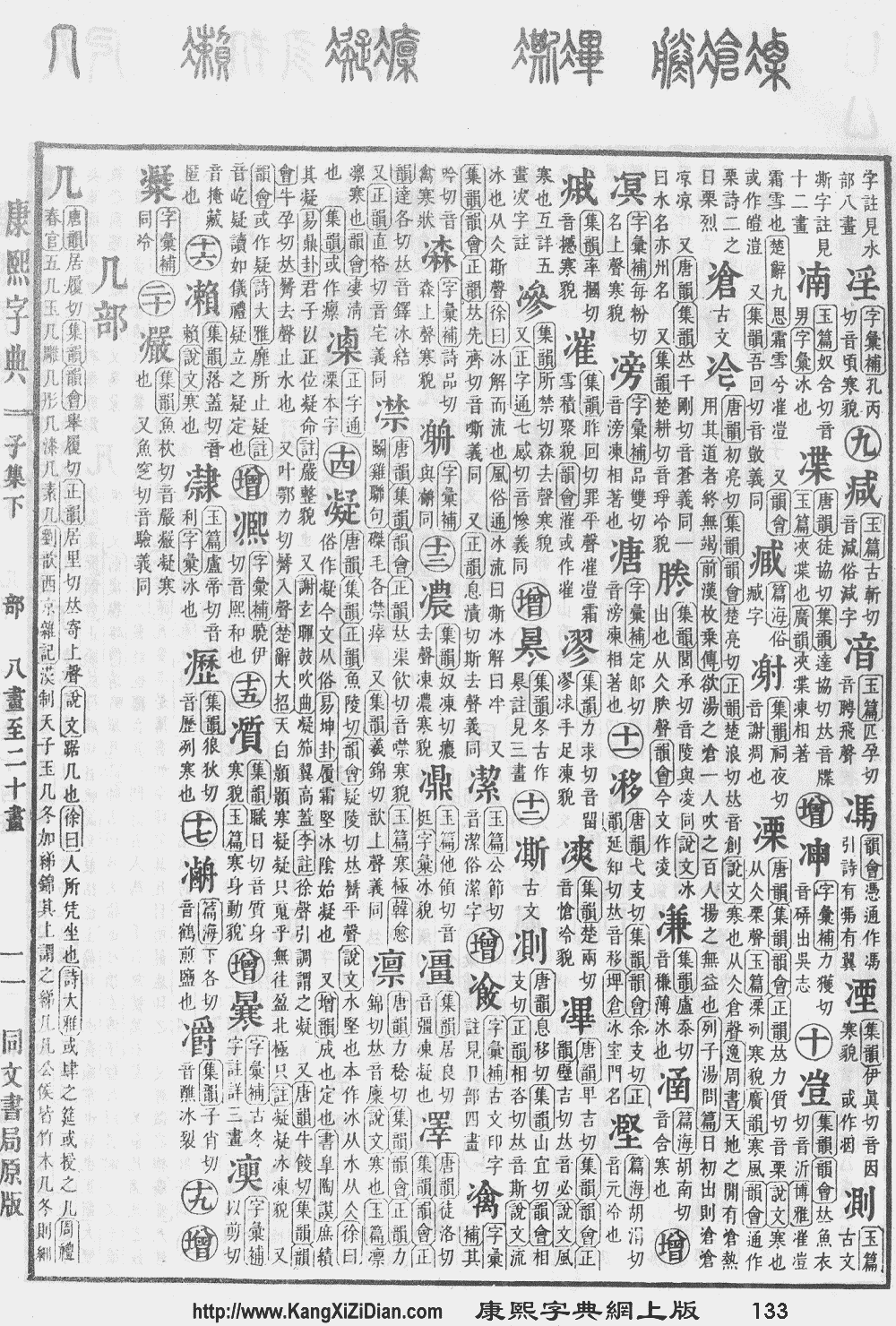
- Kangxi Dictionary: page 133, character 57
- Dai Kanwa Jiten: character 1737
- Dae Jaweon: page 299, character 8
- Hanyu Da Zidian (first edition): volume 1, page 275, character 19
- Unihan data for U+51E0
Chinese
Glyph origin
| Historical forms of the character 几 | ||
|---|---|---|
| Warring States | Shuowen Jiezi (compiled in Han) | Liushutong (compiled in Ming) |
| Chu slip and silk script | Small seal script | Transcribed ancient scripts |
 |
 |
 |
Characters in the same phonetic series (几) (Zhengzhang, 2003)
Etymology 1
| simp. and trad. |
几 | |
|---|---|---|
| alternative forms | 𠀃 机 | |
From Proto-Sino-Tibetan *krəj (“foot, leg; stool”). Compare Tibetan ཁྲི (khri) and Burmese ခြေ (hkre).
Pronunciation
Definitions
几
- † stool; chair
- 謀於長者,必操几杖以從之。長者問,不辭讓而對,非禮也。 [Classical Chinese, trad.]
- From: The Book of Rites, c. 4th – 2nd century BCE
- Móu yú zhǎngzhě, bì cāo jī zhàng yǐ cóng zhī. Zhǎngzhě wèn, bù círàng ér duì, fēilǐ yě. [Pinyin]
- In going to take counsel with an elder, one must carry a stool and a staff with him (for the elder's use). When the elder asks a question, to reply without acknowledging one's incompetency and (trying to) decline answering, is contrary to propriety.
谋于长者,必操几杖以从之。长者问,不辞让而对,非礼也。 [Classical Chinese, simp.]
- long narrow table; bench
- small table
- 茶几 ― chájī ― tea table
Etymology 2
| For pronunciation and definitions of 几 – see 幾 (“how much; how many; what; which; etc.”). (This character is the simplified form of 幾). |
Notes:
|
Etymology 3
| For pronunciation and definitions of 几 – see 人 (“man; person; people; a person associated with a particular identity or trait; -er; etc.”). (This character is a variant form of 人). |
Japanese
Korean
Vietnamese
This article is issued from Wiktionary. The text is licensed under Creative Commons - Attribution - Sharealike. Additional terms may apply for the media files.