對
| ||||||||
Translingual
| Stroke order | |||
|---|---|---|---|
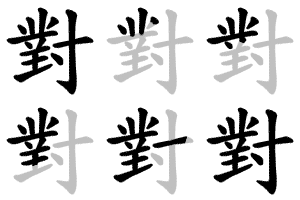 | |||
| Traditional | 對 |
|---|---|
| Shinjitai | 対 |
| Simplified | 对 |
Han character
對 (Kangxi radical 41, 寸+11, 14 strokes, cangjie input 廿土木戈 (TGDI), four-corner 34100, composition ⿰⿱业𦍌寸)
Related characters
- 対 (Japanese shinjitai)
- 对 (Simplified Chinese)
References
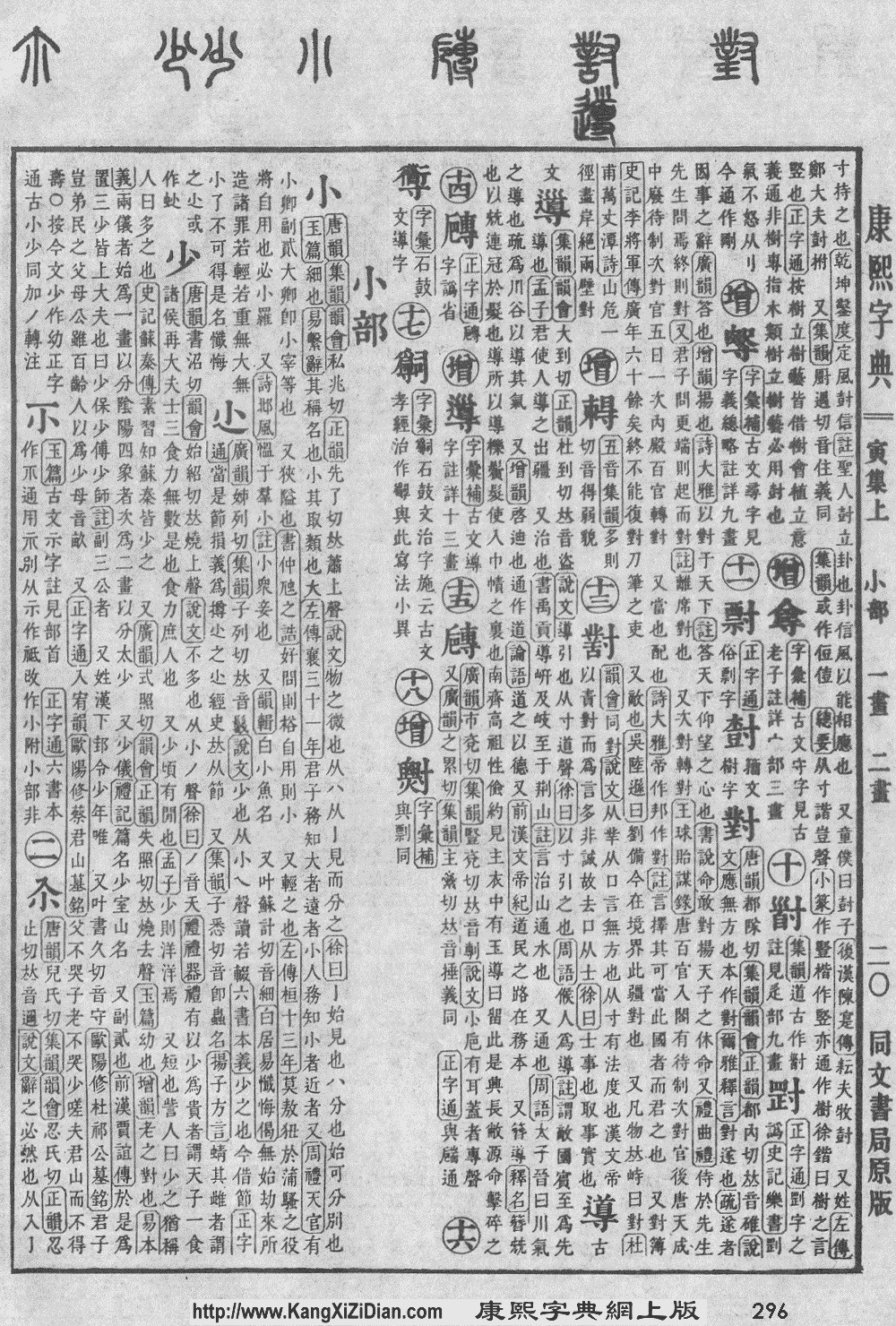
- Kangxi Dictionary: page 296, character 7
- Dai Kanwa Jiten: character 7457
- Hanyu Da Zidian (first edition): volume 1, page 511, character 9
- Unihan data for U+5C0D
Chinese
| trad. | 對 | |
|---|---|---|
| simp. | 对 | |
| alternative forms | 対 𫴰 𡭊 | |
Glyph origin
| Historical forms of the character 對 | ||
|---|---|---|
| Shang | Western Zhou | Shuowen Jiezi (compiled in Han) |
| Oracle bone script | Bronze inscriptions | Small seal script |
 |
 |
 |
In the oracle bone and bronze scripts, it was an ideogrammic compound (會意/会意) : 丵 (“tool for digging”) + 土 (“earth”) + 又 (“hand”). The original meaning of the character is unclear, but it may be “to develop (land)”. It was later borrowed for “to reply”. Compare 封, 邦.
In the seal script, 又 has become the related 寸. Shuowen has two seal script forms for this character: 𡭊 (main form) and 對 (alternative form). The main form, which has a 口 (“mouth”), was probably created to specialize the character to signify “to reply”, but this form was not inherited in later scripts. Shuowen interprets the latter form (shown above) as a form that Emperor Wen of Han created by replacing 口 with 士 (“soldier; warrior”) because many of the replies were untruthful (just lip service), but it is more likely that 士 is a corruption of 土.
Pronunciation
Definitions
對
- correct; true; right
- to treat; to deal with; to take on
- 對症下藥/对症下药 ― duìzhèngxiàyào ― to prescribe the right medicine for an illness
- 對事不對人/对事不对人 ― duì shì bù duì rén ― to concern oneself with acts and not with individuals (when settling an issue)
- 刀對刀,槍對槍/刀对刀,枪对枪 ― dāo duì dāo, qiāng duì qiāng ― sword against sword; spear against spear
- 廣東隊對香港隊/广东队对香港队 ― Guǎngdōng duì duì Xiānggǎng duì ― Guangdong competes against Hong Kong
- (introducing the recipient of the action) towards; to
- to; with regard to; concerning
-
- 難忘妳對我那種體貼入微 時時刻刻腦海中都緊記 [Literary Cantonese, trad.]
- naan4 mong4 nei5 deoi3 ngo5 naa5 zung2 tai2 tip3 jap6 mei4, si4 si4 hak1 hak1 nou5 hoi2 zung1 dou1 gan2 gei3 [Jyutping]
- I can't forget that attention you gave me; it's still stuck fast in my mind all the time
难忘你对我那种体贴入微 时时刻刻脑海中都紧记 [Literary Cantonese, simp.]
- according to; for
- opposite; opposing
- to face
- paired; contrasting
- to suit; to fit
- to match; to cause two things to match
- to respond; to answer
- 冉子退朝。子曰:「何晏也?」對曰:「有政。」 [Classical Chinese, trad.]
- From: The Analects of Confucius, c. 475 – 221 BCE, translated based on James Legge's version
- Rǎnzǐ tuìcháo. Zǐ yuē: “Hé yàn yě?” Duì yuē: “Yǒu zhèng.” [Pinyin]
- The disciple Ran returning from the court, the Master said to him, "How are you so late?" He replied, "We had government business."
冉子退朝。子曰:「何晏也?」对曰:「有政。」 [Classical Chinese, simp.]
- to check by comparing; to verify by comparing
- to adjust; to set
- to mix; to add
- 二哥正跟小六兒往酒裡對水。為省錢,他打了很少的酒,所以得設法使這一點酒取之不盡,用之不竭。 [MSC, trad.]
- From: 1960s [2019], Lao She, 正紅旗下, Beijing: 北京联合出版公司, →ISBN, p. 59
- Èrgē zhèng gēn xiǎo liùr wǎng jiǔ lǐ duì shuǐ. Wèi shěngqián, tā dǎ le hěn shào de jiǔ, suǒyǐ děi shèfǎ shǐ zhè yīdiǎn jiǔ qǔzhībùjìn, yòngzhībùjié. [Pinyin]
- (please add an English translation of this usage example)
二哥正跟小六儿往酒里对水。为省钱,他打了很少的酒,所以得设法使这一点酒取之不尽,用之不竭。 [MSC, simp.]
- to divide in half
- couplet
- 流水對/流水对 ― liúshuǐduì ― (please add an English translation of this usage example)
- Classifier for pairs of objects: pair
- pair
- (Southern Min, Taiwanese Hakka) from
- 2001, “家後”, 鄭進一, 陳維祥 (lyrics)performed by 江蕙 [Jody Chiang]:
- a surname
Synonyms
- (pair): (Cantonese) 啤 (pe1)
| Variety | Location | Words |
|---|---|---|
| Classical Chinese | 吊子 | |
| Formal (Written Standard Chinese) | 對聯 | |
| Mandarin | Taiwan | 對聯 |
| Jinan | 對子 | |
| Wanrong | 對子 | |
| Xi'an | 對子 | |
| Yinchuan | 對子 | |
| Wuhan | 對子 | |
| Guiyang | 對子 | |
| Singapore | 對聯 | |
| Cantonese | Guangzhou | 對, 對聯 |
| Hong Kong | 對, 對聯 | |
| Dongguan | 對 | |
| Gan | Nanchang | 對子 |
| Lichuan | 對子 | |
| Pingxiang | 對子 | |
| Hakka | Meixian | 對聯, 對仔 |
| Yudu | 對子 | |
| Miaoli (N. Sixian) | 對聯 | |
| Pingtung (Neipu; S. Sixian) | 對聯 | |
| Hsinchu County (Zhudong; Hailu) | 對聯 | |
| Taichung (Dongshi; Dabu) | 對聯 | |
| Hsinchu County (Qionglin; Raoping) | 對聯 | |
| Yunlin (Lunbei; Zhao'an) | 對聯 | |
| Jin | Taiyuan | 對聯, 對子 |
| Xinzhou | 對子 | |
| Northern Min | Jian'ou | 對聯 |
| Eastern Min | Fuzhou | 對聯 |
| Southern Min | Xiamen | 聯對 |
| Quanzhou | 聯對 | |
| Zhangzhou | 聯對, 門對 | |
| Tainan | 聯對 GT | |
| Shantou | 對聯 | |
| Leizhou | 對 | |
| Haikou | 對 | |
| Wu | Danyang | 對聯, 對子 |
| Xiang | Changsha | 對子 |
| Loudi | 對子 | |
| Note | GT - General Taiwanese (no specific region identified) | |
Compounds
- 一對/一对 (yīduì)
- 三對六面/三对六面
- 三曹對案/三曹对案
- 三頭對案/三头对案
- 不對/不对 (bùduì)
- 不對勁/不对劲 (bùduìjìn)
- 不對盤/不对盘
- 不對眼/不对眼
- 不對碴兒/不对碴儿
- 不對胃口/不对胃口
- 不對腔板/不对腔板
- 不對賬/不对账
- 不對頭/不对头
- 不搭對/不搭对
- 不當不對/不当不对
- 主題派對/主题派对
- 作對/作对 (zuòduì)
- 借對/借对
- 偶句對/偶句对
- 假對/假对
- 出雙入對/出双入对 (chūshuāngrùduì)
- 切對/切对
- 劈排定對/劈排定对
- 劈牌定對/劈牌定对
- 劈牌放對/劈牌放对
- 反對/反对 (fǎnduì)
- 反對黨/反对党 (fǎnduìdǎng)
- 吟詩作對/吟诗作对 (yínshī zuò duì)
- 問對/问对
- 唱對臺戲/唱对台戏 (chàng duìtáixì)
- 單句對/单句对
- 夜雨對床/夜雨对床
- 大對/大对
- 大對決/大对决
- 失對/失对
- 奏對/奏对
- 婚對/婚对
- 對上/对上 (duìshàng)
- 對不上號/对不上号
- 對不住/对不住 (duìbùzhù)
- 對不是/对不是
- 對不起/对不起 (duìbùqǐ)
- 對了/对了 (duìle)
- 對了檻兒/对了槛儿
- 對仗/对仗 (duìzhàng)
- 對付/对付 (duìfu)
- 對位/对位
- 對保/对保
- 對偶/对偶 (duì'ǒu)
- 對價/对价 (duìjià)
- 對光/对光
- 對光兒/对光儿
- 對分/对分
- 對列/对列
- 對刺/对刺
- 對副/对副
- 對勁/对劲 (duìjìn)
- 對勘/对勘
- 對半/对半 (duìbàn)
- 對口/对口 (duìkǒu)
- 對口瘡/对口疮
- 對口相聲/对口相声
- 對口詞/对口词
- 對句/对句 (duìjù)
- 對合/对合 (duìhé)
- 對吵/对吵
- 對命/对命
- 對味/对味
- 對品調用/对品调用
- 對唔住/对唔住
- 對唱/对唱 (duìchàng)
- 對嘴/对嘴 (duìzuǐ)
- 對嘴子/对嘴子
- 對嘴對舌/对嘴对舌
- 對圓/对圆 (duìyuán)
- 對坐/对坐
- 對堵/对堵
- 對壘/对垒 (duìlěi)
- 對外貿易/对外贸易 (duìwài màoyì)
- 對天發誓/对天发誓
- 對天祝告/对天祝告
- 對天長嘆/对天长叹
- 對奕/对奕 (duìyì)
- 對子/对子 (duìzi)
- 對對/对对
- 對對糊/对对糊 (duìduìhú)
- 對對胡/对对胡 (duìduìhú)
- 對對角/对对角
- 對局/对局
- 對岸/对岸 (duì'àn)
- 對峙/对峙 (duìzhì)
- 對席/对席
- 對帳/对帐 (duìzhàng)
- 對床夜語/对床夜语
- 對床風雨/对床风雨
- 對弈/对弈 (duìyì)
- 對式/对式
- 對待/对待 (duìdài)
- 對得起/对得起 (duìdeqǐ)
- 對應/对应 (duìyìng)
- 對手/对手 (duìshǒu)
- 對打/对打 (duìdǎ)
- 對扣/对扣
- 對抗/对抗 (duìkàng)
- 對折/对折 (duìzhé)
- 對抗賽/对抗赛
- 對換/对换 (duìhuàn)
- 對支/对支
- 對敵/对敌 (duìdí)
- 對數/对数 (duìshù)
- 對方/对方 (duìfāng)
- 對於/对于 (duìyú)
- 對景/对景
- 對景傷情/对景伤情
- 對本/对本
- 對枰/对枰
- 對棋/对棋
- 對歌/对歌 (duìgē)
- 對比/对比 (duìbǐ)
- 對比色/对比色
- 對決/对决 (duìjué)
- 對泣/对泣
- 對流/对流 (duìliú)
- 對流層/对流层 (duìliúcéng)
- 對流雨/对流雨
- 對消/对消 (duìxiāo)
- 對準/对准 (duìzhǔn)
- 對焦/对焦 (duìjiāo)
- 對照/对照 (duìzhào)
- 對牌/对牌
- 對牛彈琴/对牛弹琴 (duìniútánqín)
- 對狀/对状
- 對獎/对奖
- 對理/对理
- 對生/对生
- 對當/对当
- 對症/对症 (duìzhèng)
- 對症下藥/对症下药 (duìzhèngxiàyào)
- 對白/对白 (duìbái)
- 對看/对看
- 對眼/对眼 (duìyǎn)
- 對視/对视 (duìshì)
- 對稱/对称
- 對空射擊/对空射击
- 對空策/对空策
- 對立/对立 (duìlì)
- 對策/对策 (duìcè)
- 對答/对答 (duìdá)
- 對等/对等 (duìděng)
- 對答如流/对答如流 (duìdárúliú)
- 對等條約/对等条约
- 對等貿易/对等贸易
- 對筆跡/对笔迹
- 對簿/对簿 (duìbù)
- 對簿公堂/对簿公堂 (duìbùgōngtáng)
- 對耦/对耦
- 對聯/对联 (duìlián)
- 對聯兒/对联儿
- 對胃口/对胃口 (duì wèikǒu)
- 對脫/对脱
- 對膝/对膝
- 對臉/对脸
- 對臨/对临
- 對臺戲/对台戏 (duìtáixì)
- 對茌兒/对茌儿
- 對著幹/对著干 (duìzhegàn)
- 對號/对号
- 對號入座/对号入座 (duìhàorùzuò)
- 對號列車/对号列车
- 對號快車/对号快车
- 對號鎖/对号锁
- 對蝦/对虾 (duìxiā)
- 對街/对街
- 對襟/对襟 (duìjīn)
- 對襯/对衬
- 對親/对亲
- 對角/对角 (duìjiǎo)
- 對角線/对角线 (duìjiǎoxiàn)
- 對訴/对诉
- 對詞/对词
- 對話/对话 (duìhuà)
- 對談/对谈 (duìtán)
- 對調/对调 (duìdiào)
- 對講/对讲
- 對講機/对讲机 (duìjiǎngjī)
- 對證/对证 (duìzhèng)
- 對象/对象 (duìxiàng)
- 對質/对质 (duìzhì)
- 對賴/对赖
- 對路/对路 (duìlù)
- 對轉/对转 (duìzhuǎn)
- 對造/对造 (duìzào)
- 對過/对过 (duìguò)
- 對還/对还
- 對邊/对边 (duìbiān)
- 對酌/对酌
- 對酒當歌/对酒当歌
- 對針/对针
- 對錯/对错 (duìcuò)
- 對門/对门 (duìmén)
- 對門而居/对门而居
- 對開/对开 (duìkāi)
- 對陣/对阵 (duìzhèn)
- 對青山/对青山 (Duìqīngshān)
- 對面/对面 (duìmiàn)
- 對頭/对头
- 對頭親/对头亲
- 對題/对题
- 對食/对食 (duìshí)
- 對飲/对饮
- 屬對/属对
- 廷對/廷对
- 引對/引对
- 愧對/愧对 (kuìduì)
- 應對/应对 (yìngduì)
- 應對不窮/应对不穷
- 應對如流/应对如流
- 成對/成对 (chéngduì)
- 成雙作對/成双作对
- 成雙捉對/成双捉对
- 戶對門當/户对门当
- 扇對/扇对
- 扇面對/扇面对
- 打對/打对
- 打對臺/打对台
- 折對/折对
- 找對頭/找对头
- 招對/招对
- 抵對/抵对
- 抱柱對/抱柱对
- 抽黃對白/抽黄对白
- 捉對/捉对
- 接對/接对
- 掂對/掂对
- 擠對/挤对 (jǐduì)
- 擲刀對泣/掷刀对泣
- 支對/支对
- 放對/放对 (fàngduì)
- 敵對/敌对 (díduì)
- 文不對題/文不对题 (wénbùduìtí)
- 新亭對泣/新亭对泣
- 望衡對宇/望衡对宇
- 本對/本对
- 查對/查对 (cháduì)
- 核對/核对 (héduì)
- 校對/校对 (jiàoduì)
- 校對員/校对员 (jiàoduìyuán)
- 條對/条对
- 棋逢對手/棋逢对手 (qíféngduìshǒu)
- 楚囚對泣/楚囚对泣
- 楚囚相對/楚囚相对
- 正對/正对
- 死對頭/死对头 (sǐduìtou)
- 死無對證/死无对证 (sǐwúduìzhèng)
- 比對/比对 (bǐduì)
- 沒對/没对
- 派對/派对 (pàiduì)
- 流水對/流水对
- 無言以對/无言以对 (wúyányǐduì)
- 牛衣對泣/牛衣对泣
- 犯對/犯对
- 異類對/异类对
- 當句對/当句对
- 當門對戶/当门对户
- 當面對質/当面对质
- 登對/登对 (dēngduì)
- 相對/相对 (xiāngduì)
- 相對多數/相对多数 (xiāngduì duōshù)
- 相對時間/相对时间
- 相對溼度/相对湿度 (xiāngduì shīdù)
- 相對無言/相对无言
- 相對論/相对论 (xiāngduìlùn)
- 磨對/磨对
- 空對空/空对空
- 答對/答对 (dáduì)
- 絕對/绝对 (juéduì)
- 絕對主義/绝对主义 (juéduìzhǔyì)
- 絕對值/绝对值 (juéduìzhí)
- 絕對多數/绝对多数 (juéduì duōshù)
- 絕對數字/绝对数字
- 絕對時間/绝对时间
- 絕對溫度/绝对温度 (juéduì wēndù)
- 絕對溼度/绝对湿度
- 絕對論/绝对论
- 絕對零度/绝对零度 (juéduì língdù)
- 絕對音樂/绝对音乐 (juéduì yīnyuè)
- 絕對高度/绝对高度
- 聯綿對/联绵对
- 胡支對/胡支对
- 臨軍對壘/临军对垒
- 臨軍對陣/临军对阵
- 臨風對月/临风对月
- 葉面對稱/叶面对称
- 虛字對/虚字对
- 言對/言对
- 豬毋大,大對狗去/猪毋大,大对狗去 (ti m̄ tōa, tōa tùi káu khì)
- 買進對沖/买进对冲
- 質對/质对 (zhìduì)
- 賭對/赌对
- 蹉對/蹉对
- 迴文對/回文对
- 連珠對/连珠对
- 遙遙相對/遥遥相对
- 適銷對路/适销对路
- 配對/配对 (pèiduì)
- 酬對/酬对 (chóuduì)
- 針對/针对 (zhēnduì)
- 針鋒相對/针锋相对 (zhēnfēngxiāngduì)
- 門對/门对
- 門當戶對/门当户对 (méndānghùduì)
- 門高莫對/门高莫对
- 陰陽對轉/阴阳对转
- 隆中對/隆中对
- 雙雙對對/双双对对
- 面對/面对 (miànduì)
- 面對面/面对面 (miànduìmiàn)
- 頭對/头对
- 風雨對床/风雨对床
- 點對/点对
Descendants
Others:
Further reading
- “Entry #10475”, in 臺灣閩南語常用詞辭典 [Dictionary of Frequently-Used Taiwan Minnan] (overall work in Mandarin and Hokkien), Ministry of Education, R.O.C., 2023.
Japanese
| 対 | |
| 對 |
Readings
- Go-on: たい (tai)
- Kan-on: たい (tai)
- Tō-on: つい (tsui)←つゐ (twi, historical)
- Kun: あいて (aite, 對)←あひて (afite, 對, historical); こたえる (kotaeru, 對える)←こたへる (kotaferu, 對へる, historical); そろい (soroi, 對い)←そろひ (sorofi, 對ひ, historical); つれあい (tsureai, 對い)←つれあひ (tureafi, 對ひ, historical); ならぶ (narabu, 對ぶ); むかう (mukau, 對かう)←むかふ (mukafu, 對かふ, historical)
- Nanori: つし (tsushi)
Korean
Alternative forms
Etymology
From Middle Chinese 對 (MC twojH).
| Historical Readings | ||
|---|---|---|
| Dongguk Jeongun Reading | ||
| Dongguk Jeongun, 1448 | 됭〮 (Yale: twóy) | |
| Middle Korean | ||
| Text | Eumhun | |
| Gloss (hun) | Reading | |
| Hunmong Jahoe, 1527 | ᄧᅡᆨ (Yale: pcàk) | ᄃᆡ〯 (Yale: tǒy) |
Pronunciation
- (SK Standard/Seoul) IPA(key): [tɛ(ː)] ~ [te̞(ː)]
- Phonetic hangul: [대(ː)/데(ː)]
- Though still prescribed in Standard Korean, most speakers in both Koreas no longer distinguish vowel length.
Hanja
Wikisource 對 (eumhun 대할 대 (daehal dae))
- Hanja form? of 대 (“to answer; to reply”). [affix]
- Hanja form? of 대 (“to face; to confront”). [verbal root; prefix; affix]
- Hanja form? of 대 (“to be about; to concern”). [verbal root; prefix; affix]
- Hanja form? of 대 (“pair; contrasting pair”). [noun; affix]
- Hanja form? of 대 (“versus”). [noun]
- Hanja form? of 대 (“opponent; counterpart; opposite; contrasting”). [affix]
Compounds
- 대가 (對價, daega)
- 대각 (對角, daegak)
- 대강 (對講, daegang)
- 대객 (對客, daegaek)
- 대격 (對格, daegyeok)
- 대견 (對見, daegyeon)
- 대결 (對決, daegyeol)
- 대경 (對境, daegyeong)
- 대공 (對共, daegong)
- 대공 (對空, daegong)
- 대교 (對校, daegyo)
- 대구 (對句, daegu)
- 대국 (對局, daeguk)
- 대극 (對極, daegeuk)
- 대기 (對機, daegi)
- 대남 (對南, daenam)
- 대내 (對內, daenae)
- 대담 (對談, daedam)
- 대답 (對答, daedap)
- 대두 (對頭, daedu)
- 대등 (對等, daedeung)
- 대련 (對聯, daeryeon)
- 대련 (對鍊, daeryeon)
- 대례 (對禮, daerye)
- 대론 (對論, daeron)
- 대류 (對流, daeryu)
- 대리 (對理, daeri)
- 대립 (對立, daerip)
- 대면 (對面, daemyeon)
- 대무 (對舞, daemu)
- 대물 (對物, daemul)
- 대미 (對美, daemi)
- 대변 (對辨, daebyeon)
- 대변 (對辯, daebyeon)
- 대변 (對邊, daebyeon)
- 대북 (對北, daebuk)
- 대비 (對備, daebi)
- 대비 (對比, daebi)
- 대상 (對象, daesang)
- 대생 (對生, daesaeng)
- 대석 (對席, daeseok)
- 대석 (對石, daeseok)
- 대소 (對訴, daeso)
- 대수 (對手, daesu)
- 대수 (對數, daesu)
- 대식 (對食, daesik)
- 대심 (對審, daesim)
- 대안 (對案, daean)
- 대안 (對顔, daean)
- 대양 (對揚, daeyang)
- 대어 (對語, daeeo)
- 대언 (對言, daeeon)
- 대역 (對譯, daeyeok)
- 대역 (對驛, daeyeok)
- 대영 (對英, daeyeong)
- 대외 (對外, dae'oe)
- 대우 (對偶, dae'u)
- 대음 (對飮, daeeum)
- 대응 (對應, daeeung)
- 대의 (對義, dae'ui)
- 대인 (對人, daein)
- 대일 (對日, daeil)
- 대작 (對酌, daejak)
- 대적 (對敵, daejeok)
- 대전 (對戰, daejeon)
- 대점 (對點, daejeom)
- 대조 (對照, daejo)
- 대좌 (對坐, daejwa)
- 대좌 (對座, daejwa)
- 대중 (對中, daejung)
- 대증 (對症, daejeung)
- 대증 (對證, daejeung)
- 대지 (對地, daeji)
- 대지 (對持, daeji)
- 대진 (對陳, daejin)
- 대질 (對質, daejil)
- 대창 (對唱, daechang)
- 대책 (對策, daechaek)
- 대처 (對處, daecheo)
- 대척 (對蹠, daecheok)
- 대체 (對替, daeche)
- 대충 (對沖, daechung)
- 대치 (對峙, daechi)
- 대치 (對置, daechi)
- 대칭 (對稱, daeching)
- 대폭 (對幅, daepok)
- 대한 (對韓, daehan)
- 대항 (對抗, daehang)
- 대향 (對向, daehyang)
- 대화 (對話, daehwa)
- 감대 (監對, gamdae)
- 면대 (面對, myeondae)
- 반대 (反對, bandae)
- 변대 (辨對, byeondae)
- 빈대 (賓對, bindae)
- 상대 (相對, sangdae)
- 쌍대 (雙對, ssangdae)
- 안대 (案對, andae)
- 역대 (力對, yeokdae)
- 우대 (偶對, udae)
- 윤대 (輪對, yundae)
- 응대 (應對, eungdae)
- 일대 (一對, ildae)
- 적대 (敵對, jeokdae)
- 절대 (絕對, jeoldae)
- 접대 (接對, jeopdae)
- 대공전 (對空戰, daegongjeon)
- 대공포 (對空砲, daegongpo)
- 대구법 (對句法, daegubeop)
- 대내적 (對內的, daenaejeok)
- 대등법 (對等法, daedeungbeop)
- 대등형 (對等形, daedeunghyeong)
- 대류권 (對流圈, daeryugwon)
- 대립적 (對立的, daeripjeok)
- 대물경 (對物鏡, daemulgyeong)
- 대비책 (對備策, daebichaek)
- 대상물 (對象物, daesangmul)
- 대상자 (對象者, daesangja)
- 대상지 (對象地, daesangji)
- 대수표 (對數表, daesupyo)
- 대외비 (對外秘, dae'oebi)
- 대외적 (對外的, dae'oejeok)
- 대우법 (對偶法, dae'ubeop)
- 대위법 (對位法, daewibeop)
- 대응각 (對應角, daeeunggak)
- 대응점 (對應點, daeeungjeom)
- 대응책 (對應策, daeeungchaek)
- 대전료 (對戰料, daejeollyo)
- 대전표 (對戰表, daejeonpyo)
- 대조법 (對照法, daejobeop)
- 대조적 (對照的, daejojeok)
- 대진표 (對陳表, daejinpyo)
- 대척자 (對蹠者, daecheokja)
- 대척적 (對蹠的, daecheokjeok)
- 대척점 (對蹠點, daecheokjeom)
- 대칭률 (對稱律, daechingnyul)
- 대칭적 (對稱的, daechingjeok)
- 대칭축 (對稱軸, daechingchuk)
- 대화문 (對話文, daehwamun)
- 대화방 (對話房, daehwabang)
- 대화자 (對話者, daehwaja)
- 대화체 (對話體, daehwache)
- 내대각 (內對角, naedaegak)
- 비대칭 (非對稱, bidaeching)
- 선대칭 (線對稱, seondaeching)
- 역대응 (逆對應, yeokdaeeung)
- 일대일 (一對一, ildaeil)
- 점대칭 (點對稱, jeomdaeching)
- 대외관계 (對外關係, dae'oegwan'gye)
- 대외무역 (對外貿易, dae'oemuyeok)
- 대인관계 (對人關係, daein'gwan'gye)
- 대전차포 (對戰車砲, daejeonchapo)
- 동시대비 (同時對比, dongsidaebi)
- 삼자대면 (三者對面, samjadaemyeon)
- 대차대조표 (貸借對照表, daechadaejopyo)