關
| ||||||||
Translingual
| Traditional | 關 |
|---|---|
| Shinjitai | 関 |
| Simplified | 关 |
Han character
關 (Kangxi radical 169, 門+11, 19 strokes, cangjie input 日弓女戈廿 (ANVIT), four-corner 77772, composition ⿵門𢇇)
Derived characters
- 𡅭, 𡤡, 𢺄, 𣠸
References
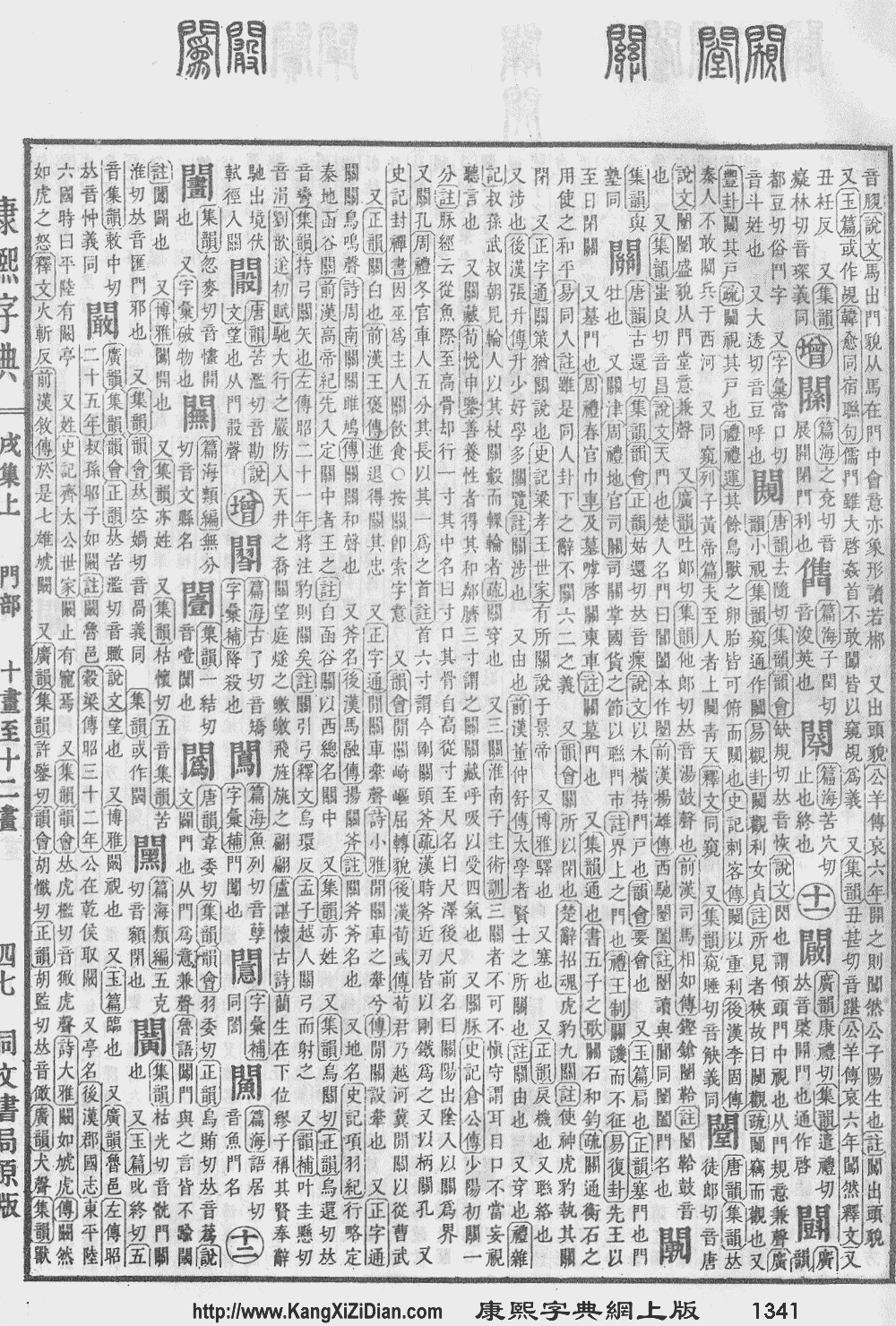
- Kangxi Dictionary: page 1341, character 9
- Dai Kanwa Jiten: character 41470
- Dae Jaweon: page 1845, character 13
- Hanyu Da Zidian (first edition): volume 7, page 4316, character 10
- Unihan data for U+95DC
Chinese
| trad. | 關 | |
|---|---|---|
| simp. | 关* | |
| alternative forms | ||
Glyph origin
Characters in the same phonetic series (卵) (Zhengzhang, 2003)
Phono-semantic compound (形聲/形声, OC *kroːn) : semantic 門 (“door”) + phonetic 𢇅 () – to stop the door from opening with a wooden stick.
The bronze inscription was in the form of 門 (“door”) + 卝 (“door closed”). 卝 might also serve as a phonetic component.
Etymology 1
Compare Proto-Southwestern Tai *klɔːnᴬ² (“latch of door; rafter”), whence Thai กลอน (glɔɔn) (Schuessler, 2007).
Pronunciation
Definitions
關
- door bolt
- to close; to shut
- to close down (a business)
- to lock up; to detain
- to turn off; to switch off
- (literary) to go through; to pass
- 太學者,賢士之所關也,教化之本原也。 [Classical Chinese, trad.]
- From: The Book of Han, circa 1st century CE
- Tàixué zhě, xiánshì zhī suǒ guān yě, jiàohuà zhī běnyuán yě. [Pinyin]
- The Grand College is the passage that the good and able go through. It is the foundation of civilisation.
太学者,贤士之所关也,教化之本原也。 [Classical Chinese, simp.]
- to concern; to implicate; to relate to
- frontier pass; border control; checkpoint (controlled passage)
- (specifically) Shanhai Pass
- area just outside a city gate
- difficult time; critical juncture
- 難關/难关 ― nánguān ― crisis; difficulty
- 年關/年关 ― niánguān ― end of the year (time for settling accounts)
- 1933 June 30, Lu Xun, “我的種痘”, in 文學, 3rd edition, volume 1, number 2, 生活書店, published Sep 1933, page 246:
- 雖說住的是偏僻之處,和別地方交通很少,比現在可以減少輸入傳染病的機會,然而天花卻年年流行的,因此而死的常聽到。我居然逃過了這一關,真是洪福齊天,就是每年開一次慶祝會也不算過分。 [MSC, trad.]
- Suī shuō zhù de shì piānpì zhī chù, hé bié dìfāng jiāotōng hěn shǎo, bǐ xiànzài kěyǐ jiǎnshào shūrù chuánrǎnbìng de jīhuì, rán'ér tiānhuā què niánnián liúxíng de, yīncǐ ér sǐ de cháng tīng dào. Wǒ jūrán táo guò le zhè yī guān, zhēnshì hóngfúqítiān, jiùshì měinián kāi yī cì qìngzhù huì yě bùsuàn guòfèn. [Pinyin]
- (please add an English translation of this quotation)
虽说住的是偏僻之处,和别地方交通很少,比现在可以减少输入传染病的机会,然而天花却年年流行的,因此而死的常听到。我居然逃过了这一关,真是洪福齐天,就是每年开一次庆祝会也不算过分。 [MSC, simp.]
- key; crucial part
- (video games) Short for 關卡/关卡 (guānqiǎ, “level”).
- (traditional Chinese medicine) Short for 關上/关上 (guānshàng, “guan, a pulse position on the wrist”).
- (dated) to issue or receive payment
- 關餉/关饷 ― guānxiǎng ― to issue or receive pay
- 賈珍因問尤氏:「咱們春祭的恩賞可領了不曾?」尤氏道:「今兒我打發蓉兒關去了。」 [Written Vernacular Chinese, trad.]
- From: Cao Xueqin, Dream of the Red Chamber, mid-18th century CE
- Gǔzhēn yīn wèn Yóu shì: “Zánmen chūnjì de ēnshǎng kě lǐng le bùcéng?” Yóu shì dào: “Jīn'ér wǒ dǎfā Róng'ér guān qù le.” [Pinyin]
- (please add an English translation of this quotation)
贾珍因问尤氏:「咱们春祭的恩赏可领了不曾?」尤氏道:「今儿我打发蓉儿关去了。」 [Written Vernacular Chinese, simp.]
- a surname
Synonyms
Dialectal synonyms of 關 (“to close (a door, gate, etc.)”) [map]
| Variety | Location | Words |
|---|---|---|
| Formal (Written Standard Chinese) | 關, 閉 | |
| Mandarin | Taiwan | 關 |
| Wanrong | 關 | |
| Xi'an | 關 | |
| Yinchuan | 關 | |
| Wuhan | 關 | |
| Malaysia | 關 | |
| Singapore | 關 | |
| Cantonese | Guangzhou | 閂 |
| Hong Kong | 閂 | |
| Taishan | 閂 | |
| Singapore (Guangfu) | 閂 | |
| Gan | Nanchang | 關 |
| Pingxiang | 關 | |
| Hakka | Meixian | 關 |
| Miaoli (N. Sixian) | 關 | |
| Pingtung (Neipu; S. Sixian) | 關 | |
| Hsinchu County (Zhudong; Hailu) | 關 | |
| Taichung (Dongshi; Dabu) | 關 | |
| Hsinchu County (Qionglin; Raoping) | 關 | |
| Yunlin (Lunbei; Zhao'an) | 關 | |
| Eastern Min | Fuzhou | 關 |
| Southern Min | Taipei | 關 |
| New Taipei (Sanxia) | 關 | |
| Kaohsiung | 關 | |
| Yilan | 關 | |
| Changhua (Lukang) | 關 | |
| Taichung | 關 | |
| Tainan | 關 | |
| Hsinchu | 關 | |
| Kinmen | 關 | |
| Penghu (Magong) | 關 | |
| Penang (Hokkien) | 崁 | |
| Singapore (Hokkien) | 關 | |
| Shantou | 關 | |
| Singapore (Teochew) | 關 | |
| Singapore (Hainanese) | 關 | |
Compounds
- 一曲陽關/一曲阳关
- 三關/三关
- 下關/下关 (Xiàguān)
- 不動關節/不动关节
- 不相關/不相关
- 不關/不关 (bùguān)
- 不關心/不关心
- 不關痛癢/不关痛痒 (bùguāntòngyǎng)
- 不關緊要/不关紧要
- 不關親/不关亲
- 中樞機關/中枢机关
- 主管機關/主管机关
- 事關重大/事关重大
- 互惠關稅/互惠关税
- 交關/交关 (jiāoguān)
- 人命關天/人命关天 (rénmìngguāntiān)
- 人際關係/人际关系 (rénjìguānxì)
- 休戚相關/休戚相关 (xiūqīxiāngguān)
- 何關/何关
- 保護關稅/保护关税 (bǎohù guānshuì)
- 保險開關/保险开关
- 偏關/偏关 (Piānguān)
- 偏頭關/偏头关 (Piāntóuguān)
- 傾銷關稅/倾销关税
- 優惠關稅/优惠关税
- 入關/入关 (rùguān)
- 入關談判/入关谈判
- 內三關/内三关 (Nèisānguān)
- 兩性關係/两性关系 (liǎngxìng guānxì)
- 八關齋/八关斋
- 公共關係/公共关系
- 公家機關/公家机关
- 公關/公关 (gōngguān)
- 出關/出关 (chūguān)
- 函谷關/函谷关 (Hángǔ Guān)
- 分支機關/分支机关
- 分關/分关
- 利害關係/利害关系
- 初級關係/初级关系
- 勞資關係/劳资关系 (láozī guānxi)
- 司法機關/司法机关
- 叩關/叩关
- 各不相關/各不相关
- 咬定牙關/咬定牙关
- 咬緊牙關/咬紧牙关 (yǎojǐnyáguān)
- 唱陽關/唱阳关
- 嘉峪關/嘉峪关 (Jiāyùguān)
- 四關/四关
- 因果關係/因果关系 (yīnguǒ guānxì)
- 國際關係/国际关系 (guójì guānxì)
- 土關埡/土关垭 (Tǔguānyà)
- 坐關/坐关
- 城關/城关 (chéngguān)
- 執行機關/执行机关
- 報復關稅/报复关税
- 報關/报关 (bàoguān)
- 報關行/报关行
- 外三關/外三关 (Wàisānguān)
- 外交關係/外交关系 (wàijiāo guānxì)
- 多謝關照/多谢关照
- 大散關/大散关
- 大關/大关 (dàguān)
- 大關節目/大关节目
- 夫妻關係/夫妻关系
- 天關客星/天关客星
- 天關星/天关星
- 娘子關/娘子关
- 定時開關/定时开关
- 寧武關/宁武关 (Níngwǔguān)
- 封關/封关 (fēngguān)
- 居庸關/居庸关 (Jūyōngguān)
- 山海關/山海关 (Shānhǎiguān)
- 嶢關/峣关
- 工關/工关
- 幕僚機關/幕僚机关
- 年關/年关 (niánguān)
- 并列關係/并列关系
- 性命交關/性命交关 (xìngmìngjiāoguān)
- 息息相關/息息相关 (xīxīxiāngguān)
- 情報機關/情报机关
- 扃關/扃关
- 打破迷關/打破迷关
- 打通關/打通关
- 打通關節/打通关节
- 打關節/打关节
- 把關/把关 (bǎguān)
- 拔關/拔关
- 抱關/抱关
- 拉關係/拉关系
- 抱關擊柝/抱关击柝
- 指關節/指关节 (zhǐguānjié)
- 捎關打節/捎关打节
- 接關係/接关系
- 插關兒/插关儿
- 攔關/拦关
- 攻關/攻关 (gōngguān)
- 攸關/攸关 (yōuguān)
- 政權機關/政权机关
- 散關/散关
- 方關/方关
- 昭關/昭关
- 曉關/晓关 (Xiǎoguān)
- 有關/有关 (yǒuguān)
- 杉關/杉关
- 杵臼關節/杵臼关节
- 榆關/榆关
- 樊江關/樊江关
- 機關/机关 (jīguān)
- 機關刊物/机关刊物 (jīguān kānwù)
- 機關報/机关报 (jīguānbào)
- 機關槍/机关枪 (jīguānqiāng)
- 機關炮/机关炮 (jīguānpào)
- 機關用盡/机关用尽
- 機關車/机关车 (jīguānchē)
- 機關頭/机关头
- 款關/款关
- 正陽關/正阳关
- 武勝關/武胜关 (Wǔshèngguān)
- 民意機關/民意机关
- 沒關係/没关系
- 治安機關/治安机关
- 派出機關/派出机关
- 洪關/洪关 (Hóngguān)
- 津關/津关
- 洋關/洋关
- 海關/海关 (hǎiguān)
- 滑動關節/滑动关节
- 漠不相關/漠不相关
- 漠不關心/漠不关心 (mòbùguānxīn)
- 漁洋關/渔洋关 (Yúyángguān)
- 潼關/潼关 (Tóngguān)
- 潼關縣/潼关县
- 濂洛關閩/濂洛关闽
- 無關/无关 (wúguān)
- 無關宏旨/无关宏旨
- 無關痛癢/无关痛痒 (wúguāntòngyǎng)
- 無關緊要/无关紧要 (wúguānjǐnyào)
- 營業機關/营业机关
- 牙關/牙关 (yáguān)
- 牙關緊閉/牙关紧闭
- 特惠關稅/特惠关税
- 犯關排闥/犯关排闼
- 獻關/献关 (xiànguān)
- 玄關/玄关 (xuánguān)
- 玄關妙理/玄关妙理
- 玉門關/玉门关 (Yùmén Guān)
- 玉關/玉关
- 球窩關節/球窝关节
- 生死攸關/生死攸关 (shēngsǐ yōuguān)
- 生死關頭/生死关头 (shēngsǐguāntóu)
- 生關死劫/生关死劫
- 當關/当关
- 痛癢無關/痛痒无关
- 痛癢相關/痛痒相关
- 白桑關/白桑关 (Báisāngguān)
- 百二關山/百二关山
- 相關/相关 (xiāngguān)
- 相關係數/相关系数
- 相關指數/相关指数
- 社會關係/社会关系
- 禪關/禅关
- 秦關/秦关
- 稅關/税关 (shuìguān)
- 穿關/穿关
- 立法機關/立法机关 (lìfǎ jīguān)
- 節關/节关
- 紫荊關/紫荆关
- 結關/结关 (jiéguān)
- 緊要關頭/紧要关头 (jǐnyào guāntóu)
- 緊關裡/紧关里
- 羅成叫關/罗成叫关
- 群眾關係/群众关系
- 肘關節/肘关节
- 股關節/股关节
- 股關節炎/股关节炎
- 臨終關懷/临终关怀 (línzhōng guānhuái)
- 蒲關/蒲关
- 藍關/蓝关 (Lánguān)
- 藥裹關心/药裹关心
- 虎牢關/虎牢关 (Hǔláo Guān)
- 虎頭關/虎头关
- 行政機關/行政机关 (xíngzhèng jīguān)
- 行關/行关
- 裙帶關係/裙带关系 (qúndài guānxì)
- 複式關稅/复式关税
- 親子關係/亲子关系
- 調關/调关 (Tiáoguān)
- 負載開關/负载开关
- 買關節/买关节
- 賊去關門/贼去关门
- 賣關子/卖关子 (mài guānzi)
- 賣關節/卖关节
- 跗關節/跗关节
- 轉關兒/转关儿
- 連帶關係/连带关系
- 通關/通关 (tōngguān)
- 通關手/通关手
- 通關節/通关节 (tōng guānjié)
- 通關鼻子/通关鼻子
- 進關/进关
- 過三關/过三关 (guòsānguān)
- 過五關/过五关
- 過五關斬六將/过五关斩六将 (guò wǔ guān zhǎn liù jiàng)
- 過關/过关 (guòguān)
- 過關斬將/过关斩将 (guòguānzhǎnjiàng)
- 邊關/边关 (biānguān)
- 鄉關/乡关 (xiāngguān)
- 重機關槍/重机关枪
- 重關/重关
- 野三關/野三关 (Yěsānguān)
- 金融機關/金融机关
- 針關/针关
- 鈔關/钞关
- 鍼關/针关
- 鎮南關/镇南关 (Zhènnánguān)
- 鐵郭銅關/铁郭铜关
- 鐵門關/铁门关 (Tiěménguān)
- 長關/长关
- 門不夜關/门不夜关
- 閉關/闭关 (bìguān)
- 閉關卻掃/闭关却扫
- 閉關自守/闭关自守 (bìguānzìshǒu)
- 閉關鎖國/闭关锁国 (bìguānsuǒguó)
- 間關/间关
- 開關/开关 (kāiguān)
- 閘刀開關/闸刀开关
- 闖關/闯关 (chuǎngguān)
- 關中/关中 (Guānzhōng)
- 關尹/关尹
- 關乎/关乎 (guānhū)
- 關了釘兒/关了钉儿
- 關亡/关亡
- 關人/关人
- 關令/关令
- 關係/关系
- 關係人/关系人
- 關係企業/关系企业 (guānxì qǐyè)
- 關係命題/关系命题
- 關係戶/关系户
- 關係詞/关系词
- 關係調/关系调
- 關係運算/关系运算
- 關俸/关俸
- 關元/关元
- 關內/关内 (guānnèi)
- 關內侯/关内侯
- 關公/关公 (Guān Gōng)
- 關刀/关刀 (guāndāo)
- 關切/关切 (guānqiè)
- 關切補詞/关切补词
- 關南/关南 (Guānnán)
- 關卡/关卡 (guānqiǎ)
- 關取/关取
- 關口/关口 (guānkǒu)
- 關召/关召
- 關同/关同
- 關合/关合
- 關報/关报 (guānbào)
- 關堡/关堡
- 關塞/关塞 (guānsài)
- 關外/关外 (guānwài)
- 關夫子/关夫子 (Guānfūzǐ)
- 關子/关子
- 關子嶺/关子岭
- 關山/关山 (guānshān)
- 關山月/关山月
- 關山迢遞/关山迢递
- 關岳/关岳
- 關島/关岛 (Guāndǎo)
- 關嶺/关岭
- 關嶺縣/关岭县
- 關帝/关帝 (Guāndì)
- 關帝廟/关帝庙 (Guāndìmiào)
- 關席/关席
- 關平/关平
- 關店/关店
- 關廂/关厢
- 關廟/关庙 (Guānmiào)
- 關弓/关弓
- 關張/关张 (guānzhāng)
- 關征
- 關心/关心 (guānxīn)
- 關情/关情
- 關愛/关爱 (guān'ài)
- 關懷/关怀 (guānhuái)
- 關懷備至/关怀备至 (guānhuáibèizhì)
- 關手/关手
- 關押/关押 (guānyā)
- 關掉/关掉 (guāndiào)
- 關捩子/关捩子
- 關提/关提
- 關撲/关扑
- 關支/关支
- 關政/关政
- 關文/关文
- 關於/关于 (guānyú)
- 關暇/关暇
- 關書/关书
- 關會/关会
- 關東/关东 (Guāndōng)
- 關東客/关东客
- 關東平原/关东平原 (Guāndōng Píngyuán)
- 關東軍/关东军 (Guāndōngjūn)
- 關棧/关栈
- 關機/关机 (guānjī)
- 關沮/关沮 (Guānjǔ)
- 關注 (guānzhù)
- 關河/关河
- 關津/关津
- 關涉/关涉 (guānshè)
- 關渡/关渡
- 關漢卿/关汉卿
- 關照/关照 (guānzhào)
- 關煞/关煞
- 關燈/关灯
- 關牡/关牡
- 關白/关白
- 關目/关目
- 關眼兒/关眼儿
- 關礙/关碍 (guān'ài)
- 關禁/关禁
- 關稅/关税 (guānshuì)
- 關稅保護/关税保护
- 關稅壁壘/关税壁垒
- 關稅政策/关税政策
- 關稅率/关税率
- 關稅稅則/关税税则
- 關稅自主/关税自主
- 關竅/关窍
- 關節/关节 (guānjié)
- 關節囊/关节囊 (guānjiénáng)
- 關節炎/关节炎 (guānjiéyán)
- 關節痛/关节痛
- 關節腫大/关节肿大
- 關系/关系
- 關紐/关纽
- 關緊/关紧
- 關羽髯/关羽髯
- 關聘/关聘
- 關聖/关圣 (Guānshèng)
- 關聖帝君/关圣帝君 (Guānshèng Dìjūn)
- 關聯/关联 (guānlián)
- 關脈/关脉
- 關西/关西 (guānxī)
- 關親/关亲
- 關覽/关览
- 關託/关托
- 關說/关说 (guānshuō)
- 關路圻/关路圻 (Guānlùqí)
- 關輔/关辅
- 關通/关通
- 關連/关连 (guānlián)
- 關連概念/关连概念
- 關進/关进 (guānjìn)
- 關都尉/关都尉
- 關金券/关金券
- 關鍵/关键 (guānjiàn)
- 關鍵時刻/关键时刻
- 關鍵期/关键期
- 關鍵球/关键球
- 關門/关门 (guānmén)
- 關門大吉/关门大吉 (guānméndàjí)
- 關門弟子/关门弟子
- 關門狀/关门状
- 關門落鎖/关门落锁
- 關門落閂/关门落闩
- 關門閉戶/关门闭户
- 關閉/关闭 (guānbì)
- 關關/关关 (guānguān)
- 關防/关防 (guānfáng)
- 關隘/关隘 (guān'ài)
- 關雲長/关云长
- 關頭/关头 (guāntóu)
- 關風/关风
- 關餉/关饷
- 關馬鄭白/关马郑白
- 陽關/阳关 (Yángguān)
- 陽關三疊/阳关三叠
- 陽關大道/阳关大道 (yángguān dàdào)
- 陽關道/阳关道 (yángguāndào)
- 雁門關/雁门关 (Yànménguān)
- 雄關/雄关 (Xióngguān)
- 雙關/双关 (shuāngguān)
- 雙關語/双关语 (shuāngguānyǔ)
- 難關/难关
- 電源開關/电源开关
- 韶關/韶关 (Sháoguān)
- 馬關/马关 (Mǎguān)
- 馬關條約/马关条约 (Mǎguān Tiáoyuē)
- 鬼門關/鬼门关 (guǐménguān)
- 鬼頭關竅/鬼头关窍
Descendants
Etymology 2
| For pronunciation and definitions of 關 – see 彎 (“to bend; to make bent; to turn; to make a turn; to change direction; etc.”). (This character is the simplified form of 彎). |
Notes:
|
References
- “關”, in 漢語多功能字庫 (Multi-function Chinese Character Database), 香港中文大學 (the Chinese University of Hong Kong), 2014–
- Dictionary of Chinese Character Variants (教育部異體字字典), A04398
- “Entry #12935”, in 臺灣閩南語常用詞辭典 [Dictionary of Frequently-Used Taiwan Minnan] (overall work in Mandarin and Hokkien), Ministry of Education, R.O.C., 2023.
Japanese
| 関 | |
| 關 |
Readings
- Go-on: けん (ken)←けん (ken, historical)←くゑん (kwen, ancient)
- Kan-on: かん (kan)←くわん (kwan, historical)
- Kun: かかわる (kakawaru, 關わる)←かかはる (kakafaru, 關はる, historical); せき (seki, 關)
- Nanori: とおる (tōru)←とほる (toforu, historical)
Korean
Etymology 1
From Middle Chinese 關 (MC kwaen). Recorded as Middle Korean 관 (kwan) (Yale: kwan) in Hunmong Jahoe (訓蒙字會 / 훈몽자회), 1527.
Pronunciation
- (SK Standard/Seoul) IPA(key): [kwa̠n]
- Phonetic hangul: [관]
Compounds
Compounds
- 관계 (關係, gwan'gye, “relationship”)
- 관련 (關聯, gwallyeon, “connection; relation”)
- 관건 (關鍵, gwan'geon, “crucial point”)
- 관문 (關門, gwanmun, “gate”)
- 관세 (關稅, gwanse, “customs duty”)
- 관심 (關心, gwansim, “care; interest”)
- 관여 (關與, gwanyeo, “involvement”)
- 관절 (關節, gwanjeol, “joint”)
- 난관 (難關, nan'gwan, “crisis; difficulty”)
- 무관 (無關, mugwan, “unrelatedness”)
- 상관 (相關, sanggwan, “correlation”)
- 연관 (聯關, yeon'gwan, “connection”)
Etymology 2
Related to Middle Chinese 彎 (MC 'waen).
Hanja
Vietnamese
This article is issued from Wiktionary. The text is licensed under Creative Commons - Attribution - Sharealike. Additional terms may apply for the media files.