偋
| ||||||||
Translingual
Han character
偋 (Kangxi radical 9, 人+9, 11 strokes, cangjie input 人尸廿廿 (OSTT), four-corner 27241, composition ⿰亻屏)
References
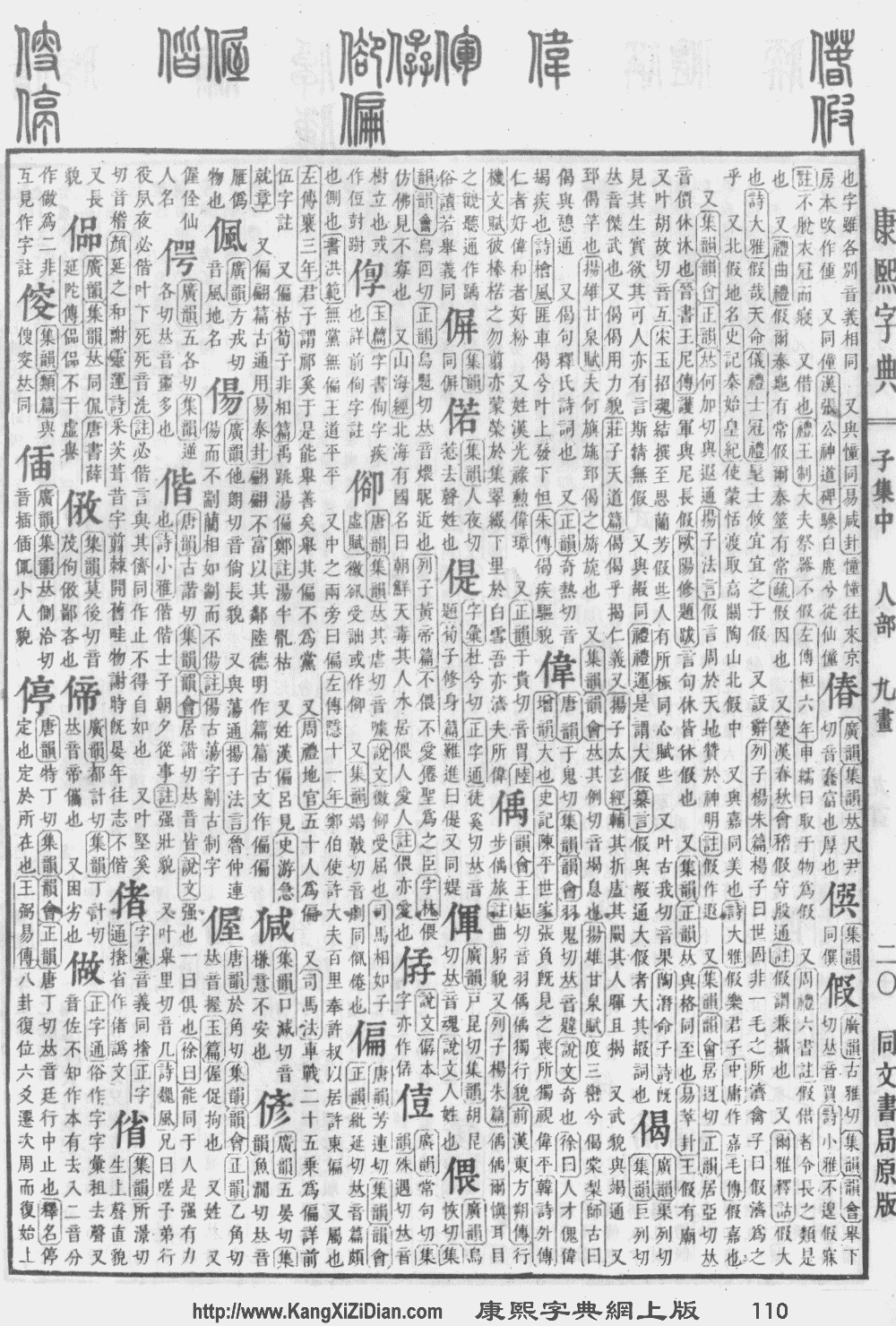
- Kangxi Dictionary: page 110, character 7
- Dai Kanwa Jiten: character 839
- Dae Jaweon: page 235, character 2
- Hanyu Da Zidian (first edition): volume 1, page 198, character 2
- Unihan data for U+504B
Chinese
| simp. and trad. |
偋 | |
|---|---|---|
| alternative forms | 𠌸 | |
Glyph origin
Characters in the same phonetic series (并) (Zhengzhang, 2003)
| Old Chinese | |
|---|---|
| 鵧 | *bi |
| 駢 | *beːn |
| 胼 | *beːn |
| 骿 | *beːn |
| 軿 | *beːn, *beːŋ |
| 賆 | *beːn |
| 跰 | *preŋs, *beːn |
| 恲 | *pʰreŋ |
| 鮩 | *breŋʔ, *beːŋʔ, *biɡ |
| 絣 | *preːŋ |
| 拼 | *preːŋ |
| 迸 | *preːŋs |
| 姘 | *pʰreːŋ, *pʰeːŋ |
| 皏 | *pʰreːŋʔ |
| 併 | *breːŋʔ, *breːŋs, *peŋʔ, *peŋs, *beːŋʔ |
| 并 | *peŋ, *peŋs |
| 栟 | *peŋ |
| 屏 | *peŋ, *peŋʔ, *beːŋ |
| 箳 | *peŋ, *beːŋ |
| 餅 | *peŋʔ |
| 鉼 | *peŋʔ |
| 摒 | *peŋs |
| 庰 | *beŋs |
| 偋 | *beŋs |
| 艵 | *pʰeːŋ |
| 頩 | *pʰeːŋ, *pʰeːŋʔ |
| 竮 | *pʰeːŋ, *beːŋ |
| 瓶 | *beːŋ |
| 缾 | *beːŋ |
| 蛢 | *beːŋ |
| 荓 | *beːŋ |
| 郱 | *beːŋ |
| 洴 | *beːŋ |
| 蓱 | *beːŋ |
Pronunciation 1
Synonyms
Dialectal synonyms of 藏 (“to hide; to conceal”) [map]
Dialectal synonyms of 躲 (“to hide”) [map]
Pronunciation 2
References
- “偋”, in 漢語多功能字庫 (Multi-function Chinese Character Database), 香港中文大學 (the Chinese University of Hong Kong), 2014–
Japanese
Kanji
偋
- This term needs a translation to English. Please help out and add a translation, then remove the text
{{rfdef}}.
This article is issued from Wiktionary. The text is licensed under Creative Commons - Attribution - Sharealike. Additional terms may apply for the media files.