孬
| ||||||||
Translingual
Han character
孬 (Kangxi radical 39, 子+7, 10 strokes, cangjie input 一火女弓木 (MFVND), four-corner 10447, composition ⿱不好)
References
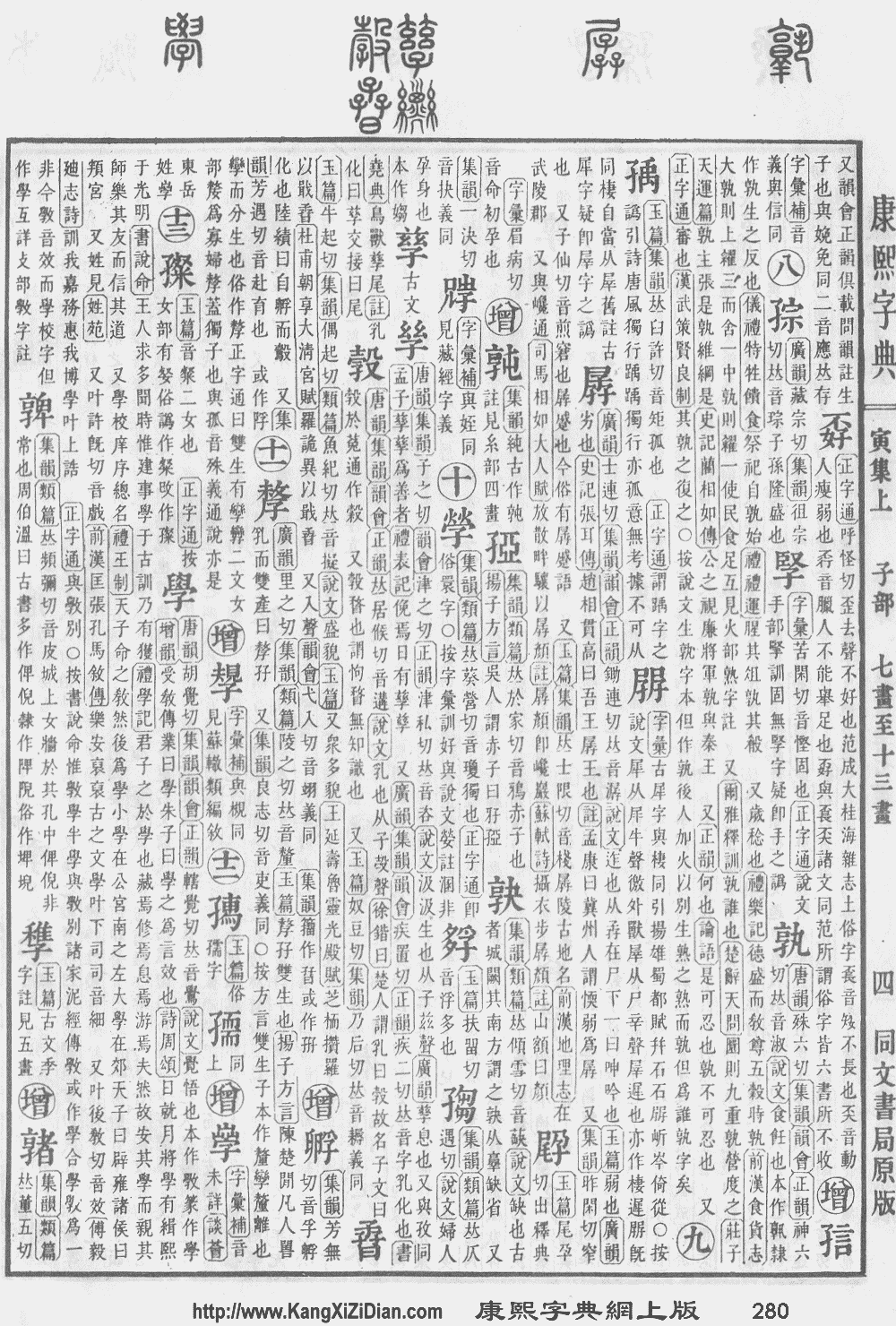
- Kangxi Dictionary: page 280, character 1
- Dai Kanwa Jiten: character 6989
- Dae Jaweon: page 548, character 21
- Hanyu Da Zidian (first edition): volume 8 (in addendum), page 18, character 10
- Unihan data for U+5B6C
Chinese
| trad. | 孬 | |
|---|---|---|
| simp. # | 孬 | |
Etymology 1
For Hangzhounese "cannot", see 好.
(This etymology is missing or incomplete. Please add to it, or discuss it at the Etymology scriptorium. Particularly: “Standarin: contraction of something with 好?”)
Pronunciation
Definitions
孬
- (regional, informal) not good
- (regional, informal) cowardly, contemptible
- (Hangzhounese) cannot
Etymology 2
Contraction of 唔好.
Pronunciation
Definitions
孬
Synonyms
Dialectal synonyms of 壞 (“bad; not good”) [map]
| Variety | Location | Words |
|---|---|---|
| Classical Chinese | 惡 | |
| Formal (Written Standard Chinese) | 壞 | |
| Mandarin | Beijing | 壞, 賴 |
| Taiwan | 壞 | |
| Jinan | 壞, 孬, 賴 | |
| Xi'an | 瞎, 壞 | |
| Wuhan | 壞, 拐 | |
| Chengdu | 壞 | |
| Yangzhou | 壞 | |
| Hefei | 壞 | |
| Malaysia | 壞 | |
| Singapore | 壞 | |
| Cantonese | Guangzhou | 壞, 弊, 衰 |
| Hong Kong | 壞, 衰 | |
| Zhongshan (Shiqi) | 衰 | |
| Yangjiang | 壞 | |
| Kuala Lumpur (Guangfu) | 衰 | |
| Singapore (Guangfu) | 衰 | |
| Gan | Nanchang | 壞 |
| Hakka | Meixian | 壞 |
| Wuhua (Meilin) | 衰 | |
| Jin | Taiyuan | 賴, 壞 |
| Northern Min | Jian'ou | 壞, 獰 |
| Eastern Min | Fuzhou | 呆, 否 |
| Southern Min | Xiamen | 歹, 䆀 |
| Xiamen (Tong'an) | 歹 | |
| Quanzhou | 歹 | |
| Jinjiang | 歹 | |
| Nan'an | 歹 | |
| Shishi | 歹 | |
| Zhangzhou | 䆀 | |
| Zhao'an | 䆀, 孬 | |
| Tainan | 歹 | |
| Penang (Hokkien) | 䆀, 歹 | |
| Singapore (Hokkien) | 歹 | |
| Manila (Hokkien) | 歹 | |
| Datian | 歹 | |
| Chaozhou | 孬 | |
| Shantou | 孬 | |
| Jieyang | 孬, 歹 | |
| Singapore (Teochew) | 歹, 孬 | |
| Leizhou | 㾀 | |
| Wenchang | 㾀 | |
| Haikou | 㾀 | |
| Singapore (Hainanese) | 㾀 | |
| Wu | Shanghai | 壞, 恘 |
| Suzhou | 壞, 恘 | |
| Ningbo | 歪, 推扳, 嘸做 | |
| Wenzhou | 毛 | |
| Xiang | Changsha | 壞, 拐 |
| Shuangfeng | 壞, 拐 | |
Dialectal synonyms of 別 (“do not”) [map]
Pronunciation
Vietnamese
Han character
孬: Hán Việt readings: nạo[1], khoái[2]
孬: Nôm readings: nao[3]
- This term needs a translation to English. Please help out and add a translation, then remove the text
{{rfdef}}.
References
- Trần (1999).
- Nguyễn (1974).
- Trần (2004).
This article is issued from Wiktionary. The text is licensed under Creative Commons - Attribution - Sharealike. Additional terms may apply for the media files.