帶
| ||||||||
Translingual
| Traditional | 帶 |
|---|---|
| Shinjitai | 帯 |
| Simplified | 带 |
Han character
帶 (Kangxi radical 50, 巾+8, 11 strokes, cangjie input 大心月中月 (KPBLB), four-corner 44227, composition ⿳⿻廿儿冖巾(GJKV) or ⿳⿻廿⿰丿㇄冖巾(HT))
Derived characters
Related characters
- 帯 (Japanese shinjitai)
- 带 (Simplified Chinese)
Further reading
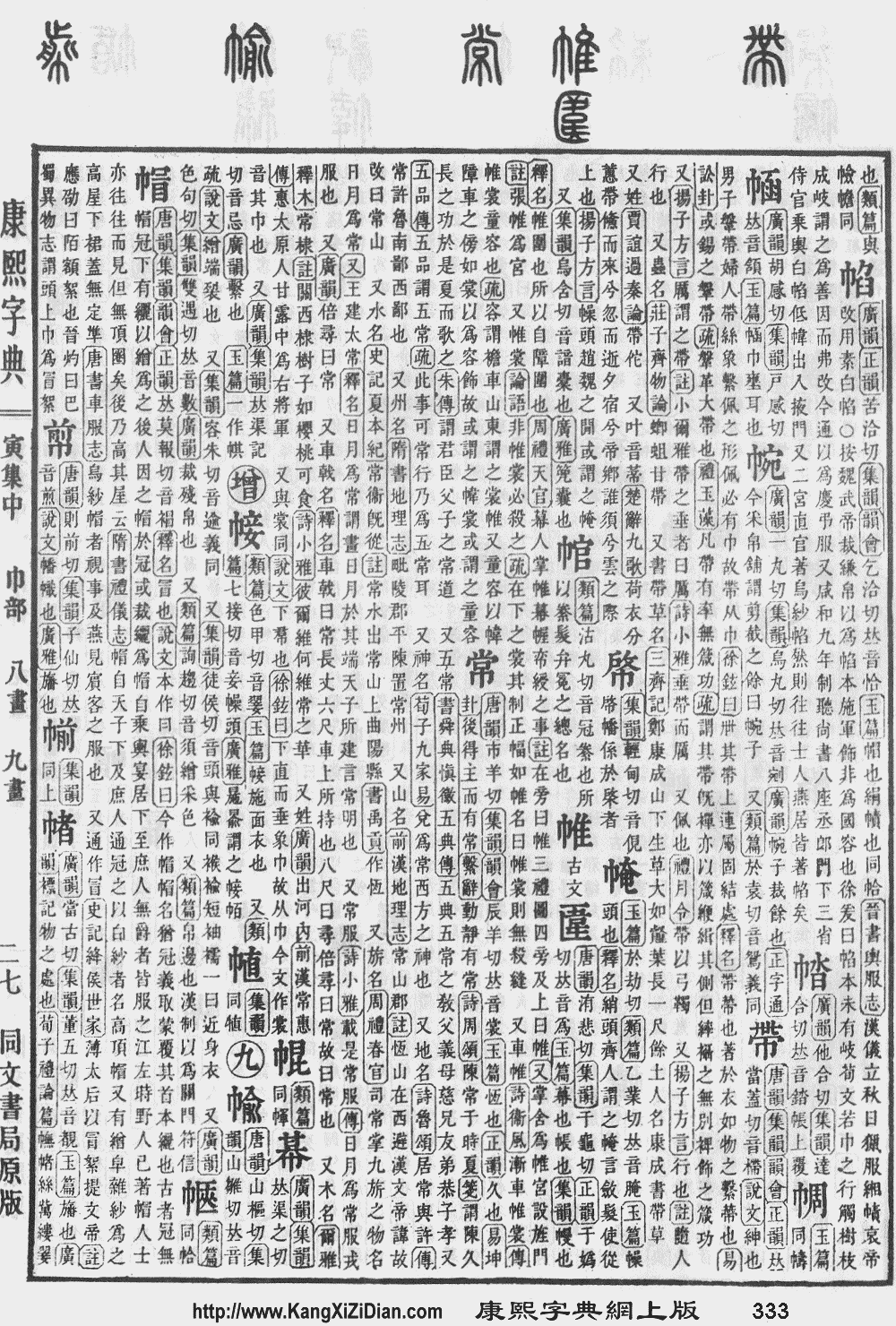
- Kangxi Dictionary: page 333, character 6
- Dai Kanwa Jiten: character 8950
- Dae Jaweon: page 639, character 8
- Hanyu Da Zidian (first edition): volume 1, page 742, character 12
- Unihan data for U+5E36
Chinese
Glyph origin
| Historical forms of the character 帶 | ||
|---|---|---|
| Shang | Shuowen Jiezi (compiled in Han) | Liushutong (compiled in Ming) |
| Oracle bone script | Small seal script | Transcribed ancient scripts |
 |
 |
 |
Characters in the same phonetic series (帶) (Zhengzhang, 2003)
Pictogram (象形) .
Etymology 1
| trad. | 帶 | |
|---|---|---|
| simp. | 带 | |
| alternative forms | 帯 | |
From Proto-Sino-Tibetan *s-daːj (“waist; belt; zone; flat expanse”). Cognate with Tibetan སྡེ (sde, “part; portion; district”) and Proto-Lolo-Burmese *N-day³ (“level expanse; plain”). Also compare the phonologically similar Proto-Sino-Tibetan *s-taj (“naval; abdomen; center; self”).
Pronunciation
Definitions
帶
- belt; ribbon; tape (Classifier: 條/条 c)
- tyre
- zone; area; belt
- cassette (Classifier: 餅/饼 c)
- leucorrhoea
- to take; to bring along; to carry
- to do something incidentally
- to lead; to head
- 利用網絡資料自主學習、通過偽聲群進行同好交流、請「大佬」帶。 [MSC, trad.]
- From: 2019, 江舒晨 (Jiang Shuchen), 《彩虹般的声音:中国伪声亚文化初探》 [Voice Like A Rainbow: A Study of Chinese Fake Voice Subculture] (thesis), Xiamen: Xiamen University, page 29
- Lìyòng wǎngluò zīliào zìzhǔ xuéxí, tōngguò wěishēngqún jìnxíng tónghào jiāoliú, qǐng “dàlǎo” dài. [Pinyin]
- (please add an English translation of this usage example)
利用网络资料自主学习、通过伪声群进行同好交流、请「大佬」带。 [MSC, simp.]
- to bear; to have
- to have something attached
- to contain; to carry
- to drive; to spur on
- to look after; to bring up
- (Hokkien) to worry about; to care for
- (Hokkien) to involve in trouble; to implicate
- (neologism, Internet slang) Pronunciation spelling of 大.
Synonyms
Dialectal synonyms of 帶 (“to take/bring (someone somewhere)”) [map]
| Variety | Location | Words |
|---|---|---|
| Formal (Written Standard Chinese) | 帶 | |
| Mandarin | Taiwan | 帶 |
| Singapore | 帶 | |
| Cantonese | Hong Kong | 帶 |
| Southern Min | Xiamen | 𤆬 |
| Quanzhou | 𤆬 | |
| Zhangzhou | 𤆬 | |
| Taipei | 𤆬 GT | |
| Penang (Hokkien) | 𤆬 | |
| Singapore (Hokkien) | 𤆬 | |
| Manila (Hokkien) | 𤆬 | |
| Jieyang | 邀, 𤆬 | |
| Note | GT - General Taiwanese (no specific region identified) | |
Dialectal synonyms of 帶 (“to carry; to bring along (an object)”) [map]
| Variety | Location | Words |
|---|---|---|
| Formal (Written Standard Chinese) | 帶, 攜, 攜帶 | |
| Mandarin | Taiwan | 帶 |
| Singapore | 帶 | |
| Cantonese | Hong Kong | 帶 |
| Ho Chi Minh City (Guangfu) | 帶 | |
| Hakka | Miaoli (N. Sixian) | 帶 |
| Pingtung (Neipu; S. Sixian) | 帶 | |
| Hsinchu County (Zhudong; Hailu) | 帶 | |
| Taichung (Dongshi; Dabu) | 帶 | |
| Hsinchu County (Qionglin; Raoping) | 帶 | |
| Yunlin (Lunbei; Zhao'an) | 隨, 抸 | |
| Southern Min | Xiamen | 帶, 紮 |
| Quanzhou | 帶 | |
| Zhangzhou | 帶, 紮 | |
| Tainan | 紮 | |
| Penang (Hokkien) | 紮 | |
| Singapore (Hokkien) | 紮 | |
| Jieyang | 紮 | |
Compounds
- 一帶/一带 (yīdài)
- 一衣帶水/一衣带水 (yīyīdàishuǐ)
- 丁字帶/丁字带
- 不冠不帶/不冠不带
- 中間地帶/中间地带 (zhōngjiān dìdài)
- 主序帶/主序带
- 五帶/五带
- 亞熱帶/亚热带 (yàrèdài)
- 伴唱帶/伴唱带
- 低壓帶/低压带
- 佩帶/佩带 (pèidài)
- 倒帶/倒带
- 傳動帶/传动带
- 傳送帶/传送带 (chuánsòngdài)
- 光帶/光带
- 八帶魚/八带鱼 (bādàiyú)
- 冠帶/冠带 (guāndài)
- 冠帶官/冠带官
- 分釵斷帶/分钗断带
- 勒緊褲帶/勒紧裤带 (lēi jǐn kùtóu)
- 北寒帶/北寒带 (Běihándài)
- 北溫帶/北温带 (běiwēndài)
- 卡帶/卡带 (kǎdài)
- 原聲帶/原声带 (yuán shēngdài)
- 原音帶/原音带
- 吊帶/吊带 (diàodài)
- 命帶桃花/命带桃花
- 地帶/地带 (dìdài)
- 地震帶/地震带 (dìzhèndài)
- 外帶/外带 (wàidài)
- 大帶/大带
- 大帶型/大带型
- 夫人裙帶/夫人裙带
- 央帶/央带
- 夾帶/夹带 (jiādài)
- 夾槍帶棒/夹枪带棒
- 好球帶/好球带 (hǎoqiúdài)
- 安全帶/安全带 (ānquándài)
- 安眉帶眼/安眉带眼
- 宮門帶/宫门带
- 寒帶/寒带 (hándài)
- 寒帶氣候/寒带气候
- 寶帶/宝带 (bǎodài)
- 寶帶橋/宝带桥
- 將帶/将带
- 履帶/履带 (lǚdài)
- 履帶車/履带车
- 山河襟帶/山河襟带
- 峨冠博帶/峨冠博带
- 布衣葦帶/布衣苇带
- 布衣韋帶/布衣韦带
- 帶一腳/带一脚 (dàiyījiǎo)
- 帶上一筆/带上一笔
- 帶上門/带上门
- 帶來/带来 (dàilái)
- 帶信/带信
- 帶俸/带俸
- 帶個好/带个好
- 帶俸差操/带俸差操
- 帶兵/带兵 (dàibīng)
- 帶分數/带分数 (dàifēnshù)
- 帶刺/带刺
- 帶勁/带劲 (dàijìn)
- 帶動/带动 (dàidòng)
- 帶動唱/带动唱
- 帶原者/带原者 (dàiyuánzhě)
- 帶厲山河/带厉山河
- 帶取/带取
- 帶口/带口
- 帶同/带同
- 帶唱帶演/带唱带演
- 帶回/带回 (dàihuí)
- 帶圍/带围
- 帶子/带子 (dàizi)
- 帶孝/带孝 (dàixiào)
- 帶孩子/带孩子 (dài háizi)
- 帶徒弟/带徒弟
- 帶徵/带征
- 帶徵銀/带征银
- 帶怨/带怨
- 帶憂/带忧
- 帶手/带手
- 帶手兒/带手儿
- 帶打/带打
- 帶把子/带把子
- 帶挈/带挈
- 帶挾/带挟
- 帶教/带教
- 帶月/带月
- 帶月披星/带月披星
- 帶案/带案
- 帶條的/带条的
- 帶水/带水
- 帶水帶漿/带水带浆
- 帶水拖泥/带水拖泥
- 帶河厲山/带河厉山
- 帶牌走馬/带牌走马
- 帶牛佩犢/带牛佩犊
- 帶狀/带状 (dàizhuàng)
- 帶狀疱疹/带状疱疹 (dàizhuàng pàozhěn)
- 帶球撞人/带球撞人
- 帶球跑/带球跑 (dàiqiúpǎo)
- 帶甲/带甲
- 帶甲之勞/带甲之劳
- 帶眼/带眼
- 帶眼安眉/带眼安眉
- 帶礪/带砺
- 帶礪山河/带砺山河
- 帶礪河山/带砺河山
- 帶神/带神
- 帶笑/带笑
- 帶笏/带笏
- 帶累/带累 (dàilěi)
- 帶罪徵收/带罪征收
- 帶罪立功/带罪立功 (dàizuìlìgōng)
- 帶聲/带声
- 帶肚子/带肚子
- 帶膆貂掛/带膆貂挂
- 帶草/带草
- 帶草連真/带草连真
- 帶菌/带菌
- 帶菌者/带菌者
- 帶走/带走 (dàizǒu)
- 帶路/带路 (dàilù)
- 帶身子/带身子
- 帶金佩紫/带金佩紫
- 帶鉤/带钩 (dàigōu)
- 帶鋸機/带锯机
- 帶電/带电
- 帶音/带音 (dàiyīn)
- 帶領/带领 (dàilǐng)
- 帶頭/带头 (dàitóu)
- 帶髮修行/带发修行
- 帶魚/带鱼 (dàiyú)
- 彩帶/彩带 (cǎidài)
- 彩帶舞/彩带舞
- 影帶/影带 (yǐngdài)
- 扈帶/扈带
- 打孔紙帶/打孔纸带
- 打字帶/打字带
- 打帶跑/打带跑
- 打領帶/打领带
- 拖兒帶女/拖儿带女
- 拉家帶口/拉家带口
- 拖帶/拖带
- 拐帶/拐带 (guǎidài)
- 拐帶人口/拐带人口
- 披星帶月/披星带月 (pīxīngdàiyuè)
- 披枷帶鎖/披枷带锁
- 拖泥帶水/拖泥带水 (tuōnídàishuǐ)
- 拖男帶女/拖男带女
- 披荊帶棘/披荆带棘
- 披麻帶孝/披麻带孝 (pīmádàixiào)
- 披麻帶索/披麻带索
- 挈帶/挈带
- 捎帶/捎带 (shāodài)
- 挾帶/挟带 (xiédài)
- 捎帶腳兒/捎带脚儿
- 插金帶銀/插金带银
- 擔帶/担带
- 攜家帶眷/携家带眷
- 攜帶/携带 (xiédài)
- 攜挾帶/携挟带
- 支持帶/支持带 (zhīchídài)
- 散帶衡門/散带衡门
- 易帶/易带
- 映帶/映带
- 晶帶/晶带
- 月經帶/月经带 (yuèjīngdài)
- 束帶/束带
- 束帶頂冠/束带顶冠
- 林帶/林带
- 梨花帶雨/梨花带雨 (líhuādàiyǔ)
- 止血帶/止血带 (zhǐxuèdài)
- 母帶/母带 (mǔdài)
- 河山帶礪/河山带砺
- 沾帶/沾带
- 沾親帶故/沾亲带故
- 沾親帶骨/沾亲带骨
- 海帶/海带 (hǎidài)
- 海帶卷/海带卷
- 海帶芽/海带芽 (hǎidàiyá)
- 淺帶/浅带
- 溫帶/温带 (wēndài)
- 溫帶植物/温带植物
- 溫帶氣旋/温带气旋 (wēndài qìxuán)
- 無光帶/无光带 (wúguāng dài)
- 無千帶數/无千带数
- 無雨帶/无雨带
- 無風帶/无风带
- 熱帶/热带 (rèdài)
- 熱帶低壓/热带低压
- 熱帶氣旋/热带气旋 (rèdài qìxuán)
- 熱帶魚/热带鱼 (rèdàiyú)
- 牽籐帶葉/牵藤带叶
- 犀帶/犀带
- 玉帶/玉带 (yùdài)
- 生毛帶角/生毛带角
- 白帶/白带 (báidài)
- 白帶魚/白带鱼
- 皮帶/皮带 (pídài)
- 皮帶傳動/皮带传动
- 破碎帶/破碎带
- 磁帶/磁带 (cídài)
- 磁帶機/磁带机
- 礪山帶河/砺山带河
- 礪帶山河/砺带山河
- 穿帶/穿带
- 穿帶印/穿带印
- 管帶/管带 (guǎndài)
- 簇帶/簇带
- 粘皮帶骨/粘皮带骨
- 紐帶/纽带 (niǔdài)
- 紫袍玉帶/紫袍玉带
- 絲帶/丝带 (sīdài)
- 綠帶/绿带
- 緄帶/绲带
- 綬帶/绶带 (shòudài)
- 綬帶鳥/绶带鸟
- 緞帶/缎带 (duàndài)
- 緩帶/缓带
- 緞帶花/缎带花
- 緩衝地帶/缓冲地带
- 繃帶/绷带 (bēngdài)
- 纏帶/缠带
- 羊帶來/羊带来
- 耽帶/耽带
- 聲帶/声带 (shēngdài)
- 聲帶小結/声带小结
- 肩帶/肩带
- 背帶/背带 (bēidài)
- 腰帶/腰带 (yāodài)
- 腿帶/腿带
- 膠帶/胶带 (jiāodài)
- 臍帶/脐带 (qídài)
- 蝍蛆鉗帶/蝍蛆钳带
- 衣不解帶/衣不解带 (yī bù jiě dài)
- 衣帶詔/衣带诏
- 被山帶河/被山带河
- 裙帶/裙带 (qúndài)
- 裙帶官/裙带官
- 裙帶菜/裙带菜 (qúndàicài)
- 裙帶親/裙带亲
- 裙帶關係/裙带关系 (qúndài guānxì)
- 裙帶魚/裙带鱼
- 褒衣博帶/褒衣博带
- 褶皺帶/褶皱带
- 襟山帶河/襟山带河
- 襟帶/襟带
- 襪帶/袜带 (wàdài)
- 西風帶/西风带
- 角帶/角带
- 話中帶刺/话中带刺
- 調書帶兒/调书带儿
- 貞操帶/贞操带 (zhēncāodài)
- 赤帶/赤带
- 輕裘緩帶/轻裘缓带
- 輪匝帶/轮匝带
- 輪帶/轮带 (lúndài)
- 輸送帶/输送带 (shūsòngdài)
- 迴帶/回带
- 透光帶/透光带 (tòuguāng dài)
- 連勸帶訓/连劝带训
- 連帶/连带 (liándài)
- 連帶保證/连带保证
- 連帶負擔/连带负担
- 連帶責任/连带责任
- 連帶關係/连带关系
- 連拖帶拉/连拖带拉
- 連拖帶拽/连拖带拽
- 連朦帶忽/连朦带忽
- 連本帶利/连本带利
- 連枝帶葉/连枝带叶
- 連爬帶滾/连爬带滚
- 連皮帶骨/连皮带骨
- 連說帶唱/连说带唱
- 連說帶罵/连说带骂
- 連跌帶爬/连跌带爬
- 連跑帶跳/连跑带跳
- 連踢帶打/连踢带打
- 連頭帶尾/连头带尾
- 金帶/金带
- 鈿帶/钿带
- 鉤絡帶/钩络带
- 錄像帶/录像带 (lùxiàngdài)
- 錶帶/表带 (biǎodài)
- 錦帶/锦带
- 錄影帶/录影带 (lùyǐngdài)
- 錄音帶/录音带 (lùyīndài)
- 附帶/附带 (fùdài)
- 附帶條款/附带条款
- 隨帶/随带
- 雙聲帶/双声带
- 面帶憂容/面带忧容
- 革帶移孔/革带移孔
- 鞓帶/鞓带
- 鞶帶/鞶带
- 韌帶/韧带 (rèndài)
- 音帶/音带
- 順帶/顺带 (shùndài)
- 領帶/领带 (lǐngdài)
- 領帶夾/领带夹 (lǐngdàijiā)
- 頰帶/颊带
- 頤帶/颐带
- 飄帶/飘带
- 飽和帶/饱和带
- 高冠博帶/高冠博带
- 髮帶/发带 (fàdài)
- 鬆緊帶/松紧带 (sōngjǐndài)
- 鹽分地帶/盐分地带
- 黃道帶/黄道带 (huángdàodài)
- 黃金地帶/黄金地带
Etymology 2
| trad. | 帶 | |
|---|---|---|
| simp. | 带 | |
| alternative forms | 地 塊/块 處/处 | |
(This etymology is missing or incomplete. Please add to it, or discuss it at the Etymology scriptorium. Particularly: “related to 塊 tè?”)
Pronunciation
Synonyms
Dialectal synonyms of 哪裡 (“where”) [map]
Pronunciation
References
- “帶”, in 漢語多功能字庫 (Multi-function Chinese Character Database), 香港中文大學 (the Chinese University of Hong Kong), 2014–
Japanese
| 帯 | |
| 帶 |
Kanji
帶
(“Jinmeiyō” kanji used for names, kyūjitai kanji, shinjitai form 帯)
- This term needs a translation to English. Please help out and add a translation, then remove the text
{{rfdef}}.
Korean
Vietnamese
This article is issued from Wiktionary. The text is licensed under Creative Commons - Attribution - Sharealike. Additional terms may apply for the media files.