菜
See also: 莱
| ||||||||
| ||||||||
Translingual
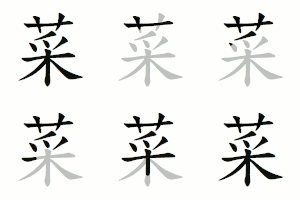
| Stroke order | |||
|---|---|---|---|
 | |||
Han character
菜 (Kangxi radical 140, 艸+8, 12 strokes in traditional Chinese and Korean, 11 strokes in simplified Chinese and Japanese, cangjie input 廿月木 (TBD), four-corner 44904, composition ⿱艹采)
Derived characters
- 𢵛, 𰲎, 𮓇
References
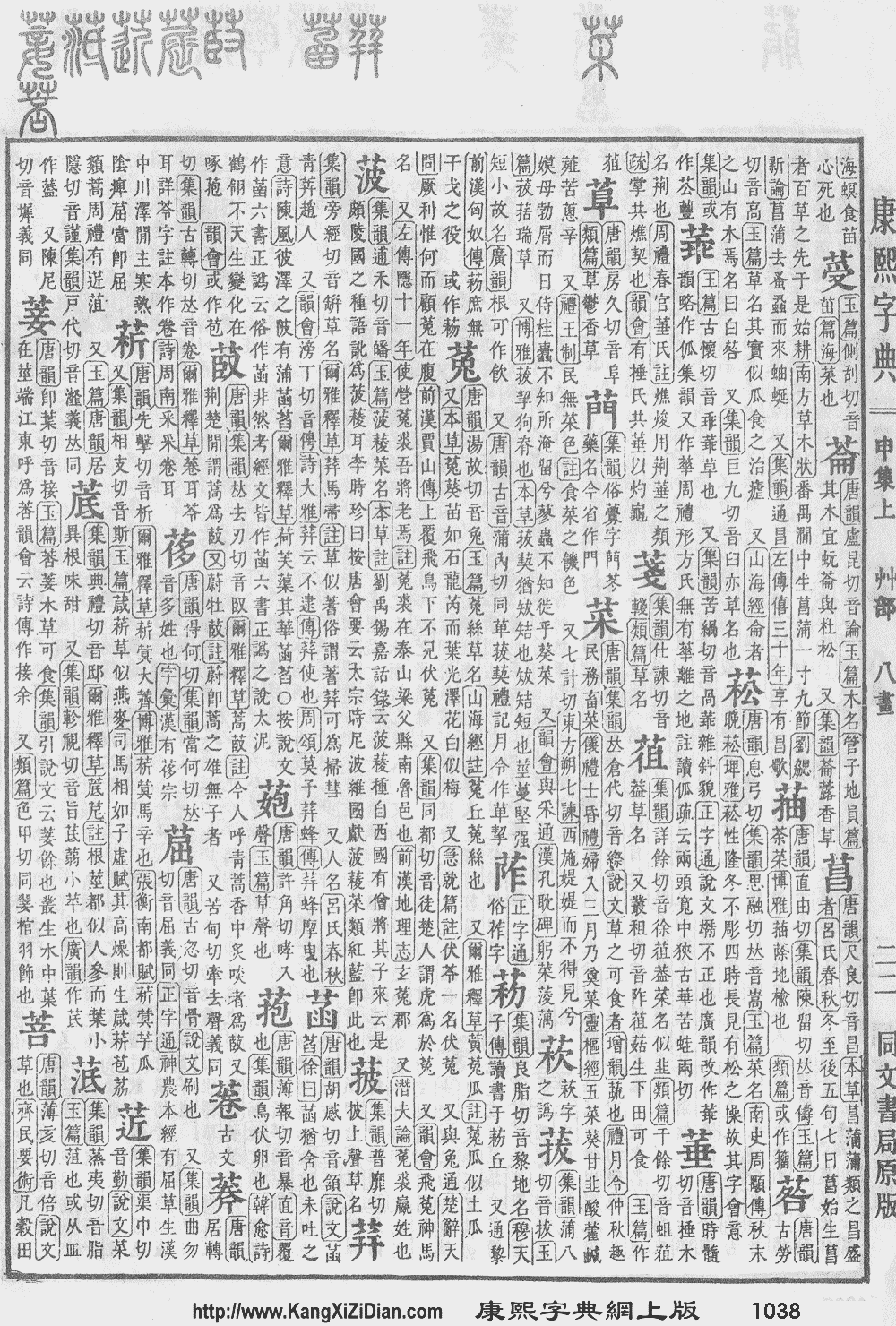
- Kangxi Dictionary: page 1038, character 13
- Dai Kanwa Jiten: character 31184
- Dae Jaweon: page 1496, character 16
- Hanyu Da Zidian (first edition): volume 5, page 3236, character 10
- Unihan data for U+83DC
- Unihan data for U+2F9A3
Chinese
| trad. | 菜 | |
|---|---|---|
| simp. # | 菜 | |
| 2nd round simp. | 𦬁 | |
Glyph origin
Characters in the same phonetic series (采) (Zhengzhang, 2003)
Phono-semantic compound (形聲/形声, OC *sʰɯːs) : semantic 艹 (“grass; plant”) + phonetic 采 (OC *sʰɯːʔ).
Etymology
From 采 (OC *sʰɯːʔ, “to gather; to pluck”) + nominalizing *-s, literally “what is gathered or plucked” (Sagart, 1999; Schuessler, 2007). See 采 for more.
Pronunciation
Definitions
菜
- vegetable; greens (Classifier: 棵 m; 根 m; 條/条 c; 樖 c)
- dish; course (Classifier: 盤/盘 m; 道 m; 味 m)
- cuisine; (type of) food
- grocery
- (colloquial) (one's) type; cup of tea(Classifier: 條/条 c)
- (colloquial) bad; inferior; disappointing; below average
- (Hong Kong Cantonese, slang, derogatory) girlfriend (Classifier: 條/条 c; 樖 c)
- a surname: Cai; Tsai
Synonyms
- (rape): 油菜 (yóucài)
- (dish):
Dialectal synonyms of 菜 (“dish; vegetable or meat dish”) [map]
- (cuisine): 餐 (cān)
- (girlfriend):
Dialectal synonyms of 女朋友 (“girlfriend”) [map]
| Variety | Location | Words |
|---|---|---|
| Formal (Written Standard Chinese) | 女朋友, 女友 | |
| Mandarin | Beijing | 女朋友 |
| Taiwan | 女朋友, 女友, 馬子 humorous or derogatory | |
| Chengdu | 女娃子, 女娃娃, 女娃兒, 盤子 | |
| Guilin | 𧊅 | |
| Xuzhou | 女朋友 | |
| Nanjing | 女朋友, 攀西 | |
| Singapore | 女朋友 | |
| Cantonese | Guangzhou | 女朋友, 女 |
| Hong Kong | 女朋友, 女友, 女, 女女, 菜 derogatory | |
| Taishan | 女朋友, 女 | |
| Dongguan | 皮油 | |
| Singapore (Guangfu) | 女朋友 | |
| Hakka | Meixian | 女朋友 |
| Miaoli (N. Sixian) | 細妹朋友, 女朋友 | |
| Hsinchu County (Zhudong; Hailu) | 細妹朋友, 女朋友 | |
| Taichung (Dongshi; Dabu) | 細妹朋友, 女朋友 | |
| Hsinchu County (Qionglin; Raoping) | 細妹朋友, 女朋友 | |
| Yunlin (Lunbei; Zhao'an) | 妹子朋友, 女朋友 | |
| Eastern Min | Fuzhou | 女朋友 |
| Southern Min | Xiamen | 女朋友 |
| Shishi | 女朋友 | |
| Taipei | 姼仔 GT | |
| Penang (Hokkien) | 查某朋友 | |
| Singapore (Hokkien) | 查某朋友 | |
| Manila (Hokkien) | 女朋友, 查某朋友 | |
| Chaozhou | 女朋友 | |
| Haifeng | 女朋友 | |
| Singapore (Teochew) | 查某朋友 | |
| Leizhou | 女朋友 | |
| Singapore (Hainanese) | 女朋友 | |
| Wu | Shanghai | 女朋友 |
| Suzhou | 女朋友 | |
| Hangzhou | 女朋友 | |
| Ningbo | 女朋友 | |
| Zhoushan | 女朋友 | |
| Xiang | Changsha | 妹子 |
| Note | GT - General Taiwanese (no specific region identified) | |
Compounds
- A菜 (ēi-cài, “Indian Lettuce”)
- 上菜 (shàngcài)
- 下酒菜 (xiàjiǔcài)
- 下飯菜兒/下饭菜儿
- 中國菜/中国菜 (Zhōngguócài)
- 主菜 (zhǔcài)
- 乾菜/干菜 (gāncài)
- 佈菜/布菜
- 便菜
- 做菜 (zuòcài)
- 八寶菜/八宝菜 (bābǎocài)
- 冬寒菜 (“Chinese Mallow”)
- 冬菜 (dōngcài, “preserved dried cabbage or mustard greens”) ( winter vegetable)
- 冷凍蔬菜/冷冻蔬菜
- 剩菜 (shèngcài)
- 加菜 (jiācài)
- 加菜金 (jiācàijīn)
- 包心菜 (bāoxīncài)
- 卷心菜 (juǎnxīncài)
- 叫菜
- 名菜 (míngcài)
- 合菜戴帽
- 和菜
- 咬菜根
- 嚼菜根
- 堂菜
- 大菜 (dàcài)
- 大菜間/大菜间
- 大鍋菜/大锅菜
- 大頭菜/大头菜 (dàtóucài)
- 好菜
- 客菜
- 家常菜 (jiāchángcài)
- 寶塔菜/宝塔菜
- 小白菜 (xiǎobáicài)
- 小菜 (xiǎocài)
- 小菜碟兒/小菜碟儿
- 小菜飯/小菜饭
- 小鍋菜/小锅菜
- 布菜 (bùcài)
- 年菜 (niáncài)
- 招牌菜 (zhāopáicài)
- 拿手菜 (náshǒucài)
- 捕蟲堇菜/捕虫堇菜
- 擇菜/择菜 (zháicài)
- 攤黃菜/摊黄菜
- 放小菜兒/放小菜儿
- 春菜絲兒/春菜丝儿
- 有機蔬菜/有机蔬菜
- 果菜 (guǒcài)
- 果菜市場/果菜市场
- 果菜類/果菜类
- 根菜類/根菜类 (gēncàilèi)
- 椰菜 (yēcài)
- 榨菜 (zhàcài)
- 水耕蔬菜
- 江淮菜 (Jiānghuái cài)
- 沉菜
- 法國菜/法国菜
- 波稜菜/波棱菜
- 油菜 (yóucài)
- 泡菜 (pàocài)
- 洋白菜 (yángbáicài)
- 洋菜 (yángcài)
- 海白菜
- 海菜 (hǎicài, “(edible) seaweed”)
- 滷菜/卤菜 (lǔcài)
- 漏虀搭菜
- 炒菜 (chǎocài)
- 煮菜
- 熬菜
- 熟菜
- 燕菜 (yàncài)
- 珊瑚菜
- 甘紫菜
- 甜菜 (tiáncài)
- 生菜 (shēngcài)
- 番菜
- 番菜館/番菜馆
- 白屈菜 (báiqūcài)
- 白花菜
- 白菜 (báicài)
- 盆菜 (péncài)
- 盒子菜
- 盤菜/盘菜 (páncài)
- 眼子菜
- 石花菜 (shíhuācài)
- 砍瓜切菜
- 空心菜 (kōngxīncài)
- 素菜 (sùcài)
- 組合菜/组合菜
- 紫菜 (zǐcài)
- 羅漢菜/罗汉菜
- 羊栖菜 (yángqīcài)
- 羊踏菜園/羊踏菜园
- 義大利菜/义大利菜
- 翠玉白菜
- 肉邊菜/肉边菜
- 花椰菜 (huāyēcài)
- 芹菜 (qíncài)
- 芽菜 (yácài, “mungbean sprout, soybean sprout”)
- 芥菜
- 芥菜頭/芥菜头
- 花菜類/花菜类
- 芥藍菜/芥蓝菜
- 茅膏菜
- 苦菜 (kǔcài)
- 草腹菜腸/草腹菜肠
- 茯苓菜
- 荇菜 (xìngcài)
- 荳芽菜/豆芽菜
- 莕菜
- 莧菜/苋菜 (xiàncài)
- 菜刀 (càidāo)
- 菜包子 (càibāozi)
- 菜單/菜单 (càidān)
- 菜圃 (càipǔ)
- 菜園/菜园 (càiyuán)
- 菜場/菜场 (càichǎng)
- 菜姑 (chhài-ko͘) (Min Nan)
- 菜子 (càizǐ)
- 菜市 (càishì)
- 菜市口 (Càishìkǒu)
- 菜市場/菜市场
- 菜式 (càishì)
- 菜心 (càixīn)
- 菜攤/菜摊 (càitān)
- 菜案 (cài'àn)
- 菜根
- 菜根譚/菜根谭
- 菜殼子/菜壳子
- 菜油 (càiyóu)
- 菜油燈/菜油灯
- 菜牛 (càiniú)
- 菜瓜 (càiguā)
- 菜瓜布
- 菜畦 (càiqí)
- 菜盒子
- 菜秧 (càiyāng)
- 菠稜菜/菠棱菜 (bōléngcài)
- 菜籃/菜篮
- 菜籽 (càizǐ)
- 菜色 (càisè)
- 菜花 (càihuā)
- 菜茹
- 菘菜
- 菫菜
- 菠菜 (bōcài)
- 菰菜
- 菜蔬 (càishū)
- 菜薹 (càitái)
- 菜虎子
- 菜蚜
- 菜蟲/菜虫 (càichóng)
- 菜譜/菜谱 (càipǔ)
- 菜豆 (càidòu)
- 菜貨/菜货
- 菜農/菜农 (càinóng)
- 菜青 (càiqīng)
- 菜頭/菜头 (càitóu)
- 菜館/菜馆 (càiguǎn)
- 菜餚/菜肴 (càiyáo)
- 菜饌/菜馔
- 菜馬/菜马
- 菜鳥/菜鸟 (càiniǎo)
- 菜鴨/菜鸭
- 菜鴿子/菜鸽子
- 葉甜菜/叶甜菜 (yètiáncài)
- 葷菜/荤菜 (hūncài)
- 葉菜類/叶菜类
- 蓋菜/盖菜 (gàicài)
- 蒓菜/莼菜 (chúncài)
- 蔊菜
- 蔬菜 (shūcài)
- 蓼菜成行
- 蕹菜 (wèngcài)
- 蕺菜 (jícài)
- 薺菜/荠菜 (jìcài)
- 藤菜 (téngcài)
- 行菜
- 裙帶菜/裙带菜 (qúndàicài)
- 豆芽菜 (dòuyácài)
- 貢菜/贡菜
- 買菜/买菜 (mǎicài)
- 買菜求益/买菜求益
- 車輪菜/车轮菜
- 辣菜 (làcài)
- 辣菜根子
- 酒菜 (jiǔcài)
- 配菜 (pèicài)
- 酸菜 (suāncài)
- 醃菜/腌菜 (yāncài)
- 醬菜/酱菜 (jiàngcài)
- 釋菜/释菜
- 野莧菜/野苋菜
- 野菜 (yěcài)
- 金花菜
- 金針菜/金针菜 (jīnzhēncài)
- 銀條菜/银条菜
- 長年菜/长年菜
- 雜合菜/杂合菜
- 霉乾菜 (méigāncài)
- 青江白菜
- 青菜 (qīngcài)
- 面有菜色 (miànyǒucàisè)
- 韭菜 (jiǔcài)
- 韭菜盒子 (jiǔcài hézi)
- 韭菜花 (jiǔcàihuā)
- 頭髮菜/头发菜
- 飛龍菜/飞龙菜
- 飯菜/饭菜 (fàncài)
- 餔菜/𫗦菜
- 香菜 (xiāngcài)
- 高麗菜/高丽菜 (gāolícài)
- 髮菜/发菜 (fàcài)
- 鮭菜/鲑菜
- 鵝仔菜/鹅仔菜 (ngò-é-chhoi) (Min Nan)
- 鵠形菜色/鹄形菜色
- 鷓鴣菜/鹧鸪菜
- 鹹菜/咸菜 (xiáncài)
- 鹿角菜
- 麻菜珩 (Mácàihéng)
- 黃花菜/黄花菜 (huánghuācài)
- 黃花蜜菜/黄花蜜菜
- 點菜/点菜 (diǎncài)
- 龍鬚菜/龙须菜 (lóngxūcài)
References
- “菜”, in 漢語多功能字庫 (Multi-function Chinese Character Database), 香港中文大學 (the Chinese University of Hong Kong), 2014–
- “Entry #8956”, in 臺灣閩南語常用詞辭典 [Dictionary of Frequently-Used Taiwan Minnan] (overall work in Mandarin and Hokkien), Ministry of Education, R.O.C., 2023.
Japanese
| Shinjitai | 菜 |  |
| Kyūjitai [1][2][3] |
菜󠄁 菜+ 󠄁?(Adobe-Japan1) |
 |
| 菜󠄄 菜+ 󠄄?(Hanyo-Denshi) (Moji_Joho) | ||
| 菜󠄃 菜+ 󠄃?(Hanyo-Denshi) (Moji_Joho) |
 | |
| The displayed kanji may be different from the image due to your environment. See here for details. | ||
Readings
Compounds
Compounds
- 菜園 (saien)
- 菜花 (saika)
- 菜果 (saika)
- 菜館 (saikan)
- 菜畦 (saikei)
- 菜甲 (saikō)
- 菜羹 (saikō)
- 菜骨 (saikotsu)
- 菜根 (saikon)
- 菜市 (saishi)
- 菜肆 (saishi)
- 菜粥 (saishuku)
- 菜菹 (saisho)
- 菜茹 (saijo)
- 菜色 (saishoku)
- 菜食 (saishoku)
- 菜人 (saijin)
- 菜銭 (saisen)
- 菜蔬 (saiso)
- 菜菹 (saiso)
- 菜代 (saidai)
- 菜単 (saitan)
- 菜地 (saichi)
- 菜腸 (saichō)
- 菜肚 (saito)
- 菜刀 (saitō)
- 菜把 (saiha)
- 菜伯 (saihaku)
- 菜箸 (saibashi)
- 菜飯 (saihan)
- 菜夫 (saifu)
- 菜餠 (saihei)
- 菜圃 (saiho)
- 菜畝 (saiho)
- 菜油 (saiyu)
- 菜料 (sairyō)
- 菜籠 (sairō)
- 荇菜, 莕菜 (asaza)
- 園菜 (ensai)
- 塩菜 (ensai)
- 果菜 (kasai)
- 嘉菜 (kasai)
- 解菜 (kaisai)
- 鮭菜 (kaisai)
- 寒菜 (kansai)
- 葵菜 (kisai)
- 魚菜 (gyosai)
- 芹菜 (kinsai)
- 菫菜 (kinsai)
- 苦菜 (kusai)
- 捃菜 (kunsai)
- 葷菜 (kunsai)
- 菰菜 (kosai)
- 咬菜 (kōsai)
- 香菜 (kōsai)
- 根菜 (konsai)
- 祭菜 (saisai)
- 雑菜
- 山菜 (sansai)
- 種菜 (shusai)
- 拾菜 (shūsai)
- 蓴菜 (junsai)
- 茹菜 (josai)
- 食菜 (shokusai)
- 水菜 (suisai)
- 釈菜 (sekisai)
- 前菜 (zensai)
- 蔬菜 (sosai)
- 総菜, 惣菜 (sōzai)
- 束菜 (sokusai)
- 択菜 (takusai)
- 畜菜 (chikusai)
- 摘菜 (tekisai)
- 甜菜 (tensai, “sugar beet”)
- 奠菜 (tensai)
- 冬菜 (tōsai)
- 白菜 (hakusai, “bok choy”)
- 飯菜 (hansai)
- 蘋菜
- 鼈菜 (bessai)
- 野菜 (yasai)
- 葉菜 (yōsai)
- 冷菜 (reisai)
- 萵菜 (wasai)
Derived terms
Derived terms
- 菜刀 (nagatana)
- 菜粥 (nagayu)
- 菜殻火 (nagarabi)
- 菜葱 (nagi)
- 菜種 (natane)
- 菜漬け (nazuke)
- 菜っ葉 (nappa)
- 菜の花 (nanohana)
- 菜畑 (nabatake)
- 菜花 (nabana)
- 菜虫 (namushi)
- 菜飯 (nameshi)
- 菜類 (narui)
- 野沢菜 (nozawana)
- 青菜 (aona)
- 蕪菜 (kabuna), 蕪菜 (kaburana): turnip
- 茎菜 (kukina)
- 小松菜 (komatsuna): komatsuna
- 肴 (sakana)
- 塩菜 (shiona)
- 菘 (suzuna), 鈴菜 (suzuna): turnip
- 摘菜 (tsumina)
- 苦菜 (nigana)
- 冬菜 (fuyuna)
- 水菜 (mizuna)
References
- 白川静 (Shirakawa Shizuka) (2014) “菜”, in 字通 (Jitsū) (in Japanese), popular edition, Tōkyō: Heibonsha, →ISBN
- Shōundō Henshūjo, editor (1927), 新漢和辞典 [The New Kanji-Japanese Dictionary] (in Japanese), Ōsaka: Shōundō, , page 1033 (paper), page 529 (digital)
- Haga, Gōtarō (1914) 漢和大辞書 [The Great Kanji-Japanese Dictionary] (in Japanese), Fourth edition, Tōkyō: Kōbunsha, , page 1826 (paper), page 965 (digital)
- Matsumura, Akira, editor (2006), 大辞林 [Daijirin] (in Japanese), Third edition, Tōkyō: Sanseidō, →ISBN
- NHK Broadcasting Culture Research Institute, editor (1998), NHK日本語発音アクセント辞典 [NHK Japanese Pronunciation Accent Dictionary] (in Japanese), Tōkyō: NHK Publishing, →ISBN
- Yamada, Tadao et al., editors (2011), 新明解国語辞典 [Shin Meikai Kokugo Jiten] (in Japanese), Seventh edition, Tōkyō: Sanseidō, →ISBN
Korean
Compounds
Compounds
- 야채 (野菜, yachae, “vegetable”)
- 채소 (菜蔬, chaeso, “vegetable”)
- 채소류 (菜蔬類, chaesoryu)
- 채소밭 (菜蔬밭, chaesobat, “vegetable garden”)
- 향채 (香菜, hyangchae, “coriander”)
- 채식주의 (菜食主義, chaesikjuui, “vegetarianism”)
- 채식주의자 (菜食主義者, chaesikjuuija, “vegetarian”)
- 건채 (乾菜, geonchae, “ dried vegetable(s)”)
- 공심채 (空心菜, gongsimchae, “ water spinach”)
- 잡채 (雜菜, japchae, “mixed vegetables”)
Vietnamese
This article is issued from Wiktionary. The text is licensed under Creative Commons - Attribution - Sharealike. Additional terms may apply for the media files.