入
| ||||||||
| ||||||||
Translingual
| Traditional | 入 |
|---|---|
| Simplified | 入 |
| Japanese | 入 |
| Korean | 入 |
| Stroke order | |||
|---|---|---|---|
 | |||
Han character
入 (Kangxi radical 11, 入+0, 2 strokes, cangjie input 人竹 (OH), four-corner 80000, composition ⿹乀丿)
- Kangxi radical #11, ⼊.
References
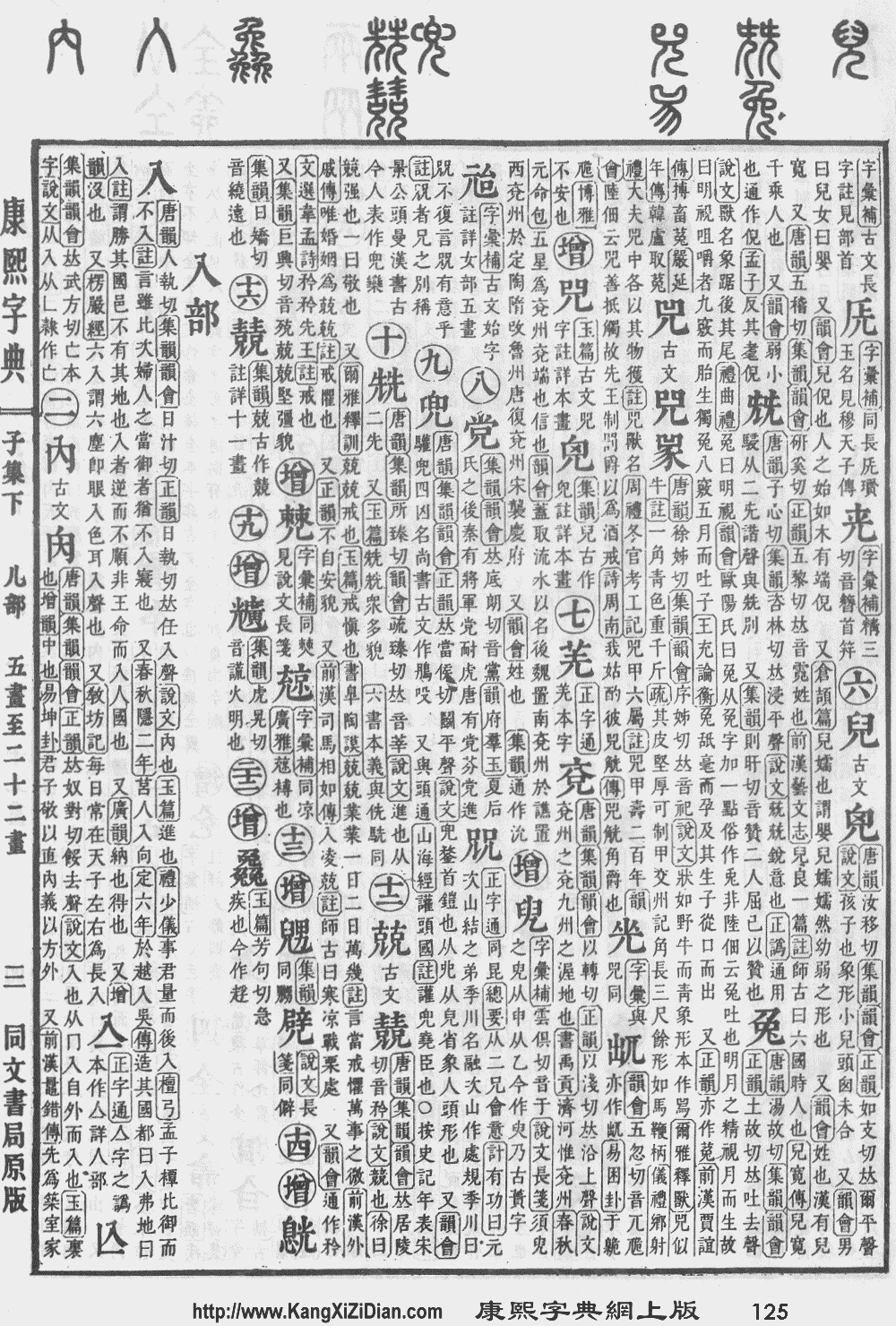
- Kangxi Dictionary: page 125, character 32
- Dai Kanwa Jiten: character 1415
- Dae Jaweon: page 266, character 18
- Hanyu Da Zidian (first edition): volume 1, page 102, character 1
- Unihan data for U+5165

Chinese
| trad. | 入 | |
|---|---|---|
| simp. # | 入 | |
Glyph origin
| Historical forms of the character 入 | ||||||||||||||||||||||||||||||||||||||||||||||||||||||||||||||||||||||||||||||||||||||||||||||||||||||||||||||||||||||||||||||||
|---|---|---|---|---|---|---|---|---|---|---|---|---|---|---|---|---|---|---|---|---|---|---|---|---|---|---|---|---|---|---|---|---|---|---|---|---|---|---|---|---|---|---|---|---|---|---|---|---|---|---|---|---|---|---|---|---|---|---|---|---|---|---|---|---|---|---|---|---|---|---|---|---|---|---|---|---|---|---|---|---|---|---|---|---|---|---|---|---|---|---|---|---|---|---|---|---|---|---|---|---|---|---|---|---|---|---|---|---|---|---|---|---|---|---|---|---|---|---|---|---|---|---|---|---|---|---|---|---|
| Shang | Western Zhou | Warring States | Shuowen Jiezi (compiled in Han) | Liushutong (compiled in Ming) | ||||||||||||||||||||||||||||||||||||||||||||||||||||||||||||||||||||||||||||||||||||||||||||||||||||||||||||||||||||||||||||
| Oracle bone script | Bronze inscriptions | Chu slip and silk script | Small seal script | Transcribed ancient scripts | ||||||||||||||||||||||||||||||||||||||||||||||||||||||||||||||||||||||||||||||||||||||||||||||||||||||||||||||||||||||||||||
 |
 |
 |
 |
 | ||||||||||||||||||||||||||||||||||||||||||||||||||||||||||||||||||||||||||||||||||||||||||||||||||||||||||||||||||||||||||||
||||
|
References: Mostly from Richard Sears' Chinese Etymology site (authorisation),
| ||||||||||||||||||||||||||||||||||||||||||||||||||||||||||||||||||||||||||||||||||||||||||||||||||||||||||||||||||||||||||||||||


Ideogram (指事) - an arrowhead indicating "to enter".
Compare 人 (rén).
Etymology
From Proto-Sino-Tibetan *nup ~ nip. Cognate with Tibetan ནུབ (nub, “to fall (gradually), sink, to set; to decay, to decline”) and Burmese နိပ် (nip, “to decline (e.g. price); to be suppressed, to settle, to be quelled”).
Chinese characters belonging to the same word family include:
- 納 (OC *nuːb, “to make enter”)
- 內 (OC *nuːbs, “inside”)
- 軜 (OC *nuːb, “reins on the inside of the horse”)
- 妠 (OC *nuːms, *nuːb, *rnoːd, “to marry (a girl)”)
- and potentially Cantonese 擸 (laap3, “to bring together, to collect”)
The regular Mandarin pronunciation as predicted from Middle Chinese is rì. The irregular sound change is for taboo reasons - to avoid homophony with its derived vulgar meaning "to enter > to have sexual intercourse", nowadays represented by 日 (rì).
Pronunciation
Definitions
入
- to enter; to go into
- to join; to become a member of
- (literary) to accept; to admit
- (literary) to pay
- income
- to confirm; to agree
- 入情入理 ― rùqíngrùlǐ ― to be fair and reasonable
- to arrive (at); to attain
- (literary) to enter the imperial government and become an official
- (telephony) to get through
- Synonym: 通
- (Cantonese) in; inside
- (Cantonese) to stock up on
- (Cantonese) to submit
- (Cantonese) to input; to enter; to type into a computer
- (Cantonese) to put something into
- (literary, dialectal Mandarin, dialectal Wu, vulgar) to fuck; to have sexual intercourse
- Synonym: 日
- (Chinese phonetics) Short for 入聲/入声 (rùshēng, “the checked tone”).
- (retail, on packaging, usually after a number and optional classifier) pieces inside packaging; n-pack
Synonyms
| Variety | Location | Words |
|---|---|---|
| Classical Chinese | 入 | |
| Formal (Written Standard Chinese) | 進 | |
| Mandarin | Beijing | 進 |
| Taiwan | 進 | |
| Jinan | 進 | |
| Luoyang | 進 | |
| Wanrong | 進 | |
| Xi'an | 進 | |
| Yinchuan | 進 | |
| Ürümqi | 進 | |
| Chengdu | 進 | |
| Guiyang | 進 | |
| Guilin | 進 | |
| Yangzhou | 進 | |
| Malaysia | 進 | |
| Singapore | 進 | |
| Cantonese | Guangzhou | 入 |
| Hong Kong | 入 | |
| Taishan | 入 | |
| Dongguan | 入 | |
| Kuala Lumpur (Guangfu) | 入 | |
| Singapore (Guangfu) | 入 | |
| Gan | Lichuan | 進 |
| Hakka | Meixian | 入 |
| Miaoli (N. Sixian) | 落, 入 | |
| Pingtung (Neipu; S. Sixian) | 入, 落 | |
| Hsinchu County (Zhudong; Hailu) | 落, 入 | |
| Taichung (Dongshi; Dabu) | 入, 落 | |
| Hsinchu County (Qionglin; Raoping) | 落, 入 | |
| Yunlin (Lunbei; Zhao'an) | 入 | |
| Huizhou | Jixi | 進 |
| Jin | Xinzhou | 進 |
| Northern Min | Jian'ou | 裡 |
| Eastern Min | Fuzhou | 裡 |
| Matsu | 裡 | |
| Singapore (Fuqing) | 裡 | |
| Southern Min | Xiamen | 入 |
| Quanzhou | 入 | |
| Zhangzhou | 入 | |
| Zhao'an | 入 | |
| Tainan | 入 | |
| Penang (Hokkien) | 入 | |
| Singapore (Hokkien) | 入 | |
| Manila (Hokkien) | 入 | |
| Shantou | 入 | |
| Jieyang | 入 | |
| Singapore (Teochew) | 入 | |
| Leizhou | 入 | |
| Wenchang | 入 | |
| Haikou | 入 | |
| Singapore (Hainanese) | 入 | |
| Wu | Shanghai | 進 |
| Danyang | 進 | |
| Jinhua | 進 | |
See also
| The tones (of Chinese) in Mandarin · 聲調/声调 (shēngdiào) (layout · text) | ||||||||||
|---|---|---|---|---|---|---|---|---|---|---|
| 平仄 (píngzè) | 平 (píng) 平聲/平声 (píngshēng) |
仄 (zè) 仄聲/仄声 (zèshēng) | ||||||||
| 平上去入 (píngshǎngqùrù) 四聲/四声 (sìshēng) |
平 (píng) 平聲/平声 (píngshēng) |
上 (shǎng) 上聲/上声 (shǎngshēng) |
去 (qù) 去聲/去声 (qùshēng) |
入 (rù) 入聲/入声 (rùshēng) | ||||||
| 標調方法/标调方法 (biāodiào fāngfǎ) 標調法/标调法 |
四角標調法/四角标调法 | ꜀◌ | ꜂◌ | ◌꜄ | ◌꜆ | |||||
| [Term?] | ◌〪 | ◌〫 | ◌〬 | ◌〭 | ||||||
| 傍點/傍点 | ∅ | ◌〮 | ◌〯 | ∅ | ||||||
| 四聲八調/四声八调 | 陰平/阴平 (yīnpíng) | 陽平/阳平 (yángpíng) | 陰上/阴上 (yīnshǎng) | 陽上/阳上 (yángshǎng) | 陰去/阴去 (yīnqù) | 陽去/阳去 (yángqù) | 陰入/阴入 (yīnrù) | 陽入/阳入 (yángrù) | ||
| 陰/阴 (yīn) | 陽/阳 (yáng) | |||||||||
| 標調方法/标调方法 (biāodiào fāngfǎ) 標調法/标调法 |
四角標調法/四角标调法 | ꜀◌ | ꜁◌ | ꜂◌ | ꜃◌ | ◌꜄ | ◌꜅ | ◌꜆ | ◌꜇ | |
| The tones (of Standard Mandarin) in Mandarin · 聲調/声调 (shēngdiào) (layout · text) | ||||||||||
|---|---|---|---|---|---|---|---|---|---|---|
| 四聲/四声 (sìshēng) | 陰平/阴平 (yīnpíng) 一聲/一声 |
陽平/阳平 (yángpíng) 二聲/二声 (èrshēng) |
上聲/上声 (shǎngshēng) 三聲/三声 (sānshēng) |
去聲/去声 (qùshēng) 四聲/四声 (sìshēng) |
輕聲/轻声 (qīngshēng) | |||||
Compounds
- 不入虎穴,焉得虎子 (bù rù hǔxué, yān dé hǔzǐ)
- 並入/并入
- 中入
- 乘虛而入/乘虚而入 (chéngxū'érrù)
- 介入 (jièrù)
- 代入 (dàirù)
- 低入
- 低收入
- 併入/并入 (bìngrù)
- 侵入 (qīnrù)
- 傳入/传入 (chuánrù)
- 入不敷出 (rùbùfūchū)
- 入世 (rùshì)
- 入伙 (rùhuǒ)
- 入伍 (rùwǔ)
- 入伍生
- 入住 (rùzhù)
- 入來/入来 (rùlái)
- 入侵 (rùqīn)
- 入侵者 (rùqīnzhě)
- 入冬 (rùdōng)
- 入口 (rùkǒu)
- 入口頁/入口页
- 入味 (rùwèi)
- 入土 (rùtǔ)
- 入土為安/入土为安 (rùtǔwéi'ān)
- 入場/入场 (rùchǎng)
- 入場券/入场券
- 入場式/入场式
- 入場費/入场费
- 入境 (rùjìng)
- 入境問俗/入境问俗
- 入境簽證/入境签证
- 入境隨俗/入境随俗 (rùjìngsuísú)
- 入夜 (rùyè)
- 入學/入学 (rùxué)
- 入學率/入学率 (rùxuélǜ)
- 入座 (rùzuò)
- 入微 (rùwēi)
- 入心 (rùxīn)
- 入情入理 (rùqíngrùlǐ)
- 入手 (rùshǒu)
- 入時/入时 (rùshí)
- 入會/入会 (rùhuì)
- 入木三分 (rùmùsānfēn)
- 入格 (rùgé)
- 入樽 (rùzūn)
- 入殮/入殓 (rùliàn)
- 入涅
- 入海口 (rùhǎikǒu)
- 入獄/入狱 (rùyù)
- 入盟
- 入眠 (rùmián)
- 入睡 (rùshuì)
- 入神 (rùshén)
- 入秋
- 入籍 (rùjí)
- 入聖/入圣 (rùshèng)
- 入聲/入声 (rùshēng)
- 入聯/入联
- 入肉
- 入股 (rùgǔ)
- 入藥/入药 (rùyào)
- 入贅/入赘 (rùzhuì)
- 入迷 (rùmí)
- 入道 (rùdào)
- 入選/入选 (rùxuǎn)
- 入鄉隨俗/入乡随俗 (rùxiāngsuísú)
- 入門/入门 (rùmén)
- 入門課程/入门课程
- 入關/入关 (rùguān)
- 入院 (rùyuàn)
- 入面
- 入風口/入风口
- 入黨/入党 (rùdǎng)
- 再入 (zàirù)
- 准入 (zhǔnrù)
- 凹入
- 出入 (chūrù)
- 切入 (qiērù)
- 列入 (lièrù)
- 加入 (jiārù)
- 匯入/汇入 (huìrù)
- 參入/参入 (cānrù)
- 吸入 (xīrù)
- 單刀直入/单刀直入 (dāndāozhírù)
- 四捨五入/四舍五入 (sìshěwǔrù)
- 固定收入
- 國民收入/国民收入 (guómín shōurù)
- 地租收入
- 墜入/坠入
- 存入 (cúnrù)
- 封入 (fēngrù)
- 導入/导入 (dǎorù)
- 嵌入 (qiànrù)
- 市場準入/市场准入
- 平均收入
- 年收入
- 引入 (yǐnrù)
- 悟入 (wùrù)
- 慎入
- 投入 (tóurù)
- 押入
- 拉入
- 排入
- 捲入/卷入 (juǎnrù)
- 插入 (chārù)
- 擠入/挤入
- 攝入/摄入 (shèrù)
- 收入 (shōurù)
- 攻入
- 敲入
- 月收入
- 格格不入 (gégébùrù)
- 步入 (bùrù)
- 歲入/岁入 (suìrù)
- 歸入/归入 (guīrù)
- 毛收入
- 沁入
- 注入 (zhùrù)
- 流入 (liúrù)
- 浸入 (jìnrù)
- 混入 (hùnrù)
- 深入 (shēnrù)
- 淨收入/净收入
- 滲入/渗入 (shènrù)
- 潛入/潜入 (qiánrù)
- 營業收入/营业收入
- 病從口入/病从口入
- 登入 (dēngrù)
- 破門而入/破门而入 (pòmén'érrù)
- 禁止駛入/禁止驶入
- 簽入/签入 (qiānrù)
- 納入/纳入 (nàrù)
- 總收入/总收入
- 考入 (kǎorù)
- 落入 (luòrù)
- 融入 (róngrù)
- 衝入/冲入
- 裝入/装入
- 走入 (zǒurù)
- 踏入 (tàrù)
- 載入/载入
- 輸入/输入 (shūrù)
- 轉入/转入 (zhuǎnrù)
- 進入/进入 (jìnrù)
- 遷入/迁入 (qiānrù)
- 選入/选入
- 錄入/录入 (lùrù)
- 鍵入/键入 (jiànrù)
- 闌入/阑入 (lánrù)
- 闖入/闯入 (chuǎngrù)
- 陰入/阴入 (yīnrù)
- 陷入 (xiànrù)
- 陽入/阳入 (yángrù)
- 靜脈注入/静脉注入
- 駛入/驶入
References
- “入”, in 漢語多功能字庫 (Multi-function Chinese Character Database), 香港中文大學 (the Chinese University of Hong Kong), 2014–
Japanese
Readings
- Go-on: にゅう (nyū, Jōyō)←にふ (nifu, historical)
- Kan-on: じゅう (jū)←じふ (zifu, historical)
- Kan’yō-on: じゅ (ju); にっ (ni')←にふ (nifu, historical)
- Kun: いる (iru, 入る, Jōyō); いり (iri, 入り); いれる (ireru, 入れる, Jōyō); はいる (hairu, 入る, Jōyō)←はひる (fafiru, 入る, historical); しお (shio)←しほ (sifo, historical)
- Nanori: いり (iri); いる (iru); しほ (shiho); なり (nari)
Compounds
- 圧入 (atsunyū)
- 移入 (inyū)
- 介入 (kainyū)
- 加入 (kanyū)
- 陥入 (kannyū)
- 観入 (kannyū)
- 嵌入 (kannyū)
- 貫入 (kannyū)
- 記入 (kinyū)
- 吸入 (kyūnyū)
- 工具入 (kōguire)
- 購入 (kōnyū)
- 混入 (konnyū)
- 悟入 (gonyū)
- 塵入 (gomīre)
- 歳入 (sainyū)
- 算入 (sannyū)
- 参入 (sannyū)
- 四捨五入 (shisha gonyū)
- 収入 (shūnyū)
- 出入 (shutsunyū)
- 新入 (shinnyū)
- 侵入 (shinnyū)
- 進入 (shinnyū)
- 浸入 (shinnyū)
- 切入 (setsunyū)
- 先入 (sennyū)
- 潜入 (sennyū)
- 挿入 (sōnyū)
- 単刀直入 (tantōchokunyū)
- 代入 (dainyū)
- 注入 (chūnyū)
- 闖入 (chinnyū)
- 転入 (tennyū)
- 投入 (tōnyū)
- 突入 (totsunyū)
- 導入 (dōnyū)
- 納入 (nōnyū)
- 搬入 (hannyū)
- 場所入 (bashoiri)
- 一入 (hitoshio)
- 平上去入 (hyōjōkyonyū)
- 封入 (fūnyū)
- 編入 (hennyū)
- 没入 (botsunyū)
- 申入 (mōshīre)
- 輸入 (yunyū)
- 濫入 (rannyū)
- 乱入 (rannyū)
- 流入 (ryūnyū)
- 弯入 (wannyū)
- 彎入 (wannyū)
- 湾入 (wannyū)
- 押入 (oshīre)
- 婿入 (mukoiri)
- 入会 (nyūkai)
- 立入禁止 (tachiirikinshi)
- 入口 (iriguchi)
- 入江 (irie)
- 嫁入道中 (yomeiridōchū)
- 入日 (irihi)
- 入母屋 (irimoya)
- 入婿 (irimuko)
- 入り目 (irime)
- 入墨 (irezumi)
- 入院 (nyūin)
- 入営 (nyūei)
- 入園 (nyūen)
- 入苑 (nyūen)
- 入荷 (nyūka)
- 入海 (iriumi)
- 入閣 (nyūkaku)
- 入学 (nyūgaku)
- 入掛 (irekake)
- 入棺 (nyūkan)
- 入監 (nyūkan)
- 入居 (nyūkyo)
- 入渠 (nyūkyo)
- 入漁 (nyūgyo)
- 入京 (nyūkyō)
- 入境 (nyūkyō)
- 入金 (nyūkin)
- 入庫 (nyūko)
- 入御 (nyūgo)
- 入交 (irimajiri)
- 入坑 (nyūkō)
- 入校 (nyūkō)
- 入港 (nyūkō)
- 入稿 (nyūkō)
- 入貢 (nyūkō)
- 入国 (nyūkoku)
- 入獄 (nyūgoku)
- 入魂 (nyūkon)
- 入札 (nyūsatsu)
- 入試 (nyūshi)
- 入歯 (ireba)
- 入室 (nyūshitsu)
- 入質 (nyūshichi)
- 入舎 (nyūsha)
- 入射 (nyūsha)
- 入社 (nyūsha)
- 入寂 (nyūjaku)
- 入手 (nyūshu)
- 入塾 (nyūjuku)
- 入所 (nyūsho)
- 入賞 (nyūshō)
- 入城 (nyūjō)
- 入場 (nyūjō)
- 入植 (nyūshoku)
- 入神 (nyūshin), 入伸 (nyūshin)
- 入信 (nyūshin)
- 入水 (jusui), 入水 (nyūsui)
- 入声 (nisshō)
- 入籍 (nyūseki)
- 入船 (nyūsen), 入船 (irifune), 入船 (Irifune)
- 入選 (nyūsen)
- 入相 (iriai)
- 入隊 (nyūtai)
- 入団 (nyūdan)
- 入朝 (nyūchō)
- 入超 (nyūchō)
- 入津 (nyūshin)
- 入定 (nyūjō)
- 入廷 (nyūtai)
- 入電 (nyūden)
- 入党 (nyūtō)
- 入唐 (nittō)
- 入湯 (nyūtō)
- 入道 (nyūdō)
- 入内 (judai)
- 入念 (nyūnen)
- 入梅 (tsuyuiri), 入梅 (nyūbai)
- 入費 (nyūhi)
- 入夫 (nyūfu)
- 入府 (nyūfu)
- 入部 (nyūbu)
- 入仏 (nyūbutsu)
- 入物 (iremono)
- 入幕 (nyūmaku)
- 入滅 (nyūmetsu)
- 入綿 (irewata)
- 入木 (nyūboku)
- 入門 (nyūmon)
- 入用 (nyūyō)
- 入浴 (nyūyoku)
- 入来 (nyūrai)
- 入洛 (juraku), 入洛 (nyūraku)
- 入力 (nyūryoku)
- 入牢 (nyūrō)
- 入冦 (nyūkō)
- 入寇 (nyūkō)
- 入鋏 (nyūkyō)
Etymology 1
| Kanji in this term |
|---|
| 入 |
| い(り) Grade: 1 |
| kun’yomi |
The 連用形 (ren'yōkei, “stem or continuative form”) of the verb 入る (iru, “to go in, to be in”)..[1][2][3][4]
Attested as a standalone noun since the early 1200s.[2]
Noun
入 • (iri)
- [from early 1200s] entering, going in
- [from 1693] setting, such as a sunset or moonset (from the idea of the sun or moon going into the horizon)
- [from 1441] the beginning or first day of a period of time
- [date unclear] income, takings
- Synonym: 収入 (shūnyū)
- [from 1774] a subtotal or portion of some larger payment amount
- Synonym: 内金 (uchikin)
- [from 1929] an expense, an amount needed
- [from 1675] the amount of people or things that fit into a space: capacity; admission, admittance
- Synonyms: 容量 (yōryō, capacity), 入場者数 (nyūjō shasū, admission, number of people who have entered)
- [date uncertain] "on" switch, the "on" position for a switch
- Antonym: 切 (kiri)
Etymology 2
| Kanji in this term |
|---|
| 入 |
| しお Grade: 1 |
| kun’yomi |
References
- Shinmura, Izuru, editor (1998), 広辞苑 [Kōjien] (in Japanese), Fifth edition, Tōkyō: Iwanami Shoten, →ISBN
- “入”, in 日本国語大辞典 (Nihon Kokugo Daijiten, “Nihon Kokugo Daijiten”) (in Japanese), concise edition, Tōkyō: Shogakukan, 2000
- Matsumura, Akira, editor (2006), 大辞林 [Daijirin] (in Japanese), Third edition, Tōkyō: Sanseidō, →ISBN
- Kindaichi, Kyōsuke et al., editors (1997), 新明解国語辞典 [Shin Meikai Kokugo Jiten] (in Japanese), Fifth edition, Tōkyō: Sanseidō, →ISBN
- NHK Broadcasting Culture Research Institute, editor (1998), NHK日本語発音アクセント辞典 [NHK Japanese Pronunciation Accent Dictionary] (in Japanese), Tōkyō: NHK Publishing, →ISBN
Korean
Etymology
From Middle Chinese 入 (MC nyip).
| Historical readings |
|---|
|
Pronunciation
- (SK Standard/Seoul) IPA(key): [ip̚]
- Phonetic hangul: [입]
Compounds
- 입경 (入京, ipgyeong)
- 입교 (入校, ipgyo)
- 입구 (入口, ipgu)
- 입금 (入金, ipgeum)
- 입문 (入門, immun)
- 입사 (入社, ipsa)
- 입수 (入手, ipsu)
- 입시 (入試, ipsi)
- 입실 (入室, ipsil)
- 입양 (入養, ibyang)
- 입욕 (入浴, ibyok)
- 입원 (入院, ibwon)
- 입장 (入場, ipjang)
- 입장료 (入場料, ipjangnyo)
- 입찰 (入札, ipchal)
- 입하 (入荷, ipha)
- 입학 (入學, iphak)
- 입항 (入港, iphang)
- 입후 (入後, iphu)
- 가입 (加入, gaip)
- 개입 (介入, gaeip)
- 구입 (購入, gu'ip)
- 기입 (記入, giip)
- 난입 (亂入, nanip)
- 납입 (納入, nabip)
- 대입 (代入, daeip)
- 대입 (大入, daeip)
- 도입 (導入, doip)
- 돌입 (突入, dorip)
- 매입 (買入, maeip)
- 몰입 (沒入, morip)
- 반입 (搬入, banip)
- 삽입 (揷入, sabip)
- 수입 (收入, su'ip)
- 수입 (輸入, su'ip)
- 신입 (新入, sinip)
- 신입생 (新入生, sinipsaeng)
- 입수 (入水, ipsu)
- 예입 (預入, yeip)
- 영입 (迎入, yeong'ip)
- 유입 (流入, yuip)
- 잠입 (潛入, jamip)
- 전입 (轉入, jeonip)
- 주입 (注入, ju'ip)
- 진입 (進入, jinip)
- 출입 (出入, churip)
- 침입 (侵入, chimip)
- 투입 (投入, tu'ip)
- 편입 (編入, pyeonip)
- 흡입 (吸入, heubip)
Vietnamese
Han character
入: Hán Việt readings: nhập[1][2][3]
入: Nôm readings: nhập[2][3], nhạp[3][4], nhấp[1], nhắp[1], vào[1], nhép[3], nhẹp[3]
Compounds
References
- Nguyễn (2014).
- Nguyễn et al. (2009).
- Trần (2004).
- Hồ (1976).