洋
| ||||||||
Translingual
Han character
洋 (Kangxi radical 85, 水+6, 9 strokes, cangjie input 水廿手 (ETQ), four-corner 38151, composition ⿰氵羊)
Derived characters
- 𣺸, 𫈭
References
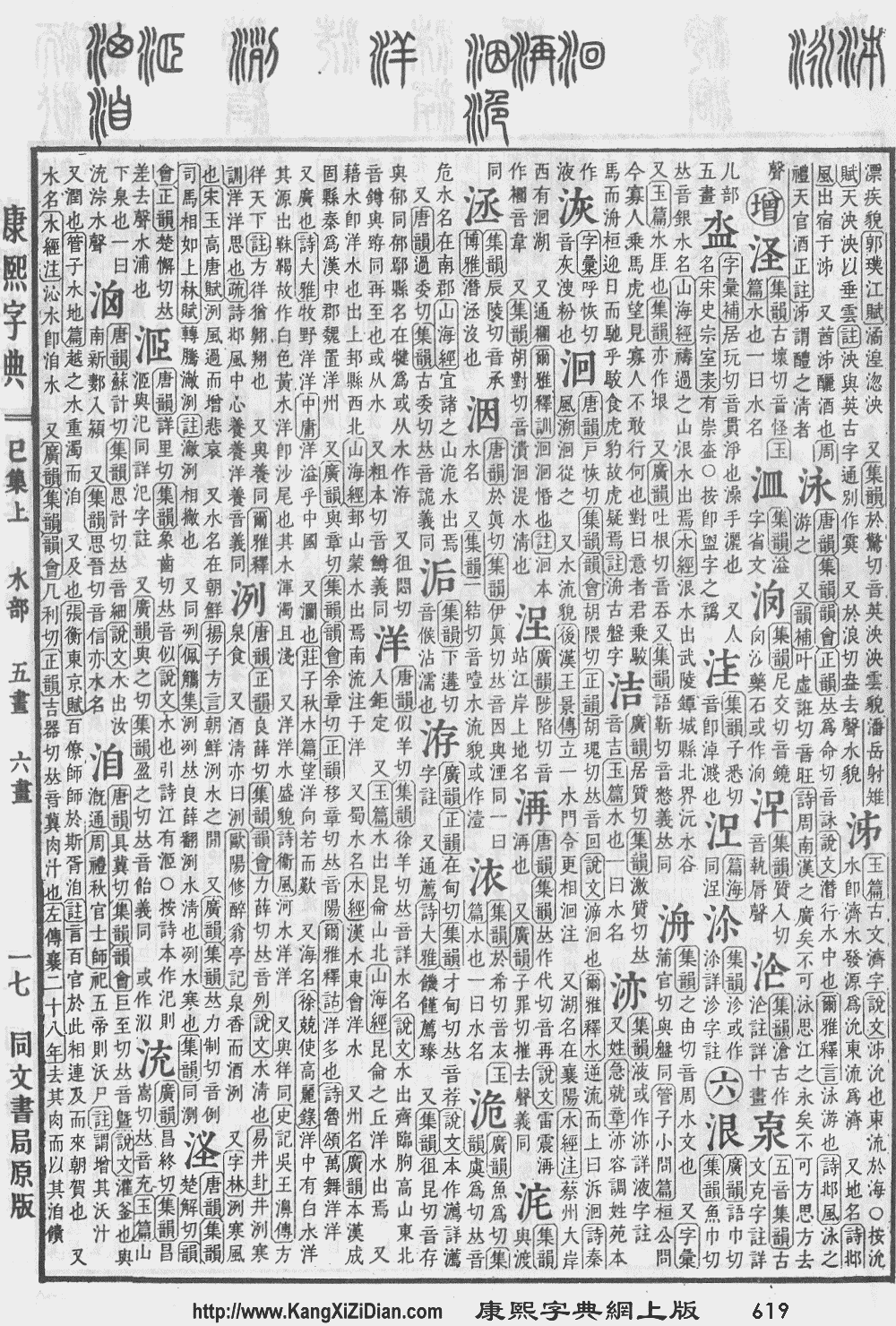
- Kangxi Dictionary: page 619, character 28
- Dai Kanwa Jiten: character 17363
- Dae Jaweon: page 1014, character 19
- Hanyu Da Zidian (first edition): volume 3, page 1615, character 11
- Unihan data for U+6D0B
Chinese
| simp. and trad. |
洋 | |
|---|---|---|
Glyph origin
Characters in the same phonetic series (羊) (Zhengzhang, 2003)
Phono-semantic compound (形聲/形声, OC *ljaŋ, *laŋ) : semantic 氵 (“water”) + phonetic 羊 (OC *laŋ).
Etymology
- “multitudinous; vast; ocean”
- Schuessler (2007) compares it with Tibetan ཡངས་པ (yangs pa, “wide; extensive; vast; spacious”). In contrast, Starostin sets up Proto-Sino-Tibetan *lɨ̆ŋ (“wave”), encompassing this and Tibetan ཀློང (klong, “space; expanse; wave”), Burmese လှိုင်း (hluing:, “wave; to abound; plentiful”).
- Compare 羕 (OC *laŋs, “(of rivers) long”), 漾 (OC *laŋs, “waves; (of rivers) long”).
- "vast expanse of flat land"
- The same word as 陽 (OC *laŋ), which is a variant of 野 (OC *laːʔ, “plain”), used in 平陽/平阳 (píngyáng, “flat land”) and many place names in which 陽/阳 (yáng) does not seem to mean "south side of mountain or north side of river" (Pan, 2016). It is also the same word as 垟 (yáng), used in place names. Cognate with 浪 (làng), 塱 (lǎng), 埌 (làng) used in place names.
Pronunciation 1
Definitions
洋
- multitudinous; vast
- ocean; vast area of sea; great expanse of water
- 太平洋 ― Tàipíngyáng ― the Pacific Ocean
- overseas; foreign; western; imported
- 洋人 ― yángrén ― foreigner (especially a westerner or Caucasian)
- 洋蔥/洋葱 ― yángcōng ― onion (literally, “Western green onion”)
- 今也舉國之所服者,洋織也,洋染也。舉國之所用者,洋物也。所接者,洋人也。所津津而流涎者,洋之奇技淫巧也。 [Classical Chinese, trad.]
- From: 1881, 《朝鮮王朝實錄》 (Joseon Veritable Records)
- Jīn yě jǔguó zhī suǒ fú zhě, yáng zhī yě, yáng rǎn yě. Jǔguó zhī suǒ yòng zhě, yáng wù yě. Suǒ jiē zhě, yángrén yě. Suǒ jīnjīn ér liúxián zhě, yáng zhī qíjìyínqiǎo yě. [Pinyin]
- In these days, what is worn in the entire country are Western clothes with Western dyes. What is used in the entire country are Western things. The people that one greets are Western men. What is overflowing and coveted are the clever tricks and wicked craft of the Westerners.
今也举国之所服者,洋织也,洋染也。举国之所用者,洋物也。所接者,洋人也。所津津而流涎者,洋之奇技淫巧也。 [Classical Chinese, simp.]
- modern; stylish; fashionable
- novel; unusual
- (historical or Shanghainese) foreign money; dollar (Classifier: 隻/只 w)
- (Min, Hakka, often in place names) plain; flatland
- (historical) A river in southern Shaanxi, China
- a surname
Compounds
- 一片汪洋
- 三大洋
- 中洋脊
- 五大洋
- 伶仃洋 (Língdīngyáng)
- 假洋鬼子
- 光洋 (guāngyáng)
- 冰洋
- 出洋 (chūyáng)
- 出洋相 (chū yángxiàng)
- 北冰洋 (Běibīngyáng)
- 北洋 (běiyáng)
- 北洋大臣
- 北洋海軍/北洋海军
- 北洋航線/北洋航线
- 北洋軍閥/北洋军阀 (Běiyáng Jūnfá)
- 十里洋場 (shílǐyángchǎng)
- 南冰洋 (Nánbīngyáng)
- 南北洋
- 南洋 (Nányáng)
- 南洋大臣
- 南洋群島/南洋群岛
- 南洋航線/南洋航线
- 印度洋 (Yìndùyáng)
- 吃洋飯/吃洋饭
- 唱洋梆子
- 喜氣洋洋/喜气洋洋 (xǐqìyángyáng)
- 喝洋水
- 喜洋洋 (xǐyángyáng)
- 土洋結合/土洋结合
- 外洋 (wàiyáng)
- 大度汪洋
- 大洋 (dàyáng)
- 大洋洲 (Dàyángzhōu)
- 大洋盆地
- 大西洋 (Dàxīyáng)
- 太平洋 (Tàipíngyáng)
- 小洋
- 崇洋 (chóngyáng)
- 崇洋媚外 (chóngyángmèiwài)
- 彷洋 (pángyáng)
- 得意洋洋 (déyìyángyáng)
- 意氣洋洋/意气洋洋 (yìqìyángyáng)
- 懶洋洋/懒洋洋 (lǎnyángyáng)
- 拉洋片 (lā yángpiān)
- 放洋 (fàngyáng)
- 方洋 (pángyáng)
- 暖洋洋 (nuǎnyángyáng)
- 望洋 (wàngyáng)
- 望洋興歎/望洋兴叹 (wàngyángxīngtàn)
- 望洋驚嘆/望洋惊叹
- 東洋/东洋 (Dōngyáng)
- 東洋人/东洋人 (dōngyángrén)
- 東洋劍/东洋剑
- 東洋大海/东洋大海
- 東洋話/东洋话
- 東洋車/东洋车 (dōngyángchē)
- 毫洋
- 江洋大盜/江洋大盗
- 沙洋 (Shāyáng)
- 汪洋 (wāngyáng)
- 汪洋大海 (wāngyángdàhǎi)
- 汪洋浩博
- 汪洋自恣
- 汪洋自肆
- 汪洋閎肆/汪洋闳肆
- 洋乾漆/洋干漆
- 洋井
- 洋人 (yángrén)
- 洋傘/洋伞 (yángsǎn)
- 洋勁/洋劲
- 洋務/洋务 (yángwù)
- 洋務運動/洋务运动 (Yángwù Yùndòng)
- 洋包子
- 洋化 (yánghuà)
- 洋叫
- 洋名字
- 洋商陸/洋商陆
- 洋嗓子 (yángsǎngzi)
- 洋地黃/洋地黄 (yángdìhuáng)
- 洋坪 (Yángpíng)
- 洋基 (Yángjī)
- 洋場/洋场 (yángchǎng)
- 洋奴 (yángnú)
- 洋娃娃 (yángwáwa)
- 洋布 (yángbù)
- 洋底盆地
- 洋廣貨/洋广货
- 洋式
- 洋房 (yángfáng)
- 洋撈/洋捞
- 洋文 (yángwén)
- 洋書/洋书
- 洋服 (yángfú)
- 洋梓 (Yángzǐ)
- 洋槍/洋枪 (yángqiāng)
- 洋槐 (yánghuái)
- 洋樓/洋楼 (yánglóu)
- 洋橄欖/洋橄榄
- 洋氣/洋气 (yángqì)
- 洋河
- 洋油 (yángyóu)
- 洋洋 (yángyáng)
- 洋流 (yángliú)
- 洋派
- 洸洋
- 洋洋喜氣/洋洋喜气
- 洋洋大觀/洋洋大观 (yángyángdàguān)
- 洋洋得意 (yángyángdéyì)
- 洋洋灑灑/洋洋洒洒 (yángyángsǎsǎ)
- 洋津畈 (Yángjīnfàn)
- 洋洋纚纚/洋洋𫄥𫄥
- 洋洋自得 (yángyángzìdé)
- 洋港 (Yánggǎng)
- 洋溢 (yángyì)
- 洋溪 (Yángxī)
- 洋溝/洋沟
- 洋火 (yánghuǒ)
- 洋火腿
- 洋灰 (yánghuī)
- 洋煙/洋烟
- 洋燈/洋灯 (yángdēng)
- 洋燭/洋烛 (yángzhú)
- 洋爐/洋炉
- 洋版
- 洋玉蘭/洋玉兰
- 洋琴 (yángqín)
- 洋瓷
- 洋畫兒/洋画儿
- 洋白菜 (yángbáicài)
- 洋盤/洋盘
- 洋相 (yángxiàng)
- 洋磁
- 洋碼子/洋码子 (yángmǎzi)
- 洋節/洋节 (yángjié)
- 洋篷
- 洋粉 (yángfěn)
- 洋紅/洋红 (yánghóng)
- 洋紙/洋纸
- 洋紗/洋纱
- 洋紫荊/洋紫荆 (yángzǐjīng)
- 洋緞/洋缎
- 洋繡球/洋绣球
- 洋繩/洋绳
- 洋罪
- 洋芋 (yángyù)
- 洋芋片 (yángyùpiàn)
- 洋菜 (yángcài)
- 洋菇 (yánggū)
- 洋菸/洋烟
- 洋蔥/洋葱 (yángcōng)
- 洋藥/洋药
- 洋蘭/洋兰
- 洋蠟/洋蜡 (yánglà)
- 洋行 (yángháng)
- 洋裁
- 洋裝/洋装 (yángzhuāng)
- 洋話/洋话 (yánghuà)
- 洋財/洋财 (yángcái)
- 洋貨/洋货 (yánghuò)
- 洋車/洋车 (yángchē)
- 洋酒 (yángjiǔ)
- 洋金
- 洋銀/洋银
- 洋錢/洋钱 (yángqián)
- 洋鐵/洋铁 (yángtiě)
- 洋鐵皮/洋铁皮
- 洋關/洋关
- 洋香瓜
- 洋馬兒/洋马儿
- 洋鬼子 (yángguǐzi)
- 洋鹼/洋碱 (yángjiǎn)
- 洋麵/洋面
- 洋麻
- 海洋 (hǎiyáng)
- 海洋化學/海洋化学 (hǎiyáng huàxué)
- 海洋地質/海洋地质
- 海洋學/海洋学 (hǎiyángxué)
- 海洋放流
- 海洋文學/海洋文学
- 海洋權/海洋权
- 海洋氣候/海洋气候
- 海洋漁業/海洋渔业
- 海洋牧場/海洋牧场
- 海洋環流/海洋环流
- 海洋生物
- 海洋線/海洋线
- 海洋能
- 海洋觀測/海洋观测
- 海洋資源/海洋资源
- 海洋開發/海洋开发
- 海洋隆起
- 漂洋 (piāoyáng)
- 漁洋關/渔洋关 (Yúyángguān)
- 潢洋
- 瀇洋/㲿洋
- 爛板洋錢/烂板洋钱
- 現大洋/现大洋 (xiàndàyáng)
- 現洋/现洋 (xiànyáng)
- 留洋 (liúyáng)
- 發洋財/发洋财 (fāyángcái)
- 白洋 (Báiyáng)
- 磨洋工 (móyánggōng)
- 茫洋
- 蘆洋/芦洋 (Lúyáng)
- 西洋 (Xīyáng)
- 西洋人 (xīyángrén)
- 西洋劍/西洋剑
- 西洋參/西洋参 (xīyángshēn)
- 西洋史
- 西洋景 (xīyángjǐng)
- 西洋棋 (xīyángqí)
- 西洋畫/西洋画 (xīyánghuà)
- 西洋象棋 (xīyáng xiàngqí)
- 西洋鏡/西洋镜 (xīyángjìng)
- 赤道洋流
- 越洋 (yuèyáng)
- 越洋電話/越洋电话
- 巡洋艦/巡洋舰 (xúnyángjiàn)
- 遠洋/远洋 (yuǎnyáng)
- 遠洋漁業/远洋渔业
- 遠渡重洋/远渡重洋 (yuǎndùchóngyáng)
- 重洋 (chóngyáng)
- 銀洋/银洋 (yínyáng)
- 開洋/开洋 (kāiyáng)
- 開洋葷/开洋荤
- 陶聲洋/陶声洋
- 零丁洋 (Língdīngyáng)
- 飄洋/飘洋
- 飄洋過海/飘洋过海
- 食洋不化
- 鷹洋/鹰洋 (yīngyáng)
- 龍洋/龙洋
Descendants
Others:
- → Zhuang: yangz
Pronunciation 2
Definitions
洋
Pronunciation 3
References
- “洋”, in 漢語多功能字庫 (Multi-function Chinese Character Database), 香港中文大學 (the Chinese University of Hong Kong), 2014–
Japanese
Readings
From Middle Chinese 洋 (MC yang, “ocean, West”):
From Middle Chinese 洋 (MC zjang, “Mi River”):
- Go-on: ぞう (zō)←ざう (zau, historical)
- Kan-on: しょう (shō)←しやう (syau, historical)
Native Japanese readings:
Compounds
Etymology 1
| Kanji in this term |
|---|
| 洋 |
| よう Grade: 3 |
| on’yomi |
/jɨau/ → /jɔː/ → /joː/
From Middle Chinese 洋 (MC yang). Compare modern Mandarin 洋 (yáng).
Noun
Derived terms
Idioms
Etymology 2
| Kanji in this term |
|---|
| 洋 |
| なだ Grade: 3 |
| kun’yomi |
From Old Japanese. Found in the Man'yōshū, completed some time after 759 CE.[2]
Alternative forms
Etymology 3
| Kanji in this term |
|---|
| 洋 |
| ひろし Grade: 3 |
| irregular |
Nominalization of the 終止形 (shūshikei, “terminal form”) of classical adjective 広し (hiroshi), modern 広い (hiroi, “vast, wide”).
Pronunciation
- IPA(key): [çiɾo̞ɕi]
Korean
Etymology
From Middle Chinese 洋 (MC yang). Recorded as Middle Korean 야ᇰ (yang) (Yale: yang) in Hunmong Jahoe (訓蒙字會 / 훈몽자회), 1527.
Compounds
Compounds
- 양인 (洋人, yang'in, “westerner”)
- 서양 (西洋, seoyang, “the West (Europe, America)”)
- 동양 (東洋, dong'yang, “the East, the Orient (Asia)”)
- 양식 (洋式, yangsik, “western style”)
- 양식 (洋食, yangsik, “western food”)
- 해양 (海洋, haeyang, “ocean, sea”)
- 양말 (洋襪, yangmal, “socks”)
- 양복 (洋服, yangbok, “suit”)
- 원양 (遠洋, wonyang, “far sea, deep sea”)
- 태평양 (太平洋, taepyeong'yang, “the Pacific”)
- 대서양 (大西洋, daeseoyang, “the Atlantic”)
- 인도양 (印度洋, indoyang, “the Indian Ocean”)
This article is issued from Wiktionary. The text is licensed under Creative Commons - Attribution - Sharealike. Additional terms may apply for the media files.