灰
| ||||||||
 | ||||||||
Translingual
| Stroke order | |||
|---|---|---|---|
 | |||
| Traditional | 灰 |
|---|---|
| Simplified | 灰 |
| Japanese | 灰 |
| Korean | 灰 |
Han character
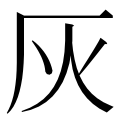
灰 (Kangxi radical 86, 火+2, 6 strokes, cangjie input 大火 (KF), four-corner 40809 or 71289, composition ⿸𠂇火(GHTK) or ⿸厂火(JV or U+2F835))
References
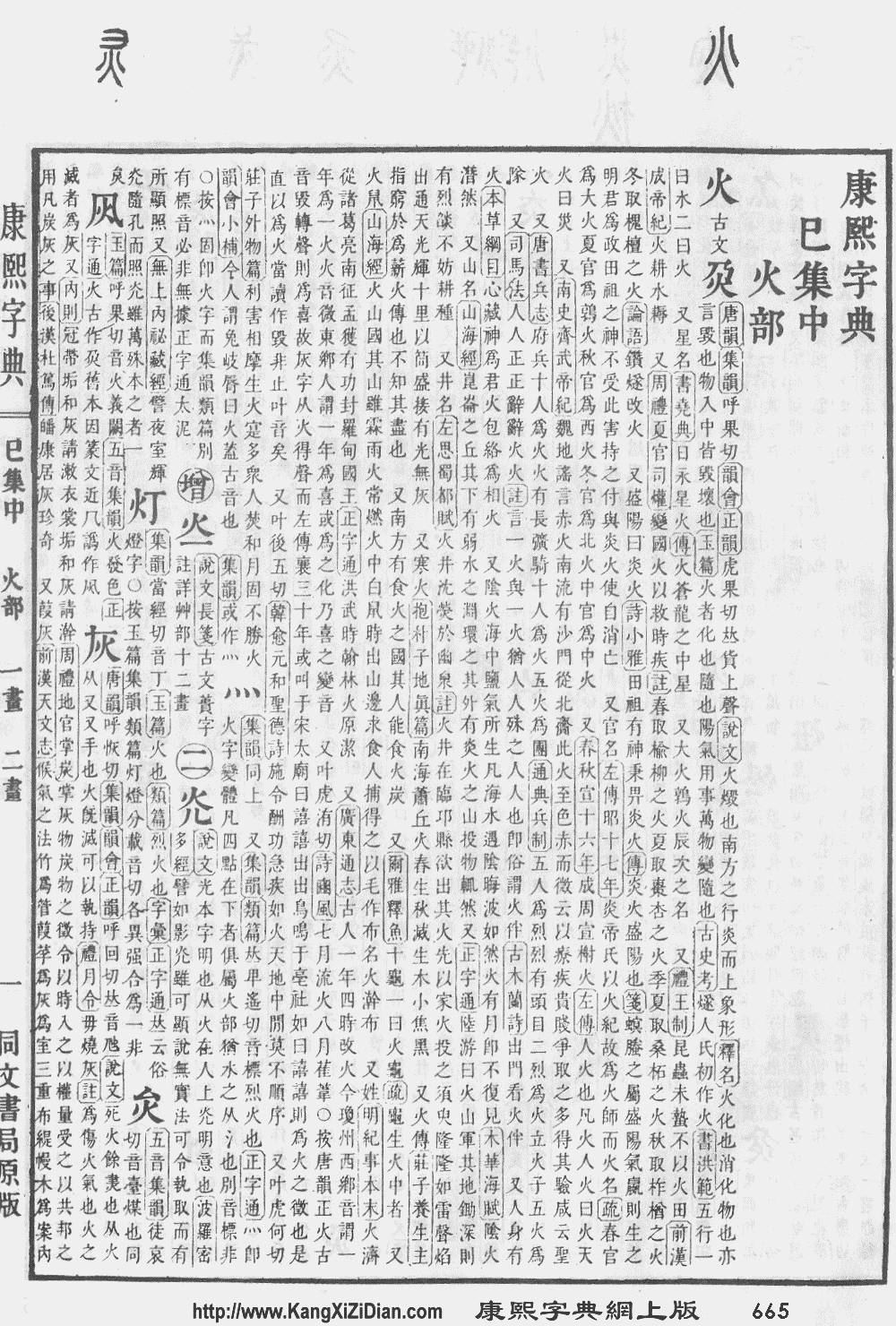
- Kangxi Dictionary: page 665, character 9
- Dai Kanwa Jiten: character 18859
- Dae Jaweon: page 1075, character 5
- Hanyu Da Zidian (first edition): volume 3, page 2188, character 4
- Unihan data for U+7070
- Unihan data for U+2F835
Chinese
| trad. | 灰 | |
|---|---|---|
| simp. # | 灰 | |
Glyph origin
| Historical forms of the character 灰 | |
|---|---|
| Warring States | Shuowen Jiezi (compiled in Han) |
| Chu slip and silk script | Small seal script |
 |
 |
Characters in the same phonetic series (灰) (Zhengzhang, 2003)
Ideogrammic compound (會意/会意) : 又 (“hand”) + 火 (“fire”) – fire that can be touched with the hand (ash). 又 has been modified to 𠂇; compare 友 (“friend”), 右 (“right”).
Etymology 1
From Proto-Sino-Tibetan *pʷut ~ hwut (“ashes, dust”) (STEDT; Schuessler (2007) reconstructs Proto-Sino-Tibetan *wu). Compare Mizo vutᴸ, Apatani mù-bu, Manipuri ut, Northern Tujia bu³ ci².
Pronunciation
Definitions
灰
Synonyms
- (dust):
Dialectal synonyms of 灰塵 (“dust”) [map]
- (disheartened):
- 低沉 (dīchén)
- 低落 (dīluò)
- 冷館/冷馆 (Xiamen Hokkien)
- 喪氣/丧气
- 壓抑/压抑 (yāyì)
- 失望 (shīwàng)
- 失落 (shīluò)
- 寡歡/寡欢 (guǎhuān)
- 幽鬱/幽郁 (yōuyù) (archaic)
- 悒鬱/悒郁 (yìyù) (literary)
- 悒鬱寡歡/悒郁寡欢 (yìyùguǎhuān)
- 愁悶/愁闷 (chóumèn)
- 憂悶/忧闷 (yōumèn)
- 慘沮/惨沮 (cǎnjǔ) (literary)
- 憂鬱/忧郁 (yōuyù)
- 憋悶/憋闷
- 懊喪/懊丧 (àosàng)
- 抑鬱/抑郁 (yìyù)
- 沉悶/沉闷 (chénmèn)
- 沉抑 (chényì)
- 沉鬱/沉郁 (chényù) (literary)
- 沮喪/沮丧 (jǔsàng)
- 消極/消极 (xiāojí)
- 消沉 (xiāochén)
- 灰心 (huīxīn)
- 灰心喪氣/灰心丧气 (huīxīnsàngqì)
- 煩悶/烦闷 (fánmèn)
- 神傷/神伤 (shénshāng) (literary)
- 索寞 (suǒmò) (literary or Eastern Min)
- 苦悶/苦闷 (kǔmèn)
- 萎靡
- 陰暗/阴暗 (yīn'àn)
- 陰沉/阴沉 (yīnchén)
- 頹唐/颓唐 (tuítáng)
- 頹喪/颓丧 (tuísàng)
- 頹廢/颓废 (tuífèi)
- 鬱悶/郁闷 (yùmèn)
- 鬱鬱/郁郁 (yùyù) (literary)
- 鬱鬱不樂/郁郁不乐 (yùyùbùlè)
- 鬱鬱寡歡/郁郁寡欢 (yùyùguǎhuān)
- 鬱鬱寡歡/郁郁寡欢 (yùyùguǎhuān)
- 齪嘈/龊嘈 (Hokkien)
- (heroin):
Dialectal synonyms of 海洛因 (“heroin”) [map]
| Variety | Location | Words |
|---|---|---|
| Formal (Written Standard Chinese) | 海洛因, 海洛英 | |
| Mandarin | Beijing | 白麵兒, 老海 |
| Taiwan | 海洛因, 白粉 | |
| Luoyang | 白麵兒, 老海 | |
| Xi'an | 白麵兒 | |
| Ürümqi | 白麵兒 | |
| Yangzhou | 白麵子 | |
| Singapore | 白粉 | |
| Dagudi (Maliba) | 白粉 | |
| Reshuitang (Longling) | 白粉, 粉藥 | |
| Mae Salong (Lancang) | 白粉, 粉藥 | |
| Mae Sai (Tengchong) | 白粉 | |
| Cantonese | Guangzhou | 白粉 |
| Hong Kong | 海洛英, 白粉, 粉, 灰, 四仔 | |
| Beihai (Qiaogang - Cô Tô) | 白粉 | |
| Beihai (Qiaogang - Cát Bà) | 白粉 | |
| Fangchenggang (Fangcheng) | 白粉 | |
| Kuala Lumpur (Guangfu) | 海洛英 | |
| Ho Chi Minh City (Guangfu) | 白粉 | |
| Móng Cái | 白粉 | |
| Hakka | Huizhou (Huicheng Bendihua) | 白粉 |
| Miaoli (N. Sixian) | 海洛因 | |
| Pingtung (Neipu; S. Sixian) | 海洛因 | |
| Hsinchu County (Zhudong; Hailu) | 海洛因 | |
| Taichung (Dongshi; Dabu) | 海洛因 | |
| Hsinchu County (Qionglin; Raoping) | 海洛因 | |
| Yunlin (Lunbei; Zhao'an) | 海洛因 | |
| Senai (Huiyang) | 白粉 | |
| Jin | Taiyuan | 料子 |
| Xinzhou | 料子 | |
| Southern Min | Xiamen | 海洛因 |
| Singapore (Hokkien) | 白粉 | |
| Chaozhou | 白粉 | |
| Shantou | 白粉 | |
| Jieyang | 白粉 | |
| Johor Bahru (Teochew) | 白粉 | |
| Pontianak (Teochew) | 下洛因 | |
| Southern Pinghua | Nanning (Tingzi) | 白粉 |
| Wu | Danyang | 白粉, 白麵 |
| Wenzhou | 白粉 | |
Compounds
- 一鼻子灰
- 不灰木
- 冷灰爆豆
- 凝灰岩 (nínghuīyán)
- 劫灰
- 叉灰泥
- 吹灰
- 吹灰之力 (chuīhuīzhīlì)
- 土灰
- 坑灰未冷
- 塔灰
- 寂若死灰
- 寒灰
- 心如寒灰
- 心如死灰
- 心灰 (xīnhuī)
- 心灰意冷 (xīnhuīyìlěng)
- 心灰意懶/心灰意懒 (xīnhuīyìlǎn)
- 心灰意敗/心灰意败
- 心若死灰
- 意懶心灰/意懒心灰
- 扒灰 (páhuī)
- 打灰堆
- 抖灰
- 抹土搽灰
- 挫骨揚灰/挫骨扬灰
- 搽灰抹土
- 搽灰抹粉
- 撣灰/掸灰
- 昆池劫灰
- 木形灰心
- 朽木死灰
- 枯形灰心
- 枯木死灰
- 槁木死灰
- 死灰 (sǐhuī)
- 死灰復然/死灰复然
- 死灰復燃/死灰复燃 (sǐhuīfùrán)
- 死灰復燎/死灰复燎
- 死灰槁木
- 油灰 (yóuhuī)
- 泥灰
- 洋灰 (yánghuī)
- 消石灰 (xiāoshíhuī)
- 清灰冷灶
- 灰不喇唧
- 灰不溜丟/灰不溜丢
- 灰不蹓丟/灰不蹓丢
- 灰不蹓秋
- 灰塵/灰尘 (huīchén)
- 灰士
- 灰姑娘 (Huīgūniang)
- 灰屎
- 灰度等級/灰度等级
- 灰心 (huīxīn)
- 灰心喪意/灰心丧意
- 灰心喪氣/灰心丧气 (huīxīnsàngqì)
- 灰心槁形
- 灰戶/灰户
- 灰指甲
- 灰撲撲/灰扑扑
- 灰暗 (huī'àn)
- 灰木
- 灰棚
- 灰櫬兒/灰榇儿
- 灰沒/灰没
- 灰滅/灰灭
- 灰溜溜
- 灰濛濛/灰蒙蒙 (huīméngméng)
- 灰炭
- 灰熊 (huīxióng)
- 灰燼/灰烬 (huījìn)
- 灰白 (huībái)
- 灰石
- 灰罐
- 灰脾氣/灰脾气
- 灰膛
- 灰色 (huīsè)
- 灰茫茫
- 灰質/灰质 (huīzhì)
- 灰身粉骨
- 灰軀糜骨/灰躯糜骨
- 灰錳氧/灰锰氧 (huīměngyǎng)
- 灰陶
- 灰頂/灰顶
- 灰頭土臉/灰头土脸 (huītóutǔliǎn)
- 灰頭土臉兒/灰头土脸儿
- 灰頭土面/灰头土面
- 灰頭草面/灰头草面
- 灰飛煙滅/灰飞烟灭 (huīfēiyānmiè)
- 灰鯨/灰鲸
- 灰鶴/灰鹤
- 灰鼠 (huīshǔ)
- 炮灰 (pàohuī)
- 焚屍揚灰/焚尸扬灰
- 無灰粉筆/无灰粉笔
- 焚骨揚灰/焚骨扬灰
- 煙灰/烟灰 (yānhuī)
- 熟石灰 (shúshíhuī)
- 爐灰/炉灰 (lúhuī)
- 爬灰
- 生石灰 (shēngshíhuī)
- 白灰 (báihuī)
- 百念皆灰
- 石灰 (shíhuī)
- 石灰乳
- 石灰岩 (shíhuīyán)
- 石灰岩洞
- 石灰水 (shíhuīshuǐ)
- 石灰石 (shíhuīshí)
- 石灰窯/石灰窑 (Shíhuīyáo)
- 石灰質/石灰质
- 磷灰石 (línhuīshí)
- 萬念俱灰/万念俱灰 (wànniànjùhuī)
- 秦灰
- 粉身灰骨
- 糶灰/粜灰
- 紙灰/纸灰
- 色如死灰
- 色若死灰
- 草木灰 (cǎomùhuī)
- 草灰 (cǎohuī)
- 菸灰/烟灰 (yānhuī)
- 菸灰缸/烟灰缸 (yānhuīgāng)
- 葭灰
- 葡萄灰
- 蛤灰
- 蜃灰
- 豆秸灰
- 跳灰
- 通草灰
- 銀灰/银灰
- 銀灰色/银灰色
- 鍋臍灰/锅脐灰
- 鐵灰色/铁灰色
- 雌一頭灰/雌一头灰
- 面如死灰
- 面如灰土
- 飲灰洗胃/饮灰洗胃
- 香灰 (xiānghuī)
- 骨灰 (gǔhuī)
- 骨灰塔
- 骨灰罈/骨灰坛
Etymology 2
| For pronunciation and definitions of 灰 – see 烌 (“(Min Nan) dust; ash”). (This character is a variant form of 烌). |
Pronunciation
References
- “灰”, in 漢語多功能字庫 (Multi-function Chinese Character Database), 香港中文大學 (the Chinese University of Hong Kong), 2014–
Japanese
| Shinjitai | 灰 | |
| Kyūjitai [1] |
灰󠄁 灰+ 󠄁?(Adobe-Japan1) |
 |
| 灰󠄃 灰+ 󠄃?(Hanyo-Denshi) (Moji_Joho) |
 | |
| The displayed kanji may be different from the image due to your environment. See here for details. | ||
Readings
Etymology 1
| Kanji in this term |
|---|
| 灰 |
| はい Grade: 6 |
| kun’yomi |
Noun
- ash
- 塵は塵に、灰は灰に
- chiri wa chiri ni, hai wa hai ni
- dust to dust, ashes to ashes
- 塵は塵に、灰は灰に
Pronunciation
- IPA(key): [ka̠i]
References
- “灰”, in 漢字ぺディア (Kanjipedia) (in Japanese), 日本漢字能力検定協会, 2015–2024
- Matsumura, Akira, editor (2006), 大辞林 [Daijirin] (in Japanese), Third edition, Tōkyō: Sanseidō, →ISBN
Vietnamese
This article is issued from Wiktionary. The text is licensed under Creative Commons - Attribution - Sharealike. Additional terms may apply for the media files.