童
| ||||||||
Translingual
| Stroke order | |||
|---|---|---|---|
 | |||
| Stroke order (Japan) | |||
|---|---|---|---|
 | |||
Han character
童 (Kangxi radical 117, 立+7, 12 strokes, cangjie input 卜廿田土 (YTWG), four-corner 00104, composition ⿱立里)
References
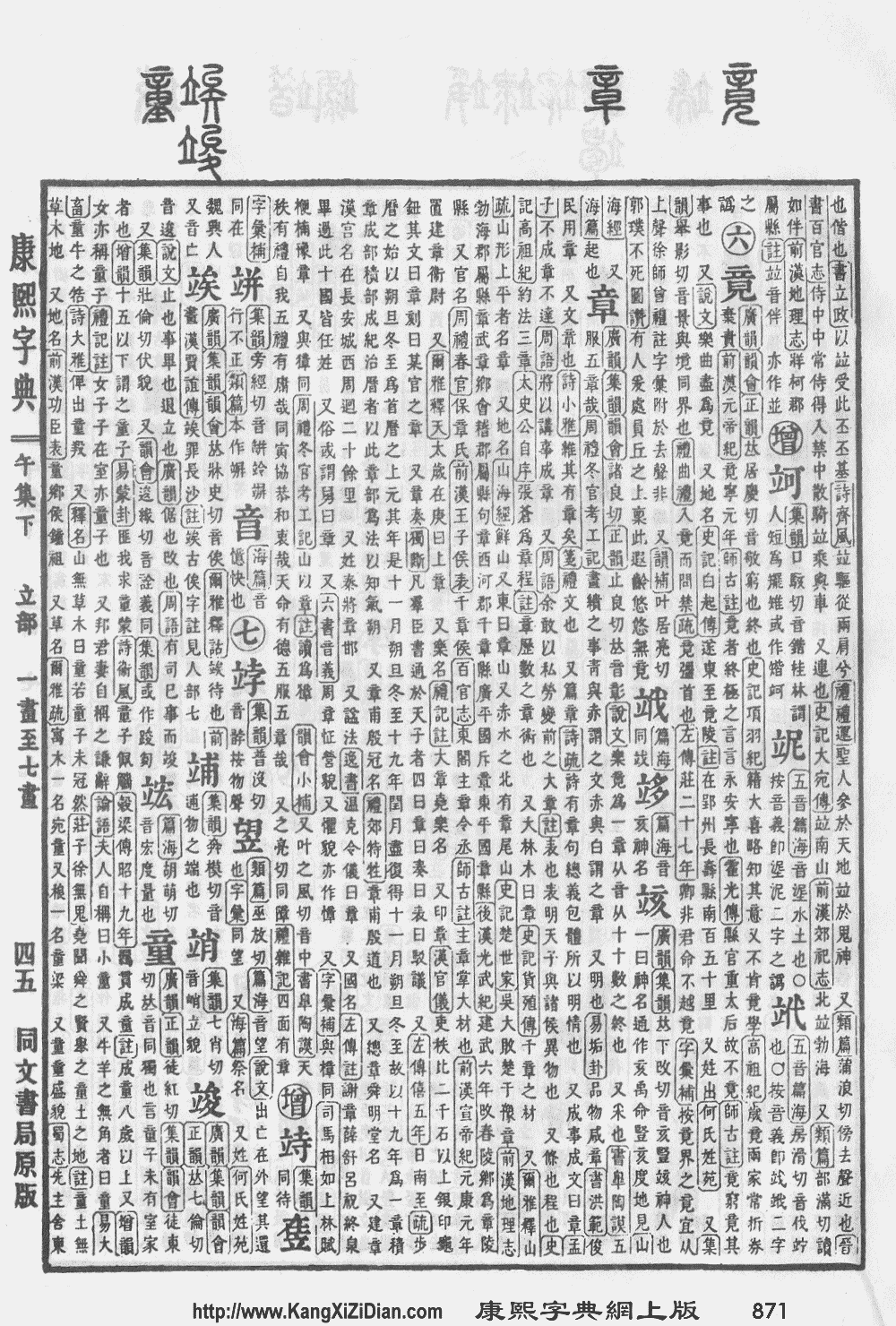
- Kangxi Dictionary: page 871, character 20
- Dai Kanwa Jiten: character 25775
- Dae Jaweon: page 1302, character 12
- Hanyu Da Zidian (first edition): volume 4, page 2711, character 9
- Unihan data for U+7AE5
Chinese
| simp. and trad. |
童 | |
|---|---|---|
| 2nd round simp. | 仝 | |
| alternative forms | 𬔥 𥪿 𥫍 僮 servant boy | |
Glyph origin
| Historical forms of the character 童 | ||||
|---|---|---|---|---|
| Shang | Western Zhou | Warring States | Shuowen Jiezi (compiled in Han) | Liushutong (compiled in Ming) |
| Oracle bone script | Bronze inscriptions | Chu slip and silk script | Small seal script | Transcribed ancient scripts |
 |
 |
 |
 |
 |
Characters in the same phonetic series (重) (Zhengzhang, 2003)
| Old Chinese | |
|---|---|
| 撞 | *rdoːŋ, *rdoːŋs |
| 幢 | *rdoːŋ, *rdoːŋs |
| 橦 | *rdoːŋ, *doːŋ, *tjoŋ |
| 噇 | *rdoːŋ |
| 𩪘 | *rdoːŋ |
| 艟 | *rdoːŋs, *tʰjoŋ |
| 憧 | *rdoːŋs, *tʰjoŋ |
| 畽 | *tʰoːnʔ, *tʰuːnʔ |
| 董 | *toːŋʔ |
| 蕫 | *toːŋʔ, *doːŋ |
| 箽 | *toːŋʔ |
| 懂 | *toːŋʔ |
| 湩 | *toːŋs, *tuːŋʔ, *toŋs |
| 曈 | *tʰoːŋ, *tʰoːŋʔ, *doːŋ |
| 童 | *doːŋ |
| 僮 | *doːŋ |
| 瞳 | *doːŋ |
| 罿 | *doːŋ, *tʰjoŋ |
| 犝 | *doːŋ |
| 潼 | *doːŋ, *tʰjoŋ |
| 穜 | *doːŋ, *doŋ |
| 動 | *doːŋʔ |
| 慟 | *doːŋs |
| 堹 | *toŋs |
| 諥 | *toŋs |
| 蹱 | *tʰoŋ, *tʰoŋs, *tjoŋ |
| 重 | *doŋ, *doŋʔ, *doŋs |
| 緟 | *doŋ, *doŋs |
| 蝩 | *doŋ |
| 褈 | *doŋ, *tʰjoŋ |
| 鐘 | *tjoŋ, *tjoŋ |
| 鍾 | *tjoŋ |
| 籦 | *tjoŋ |
| 種 | *tjoŋʔ, *tjoŋs |
| 腫 | *tjoŋʔ |
| 踵 | *tjoŋʔ |
| 歱 | *tjoŋʔ |
| 喠 | *tjoŋʔ, *tʰjoŋʔ |
| 偅 | *tjoŋs |
| 衝 | *tʰjoŋ |
| 揰 | *tʰjoŋs |
| 尰 | *djoŋʔ |
In oracle bone inscriptions, ideogrammic compound (會意/会意) : 䇂 (“chisel”) + 目 (“eye”) + 𡈼 (“person standing on soil”). It depicts a person getting their eye gouged out, a common punishment for slaves in ancient China. Compare 民, 臧.
In bronze inscriptions, the phonetic component 東 (OC *toːŋ) was added, making the character phono-semantic (形聲/形声) .
In the modern form 䇂 has corrupted into 立. The bottom 里 derives from 東 combining with 土, similar to 重.
Etymology
- “child; servant boy; virgin; bare”
- Löffler (1966) compares it to Kukish dong (“boy”); see also Rengmitca tong-kléng' (“boy”), Areng thon-dén (“boy”) (Löffler, 1960). Schuessler (2007) also compares it to Hmong-Mien: White Hmong tub (“son”), Iu Mien dorn (“son”).
- “shaman”
- Norman and Mei (1976) proposed that the Min Chinese word for “shaman” (*-dəŋA), written as 童, is from an Austroasiatic substratum, cognate with Vietnamese đồng, Mon ဒံၚ် (tòŋ, “to dance while under daemonic possession; to proceed by leaps”), ဒေါၚ် (tòŋ, “shaman called in to organise kəlok dances”). This is rebutted in Sagart (2008), who cited the wide distribution of the sense “magician; sorcerer” in late 19th-century & early 20th-century Chinese and the secondary meaning of 童 as “servant; messenger”, describing the resemblance between the Min and Austroasiatic terms as “undoubtedly fortuitous”.
Pronunciation
Definitions
童
Compounds
- 上清童子 (shàngqīng tóngzǐ)
- 乩童 (jītóng)
- 五尺之童
- 仙童
- 仙童仙女
- 低幼兒童/低幼儿童
- 兒童/儿童 (értóng)
- 兒童受虐/儿童受虐
- 兒童學/儿童学
- 兒童文學/儿童文学
- 兒童樂園/儿童乐园 (értóng lèyuán)
- 兒童畫/儿童画
- 兒童福利/儿童福利
- 兒童節/儿童节 (Értóngjié)
- 冥童
- 凡童
- 反老還童/反老还童
- 問題兒童/问题儿童
- 善才童子
- 報事靈童/报事灵童
- 報童/报童 (bàotóng)
- 天才兒童/天才儿童
- 失依兒童/失依儿童
- 失教兒童/失教儿童
- 奇童 (qítóng)
- 女童 (nǚtóng)
- 女童子軍/女童子军
- 女童軍/女童军 (nǚ tóngjūn)
- 孌童/娈童 (luántóng)
- 子童
- 孩童 (háitóng)
- 學童/学童 (xuétóng)
- 安童
- 安童哥
- 家童
- 小童 (xiǎotóng)
- 尼童子
- 幸童
- 幼童 (yòutóng)
- 幼童軍/幼童军
- 成童
- 文童
- 早熟兒童/早熟儿童
- 格林童話/格林童话
- 牛童馬走/牛童马走
- 牧童 (mùtóng)
- 特殊兒童/特殊儿童
- 狂童
- 狡童
- 玉童
- 球童 (qiútóng)
- 琴童 (qíntóng)
- 男童 (nántóng)
- 病童 (bìngtóng)
- 白叟黃童/白叟黄童
- 碧眼童顏/碧眼童颜 (bìyǎntóngyán)
- 神童 (shéntóng)
- 稚童
- 童便 (tóngbiàn)
- 童僕/童仆
- 童叟無欺/童叟无欺
- 童天王
- 童女 (tóngnǚ)
- 童婢
- 童子 (tóngzǐ)
- 童子崗/童子岗
- 童子癆/童子痨 (tóngzǐláo)
- 童子試/童子试
- 童子軍/童子军 (tóngzǐjūn)
- 童子軍節/童子军节
- 童山 (tóngshān)
- 童山濯濯
- 童工 (tónggōng)
- 童年 (tóngnián)
- 童心 (tóngxīn)
- 童心未泯 (tóngxīnwèimǐn)
- 童昏
- 童星 (tóngxīng)
- 童歌 (tónggē)
- 童烏/童乌
- 童牛角馬/童牛角马
- 童玩
- 童生 (tóngshēng)
- 童男
- 童男女
- 童男童女 (tóngnántóngnǚ)
- 童真 (tóngzhēn)
- 童稚 (tóngzhì)
- 童童 (tóngtóng)
- 童聲/童声 (tóngshēng)
- 童蒙 (tóngméng)
- 童蒙訓/童蒙训
- 童裝/童装 (tóngzhuāng)
- 童言無忌/童言无忌 (tóngyánwújì)
- 童話/童话 (tónghuà)
- 童話劇/童话剧
- 童語/童语
- 童謠/童谣 (tóngyáo)
- 童貞/童贞 (tóngzhēn)
- 童貫/童贯
- 童趣
- 童身
- 童軍/童军 (tóngjūn)
- 童農/童农
- 童顏/童颜 (tóngyán)
- 童顏鶴髮/童颜鹤发 (tóngyánhèfà)
- 童養媳/童养媳 (tóngyǎngxí)
- 童騃/童𫘤 (tóng'ái)
- 童黨/童党 (tóngdǎng)
- 老頑童/老顽童
- 耆童
- 花童
- 蒙童 (méngtóng)
- 行童
- 返老歸童/返老归童
- 返老還童/返老还童 (fǎnlǎohuántóng)
- 道童
- 金童
- 金童玉女 (jīntóngyùnǚ)
- 靈童/灵童 (língtóng)
- 頑童/顽童 (wántóng)
- 頭童齒豁/头童齿豁
- 馬童/马童
- 鶴髮童顏/鹤发童颜 (hèfàtóngyán)
- 麒麟童
- 黃童/黄童
- 黃童白叟/黄童白叟
- 齒豁頭童/齿豁头童
Japanese
| Shinjitai | 童 | |
| Kyūjitai [1] |
童󠄂 童+ 󠄂?(Hanyo-Denshi) (Moji_Joho) |
 |
| The displayed kanji may be different from the image due to your environment. See here for details. | ||
Readings
Compounds
Compounds
- 悪童 (akudō)
- 大童 (ōwarawa)
- 御河童 (okappa)
- 童男 (oguna)
- 鶴髪童顔 (kakuhatsu dōgan)
- 怪童 (kaidō)
- 学童 (gakudō)
- 河童 (kappa)
- 小童 (kowappa)
- 造酒童女 (sakatsuko)
- 児童 (jidō)
- 酒呑童子 (shuten dōji), 酒顛童子 (shuten dōji), 酒顚童子 (shuten dōji)
- 神童 (shindō)
- 童画 (dōga)
- 童顔 (dōgan)
- 童形 (dōgyō)
- 童子 (dōji)
- 童女 (dōjo)
- 童心 (dōshin)
- 童貞 (dōtei)
- 童謡 (dōyō)
- 童話 (dōwa)
- 牧童 (bokudō)
- 僕童 (bokudō)
- 童謡 (wazauta)
Etymology 1
| Kanji in this term |
|---|
| 童 |
| わらわ Grade: 3 |
| kun’yomi |
| For pronunciation and definitions of 童 – see the following entry. | ||
| ||
| (This term, 童, is an alternative spelling of the above term.) |
Etymology 2
| Kanji in this term |
|---|
| 童 |
| わらべ Grade: 3 |
| kun’yomi |
| For pronunciation and definitions of 童 – see the following entry. | ||
| ||
| (This term, 童, is an alternative spelling of the above term.) |
Etymology 3
| Kanji in this term |
|---|
| 童 |
| わらんべ Grade: 3 |
| kun’yomi |
| For pronunciation and definitions of 童 – see the following entry. | ||
| ||
| (This term, 童, is an alternative spelling of the above term.) |
Etymology 4
| Kanji in this term |
|---|
| 童 |
| わらし Grade: 3 |
| kun’yomi |
| For pronunciation and definitions of 童 – see the following entry: わらし |
(The following entry is uncreated: わらし.)
Korean
Etymology
From Middle Chinese 童 (MC duwng). Recorded as Middle Korean 도ᇰ (twong) (Yale: twong) in Hunmong Jahoe (訓蒙字會 / 훈몽자회), 1527.
Compounds
Vietnamese
Han character
- (occult, divination) of mediums or divination
- bà đồng ― a female medium
This article is issued from Wiktionary. The text is licensed under Creative Commons - Attribution - Sharealike. Additional terms may apply for the media files.