重
| ||||||||
Translingual
| Stroke order | |||
|---|---|---|---|
 | |||
Han character
重 (Kangxi radical 166, 里+2, 9 strokes, cangjie input 竹十田土 (HJWG), four-corner 20104, composition ⿱千里)
Derived characters
References
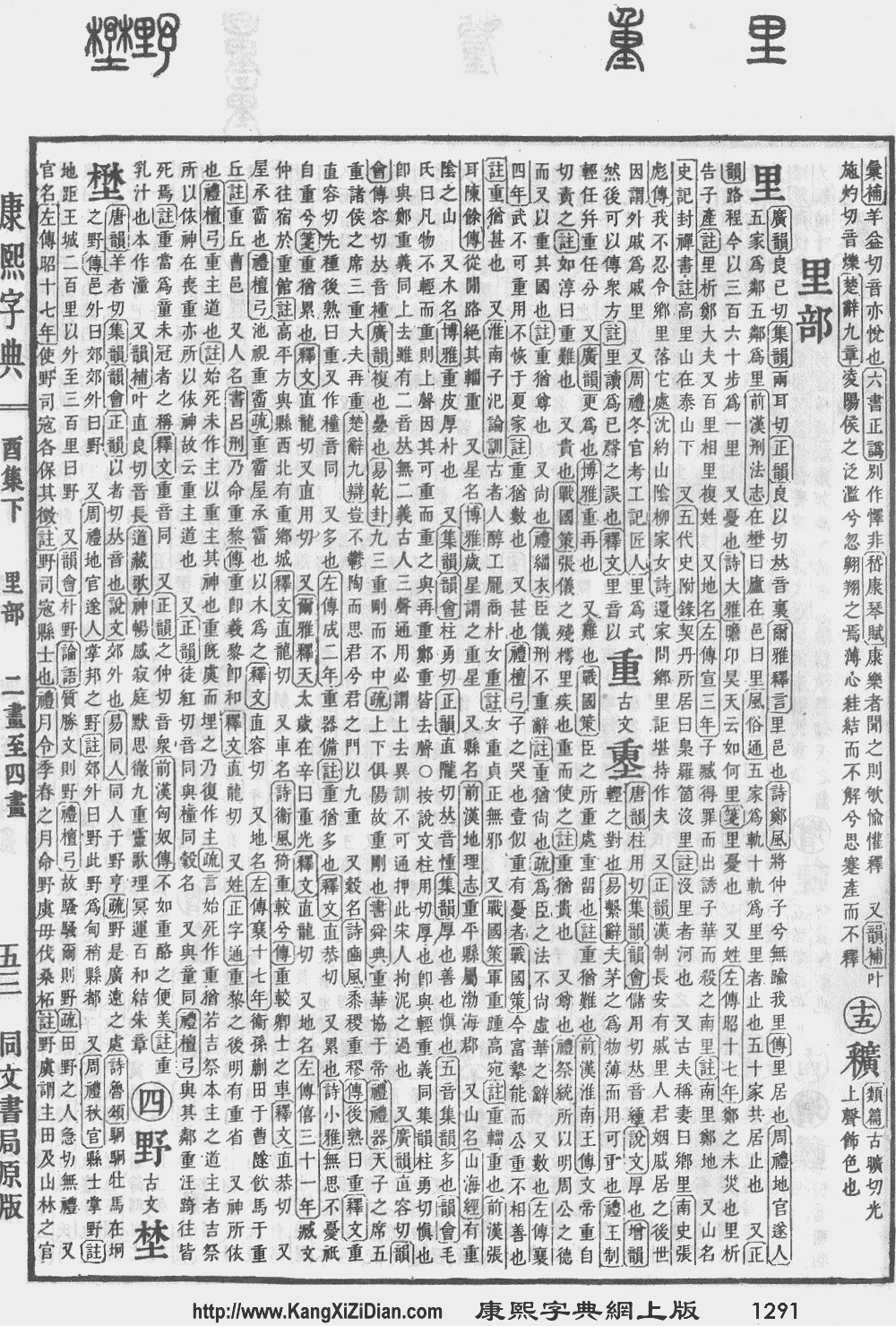
- Kangxi Dictionary: page 1291, character 3
- Dai Kanwa Jiten: character 40132
- Dae Jaweon: page 1791, character 7
- Hanyu Da Zidian (first edition): volume 6, page 3680, character 2
- Unihan data for U+91CD
Chinese
| simp. and trad. |
重 | |
|---|---|---|
| alternative forms | 𡍴 ancient 𡍺 ancient 𨤣 𧝎 𧸌 | |
Glyph origin
| Historical forms of the character 重 | ||||
|---|---|---|---|---|
| Shang | Western Zhou | Warring States | Shuowen Jiezi (compiled in Han) | Liushutong (compiled in Ming) |
| Oracle bone script | Bronze inscriptions | Chu slip and silk script | Small seal script | Transcribed ancient scripts |
 |
 |
 |
 |
 |
| Old Chinese | |
|---|---|
| 撞 | *rdoːŋ, *rdoːŋs |
| 幢 | *rdoːŋ, *rdoːŋs |
| 橦 | *rdoːŋ, *doːŋ, *tjoŋ |
| 噇 | *rdoːŋ |
| 𩪘 | *rdoːŋ |
| 艟 | *rdoːŋs, *tʰjoŋ |
| 憧 | *rdoːŋs, *tʰjoŋ |
| 畽 | *tʰoːnʔ, *tʰuːnʔ |
| 董 | *toːŋʔ |
| 蕫 | *toːŋʔ, *doːŋ |
| 箽 | *toːŋʔ |
| 懂 | *toːŋʔ |
| 湩 | *toːŋs, *tuːŋʔ, *toŋs |
| 曈 | *tʰoːŋ, *tʰoːŋʔ, *doːŋ |
| 童 | *doːŋ |
| 僮 | *doːŋ |
| 瞳 | *doːŋ |
| 罿 | *doːŋ, *tʰjoŋ |
| 犝 | *doːŋ |
| 潼 | *doːŋ, *tʰjoŋ |
| 穜 | *doːŋ, *doŋ |
| 動 | *doːŋʔ |
| 慟 | *doːŋs |
| 堹 | *toŋs |
| 諥 | *toŋs |
| 蹱 | *tʰoŋ, *tʰoŋs, *tjoŋ |
| 重 | *doŋ, *doŋʔ, *doŋs |
| 緟 | *doŋ, *doŋs |
| 蝩 | *doŋ |
| 褈 | *doŋ, *tʰjoŋ |
| 鐘 | *tjoŋ, *tjoŋ |
| 鍾 | *tjoŋ |
| 籦 | *tjoŋ |
| 種 | *tjoŋʔ, *tjoŋs |
| 腫 | *tjoŋʔ |
| 踵 | *tjoŋʔ |
| 歱 | *tjoŋʔ |
| 喠 | *tjoŋʔ, *tʰjoŋʔ |
| 偅 | *tjoŋs |
| 衝 | *tʰjoŋ |
| 揰 | *tʰjoŋs |
| 尰 | *djoŋʔ |
Phono-semantic compound (形聲/形声, OC *doŋ, *doŋʔ, *doŋs) and ideogrammic compound (會意/会意) : semantic 人 (“man”) + phonetic 東 (OC *toːŋ, “bag”) – a man carrying a bag. A glyph 土 (“earth”) was later added to show that the bag-carrying man is standing on the ground. From this composition is the current form.
Etymology
Schuessler (2007) notes that the etymology is uncertain and compares the word to Burmese စုံ (cum, “to be sufficient; pair”), which STEDT puts under Proto-Sino-Tibetan *dzum ~ tsum (“pair”).
Pronunciation 3 is the exoactive derivation of pronunciation 1.
Pronunciation 1
Synonyms
| Variety | Location | Words |
|---|---|---|
| Classical Chinese | 重 | |
| Formal (Written Standard Chinese) | 重 | |
| Mandarin | Beijing | 沉, 重 |
| Taiwan | 重 | |
| Jinan | 沉, 重 | |
| Xi'an | 沉, 重 | |
| Wuhan | 重 | |
| Chengdu | 重 | |
| Guilin | 重 | |
| Yangzhou | 重 | |
| Hefei | 重 | |
| Cantonese | Guangzhou | 重 |
| Hong Kong | 重 | |
| Yangjiang | 重 | |
| Gan | Nanchang | 重 |
| Hakka | Meixian | 重 |
| Jin | Taiyuan | 重, 沉 |
| Northern Min | Jian'ou | 重 |
| Eastern Min | Fuzhou | 重 |
| Southern Min | Xiamen | 重 |
| Quanzhou | 重 | |
| Zhangzhou | 重 | |
| Chaozhou | 重 | |
| Zhongshan Min | Shaxi (Longdu) | 重 |
| Wu | Suzhou | 重 |
| Wenzhou | 重 | |
| Xiang | Changsha | 重 |
| Shuangfeng | 重 | |
Compounds
- 不知輕重/不知轻重
- 不足輕重/不足轻重 (bùzúqīngzhòng)
- 不重
- 並重/并重 (bìngzhòng)
- 事關重大/事关重大
- 人必自重而後人重之/人必自重而后人重之 (rén bì zìzhòng érhòu rén zhòng zhī)
- 位尊勢重/位尊势重
- 保重 (bǎozhòng)
- 倚重 (yǐzhòng)
- 借重
- 偏重 (piānzhòng)
- 側重/侧重 (cèzhòng)
- 傾覆重器/倾覆重器
- 傳重/传重
- 凝重 (níngzhòng)
- 力微任重
- 加重 (jiāzhòng)
- 功高德重
- 功高望重
- 勞尊重/劳尊重
- 勞臺重/劳台重
- 千鈞重負/千钧重负
- 厚重 (hòuzhòng)
- 口重 (kǒuzhòng)
- 句重音
- 吃重 (chīzhòng)
- 名重太山
- 品高德重
- 嗟重
- 器重 (qìzhòng)
- 嚴重/严重 (yánzhòng)
- 固定重音
- 太重
- 失重 (shīzhòng)
- 契重 (qìzhòng)
- 委重投艱/委重投艰
- 威重
- 嫡孫承重/嫡孙承重
- 安土重遷/安土重迁 (āntǔzhòngqiān)
- 寶重/宝重 (bǎozhòng)
- 尊師重道/尊师重道 (zūnshīzhòngdào)
- 尊重 (zūnzhòng)
- 幣重言甘/币重言甘
- 引重
- 後重/后重
- 得權重任/得权重任 (dé quán zhòngrèn)
- 德尊望重
- 德深望重
- 德隆望重
- 德高望重 (dégāowàngzhòng)
- 心腹重患
- 急征重斂
- 恩威並重/恩威并重
- 恩深義重/恩深义重
- 恩重丘山
- 恩重如山
- 情深意重
- 情深義重/情深义重
- 情重如山
- 慎重 (shènzhòng)
- 慎重其事
- 慘重/惨重 (cǎnzhòng)
- 承重 (chéngzhòng)
- 承重孫/承重孙
- 承重牆/承重墙 (chéngzhòngqiáng)
- 拈輕怕重/拈轻怕重 (niānqīngpàzhòng)
- 持重 (chízhòng)
- 挑重擔/挑重担 (tiāozhòngdàn)
- 推重
- 擇福宜重/择福宜重
- 放尊重
- 放重
- 敬重 (jìngzhòng)
- 斗重山齊
- 未足輕重/未足轻重 (wèizúqīngzhòng)
- 榆瞑豆重
- 樸重/朴重
- 權衡輕重/权衡轻重
- 次重音
- 死重泰山
- 比重 (bǐzhòng)
- 比重計/比重计
- 毛重 (máozhòng)
- 沒輕沒重/没轻没重
- 沉重 (chénzhòng)
- 沉重寡言
- 沉重少言
- 注重 (zhùzhòng)
- 淨重/净重 (jìngzhòng)
- 深重 (shēnzhòng)
- 澤深恩重/泽深恩重
- 濃重/浓重 (nóngzhòng)
- 無足輕重/无足轻重 (wúzúqīngzhòng)
- 無足重輕/无足重轻 (wúzúzhòngqīng)
- 珍重 (zhēnzhòng)
- 異重流/异重流
- 畸輕畸重/畸轻畸重
- 疏財重義/疏财重义
- 病重 (bìngzhòng)
- 皮重 (pízhòng)
- 看重 (kànzhòng)
- 矜重
- 知輕識重/知轻识重
- 禮輕意重/礼轻意重
- 積重難返/积重难返 (jīzhòngnánfǎn)
- 穩重/稳重 (wěnzhòng)
- 笨重 (bènzhòng)
- 粗重 (cūzhòng)
- 累重
- 綦重
- 緩急輕重/缓急轻重
- 繁刑重斂/繁刑重敛
- 繁刑重賦/繁刑重赋
- 繁重 (fánzhòng)
- 罪孽深重 (zuìniè shēnzhòng)
- 罪惡深重/罪恶深重
- 罪業深重/罪业深重
- 罪逆深重
- 義氣深重/义气深重
- 義重如山/义重如山
- 義重恩深/义重恩深
- 義重情深/义重情深
- 老成持重 (lǎochéng chízhòng)
- 老成穩重/老成稳重
- 耳空重 (hīⁿ-khang-tāng) (Min Nan)
- 耳重
- 自重 (zìzhòng)
- 致遠任重/致远任重
- 舉足輕重/举足轻重 (jǔzúqīngzhòng)
- 舉重/举重 (jǔzhòng)
- 舉重若輕/举重若轻 (jǔzhòngruòqīng)
- 莊重/庄重 (zhuāngzhòng)
- 荷重
- 著重/着重 (zhuózhòng)
- 著重兒/着重儿
- 衣不重帛
- 衣不重采
- 裡急後重/里急后重
- 言重 (yánzhòng)
- 語重心長/语重心长 (yǔzhòngxīncháng)
- 豆重榆瞑
- 負重/负重 (fùzhòng)
- 負重涉遠/负重涉远
- 負重致遠/负重致远
- 財多勢重/财多势重
- 貴重/贵重 (guìzhòng)
- 賣重/卖重
- 起重機/起重机 (qǐzhòngjī)
- 超重 (chāozhòng)
- 載重/载重 (zàizhòng)
- 載重量/载重量 (zàizhòngliàng)
- 輕事重報/轻事重报
- 輕生重義/轻生重义 (qīngshēngzhòngyì)
- 輕財重士/轻财重士
- 輕財重義/轻财重义
- 輕身重義/轻身重义
- 輕重/轻重 (qīngzhòng)
- 輕重倒置/轻重倒置
- 輕重失宜/轻重失宜
- 輕重緩急/轻重缓急 (qīngzhònghuǎnjí)
- 輜重/辎重 (zīzhòng)
- 道遠任重/道远任重
- 過重/过重 (guòzhòng)
- 避重就輕/避重就轻 (bìzhòngjiùqīng)
- 邏輯重音/逻辑重音
- 鄭重/郑重 (zhèngzhòng)
- 鄭重其事/郑重其事
- 重·次輕/重·次轻 (zhòng-cìqīng)
- 重任 (zhòngrèn)
- 重倒
- 重傷/重伤 (zhòngshāng)
- 重傷罪/重伤罪
- 重傷風/重伤风 (zhòngshāngfēng)
- 重價/重价 (zhòngjià)
- 重元素
- 重兵 (zhòngbīng)
- 重典 (zhòngdiǎn)
- 重利 (zhònglì)
- 重利盤剝/重利盘剥 (zhònglìpánbō)
- 重創/重创
- 重力 (zhònglì)
- 重力位能
- 重力壩/重力坝
- 重力擺/重力摆
- 重力水
- 重力計/重力计
- 重厚
- 重厚少文
- 重名 (chóngmíng)
- 重器
- 重囚
- 重圓/重圆 (zhòngyuán)
- 重地 (zhòngdì)
- 重型 (zhòngxíng)
- 重大
- 重大過失/重大过失
- 重嫌
- 重孝
- 重寄 (chóngjì)
- 重寶/重宝
- 重工業/重工业 (zhònggōngyè)
- 重心 (zhòngxīn)
- 重患
- 重懲/重惩
- 重托 (zhòngtuō)
- 重挫 (zhòngcuò)
- 重擊/重击 (zhòngjī)
- 重擔/重担 (zhòngdàn)
- 重文 (chóngwén)
- 重文輕武/重文轻武
- 重於泰山/重于泰山 (zhòng yú Tàishān)
- 重晶石 (zhòngjīngshí)
- 重杖
- 重棗/重枣 (zhòngzǎo)
- 重機/重机 (zhòngjī)
- 重機關槍/重机关枪
- 重武器
- 重殘/重残
- 重比
- 重氣/重气
- 重氣輕生/重气轻生
- 重氫/重氢 (zhòngqīng)
- 重水 (zhòngshuǐ)
- 重油 (zhòngyóu)
- 重活 (zhònghuó)
- 重炮
- 重炮手
- 重然諾/重然诺 (zhòngránnuò)
- 重犯
- 重用 (zhòngyòng)
- 重男輕女/重男轻女 (zhòngnánqīngnǚ)
- 重病 (zhòngbìng)
- 重疾 (zhòngjí)
- 重眉毛
- 重砂
- 重視/重视 (zhòngshì)
- 重禮/重礼 (zhònglǐ)
- 重罪 (zhòngzuì)
- 重罰/重罚 (zhòngfá)
- 重義輕生/重义轻生
- 重義輕財/重义轻财
- 重聽/重听 (zhòngtīng)
- 重脣音/重唇音 (zhòngchúnyīn)
- 重臣 (zhòngchén)
- 重色輕友/重色轻友 (zhòngsèqīngyǒu)
- 重處/重处
- 重要 (zhòngyào)
- 重要分子
- 重要性 (zhòngyàoxìng)
- 重言
- 重話/重话 (zhònghuà)
- 重謝/重谢
- 重讀/重读
- 重負/重负 (zhòngfù)
- 重責/重责
- 重責大任/重责大任
- 重資/重资 (zhòngzī)
- 重賞/重赏 (zhòngshǎng)
- 重質原油/重质原油
- 重身
- 重身子 (zhòngshēnzi)
- 重辦/重办
- 重遷/重迁
- 重酒
- 重酬
- 重重的
- 重量 (zhòngliàng)
- 重量級/重量级 (zhòngliàngjí)
- 重金 (zhòngjīn)
- 重金屬/重金属 (zhòngjīnshǔ)
- 重鎮/重镇 (zhòngzhèn)
- 重音 (zhòngyīn)
- 重頭戲/重头戏
- 重馬/重马
- 重點/重点
- 重點戶/重点户
- 重點採訪/重点采访
- 陰重/阴重
- 隆重 (lóngzhòng)
- 雅重
- 難當重任/难当重任
- 面如重棗/面如重枣 (miàn rú zhòngzǎo)
- 面重
- 音重
- 頭輕腳重/头轻脚重
- 頭重腳輕/头重脚轻
- 頭重身輕/头重身轻
- 體重/体重 (tǐzhòng)
- 體重計/体重计
- 高位重祿/高位重禄
- 高官重祿/高官重禄
- 高爵重祿/高爵重禄
- 鼻塞聲重/鼻塞声重
Pronunciation 2
Definitions
重
- weight
- weighty; important
- 重任 ― zhòngrèn ― important task
- grave; serious
- solemn
- prudent
- to respect; to attach importance to
- 重義輕利/重义轻利 ― zhòngyìqīnglì ― to value righteousness and care little for material gain
- 俗尚廉恥,人性和善少言,重佛法,域中並無宰殺。 [Classical Chinese, trad.]
- From: Tang Dynasty, Fan Chuo, Manshu, chapter 10, part 2
- Súshàng liánchǐ, rénxìng héshàn shǎo yán, zhòng fófǎ, yù zhōng bìng wú zǎishā. [Pinyin]
- Their traditional customs are integrity and decency; the people are good-natured and do not chatter idly, seriously respecting Buddhist law, and nothing is killed in the region.
俗尚廉耻,人性和善少言,重佛法,域中并无宰杀。 [Classical Chinese, simp.]
- (Cantonese) still
- alt. forms: 仲
- 被單正話洗完番嚟都重濕濕地 [Cantonese, trad.]
- From: 1841, Elijah Coleman Bridgman, A Chinese Chrestomathy in the Canton Dialect, page 157
- pei5 daan1 zing3 waa6 sai2 jyun4 faan1 lai4 dou1 zung6 sap1 sap1 dei6 [Jyutping]
- [T]he sheets have just now come back from being washed, and are a little damp.
被单正话洗完番嚟都重湿湿地 [Cantonese, simp.]- 耶穌知到,就對佢哋話,做乜𢬿冇餅嚟議論呢,你哋重唔知到,唔明白咩,心中都重咁硬咩。 [Cantonese, trad.]
- From: 1899, 馬可福音:中西字 [The Gospel according to St. Mark in English and Cantonese], page 36
- je4 sou1 zi1 dou3, zau6 deoi3 keoi5 dei6 waa6, zou6 mat1 kaai5 mou5 beng2 lai4 ji5 leon6 ne1, nei5 dei6 zung6 m4 zi1 dou3, m4 ming4 baak6 me1, sam1 zung1 dou1 zung6 gam3 ngaang6 me1. [Jyutping]
- And when Jesus knew it, he said unto them, Why reason ye, becayse ye have no bread? perceive ye not yet, neither understand? have ye your heart yet hardened?
耶稣知到,就对佢哋话,做乜𢬿冇饼嚟议论呢,你哋重唔知到,唔明白咩,心中都重咁硬咩。 [Cantonese, simp.]
- (Cantonese) even more
- alt. forms: 仲
- 女徒對心慈話、到嘵呢處、致知到我丈夫所遇著嘅、比較我哋重苦、因佢係獨自己喺呢處、我哋有幾個人同伴。 [Cantonese, trad.]
- From: 1870, George H. Piercy, 《續天路歷程土話》, volume 4, page 6
- neoi5 tou4 deoi3 sam1 ci4 waa6, dou3 hiu1 ni1 cyu3, zi3 zi1 dou3 ngo5 zoeng6 fu1 so2 jyu6 zoek3 ge3, bei2 gaau3 ngo5 dei6 zung6 fu2, jan1 keoi5 hai6 duk6 zi6 gei2 hai2 ni1 cyu3, ngo5 dei6 jau5 gei2 go3 jan4 tung4 bun6. [Jyutping]
- (please add an English translation of this usage example)
女徒对心慈话、到哓呢处、致知到我丈夫所遇著嘅、比较我哋重苦、因佢系独自己喺呢处、我哋有几个人同伴。 [Cantonese, simp.]

Synonyms
Pronunciation 3
Definitions
重
Compounds
- 三重 (sānchóng)
- 三重埔 (Sānchóngpǔ)
- 三重門/三重门
- 久別重逢/久别重逢
- 九重 (jiǔchóng)
- 九重天 (jiǔchóngtiān)
- 九重葛
- 九重霄
- 二重唱 (èrchóngchàng)
- 二重國籍/二重国籍 (èrchóng guójí)
- 二重奏 (èrchóngzòu)
- 二重性 (èrchóngxìng)
- 兩重人格/两重人格
- 兩重親/两重亲
- 公司重整
- 列鼎重裀
- 卷土重來/卷土重来 (juǎntǔchónglái)
- 古井重波
- 四重奏 (sìchóngzòu)
- 土地重劃/土地重划
- 墜歡重拾/坠欢重拾
- 多重 (duōchóng)
- 多重人格
- 多重國籍/多重国籍 (duōchóng guójí)
- 多重性格
- 大地重生
- 居不重席
- 居不重茵
- 山重水複/山重水复 (shān chóng shuǐ fù)
- 市地重劃/市地重划
- 心事重重
- 戴憑重席/戴凭重席
- 手足重繭/手足重茧
- 捲土重來/卷土重来 (juǎntǔchónglái)
- 捲甲重來/卷甲重来
- 故伎重演
- 故技重施 (gùjìchóngshī)
- 斷釵重合/断钗重合
- 昏鏡重明/昏镜重明
- 昏鏡重磨/昏镜重磨
- 枵腹重趼
- 歷史重演/历史重演
- 殺出重圍/杀出重围
- 浴火重生 (yùhuǒchóngshēng)
- 深居九重 (shēn jū jiǔchóng)
- 申重
- 疊矩重規/叠矩重规
- 百舍重繭/百舍重茧
- 百舍重趼
- 破鏡重合/破镜重合
- 破鏡重圓/破镜重圆 (pòjìngchóngyuán)
- 萬重/万重
- 老調重彈/老调重弹 (lǎodiàochóngtán)
- 舊地重遊/旧地重游
- 舊夢重溫/旧梦重温
- 舊調重彈/旧调重弹 (jiùdiàochóngtán)
- 覆轍重蹈/覆辙重蹈
- 規重矩疊/规重矩叠
- 資產重估/资产重估
- 農地重劃/农地重划
- 遠渡重洋/远渡重洋 (yuǎndùchóngyáng)
- 重三
- 重三疊四/重三叠四
- 重世
- 重九 (Chóngjiǔ)
- 重九登高
- 重作馮婦/重作冯妇
- 重侍下
- 重修 (chóngxiū)
- 重修舊好/重修旧好 (chóngxiūjiùhǎo)
- 重光 (chóngguāng)
- 重光累洽
- 重出
- 重劃/重划
- 重午
- 重印 (chóngyìn)
- 重卵
- 重合 (chónghé)
- 重唱
- 重圍/重围 (chóngwéi)
- 重塑 (chóngsù)
- 重壁
- 重奏 (chóngzòu)
- 重婚 (chónghūn)
- 重孫/重孙 (chóngsūn)
- 重孫女/重孙女 (chóngsūnnǚ)
- 重孫媳/重孙媳
- 重屋
- 重山 (chóngshān)
- 重巖疊嶂/重岩叠嶂
- 重幃/重帏
- 重建 (chóngjiàn)
- 重張/重张
- 重慶/重庆 (Chóngqìng)
- 重戴
- 重拍
- 重拾舊歡/重拾旧欢
- 重振 (chóngzhèn)
- 重振旗鼓
- 重振雄風/重振雄风
- 重播 (chóngbō)
- 重操舊業/重操旧业
- 重整 (chóngzhěng)
- 重整人
- 重整旗鼓 (chóngzhěng qígǔ)
- 重新 (chóngxīn)
- 重新做人 (chóngxīnzuòrén)
- 重明 (chóngmíng)
- 重根 (chónggēn)
- 重樓/重楼 (chónglóu)
- 重樣兒/重样儿
- 重檐 (chóngyán)
- 重沓
- 重泉 (zhòngquán)
- 重洋 (chóngyáng)
- 重淵/重渊
- 重溟
- 重溫舊夢/重温旧梦
- 重溫舊業/重温旧业
- 重演 (chóngyǎn)
- 重熙
- 重熙累洽
- 重版 (chóngbǎn)
- 重現/重现 (chóngxiàn)
- 重現江湖/重现江湖
- 重環紋/重环纹
- 重瓣胃 (chóngbànwèi)
- 重生 (chóngshēng)
- 重生父母
- 重生爺娘/重生爷娘
- 重申 (chóngshēn)
- 重疊/重叠 (chóngdié)
- 重睹天日
- 重瞳
- 重穎/重颖
- 重組/重组 (chóngzǔ)
- 重結晶/重结晶 (chóngjiéjīng)
- 重繭/重茧
- 重置價格/重置价格
- 重羅麵/重罗面
- 重考 (chóngkǎo)
- 重聚 (chóngjù)
- 重臺/重台
- 重舌 (chóngshé)
- 重華/重华
- 重華宮/重华宫
- 重落
- 重蓮/重莲
- 重裀列鼎
- 重裀疊褥/重裀叠褥
- 重複/重复 (chóngfù)
- 重複課稅/重复课税
- 重見天日/重见天日 (chóngjiàntiānrì)
- 重見複出/重见复出
- 重規疊矩/重规叠矩
- 重規累矩/重规累矩
- 重規襲矩/重规袭矩
- 重親/重亲
- 重試/重试 (chóngshì)
- 重譯/重译 (chóngyì)
- 重貼現率/重贴现率
- 重赴鹿鳴/重赴鹿鸣
- 重足側目/重足侧目
- 重足而立
- 重趼
- 重蹈覆轍/重蹈覆辙 (chóngdǎofùzhé)
- 重軒/重轩
- 重返 (chóngfǎn)
- 重逢 (chóngféng)
- 重重 (chóngchóng)
- 重重疊疊/重重叠叠
- 重重落落
- 重門/重门
- 重門擊柝/重门击柝
- 重門深鎖/重门深锁
- 重閨/重闺
- 重闈/重闱
- 重關/重关
- 重阻
- 重陰/重阴
- 重陽/重阳 (Chóngyáng)
- 重陽日/重阳日
- 重陽木/重阳木
- 重陽節/重阳节 (Chóngyángjié)
- 重霄 (chóngxiāo)
- 重霤
- 重黎
- 雙重/双重 (shuāngchóng)
- 雙重人格/双重人格
- 雙重國籍/双重国籍 (shuāngchóng guójí)
- 雙重身分/双重身分
- 顧慮重重/顾虑重重
- 食不重味
- 食不重肉
- 骨肉重逢
- 高山重嶂
Japanese
Readings
From Middle Chinese 重 (MC drjowngX); compare Mandarin 重 (zhòng):
From Middle Chinese 重 (MC drjowng); compare Mandarin 重 (chóng):
From native Japanese roots:
- Kun: え (e, 重, Jōyō)←へ (fe, 重, historical); かさなる (kasanaru, 重なる, Jōyō); かさねる (kasaneru, 重ねる, Jōyō); おも (omo, 重); おもい (omoi, 重い, Jōyō); おもなう (omonau, 重なう); おもり (omori, 重り); おもんずる (omonzuru, 重んずる); ほとんど (hotondo, 重んど)
- Nanori: あつ (atsu); あつし (atsushi); いかし (ikashi); え (e); おもし (omoshi); かさぬ (kasanu); かず (kazu); かたし (katashi); さね (sane); しげ (shige); しげし (shigeshi); しげる (shigeru); のぶ (nobu); ふさ (fusa)
Compounds
- 重油 (jūyu, “fuel oil”)
- 重量 (jūryō, “weight”)
- 重力 (jūryoku, “gravity, force of gravity”)
- 重圧 (jūatsu, “pressure”)
- 重心 (jūshin, “center of gravity”)
- 重傷 (jūshō, “heavy wound”)
- 重態 (jūtai, “serious condition”)
- 重税 (jūzei, “heavy taxation”)
- 重要 (jūyō, “important, momentous”)
- 重点 (jūten, “important point, emphasis”)
- 重大 (jūdai, “serious, important”)
- 重視 (jūshi, “importance, stress”)
- 重任 (jūnin, “heavy responsibility, reappointment”)
- 重宝 (chōhō, “convenience, usefulness”)
- 重文 (jūbun, “compound sentence”)
- 重用 (jūyō), 重用 (chōyō, “appointing to a responsible post”)
- 重箱 (jūbako, “nest of boxes”)
- 重奏 (jūsō, “duet”)
- 重合 (jūgō, “polymerization”)
- 重積 (jūseki, “piling up”)
- 重々 (jūjū), 重重 (jūjū, “repeatedly, extremely”)
- 重複 (chōfuku), 重複 (jūfuku, “duplication, repetition”)
- 重盗 (jūtō, “double seal”)
- 重版 (jūhan, “second printing”)
- 重婚 (jūkon, “bigamy”)
- 重荷 (omoni, “heavy load”)
- 重い (omoi, “heavy, serious”)
- 重さ (omosa, “weight”)
- 重み (omomi, “weight, importance”)
- 重り (omori, “weight, plumb”)
- 重ね (kasane, “pile, lapping over”)
- 過重 (kajū, “overweight”)
- 体重 (taijū, “body weight”)
- 比重 (hijū, “specific gravity, relative importance”)
- 荷重 (kajū, “load”)
- 厳重 (genjū, “strict, rigor”)
- 貴重 (kichō, “precious, valuable”)
- 尊重 (sonchō, “respect, esteem”)
- 偏重 (henchō, “preponderance, overestimation”)
- 珍重 (chinchō, “prize, value highly”)
- 慎重 (shinchō, “prudence, discretion”)
- 荘重 (sōchō, “solemn, grave”)
- 多重 (tajū, “multiple, multiplex”)
- 三重 (sanjū, “threefold, triple”)
- 幾重 (ikue), 幾重 (ikujū, “manyfold”)
- 二重 (futae), 二重 (nijū, “twofold”)
- 重金属 (jūkinzoku, “heavy metal”)
- 重工業 (jūkōgyō, “heavy industry”)
- 重電機 (jūdenki, “heavy electric apparatus”)
- 重騎兵 (jūkihei, “heavy cavalry”)
- 重労働 (jūrōdō, “heavy labor”)
- 重たい (omotai, “heavy”)
- 重ねる (kasaneru, “pile up, repeat”)
- 重ねて (kasanete, “repeatedly, again”)
- 重なる (kasanaru, “be piled up, fall on”)
- 重なり (kasanari, “pile, overlapping”)
- 重商主義 (jūshōshugi, “mercantilism”)
- 重畳たる (chōjōtaru, “piled up, excellent”)
- 重苦しい (omokurushii, “heavy, oppressed”)
- 八重咲き (yaezaki, “double blossom”)
- 積み重ねる (tsumikasaneru, “pile up”)
- 折り重なる (orikasanaru, “lie on top of one another”)
- 重要文化財 (jūyō bunkazai, “important cultural property”)
- 腰が重い (koshiga omoi, “be slow to act”)
- 重い罪 (omoi tsumi, “serious crime”)
- 重い任務 (omoi ninmu, “important task”)
- 糸に重りを付ける (ito ni omori o tsukeru, “weight a line”)
- 不幸が重なる (fukō ga kasanaru, “have a series of misfortunes”)
Derived terms
- 隔てる (hedateru)
Etymology 2
/-pe/ → /-ɸe/ → /-we/ → /-e/. Cognate with 重 (he, “division”). The divergent phonological development is due to the non-null environment caused by being suffixed to the previous morpheme.
Alternative forms
See also
- 重な
Korean
Etymology 1
(This etymology is missing or incomplete. Please add to it, or discuss it at the Etymology scriptorium.)
Vietnamese
Han character
重: Hán Nôm readings: trọng, chồng, chuộng, trộng, trụng, trùng, chõng, trửng
- This term needs a translation to English. Please help out and add a translation, then remove the text
{{rfdef}}.