匪
| ||||||||
Translingual
Han character
匪 (Kangxi radical 22, 匚+8, 10 strokes, cangjie input 尸中一卜 (SLMY), four-corner 71711, composition ⿷匚非)
References
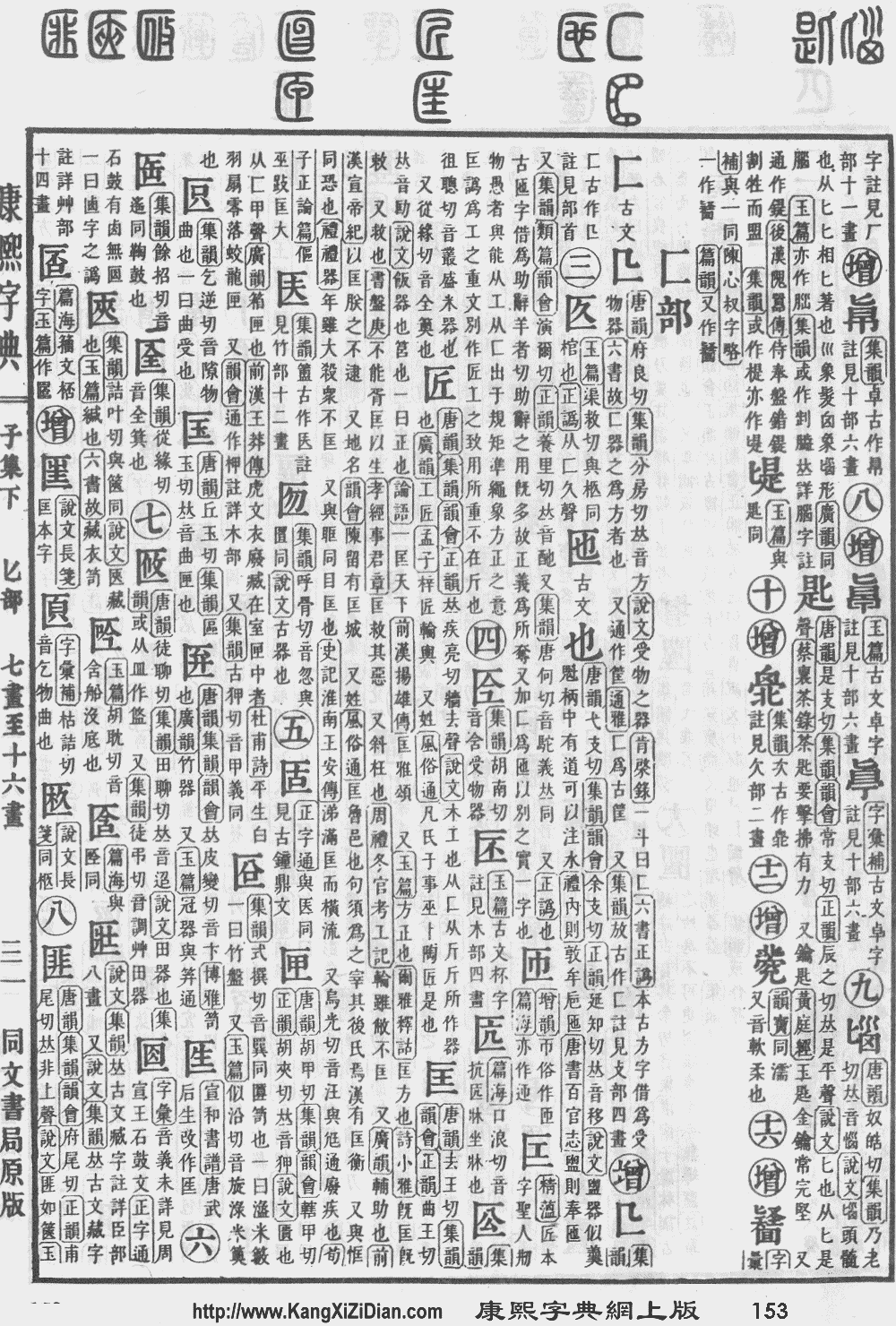
- Kangxi Dictionary: page 153, character 45
- Dai Kanwa Jiten: character 2629
- Dae Jaweon: page 346, character 6
- Hanyu Da Zidian (first edition): volume 1, page 87, character 1
- Unihan data for U+532A
Chinese
| trad. | 匪 | |
|---|---|---|
| simp. # | 匪 | |
Glyph origin
| Historical forms of the character 匪 | |
|---|---|
| Shuowen Jiezi (compiled in Han) | Liushutong (compiled in Ming) |
| Small seal script | Transcribed ancient scripts |
 |
 |
Characters in the same phonetic series (非) (Zhengzhang, 2003)
| Old Chinese | |
|---|---|
| 啡 | *pʰɯːlʔ |
| 排 | *brɯːl |
| 俳 | *brɯːl |
| 輫 | *brɯːl, *buːl |
| 悲 | *prɯl |
| 棑 | *breː, *brɯːls |
| 輩 | *puːls |
| 裴 | *buːl, *bɯl |
| 徘 | *buːl |
| 琲 | *buːlʔ |
| 痱 | *buːlʔ, *pɯds, *bɯl, *bɯls |
| 非 | *pɯl |
| 扉 | *pɯl |
| 緋 | *pɯl |
| 猆 | *pɯl |
| 斐 | *pɯl, *pʰɯlʔ |
| 馡 | *pɯl |
| 騑 | *pɯl, *pʰɯl |
| 誹 | *pɯl, *pɯlʔ, *pɯls |
| 餥 | *pɯl, *pɯlʔ |
| 匪 | *pɯlʔ |
| 棐 | *pɯlʔ |
| 蜚 | *pɯlʔ, *bɯls |
| 篚 | *pɯlʔ |
| 榧 | *pɯlʔ |
| 鯡 | *pɯls |
| 霏 | *pʰɯl |
| 菲 | *pʰɯl, *pʰɯlʔ, *bɯls |
| 婔 | *pʰɯl |
| 裶 | *pʰɯl |
| 悱 | *pʰɯlʔ |
| 奜 | *pʰɯlʔ |
| 腓 | *bɯl, *bɯls |
| 陫 | *bɯlʔ |
| 屝 | *bɯls |
| 厞 | *bɯls |
| 翡 | *bɯls |
Phono-semantic compound (形聲/形声, OC *pɯlʔ) : semantic 匚 (“box”) + phonetic 非 (OC *pɯl)
Pronunciation 1
Definitions
匪
- robber; bandit; gangster
- (Taiwan, officialese, historical, derogatory) of or relating to the "Communist bandits" (共匪 (gòngfěi))
- 匪諜/匪谍 ― fěi dié ― (derogatory) communist spy
- 毛匪澤東/毛匪泽东 ― Máo fěi Zédōng ― (derogatory) Mao Zedong
- 1994, 岳渭仁、冬卉、向東華、曉晴, 外國人眼中的蔣介石和宋美齡, →ISBN, page 14:
- 一般地説,我們叫他們「蔣介石集團」。在報紙上我們有時叫他匪;反過來他也叫我們匪。 [MSC, trad.]
- Yībān dì shuō, wǒmen jiào tāmen “Jiǎngjièshí jítuán”. Zài bàozhǐ shàng wǒmen yǒushí jiào tā fěi; fǎnguòlái tā yě jiào wǒmen fěi. [Pinyin]
- In general, we call them "Chiang Kai-shek clique". On newspapers we often call them bandits, conversely they also call us [communist] bandits.
一般地说,我们叫他们「蒋介石集团」。在报纸上我们有时叫他匪;反过来他也叫我们匪。 [MSC, simp.]
- (literary) not
- 匪夷所思 ― fěiyísuǒsī ― not what an ordinary person can imagine; unusual; fantastic
- 我心匪石,不可轉也。 [Pre-Classical Chinese, trad.]
- From: The Classic of Poetry, c. 11th – 7th centuries BCE, translated based on James Legge's version
- Wǒ xīn fěi shí, bù kě zhuǎn yě. [Pinyin]
- My mind is not a stone; -
It cannot be rolled about.
我心匪石,不可转也。 [Pre-Classical Chinese, simp.]- 夙夜匪懈,主義是從。 [Literary Chinese, trad.]
- From: National Anthem of the Republic of China
- Sùyè fěi xiè, zhǔyì shì cóng. [Pinyin]
- Without resting day or night, follow the Principles.
夙夜匪懈,主义是从。 [Literary Chinese, simp.]
- † Original form of 篚 (fěi, “bamboo basket”).
- † dishonorable; improper (behavior)
- † that; those
- † Alternative form of 斐
- 有匪君子,如切如磋,如琢如磨。 [Pre-Classical Chinese, trad. and simp.]
- From: The Classic of Poetry, c. 11th – 7th centuries BCE, translated based on James Legge's version
- Yǒu fěi jūnzǐ, rú qiē rú cuō, rú zhuó rú mó. [Pinyin]
- There is our elegant and accomplished prince, -
As from the knife and the file,
As from the chisel and the polisher!
Compounds
- 剽匪
- 剿匪 (jiǎofěi)
- 劫匪 (jiéfěi)
- 匪人
- 匪唯
- 匪夷所思 (fěiyísuǒsī)
- 匪彝
- 匪徒 (fěitú)
- 匪惟
- 匪懈
- 匪日
- 匪朝伊夕
- 匪爵
- 匪犯
- 匪石
- 匪石之心
- 匪穴 (fěixué)
- 匪諜/匪谍
- 匪賊/匪贼
- 匪躬
- 匪躬之操
- 匪躬之節/匪躬之节
- 匪難/匪难
- 匪類/匪类 (fěilèi)
- 匪風/匪风
- 匪首 (fěishǒu)
- 團匪/团匪
- 土匪 (tǔfěi)
- 夙夜匪懈 (sùyèfěixiè)
- 幗匪/帼匪
- 幫匪/帮匪
- 慣匪/惯匪
- 拳匪
- 捻匪
- 殘匪/残匪 (cánfěi)
- 獲益匪淺/获益匪浅 (huòyìfěiqiǎn)
- 盜匪/盗匪 (dàofěi)
- 票匪
- 竊匪/窃匪
- 綁匪/绑匪 (bǎngfěi)
- 股匪
- 胡匪 (húfěi)
- 蔫土匪
- 髮匪/发匪
- 鬍匪/胡匪 (húfěi)
Pronunciation 2
Definitions
匪
- Only used in 匪匪.
Pronunciation 3
Japanese
Korean
Vietnamese
This article is issued from Wiktionary. The text is licensed under Creative Commons - Attribution - Sharealike. Additional terms may apply for the media files.