解
| ||||||||
Translingual
| Stroke order | |||
|---|---|---|---|
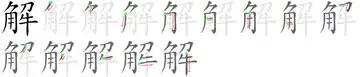 | |||
Han character
解 (Kangxi radical 148, 角+6, 13 strokes, cangjie input 弓月尸竹手 (NBSHQ), four-corner 27252, composition ⿰角𭷔)
References
- Kangxi Dictionary: page 1142, character 1
- Dai Kanwa Jiten: character 35067
- Dae Jaweon: page 1608, character 22
- Hanyu Da Zidian (first edition): volume 6, page 3925, character 10
- Unihan data for U+89E3

Chinese
| trad. | 解 | |
|---|---|---|
| simp. # | 解 | |
| 2nd round simp. | 𭷔 | |
| alternative forms | 觧 | |
Glyph origin
| Historical forms of the character 解 | |||
|---|---|---|---|
| Shang | Western Zhou | Shuowen Jiezi (compiled in Han) | Liushutong (compiled in Ming) |
| Oracle bone script | Bronze inscriptions | Small seal script | Transcribed ancient scripts |
 |
 |
 |
 |
Ideogrammic compound (會意/会意) : 角 (“horn”) + 刀 (“knife”) + 牛 (“cow”) – a knife separates a horn from a cow, i.e. “cut up (an ox)”.
Etymology
Three pronunciations are cognate. "To loosen; to disengage" > "idle, lazy, remiss". Cognate with 懈 (OC *kreːs, “lazy, remiss”) and possibly 邂逅 (OC *ɡreːs ɡoːs, “carefree and happy”).
? Area stem: *C-re. Compare Burmese ဖြေ (hpre, “to untie; to answer; to ease; to absolve”), အဖြေ (a.hpre, “answer, solution; response; explication”); Khmer រាយ (riəy, “to scatter, to be divided up, to separate”), ស្រាយ (sraay, “to untie, to undo, to explain, to solve”).
Pronunciation 1
Definitions
解
- to loosen; to unfasten; to untie
- to divide; to break up; to split; to separate
- to excrete; to go to the toilet
- 小解 ― xiǎojiě ― to empty one's bladder
- to remove; to eliminate
- 解除 ― jiěchú ― to remove; to undo; to cancel
- to dissolve; to become scattered, less substantial, or less visible
- 溶解 ― róngjiě ― to dissolve (in a liquid)
- to resolve
- to solve; to find an answer
- to explain
- to understand; to interpret
- (mathematics) solution (Classifier: 個/个)
- 近似解 ― jìnsì jiě ― approximate solution
- interpretation; explanation; analysis; understanding
- 不求甚解 ― bùqiúshènjiě ― "to not run after over-interpretation"
- 40th hexagram of the I Ching
Compounds
- 一知半解 (yīzhībànjiě)
- 三解脫門/三解脱门
- 不了解
- 不可理解
- 不求甚解 (bùqiúshènjiě)
- 不解 (bùjiě)
- 不解之仇
- 不解之緣/不解之缘 (bùjiězhīyuán)
- 不解事
- 不解其故
- 了解 (liǎojiě)
- 五斗解酲
- 免冠解印
- 兵解
- 冤家宜解不宜結/冤家宜解不宜结 (yuānjiā yí jiě bùyí jié)
- 冰散瓦解
- 冰消凍解/冰消冻解
- 冰消瓦解 (bīngxiāowǎjiě)
- 冰解凍釋/冰解冻释
- 凍解冰釋/冻解冰释
- 分憂解勞/分忧解劳
- 分解 (fēnjiě)
- 分解作用
- 分解力
- 分解因式
- 分解者 (fēnjiězhě)
- 別解/别解 (biéjiě)
- 前理解
- 剖解 (pōujiě)
- 勸解/劝解 (quànjiě)
- 化解 (huàjiě)
- 取解
- 告解 (gàojiě)
- 和解 (héjiě)
- 和解政策
- 和解書/和解书
- 善解人意 (shànjiěrényì)
- 因式分解 (yīnshì fēnjiě)
- 因數分解/因数分解 (yīnshù fēnjiě)
- 圖解/图解 (tújiě)
- 土崩瓦解 (tǔbēngwǎjiě)
- 壯士解腕/壮士解腕
- 大惑不解 (dàhuòbùjiě)
- 大解 (dàjiě)
- 大解八塊/大解八块
- 妙語解頤/妙语解颐
- 寬解/宽解
- 小解 (xiǎojiě)
- 尸解
- 崩解
- 崩解作用
- 巴解 (Bājiě)
- 庖丁解牛 (páodīngjiěniú)
- 庭外和解
- 形解
- 得解
- 慷慨解囊 (kāngkǎijiěnáng)
- 抒解
- 拆解 (chāijiě)
- 挺解
- 推解
- 排解 (páijiě)
- 排難解憂/排难解忧
- 排難解紛/排难解纷
- 推食解衣
- 擴充解釋/扩充解释
- 支解 (zhījiě)
- 救解
- 新解
- 方解石 (fāngjiěshí)
- 曲解 (qūjiě)
- 望風瓦解/望风瓦解
- 析解
- 枝解 (zhījiě)
- 水解 (shuǐjiě)
- 求解 (qiújiě)
- 注解 (zhùjiě)
- 沿革解釋/沿革解释
- 消愁解悶/消愁解闷
- 消災解厄/消灾解厄
- 消解 (xiāojiě)
- 渾身解數/浑身解数
- 漢皋解佩/汉皋解佩
- 潮解 (cháojiě)
- 為人解圍/为人解围
- 理紛解結/理纷解结
- 理解 (lǐjiě)
- 理解力 (lǐjiělì)
- 瓦解 (wǎjiě)
- 瓦解冰泮
- 瓦解冰消
- 瓦解冰銷/瓦解冰销
- 瓦解土崩
- 瓦解星散
- 瓦解星飛/瓦解星飞
- 瓦解雲散/瓦解云散
- 疏解
- 病理解剖
- 百思不解 (bǎisībùjiě)
- 百思莫解
- 百般解說/百般解说
- 監解/监解
- 瞭解/了解 (liǎojiě)
- 破解 (pòjiě)
- 糖解作用
- 紓解/纾解 (shūjiě)
- 結不解/结不解
- 經解/经解 (jīngjiě)
- 縷解/缕解
- 繫鈴解鈴/系铃解铃
- 老嫗能解/老妪能解
- 聊以解嘲
- 肢解 (zhījiě)
- 自我解嘲
- 自解
- 茫然不解
- 茫然費解/茫然费解
- 落解
- 落解粥
- 衣不解帶/衣不解带 (yī bù jiě dài)
- 裂解 (lièjiě)
- 見解/见解 (jiànjiě)
- 解事
- 解人
- 解任 (jiěrèn)
- 解佩
- 解僱/解雇 (jiěgù)
- 解像力
- 解兵
- 解兵釋甲/解兵释甲
- 解凍/解冻 (jiědòng)
- 解制
- 解剖 (jiěpōu)
- 解剖學/解剖学 (jiěpōuxué)
- 解劍拜仇/解剑拜仇
- 解勸/解劝
- 解匠
- 解危
- 解厄
- 解呈
- 解和 (jiěhé)
- 解嘲 (jiěcháo)
- 解嚴/解严 (jiěyán)
- 解囊 (jiěnáng)
- 解困 (jiěkùn)
- 解圍/解围 (jiěwéi)
- 解壓/解压 (jiěyā)
- 解夢/解梦 (jiěmèng)
- 解套
- 解官
- 解巾
- 解弦更張/解弦更张
- 解恨 (jiěhèn)
- 解悟
- 解惑 (jiěhuò)
- 解悶/解闷 (jiěmèn)
- 解悶破寂/解闷破寂
- 解愁 (jiěchóu)
- 解慍/解愠
- 解慰
- 解憂/解忧 (jiěyōu)
- 解手 (jiěshǒu)
- 解手刀
- 解扣兒/解扣儿
- 解批
- 解拆
- 解攜/解携
- 解放 (jiěfàng)
- 解放區/解放区 (jiěfàngqū)
- 解放軍/解放军 (jiěfàngjūn)
- 解故
- 解救 (jiějiù)
- 解散 (jiěsàn)
- 解散權/解散权
- 解數/解数
- 解會/解会
- 解析 (jiěxī)
- 解析函數/解析函数 (jiěxī hánshù)
- 解析幾何/解析几何 (jiěxī jǐhé)
- 解析批評/解析批评
- 解構/解构 (jiěgòu)
- 解毒 (jiědú)
- 解毒劑/解毒剂
- 解民倒懸/解民倒悬
- 解氣/解气 (jiěqì)
- 解決/解决 (jiějué)
- 解渴 (jiěkě)
- 解熱劑/解热剂
- 解玉砂
- 解甲 (jiějiǎ)
- 解甲休兵
- 解甲休士
- 解甲倒戈
- 解甲投戈
- 解甲歸田/解甲归田
- 解甲釋兵/解甲释兵
- 解疑釋結/解疑释结
- 解碼/解码 (jiěmǎ)
- 解碼器/解码器 (jiěmǎqì)
- 解禁 (jiějìn)
- 解答 (jiědá)
- 解約/解约 (jiěyuē)
- 解紐/解纽
- 解紛/解纷
- 解素
- 解組/解组
- 解組歸田/解组归田
- 解網/解网
- 解綬/解绶
- 解縛/解缚
- 解纜/解缆
- 解聘 (jiěpìn)
- 解職/解职 (jiězhí)
- 解脫/解脱 (jiětuō)
- 解藥/解药 (jiěyào)
- 解衣
- 解衣卸甲
- 解衣推食
- 解裝/解装
- 解褐
- 解訟息爭/解讼息争
- 解詁/解诂
- 解說/解说 (jiěshuō)
- 解語花/解语花 (jiěyǔhuā)
- 解調器/解调器 (jiětiáoqì)
- 解謎/解谜 (jiěmí)
- 解讀/解读 (jiědú)
- 解辮/解辫
- 解運/解运
- 解道
- 解酒 (jiějiǔ)
- 解酲
- 解釋/解释 (jiěshì)
- 解鈴繫鈴/解铃系铃
- 解開/解开 (jiěkāi)
- 解開疙瘩/解开疙瘩
- 解除 (jiěchú)
- 解難/解难
- 解難排憂/解难排忧
- 解頤/解颐
- 解顏/解颜
- 解餉/解饷
- 解饞/解馋
- 解驂推食/解骖推食
- 解體/解体 (jiětǐ)
- 解髮佯狂/解发佯狂
- 解龜/解龟
- 說文解字/说文解字 (Shuōwén Jiězì)
- 誤解/误解 (wùjiě)
- 諒解/谅解 (liàngjiě)
- 調解/调解 (tiáojiě)
- 講解/讲解 (jiǎngjiě)
- 費解/费解 (fèijiě)
- 賣解/卖解
- 跑解馬/跑解马
- 辯解/辩解 (biànjiě)
- 迎刃而解 (yíngrèn'érjiě)
- 迷惑不解
- 通解 (tōngjiě)
- 進學解/进学解
- 開解/开解
- 難分難解/难分难解 (nánfēnnánjiě)
- 難解/难解 (nánjiě)
- 難解難分/难解难分 (nánjiěnánfēn)
- 電解/电解 (diànjiě)
- 電解質/电解质 (diànjiězhì)
- 題解/题解 (tíjiě)
- 風休冰解/风休冰解
- 體解/体解
- 點解/点解 (dim2 gaai2)
Descendants
Others:
Pronunciation 2
Definitions
解
Compounds
Pronunciation 3
Definitions
解
- skills; moves (of martial arts, dance, acrobatics, etc.)
- (dated, music) to conclude a piece; to complete
- 夫曲有如此,當以他曲解之,方可盡其聲矣。 [Literary Chinese, trad.]
- From: Taiping Yulan (Readings of the Taiping Era), 977 – 983 CE
- Fú qǔ yǒurú cǐ, dāng yǐ tāqǔ xiè zhī, fāngkě jìn qí shēng yǐ. [Pinyin]
- With a work such like this, another piece should be played to complete it, so that the music finds its fullest expression.
夫曲有如此,当以他曲解之,方可尽其声矣。 [Literary Chinese, simp.]
- Used in 解廌 (xièzhì), alternative form of 獬豸 (xièzhì)
- Alternative form of 廨 (xiè, “government office”)
- Alternative form of 懈 (xiè, “to relax”)
- Xie (place name in Hedong, i.e. 河東, in present-day 運城)
- a surname
Pronunciation 4
References
- “解”, in 漢語多功能字庫 (Multi-function Chinese Character Database), 香港中文大學 (the Chinese University of Hong Kong), 2014–
Japanese
Readings
Compounds
- 解禁 (kaikin)
- 解決 (kaiketsu)
- 解雇 (kaiko)
- 解散 (kaisan)
- 解釈 (kaishaku)
- 解除 (kaijo, “cancel, release”)
- 解消 (kaishō)
- 解職 (kaishoku)
- 解析 (kaiseki)
- 解説 (kaisetsu)
- 解体 (kaitai)
- 解答 (kaitō)
- 解凍 (kaitō)
- 解読 (kaidoku)
- 解任 (kainin)
- 解放 (kaihō)
- 解剖 (kaibō, “dissection”)
- 解明 (kaimei)
- 解約 (kaiyaku)
- 解脱 (gedatsu)
- 解毒 (gedoku)
- 解熱 (genetsu)
- 瓦解 (gakai)
- 曲解 (kyokkai)
- 見解 (kenkai)
- 誤解 (gokai)
- 正解 (seikai)
- 難解 (nankai)
- 氷解 (hyōkai)
- 分解 (bunkai)
- 弁解 (benkai)
- 明解 (meikai)
- 理解 (rikai)
- 了解 (ryōkai)
- 和解 (wakai)
Affix
解 • (kai)
- divide; split; separate
- untie; loosen; relax; remove
- make clear; explain
- understand; comprehend
- opinion; explanation; solution
Noun
解 • (kai)
- explanation; interpretation
- (mathematics) solution
- answer; reply (to a given question or problem)
References
- Matsumura, Akira, editor (2006), 大辞林 [Daijirin] (in Japanese), Third edition, Tōkyō: Sanseidō, →ISBN
Korean
Hanja
解 • (hae, gae) (hangeul 해, 개, revised hae, gae, McCune–Reischauer hae, kae, Yale hay, kay)
- This term needs a translation to English. Please help out and add a translation, then remove the text
{{rfdef}}.
Compounds
- 해약 (解約)