力
| ||||||||
| ||||||||
| ||||||||
Translingual
| Stroke order | |||
|---|---|---|---|
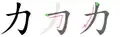 | |||
| Stroke order | |||
|---|---|---|---|
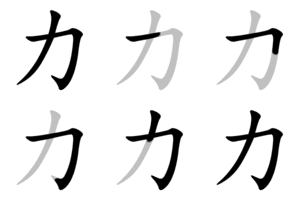 | |||
Han character
力 (Kangxi radical 19, 力+0, 2 strokes, cangjie input 大尸 (KS), four-corner 40027, composition ⿻𠃌丿)
- Kangxi radical #19, ⼒.
Derived characters
Descendants
See also
- カ (Japanese katakana)
References
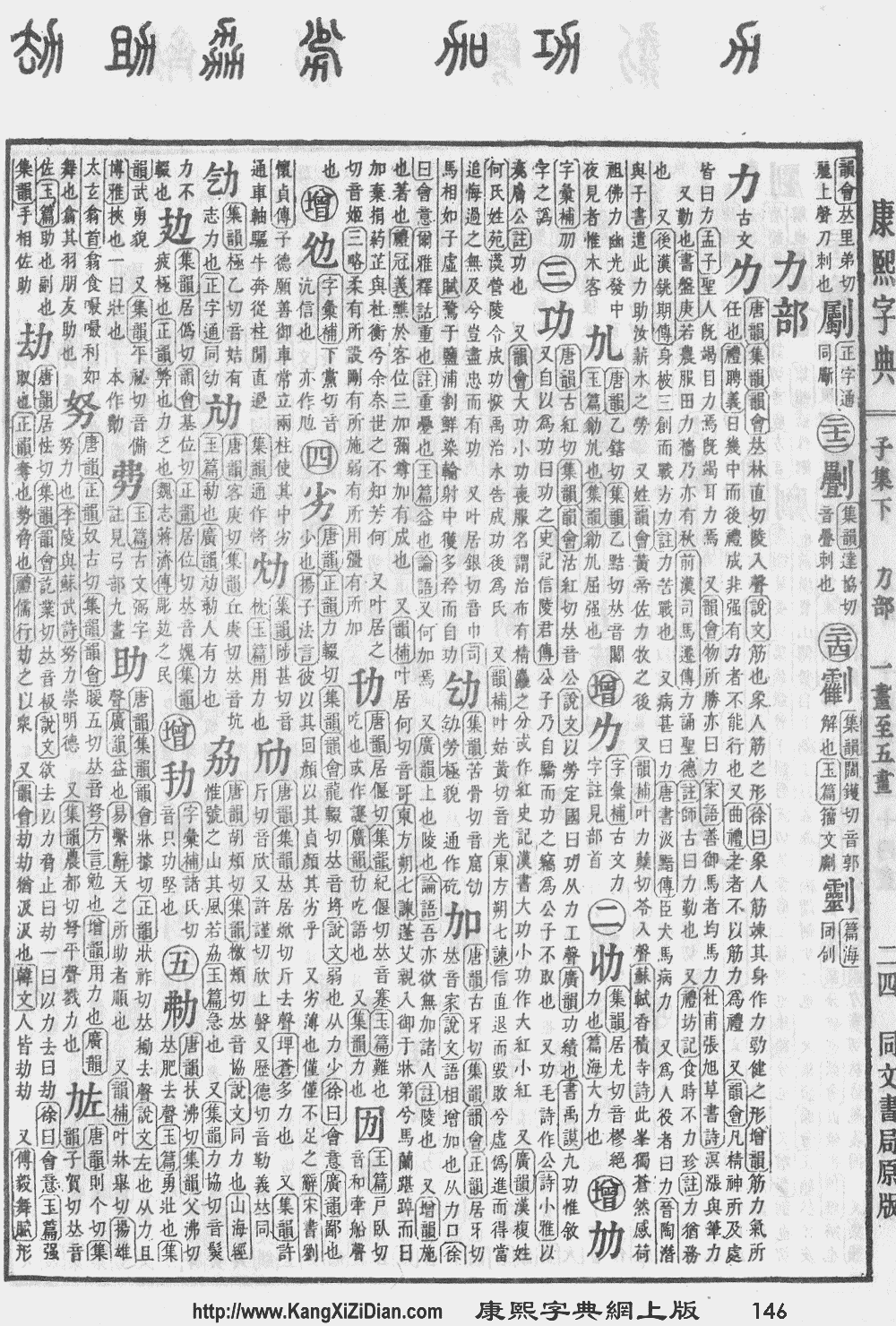
- Kangxi Dictionary: page 146, character 5
- Dai Kanwa Jiten: character 2288
- Dae Jaweon: page 327, character 31
- Hanyu Da Zidian (first edition): volume 1, page 364, character 4
- Unihan data for U+529B
- Unihan data for U+F98A
Chinese
| simp. and trad. |
力 | |
|---|---|---|
| alternative forms | 𠠲 ⿻力丶 | |
Glyph origin
| Historical forms of the character 力 | |||||||
|---|---|---|---|---|---|---|---|
| Shang | Western Zhou | Spring and Autumn | Warring States | Shuowen Jiezi (compiled in Han) | Liushutong (compiled in Ming) | ||
| Oracle bone script | Bronze inscriptions | Bronze inscriptions | Bronze inscriptions | Chu slip and silk script | Qin slip script | Small seal script | Transcribed ancient scripts |
 |
 |
 |
 |
 |
 |
 |
 |
Pictogram (象形) – alternative interpretation, either an arm bending out from the side of the body, or a wooden plough.
Etymology
From Proto-Sino-Tibetan *k-ra (“strength; to win; classifier for people”) + *-k (STEDT; Schuessler, 2007). Cognate with Burmese အား (a:, “strength; force”); Proto-Loloish *ra² (“strength”), whence Nuosu ꊋ (we); Panyi Bai [script needed] (ɣɯ̱⁴², “strength”); Central Bai hhep (“strength”). A causative derivative is 飭 (OC rhək) (Shcuessler, 2007).
Schuessler (2007) also suggests an etymological connection with 來 (OC *m·rɯːɡ, “to come”).
Pronunciation
Definitions
力
Synonyms
- (physical strength):
- (ability):
- 一手
- 人才 (réncái)
- 伎倆/伎俩 (jìliǎng) (literary)
- 俊才 (jùncái)
- 兩手/两手 (liǎngshǒu)
- 力量 (lìliàng)
- 功力 (gōnglì)
- 功夫 (gōngfu) (especially in martial arts)
- 天才 (tiāncái) (genius)
- 才具 (cáijù) (formal)
- 才力 (cáilì)
- 才器 (cáiqì) (literary)
- 才幹/才干 (cáigàn)
- 才情 (cáiqíng)
- 手段 (shǒuduàn)
- 手法 (shǒufǎ)
- 手眼 (shǒuyǎn)
- 才能
- 手腕 (shǒuwàn)
- 手腕子 (shou3 onn3 zr) (Xiang)
- 才華/才华 (cáihuá)
- 技巧 (jìqiǎo)
- 把式 (bǎshì) (dialectal)
- 技能 (jìnéng)
- 技藝/技艺 (jìyì)
- 技術/技术 (jìshù)
- 招數/招数 (zhāoshù)
- 本事
- 本領/本领 (běnlǐng)
- 材幹/材干 (cáigān) (Classical Chinese)
- 能力 (nénglì)
- 能為/能为 (néngwéi) (literary, dialectal)
- 能耐 (néngnài) (colloquial)
- 能量 (néngliàng)
- 花頭/花头 (Wu)
- 著數/着数
- 解數/解数
- 資力/资力 (zīlì)
- 路數/路数 (lùshù)
- 身手 (shēnshǒu)
- 道行
- (function):
- (to make an effort):
- 一力 (yīlì)
- 下力 (xiàlì)
- 不遺餘力/不遗余力 (bùyíyúlì)
- 僶俛/𠊟俯 (mǐnmiǎn) (literary)
- 儘力/尽力 (jìnlì) (archaic)
- 全力以赴 (quánlìyǐfù)
- 出力 (chūlì)
- 力圖/力图 (lìtú)
- 力求 (lìqiú)
- 力爭/力争 (lìzhēng)
- 加勁/加劲 (jiājìn)
- 努力 (nǔlì)
- 勉力 (miǎnlì)
- 呵嘶呵嘶 (o4 sr1 o4 sr1) (Xiang)
- 強力/强力 (qiánglì) (literary)
- 悉力 (xīlì) (literary)
- 打拼 (dǎpīn)
- 拍拚 (Hokkien, Teochew)
- 拍灘/拍滩 (Xiamen Hokkien)
- 拼搏 (pīnbó)
- 搏 (bó) (literary, or in compounds)
- 摔拍 (Zhangzhou Hokkien)
- 攢勁/攒劲 (zan3 jin4) (Xiang)
- 極力/极力 (jílì)
- 殫力/殚力 (dānlì)
- 用力 (yònglì)
- 盡力/尽力 (jìnlì)
- 竭力 (jiélì)
- 竭盡全力/竭尽全力 (jiéjìnquánlì)
- 落力 (lok6 lik6) (Cantonese, Pinghua, Hakka, Pinghua, Hokkien, Pinghua, Teochew, Pinghua, Wenzhounese, Pinghua)
- 賣力/卖力 (màilì)
- 賣力氣/卖力气 (mài lìqi)
Compounds
- 一力 (yīlì)
- 一臂之力 (yībìzhīlì)
- 不力 (bùlì)
- 不自量力 (bùzìliànglì)
- 不量力
- 主力 (zhǔlì)
- 乞力馬扎羅山/乞力马扎罗山
- 人力 (rénlì)
- 他力
- 以力服人
- 伯力 (Bólì)
- 併力/并力 (bìnglì)
- 依力克其 (Yīlìkèqí)
- 侵徹力/侵彻力
- 倍力橋/倍力桥
- 假力
- 健力
- 側蝕力/侧蚀力
- 傾力/倾力
- 傳染力/传染力 (chuánrǎnlì)
- 儘力/尽力 (jìnlì)
- 免疫力 (miǎnyìlì)
- 內力/内力
- 內聚力/内聚力
- 全力 (quánlì)
- 公信力 (gōngxìnlì)
- 兵力 (bīnglì)
- 凝聚力 (níngjùlì)
- 出力 (chūlì)
- 分力
- 分子力
- 分解力
- 判斷力/判断力 (pànduànlì)
- 創造力/创造力 (chuàngzàolì)
- 力不到,不為財/力不到,不为财
- 力不副心
- 力不勝任/力不胜任
- 力不同科
- 力不從心/力不从心 (lìbùcóngxīn)
- 力不從願/力不从愿
- 力不自勝/力不自胜
- 力主 (lìzhǔ)
- 力乏兵衰
- 力作 (lìzuò)
- 力促 (lìcù)
- 力倍功半
- 力偶 (lì'ǒu)
- 力克 (lìkè)
- 力分勢弱/力分势弱
- 力力碌碌
- 力勝/力胜
- 力勸/力劝
- 力困筋乏
- 力圖/力图 (lìtú)
- 力均勢敵/力均势敌
- 力場/力场 (lìchǎng)
- 力士 (lìshì)
- 力大無窮/力大无穷
- 力學/力学 (lìxué)
- 力屈勢窮/力屈势穷
- 力屈計窮/力屈计穷
- 力屈道窮/力屈道穷
- 力巴
- 力平衡
- 力度 (lìdù)
- 力弱
- 力強/力强
- 力役
- 力征 (lìzhēng)
- 力微任重
- 力戒 (lìjiè)
- 力戰/力战 (lìzhàn)
- 力所能及 (lìsuǒnéngjí)
- 力把
- 力拚
- 力持
- 力挫
- 力挽狂瀾/力挽狂澜 (lìwǎnkuánglán)
- 力排眾議/力排众议 (lìpáizhòngyì)
- 力攻 (lìgōng)
- 力政
- 力敵勢均/力敌势均
- 力敵萬人/力敌万人
- 力敵萬夫/力敌万夫
- 力有未逮 (lìyǒuwèidài)
- 力殫財竭/力殚财竭
- 力氣/力气 (lìqi)
- 力水
- 力求 (lìqiú)
- 力濟九區/力济九区
- 力爭/力争 (lìzhēng)
- 力田
- 力畜
- 力疾
- 力盛
- 力盡筋疲/力尽筋疲
- 力盡筋舒/力尽筋舒
- 力矩 (lìjǔ)
- 力竭 (lìjié)
- 力臂 (lìbì)
- 力臣
- 力荐 (lìjiàn)
- 力薄才疏
- 力行 (lìxíng)
- 力衰
- 力請/力请
- 力謀/力谋
- 力證/力证 (lìzhèng)
- 力蹙勢窮/力蹙势穷
- 力軟筋麻/力软筋麻
- 力辭不受/力辞不受
- 力透紙背/力透纸背
- 力道
- 力邀
- 力避 (lìbì)
- 力量 (lìliàng)
- 力錢/力钱
- 力阻
- 力點/力点
- 功力 (gōnglì)
- 加力騷/加力骚
- 努力 (nǔlì)
- 助力 (zhùlì)
- 努筋拔力
- 勉力 (miǎnlì)
- 務力/务力
- 動力/动力 (dònglì)
- 勞力/劳力 (láolì)
- 勠力 (lùlì)
- 勢力/势力 (shìlì)
- 勢單力薄/势单力薄 (shìdānlìbó)
- 勢均力敵/势均力敌 (shìjūnlìdí)
- 勢窮力孤/势穷力孤
- 勢窮力極/势穷力极
- 匹力撲六/匹力扑六
- 十力
- 協力/协力 (xiélì)
- 反撞力
- 合力 (hélì)
- 吃力 (chīlì)
- 同心僇力
- 吸力 (xīlì)
- 吹灰之力 (chuīhuīzhīlì)
- 咭力骨碌
- 回力棒
- 回力球
- 回天之力
- 國力/国力 (guólì)
- 地力 (dìlì)
- 壓克力/压克力 (yākèlì)
- 壓力/压力 (yālì)
- 外力 (wàilì)
- 大力 (dàlì)
- 夯力
- 奮力/奋力 (fènlì)
- 好力寶/好力宝
- 威力 (wēilì)
- 媚力 (mèilì)
- 孤力難為/孤力难为 (gū lì nán wéi)
- 學力/学力 (xuélì)
- 定力 (dìnglì)
- 宣力
- 實力/实力 (shílì)
- 工力 (gōnglì)
- 巧克力 (qiǎokèlì)
- 巴力 (Bālì)
- 希力奧斯/希力奥斯
- 帝力 (Dìlì)
- 平衡力
- 年輕力壯/年轻力壮 (niánqīnglìzhuàng)
- 并力 (bìnglì)
- 幻想力
- 度德量力
- 引力 (yǐnlì)
- 引潮力
- 張力/张力 (zhānglì)
- 強力/强力 (qiánglì)
- 彈力/弹力 (tánlì)
- 影響力/影响力 (yǐngxiǎnglì)
- 後座力/后座力 (hòuzuòlì)
- 後繼乏力/后继乏力
- 得力 (délì)
- 心力 (xīnlì)
- 心餘力絀/心余力绌 (xīnyúlìchù)
- 念力 (niànlì)
- 思力 (sīlì)
- 怪力亂神/怪力乱神 (guàilìluànshén)
- 悉力 (xīlì)
- 悉心畢力/悉心毕力
- 惜力 (xīlì)
- 惟力是視/惟力是视
- 情見力屈/情见力屈
- 想像力 (xiǎngxiànglì)
- 應力/应力 (yìnglì)
- 戮力 (lùlì)
- 戰力/战力 (zhànlì)
- 才力 (cáilì)
- 扭力 (niǔlì)
- 抗力 (kànglì)
- 拉力 (lālì)
- 拔山力
- 推力 (tuīlì)
- 掌力
- 接力 (jiēlì)
- 接觸力/接触力
- 握力 (wòlì)
- 摩擦力 (mócālì)
- 效力 (xiàolì)
- 斥力 (chìlì)
- 旅力
- 既判力
- 日力 (rìlì)
- 智力 (zhìlì)
- 智均力敵/智均力敌
- 暴力 (bàolì)
- 替力
- 有力 (yǒulì)
- 有氣沒力/有气没力
- 朱古力 (zhūgǔlì)
- 格力
- 核力 (hélì)
- 核子力
- 棉薄之力
- 業力/业力
- 極力/极力 (jílì)
- 權力/权力 (quánlì)
- 權鈞力齊/权钧力齐
- 欣賞力/欣赏力
- 欲振乏力
- 歇力
- 武力 (wǔlì)
- 死力 (sǐlì)
- 殫力/殚力 (dānlì)
- 殫精畢力/殚精毕力
- 殺傷力/杀伤力 (shāshānglì)
- 毅力 (yìlì)
- 比權量力/比权量力
- 民力 (mínlì)
- 氣力/气力 (qìlì)
- 水力 (shuǐlì)
- 汽力 (qìlì)
- 法力 (fǎlì)
- 注意力 (zhùyìlì)
- 活力 (huólì)
- 浮力 (fúlì)
- 潛力/潜力 (qiánlì)
- 潮力發電/潮力发电
- 火力 (huǒlì)
- 無力/无力 (wúlì)
- 無能為力/无能为力 (wúnéngwéilì)
- 熱力/热力 (rèlì)
- 營力/营力
- 爆發力/爆发力 (bàofālì)
- 物力 (wùlì)
- 犬馬之力/犬马之力 (quǎnmǎzhīlì)
- 猛力
- 獨力/独力 (dúlì)
- 獸力車/兽力车
- 理解力 (lǐjiělì)
- 生力軍/生力军 (shēnglìjūn)
- 生力麵/生力面
- 生命力 (shēngmìnglì)
- 生產力/生产力 (shēngchǎnlì)
- 用力 (yònglì)
- 畜力 (chùlì)
- 畢力同心/毕力同心
- 盡力/尽力 (jìnlì)
- 目力 (mùlì)
- 省力 (shěnglì)
- 眼力 (yǎnlì)
- 破壞力/破坏力 (pòhuàilì)
- 磁力 (cílì)
- 神力 (shénlì)
- 神工妙力
- 視力/视力 (shìlì)
- 科氏力 (kēshìlì)
- 科里奧利力 (kēlǐ'àolìlì)
- 稽古之力
- 窮心劇力/穷心剧力
- 竭力 (jiélì)
- 競爭力/竞争力 (jìngzhēnglì)
- 筆力/笔力 (bǐlì)
- 筋疲力盡/筋疲力尽 (jīnpílìjìn)
- 筋疲力軟/筋疲力软
- 精力 (jīnglì)
- 精疲力盡/精疲力尽 (jīngpílìjìn)
- 絕力/绝力
- 綿力/绵力 (miánlì)
- 縛雞之力/缚鸡之力
- 續航力/续航力
- 群力 (qúnlì)
- 群策群力 (qúncèqúnlì)
- 耐力 (nàilì)
- 耳力 (ěrlì)
- 聯想力/联想力
- 聲雄力猛/声雄力猛
- 聽力/听力 (tīnglì)
- 肆力
- 肥力 (féilì)
- 股肱之力
- 能力 (nénglì)
- 腦力/脑力 (nǎolì)
- 腳力/脚力 (jiǎolì)
- 膂力 (lǚlì)
- 自不量力 (zìbùliànglì)
- 自力 (zìlì)
- 自然力 (zìránlì)
- 自食其力 (zìshíqílì)
- 致力 (zhìlì)
- 艾力西湖 (Àilìxīhú)
- 苦力 (kǔlì)
- 著力/着力 (zhuólì)
- 蓋孜力克/盖孜力克 (Gàizīlìkè)
- 藥力/药力 (yàolì)
- 號召力/号召力 (hàozhàolì)
- 蚊力 (wénlì)
- 蠻力/蛮力
- 衝力/冲力 (chōnglì)
- 親和力/亲和力 (qīnhélì)
- 角力
- 觔力/斤力
- 解像力
- 觸山之力/触山之力
- 計盡力窮/计尽力穷
- 計窮力屈/计穷力屈
- 計窮力極/计穷力极
- 計窮力盡/计穷力尽
- 記憶力/记忆力 (jìyìlì)
- 誘惑力/诱惑力 (yòuhuòlì)
- 說服力/说服力
- 財力/财力 (cáilì)
- 財匱力絀/财匮力绌
- 財殫力盡/财殚力尽
- 財竭力盡/财竭力尽
- 貲力/赀力
- 費力/费力 (fèilì)
- 資力/资力 (zīlì)
- 賣力/卖力 (màilì)
- 賽力/赛力 (Sàilì)
- 購買力/购买力 (gòumǎilì)
- 赤力力
- 身強力壯/身强力壮 (shēnqiánglìzhuàng)
- 軍力/军力 (jūnlì)
- 較時量力/较时量力
- 通力 (tōnglì)
- 道力
- 運力/运力
- 酒力 (jiǔlì)
- 重力 (zhònglì)
- 量力而為/量力而为 (liànglì'érwéi)
- 量力而行 (liànglì'érxíng)
- 量小力微
- 量時度力/量时度力
- 阻力 (zǔlì)
- 阿莎力 (āshālì)
- 陳力就列/陈力就列
- 電力/电力 (diànlì)
- 震撼力
- 靈力/灵力 (línglì)
- 靜力平衡/静力平衡
- 靜摩擦力/静摩擦力
- 預力/预力
- 願力/愿力
- 風力/风力 (fēnglì)
- 食力 (shílì)
- 餘力/余力 (yúlì)
- 馬力/马力 (mǎlì)
- 骨力
- 體力/体力 (tǐlì)
- 鬥力/斗力 (dòulì)
- 鬼力
- 魄力 (pòlì)
- 魅力 (mèilì)
- 魔力 (mólì)
- 鼎力 (dǐnglì)
- 齊心同力/齐心同力
Descendants
Others:
References
- “力”, in 漢語多功能字庫 (Multi-function Chinese Character Database), 香港中文大學 (the Chinese University of Hong Kong), 2014–
Japanese
Readings
Etymology 1
| Kanji in this term |
|---|
| 力 |
| ちから Grade: 1 |
| kun’yomi |
From Old Japanese, ultimately from Proto-Japonic *tikara. Compound of Old Japanese elements 霊 (chi, “power, life force, essence”) + 柄 (kara, “source, origin”).
Noun
力 • (chikara)
Derived terms
- 力足 (chikara ashi): a tensed leg; tensing one's legs; (sumo) the traditional sumo stomp at the beginning of a match
- 力合わせ (chikara awase): matching strength: a competition of strength; (by extension) a sumo match
- 力軍 (chikara ikusa): a test of strength, a competition of strength
- 力石 (chikara ishi): a large stone used as a dumbbell for purposes of tests of strength
- 力一杯 (chikara ippai): with all one's strength, as hard as one can
- 力持ち (chikaramochi): a very strong person
- 力添え (chikarazoe): help, assistance, aid
Etymology 2
| Kanji in this term |
|---|
| 力 |
| りき Grade: 1 |
| goon |
From Middle Chinese 力 (lik). The goon reading, so likely the initial borrowing. Compare modern Cantonese reading lik6.
Affix
力 • (riki)
Noun
力 • (riki)
Derived terms
Etymology 3
| Kanji in this term |
|---|
| 力 |
| りょく Grade: 1 |
| kan’on |
From Middle Chinese 力 (lì), but apparently from a different source dialect or at a different time than 力 (lik). The kan'on reading, so likely a later borrowing. Compare reconstructed Middle Chinese reading /li̯ək/ or Korean reading ryeok.
Only found in compounds and idioms in modern Japanese.
Pronunciation
- IPA(key): [ɾʲo̞kɯ̟ᵝ]
Affix
力 • (ryoku)
Derived terms
- 引力 (inryoku, “attractive force”)
- 営力 (eiryoku, “geomorphic agent”)
- 気力 (kiryoku, “spirit; drive; morale; vigor”)
- 斥力 (sekiryoku, “repulsive force”)
- 動力 (dōryoku, “energy, motive force”)
- 力争 (ryokusō, “test of strength; hard fight”)
- 努力 (doryoku, “effort, endeavor”)
- 協力 (kyōryoku, “cooperation; working together”)
- 体力 (tairyoku, “bodily strength; physical power”)
- 魅力 (miryoku, “allure, charm, glamour”)
- 実力 (jitsuryoku, “merit, true ability; force”)
References
- NHK Broadcasting Culture Research Institute, editor (1998), NHK日本語発音アクセント辞典 [NHK Japanese Pronunciation Accent Dictionary] (in Japanese), Tōkyō: NHK Publishing, →ISBN
- Matsumura, Akira, editor (2006), 大辞林 [Daijirin] (in Japanese), Third edition, Tōkyō: Sanseidō, →ISBN
Korean
Etymology
From Middle Chinese 力 (MC lik). Perhaps more specifically from Late Middle Chinese 力 (LMC *liə̌k).
| Historical Readings | ||
|---|---|---|
| Dongguk Jeongun Reading | ||
| Dongguk Jeongun, 1448 | 륵〮 (Yale: lúk) | |
Pronunciation
- (SK Standard/Seoul) IPA(key): [ɾjʌ̹k̚] ~ [jʌ̹k̚]
- Phonetic hangul: [력/역]
Compounds
- 마력 (魔力, maryeok)
- 마력 (馬力, maryeok)
- 강력 (強力, gangnyeok)
- 권력 (權力, gwollyeok)
- 근력 (筋力, geullyeok)
- 노력 (努力, noryeok)
- 능력 (能力, neungnyeok)
- 동력 (動力, dongnyeok)
- 매력 (魅力, maeryeok)
- 무력 (武力, muryeok)
- 부력 (浮力, buryeok)
- 병력 (兵力, byeongnyeok)
- 세력 (勢力, seryeok)
- 속력 (速力, songnyeok)
- 수력 (水力, suryeok)
- 시력 (視力, siryeok)
- 실력 (實力, sillyeok)
- 압력 (壓力, amnyeok)
- 약력 (弱力, yangnyeok)
- 역기 (力器, yeokgi)
- 역도 (力道, yeokdo)
- 외력 (外力, oeryeok)
- 인력 (人力, illyeok)
- 인력 (引力, illyeok)
- 조력 (助力, joryeok)
- 조력 (潮力, joryeok)
- 중력 (重力, jungnyeok)
- 지력 (智力, jiryeok)
- 폭력 (暴力, pongnyeok)
- 풍력 (風力, pungnyeok)
- 학력 (學力, hangnyeok)
- 협력 (協力, hyeomnyeok)
- 화력 (火力, hwaryeok)
- 효력 (效力, hyoryeok)
Vietnamese
Han character
力: Hán Việt readings: lực (
力: Nôm readings: sức[1][3][4], lực[2][3], sực[3][4], sựt[3][4], rực[1]
Compounds
References
- Nguyễn (2014).
- Nguyễn et al. (2009).
- Trần (2004).
- Hồ (1976).