杞
| ||||||||
 | ||||||||
Translingual
Han character
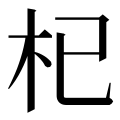
杞 (Kangxi radical 75, 木+3, 7 strokes, cangjie input 木尸山 (DSU), four-corner 47917, composition ⿰木己 or ⿰木已)
References
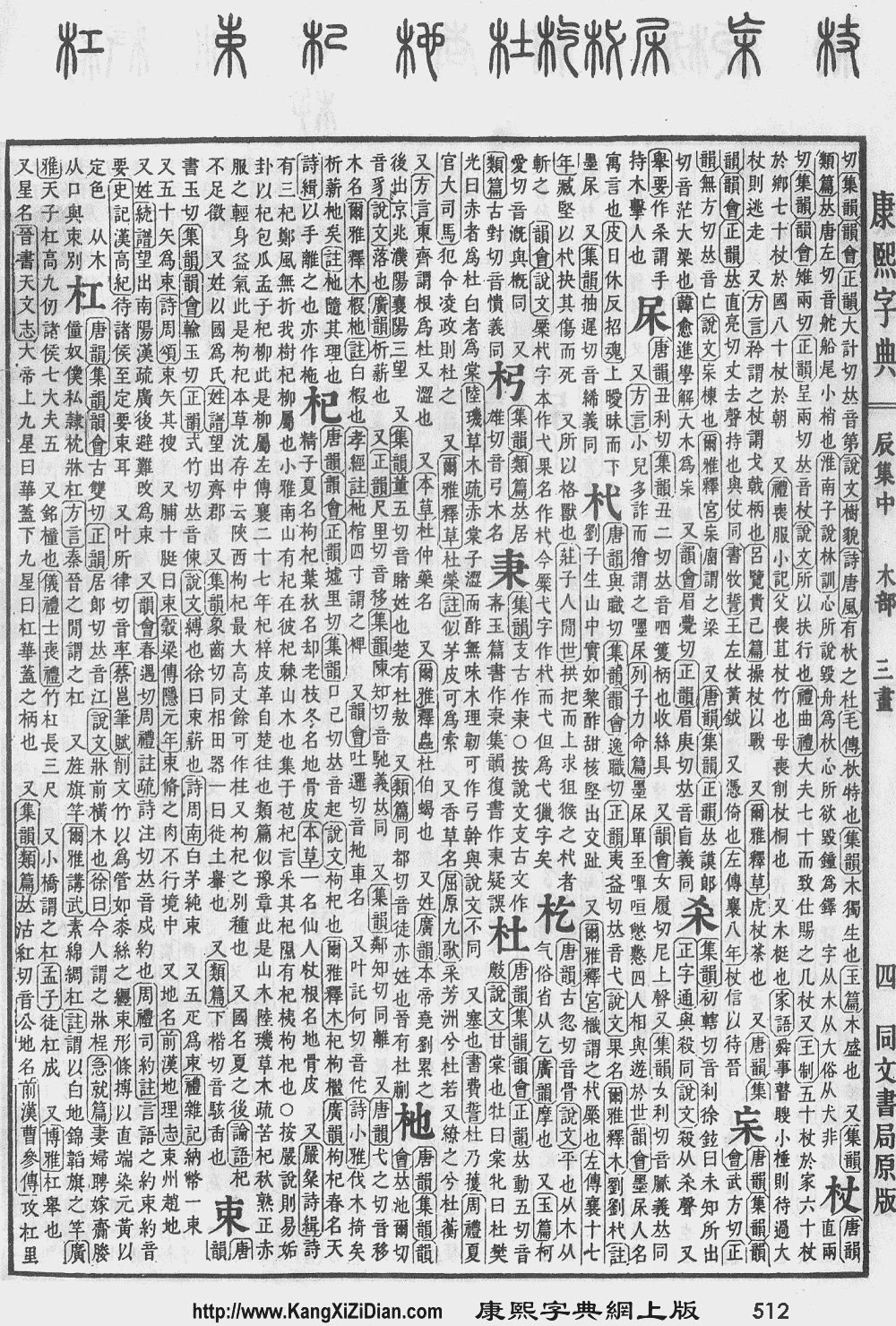
- Kangxi Dictionary: page 512, character 11
- Dai Kanwa Jiten: character 14479
- Dae Jaweon: page 898, character 1
- Hanyu Da Zidian (first edition): volume 2, page 1162, character 3
- Unihan data for U+675E
- Unihan data for U+2F8DB
Chinese
| simp. and trad. |
杞 | |
|---|---|---|
Glyph origin
Pronunciation
Definitions
杞
- Salix integra
- Synonym: 杞柳 (qǐliǔ)
- 將仲子兮、無踰我里、無折我樹杞。 [Pre-Classical Chinese, trad.]
- From: The Classic of Poetry, c. 11th – 7th centuries BCE, translated based on James Legge's version
- Jiāng Zhòngzǐ xī, wú yú wǒ lǐ, wú zhé wǒ shùqǐ. [Pinyin]
- I pray you, Master Zhong, Do not come leaping into my hamlet; Do not break my willow trees.
将仲子兮、无逾我里、无折我树杞。 [Pre-Classical Chinese, simp.]
- wolfberry
- Synonym: 枸杞 (gǒuqǐ)
- 翩翩者鵻、載飛載止、集于苞杞。 [Pre-Classical Chinese, trad.]
- From: The Classic of Poetry, c. 11th – 7th centuries BCE, translated based on James Legge's version
- Piānpiān zhě zhuī, zǎi fēi zǎi zhǐ, jí yú bāoqǐ. [Pinyin]
- Darting and dashing are the turtle-doves; now flying, now stopping; gathering on the lush wolfberry-trees.
翩翩者𱊅、载飞载止、集于苞杞。 [Pre-Classical Chinese, simp.]
- a kind of tree
- 南山有杞,北山有李。 [Pre-Classical Chinese, trad. and simp.]
- From: The Classic of Poetry, c. 11th – 7th centuries BCE, translated based on James Legge's version
- Nánshān yǒu qǐ, běishān yǒu lǐ. [Pinyin]
- On the southern hills there are qi-trees; on the northern hills there are plum-trees.
- a small feudal state (Qi), founded in Henan during the Shang Dynasty
- 子曰:「夏禮,吾能言之,杞不足徵也;殷禮,吾能言之,宋不足徵也。文獻不足故也,足則吾能徵之矣。」 [Classical Chinese, trad.]
- From: The Analects of Confucius, c. 475 – 221 BCE
- Zǐyuē: “Xiàlǐ, wú néng yán zhī, Qǐ bùzú zhēng yě; Yīnlǐ, wú néng yán zhī, Sòng bùzú zhēng yě. Wénxiàn bùzú gù yě, zú zé wú néng zhēng zhī yǐ.” [Pinyin]
- The Master said, "I could describe the ceremonies of the Xia dynasty, but Qi cannot sufficiently attest my words. I could describe the ceremonies of the Yin dynasty, but Song cannot sufficiently attest my words. (They cannot do so) because of the insufficiency of their records and wise men. If those were sufficient, I could adduce them in support of my words."
子曰:「夏礼,吾能言之,杞不足征也;殷礼,吾能言之,宋不足征也。文献不足故也,足则吾能征之矣。」 [Classical Chinese, simp.]
Compounds
Usage notes
According to Zhu Xi's 《詩經集傳》 Collected Commentaries on the Classic of Poetry, there are three kinds of trees named 杞 (qǐ) in the Classic of Poetry:
- 「柳屬也。」 "a kind of willows", i.e. Salix integra,
- 「枸檵也。」 "wolfberry", and
- 「樹,如樗。一名狗骨。」 "a tree which resembles the varnish tree [Ailanthus glandulosa] and is also named 'dog-bone'," () (though unlikely to be the shrubby 麻黃/麻黄 (máhuáng, “ephedra”)).
Japanese
Kanji
杞
- This term needs a translation to English. Please help out and add a translation, then remove the text
{{rfdef}}.
Korean
Hanja
杞 • (gi) (hangeul 기, revised gi, McCune–Reischauer ki, Yale ki)
- This term needs a translation to English. Please help out and add a translation, then remove the text
{{rfdef}}.
Vietnamese
This article is issued from Wiktionary. The text is licensed under Creative Commons - Attribution - Sharealike. Additional terms may apply for the media files.