侈
| ||||||||
Translingual
Han character
侈 (Kangxi radical 9, 人+6, 8 strokes, cangjie input 人弓戈弓 (ONIN), four-corner 27227, composition ⿰亻多)
Derived characters
- 𣔢 㢋
References
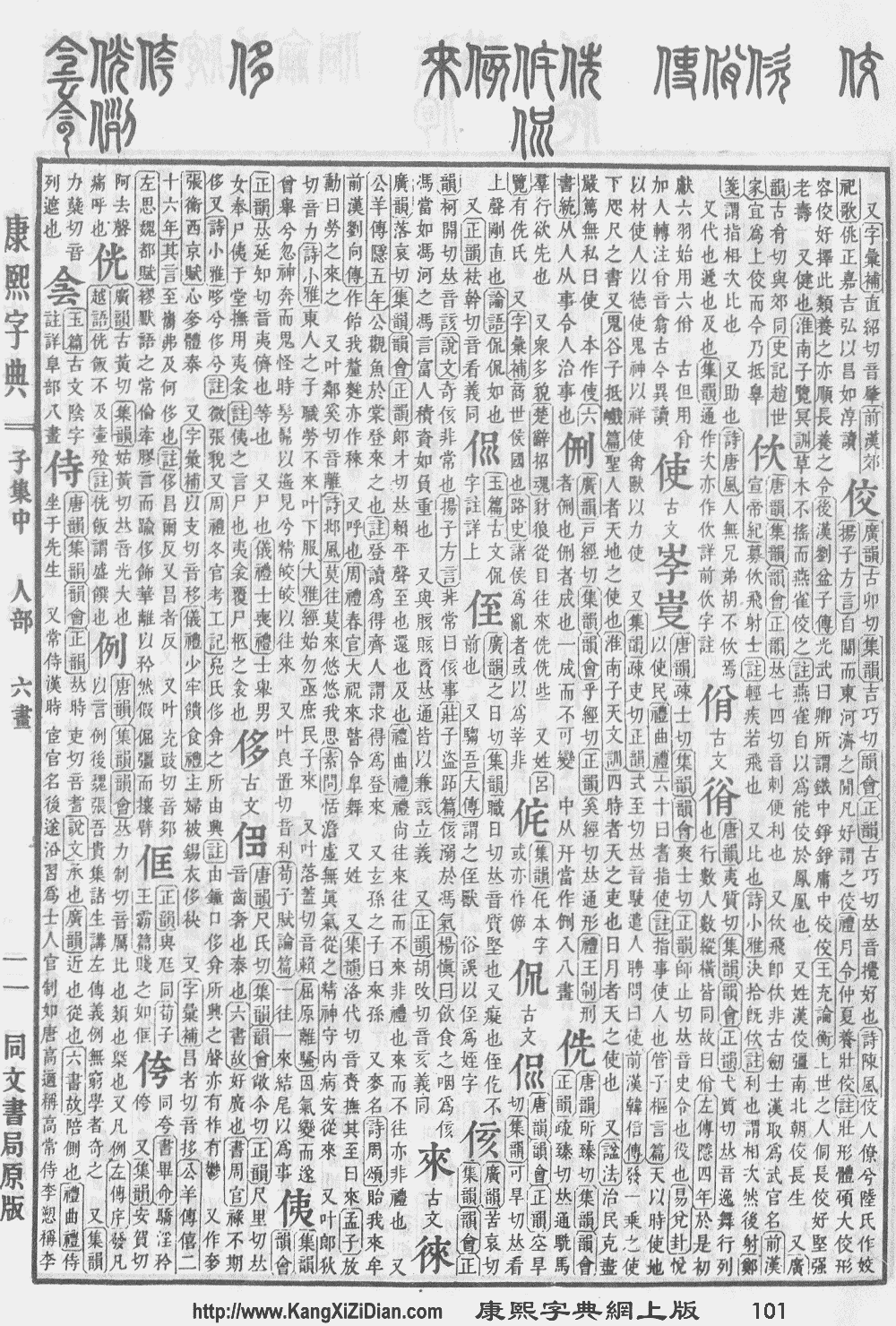
- Kangxi Dictionary: page 101, character 19
- Dai Kanwa Jiten: character 583
- Dae Jaweon: page 215, character 1
- Hanyu Da Zidian (first edition): volume 1, page 151, character 8
- Unihan data for U+4F88
Chinese
| trad. | 侈 | |
|---|---|---|
| simp. # | 侈 | |
| alternative forms | 𠈎 ancient 奓 𠕝 𣆚 𠕰 | |
Glyph origin
| Historical forms of the character 侈 | ||||||
|---|---|---|---|---|---|---|
| ||||||
|
References: Mostly from Richard Sears' Chinese Etymology site (authorisation),
|


Characters in the same phonetic series (多) (Zhengzhang, 2003)
| Old Chinese | |
|---|---|
| 多 | *ʔl'aːl |
| 哆 | *ʔl'aːlʔ, *ʔl'aːls, *ʔr'aːls, *hr'aːl, *l̥ʰjaːlʔ, *l̥ʰjalʔ, *l̥ʰjɯs |
| 跢 | *ʔl'aːls, *ʔl'aːds |
| 痑 | *ʔl'aːls, *l̥ʰaːl, *l̥ʰaːn |
| 爹 | *daːʔ, *tjaː |
| 陊 | *l'aːlʔ, *l'alʔ |
| 橠 | *naːlʔ |
| 袲 | *naːlʔ, *l̥ʰjalʔ, *lal |
| 奓 | *ʔr'aːl, *ʔr'aːls |
| 栘 | *ɦljeːl, *lal |
| 黟 | *ʔleːl, *ʔlil |
| 趍 | *sʰlo, *l'al |
| 誃 | *l'al, *l̥ʰjalʔ |
| 簃 | *l'al, *lal |
| 眵 | *ʔljjal, *l̥ʰjal |
| 恀 | *ʔljalʔ, *l̥ʰjalʔ, *ɦljalʔ |
| 侈 | *l̥ʰjalʔ |
| 姼 | *l̥ʰjalʔ, *ɦljal, *ɦljalʔ |
| 鉹 | *l̥ʰjalʔ, *lal |
| 垑 | *l̥ʰjalʔ |
| 袳 | *l̥ʰjalʔ |
| 卶 | *l̥ʰjals, *hljals |
| 宜 | *ŋral |
| 誼 | *ŋrals |
| 竩 | *ŋrals |
| 移 | *lal |
| 迻 | *lal |
| 扅 | *lal |
| 拸 | *lal, *lalʔ |
| 熪 | *lal |
| 謻 | *lal |
| 蛥 | *ɢljad |
Phono-semantic compound (形聲/形声, OC *l̥ʰjalʔ) : semantic 人 (“person”) + phonetic 多 (OC *ʔl'aːl).
Etymology 1
From Proto-Sino-Tibetan *g(r/l)aːj (“scatter, sow, dispersedly widely; wide; star”) (STEDT, Schuessler, 2007).
- Insides Chinese, cognate with 哆 (OC *ʔl'aːlʔ), 移 (OC *lal), 離 (OC *reːls, *rel, *rels) (STEDT);
- Outsides Chinese, cognate with Burmese ကျယ် (kyai, “wide”), Mizo tai (“scatter, disperse”), Northern Qiang [script needed] (ʁdʐə, “star”) (Mawo), Southern Qiang [Term?] (χdʐe³³pe⁵⁵, “star”) (Taoping), etc. (ibid.).
Pronunciation
Definitions
侈
- extravagant; wasteful; excessive; luxurious
- 二十四年,春,刻其桷,皆非禮也。御孫諫曰:「臣聞之:『儉,德之共也;侈,惡之大也。』先君有共德,而君納諸大惡,無乃不可乎?」 [Classical Chinese, trad.]
- From: Commentary of Zuo, c. 4th century BCE, translation from Zuozhuan: Commentary on the "Spring and Autumn Annals" (2017), by Stephen Durrant, Wai-yee Li and David Schaberg
- Èrshísì nián, chūn, kè qí jué, jiē fēilǐ yě. Yùsūn jiàn yuē: “Chén wén zhī: ‘Jiǎn, dé zhī gòng yě; chǐ, è zhī dà yě.’ Xiānjūn yǒu gòngdé, ér jūn nà zhū dà'è, wú nǎi bùkě hū?” [Pinyin]
- In the twenty-fourth year, in spring, the square pillars were carved: in both cases, this was not in accordance with ritual propriety. Yusun remonstrated: “I have heard: ‘Frugality is the most revered of virtues; profligacy is the greatest of evils.’ Our former ruler had revered virtue, but you led him into this greatest of evils. How on earth could this not be totally wrong?”
二十四年,春,刻其桷,皆非礼也。御孙谏曰:「臣闻之:『俭,德之共也;侈,恶之大也。』先君有共德,而君纳诸大恶,无乃不可乎?」 [Classical Chinese, simp.]- 不侈於後世,不靡於萬物,不暉於數度,以繩墨自矯,而備世之急,古之道術有在於是者。 [Classical Chinese, trad.]
- From: Zhuangzi, circa 3rd – 2nd centuries BCE
- Bùchǐ yú hòushì, bùmǐ yú wànwù, bùhuī yú shùdù, yǐ shéngmò zìjiǎo, ér bèi shì zhī jí, gǔ zhī dàoshù yǒu zài yúshì zhě. [Pinyin]
- To leave no example of extravagance to future generations; to show no wastefulness in the use of anything; to make no display in the degree of their (ceremonial) observances; to keep themselves (in their expenditure) under the restraint of strict and exact rule, so as to be prepared for occurring emergencies - such regulations formed part of the system of the Way in antiquity.
不侈于后世,不靡于万物,不晖于数度,以绳墨自矫,而备世之急,古之道术有在于是者。 [Classical Chinese, simp.]
- exaggerated; overstated
Compounds
Japanese
Kanji
侈
- This term needs a translation to English. Please help out and add a translation, then remove the text
{{rfdef}}.
Korean
Hanja
侈 (eum 치 (chi))
- This term needs a translation to English. Please help out and add a translation, then remove the text
{{rfdef}}.
Vietnamese
Han character
侈: Hán Nôm readings: xỉ, ẩy, xảy, xí, đứa, xẩy, xi
- This term needs a translation to English. Please help out and add a translation, then remove the text
{{rfdef}}.
References
This article is issued from Wiktionary. The text is licensed under Creative Commons - Attribution - Sharealike. Additional terms may apply for the media files.