生
| ||||||||
| ||||||||
Translingual
| Stroke order (Chinese) | |||
|---|---|---|---|
 | |||
| Stroke order (Chinese) | |||
|---|---|---|---|
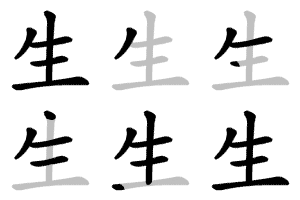 | |||
| Stroke order (Japan) | |||
|---|---|---|---|
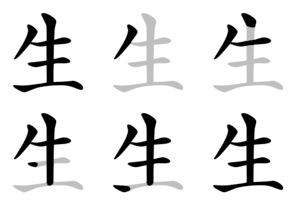 | |||
Han character
生 (Kangxi radical 100, 生+0, 5 strokes, cangjie input 竹手一 (HQM), four-corner 25100, composition ⿻𠂉土)
- Kangxi radical #100, ⽣.
- Shuowen Jiezi radical №215
Derived characters
See also
Further reading
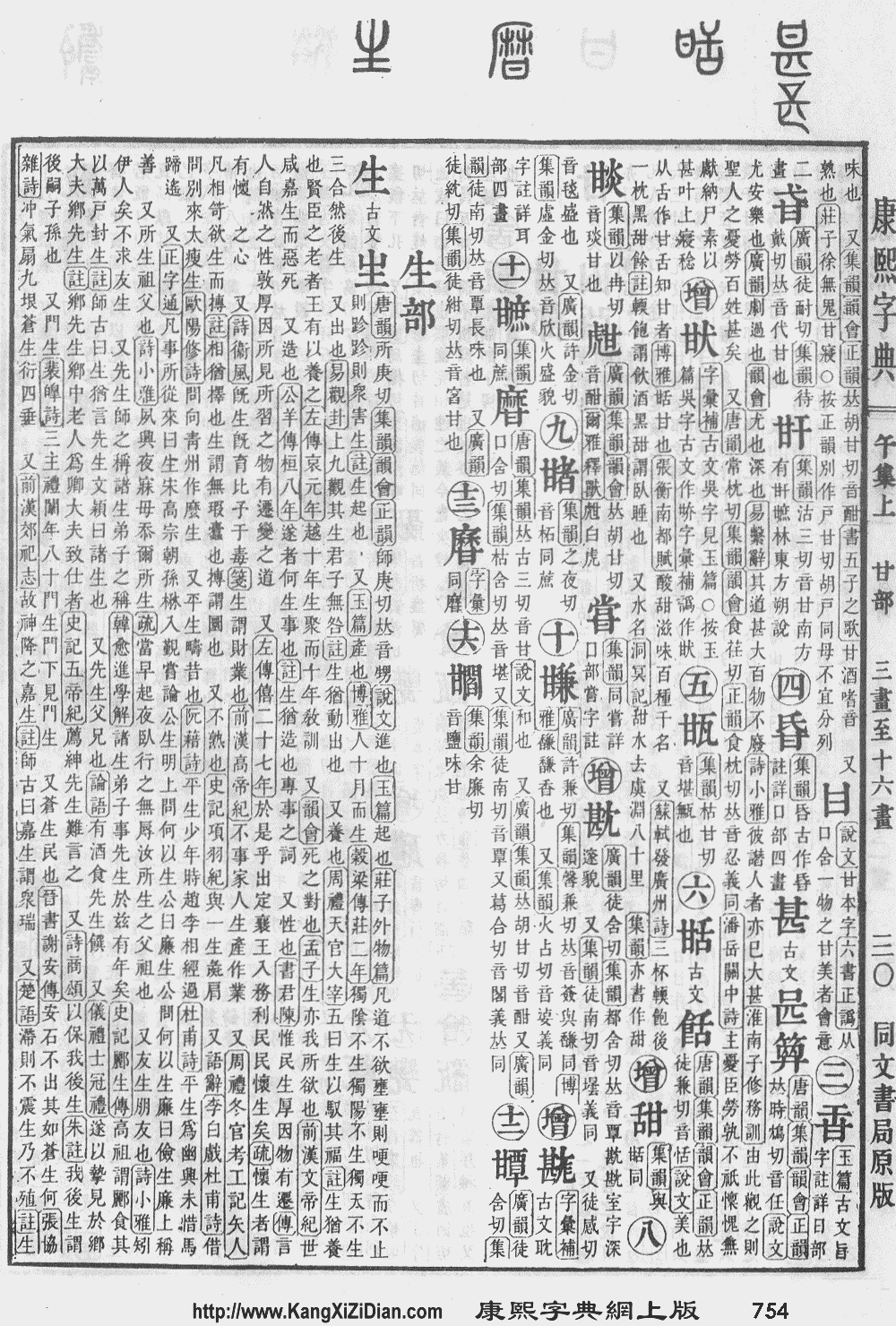
- Kangxi Dictionary: page 754, character 26
- Dai Kanwa Jiten: character 21670
- Dae Jaweon: page 1162, character 4
- Hanyu Da Zidian (first edition): volume 4, page 2575, character 1
- Unihan data for U+751F
Chinese
Glyph origin
| Historical forms of the character 生 | |||
|---|---|---|---|
| Shang | Western Zhou | Shuowen Jiezi (compiled in Han) | Liushutong (compiled in Ming) |
| Oracle bone script | Bronze inscriptions | Small seal script | Transcribed ancient scripts |
 |
 |
 |
 |
| Old Chinese | |
|---|---|
| 猜 | *sʰlɯː |
| 輤 | *sʰleːns |
| 綪 | *sʰleːns, *ʔsreːŋ |
| 倩 | *sʰleːns, *sʰleŋs |
| 棈 | *sʰleːns |
| 蒨 | *sʰeːns |
| 篟 | *sʰeːns |
| 生 | *sʰleːŋ, *sreŋs |
| 牲 | *sreŋ |
| 笙 | *sreŋ |
| 甥 | *sreŋ |
| 鉎 | *sreŋ, *sleːŋ |
| 珄 | *sreŋ |
| 鼪 | *sreŋ, *sreŋs |
| 猩 | *sreŋ, *seːŋ |
| 狌 | *sreŋ |
| 眚 | *sreŋʔ |
| 貹 | *sreŋs |
| 崝 | *zreːŋ |
| 精 | *ʔsleŋ, *ʔsleŋs |
| 菁 | *ʔsleŋ |
| 鶄 | *ʔsleŋ, *sʰleːŋ |
| 蜻 | *ʔsleŋ, *sʰleːŋ |
| 鼱 | *ʔsleŋ |
| 婧 | *ʔsleŋ, *zleŋs, *zleŋʔ |
| 睛 | *ʔsleŋ, *sʰleŋʔ |
| 箐 | *ʔsleŋ |
| 聙 | *ʔsleŋ |
| 旌 | *ʔsleŋ |
| 清 | *sʰleŋ |
| 圊 | *sʰleŋ |
| 請 | *sʰleŋʔ, *zleŋs, *zleŋ |
| 凊 | *sʰleŋs |
| 䝼 | *zleŋs, *zleŋ |
| 靚 | *zleŋs |
| 情 | *zleŋ |
| 晴 | *zleŋ |
| 夝 | *zleŋ |
| 靜 | *zleŋʔ |
| 靖 | *zleŋʔ |
| 睲 | *seŋʔ, *seːŋs |
| 惺 | *seŋʔ, *seːŋ |
| 性 | *sleŋs |
| 姓 | *sleŋs |
| 靗 | *l̥ʰeŋs |
| 鯖 | *ʔljeŋ, *sʰleːŋ |
| 青 | *sʰleːŋ |
| 靘 | *sʰleːŋ, *sʰleːŋs |
| 掅 | *sʰleːŋs |
| 胜 | *sleːŋ |
| 曐 | *sleːŋ |
| 星 | *sleːŋ |
| 鮏 | *sleːŋ |
| 腥 | *seːŋ, *seːŋs |
| 鯹 | *seːŋ |
| 醒 | *seːŋ, *seːŋʔ, *seːŋs |
| 篂 | *seːŋ |
Ideogrammic compound (會意/会意) : 屮 (“bud”) + 一 (“ground”) – sprouting from the ground.
Etymology 1
| simp. and trad. |
生 | |
|---|---|---|
| alternative forms | 𤯓 | |
From Proto-Sino-Tibetan *s-riŋ ~ s-r(j)aŋ (“to live; to be alive; to give birth; raw; green”). Cognate with Burmese ရှင် (hrang, “to live; alive”), Mizo hring (“to bear; to bring forth; to give birth to; green”).
Schuessler (2007) proposes that Proto-Sino-Tibetan *sriŋ is derived from the root *sri (“to exist”) (whence possibly Chinese 體 (OC *r̥ʰiːʔ, “body; shape; form”)) + *-ŋ (“terminative suffix”).
Both level tone and falling tone readings are found in Middle Chinese, but the latter has since been lost and is merged into the level-tone reading in modern dialects.
Related to 青 (OC *sʰleːŋ, “blue-green”), 蒼 (OC *sʰaːŋ, *sʰaːŋʔ, “dark blue; deep green”).
Derivatives: 性 (OC *sleŋs, “nature; character; personality; quality”), 姓 (OC *sleŋs, “family name”).
Pronunciation 1
Definitions
生
- to live; to subsist; to exist
- to grow; to develop; to bud
- (transitive) to bear; to give birth; to bring up; to rear
- to be born; to come into existence
- (dialectal) to lay (an egg)
- pupil; disciple; student
- (historical) scholar; Confucian scholar
- (opera) actor or male character
- Short for 先生 (xiānshēng, “gentleman”).
- having life; live
- Synonym: 活
- life; existence; being; living
- fresh; not stale
- unripe
- raw; uncooked
- (historical ethnography) uncultured; uncultivated; wild; uncivilized; savage
- 生黎 ― shēng Lí ― wild Li
- strange; unfamiliar
- mechanically; forcedly
- very; quite; extremely
- 生怕 ― shēngpà ― to fear; to be afraid of
- vivid; strong; forceful
- innate; natural; born with
- † The template Template:zh-original does not use the parameter(s):
gloss=[[intelligence]]; [[natural]] [[endowment]]
Please see Module:checkparams for help with this warning.Original form of 性 (xìng). - living things; organism
- livelihood; subsistence
- 謀生/谋生 ― móushēng ― to make a living
- lifetime; all one's life
- birthday; anniversary
- to bring back to life; to revive; to rescue
- to generate; to breed; to create
- to manufacture; to produce
- to happen; to occur; to take place
- to catch (a disease)
- (transitive) to be infested by a parasite
- (Buddhism) to go into society; to be reincarnated
- (dialectal) to set up; to put in; to settle
- to light; to ignite (a fire)
- a surname
Synonyms
| Variety | Location | Words |
|---|---|---|
| Classical Chinese | 生, 長 | |
| Formal (Written Standard Chinese) | 長 | |
| Mandarin | Taiwan | 長 |
| Yantai (Muping) | 生 | |
| Jinan | 長 | |
| Wanrong | 長 | |
| Xi'an | 長 | |
| Ürümqi | 生 | |
| Wuhan | 長 | |
| Guilin | 長 | |
| Yangzhou | 生 | |
| Singapore | 長 | |
| Cantonese | Guangzhou | 生 |
| Hong Kong | 生 | |
| Dongguan | 生 | |
| Gan | Lichuan | 長 |
| Pingxiang | 生 | |
| Hakka | Meixian | 生 |
| Miaoli (N. Sixian) | 生 | |
| Pingtung (Neipu; S. Sixian) | 生 | |
| Hsinchu County (Zhudong; Hailu) | 生 | |
| Taichung (Dongshi; Dabu) | 生 | |
| Hsinchu County (Qionglin; Raoping) | 生 | |
| Jin | Taiyuan | 長 |
| Eastern Min | Fuzhou | 生 |
| Southern Min | Xiamen | 生 |
| Quanzhou | 生 | |
| Zhangzhou | 生 | |
| Taipei | 生 GT | |
| Singapore (Hokkien) | 生 | |
| Shantou | 生 | |
| Jieyang | 生 | |
| Leizhou | 生 | |
| Haikou | 生 | |
| Wu | Suzhou | 長 |
| Ningbo | 生 | |
| Wenzhou | 生 | |
| Jinhua | 生 | |
| Xiang | Loudi | 生 |
| Note | GT - General Taiwanese (no specific region identified) | |
| Variety | Location | Words |
|---|---|---|
| Classical Chinese | 生 | |
| Formal (Written Standard Chinese) | 生 | |
| Mandarin | Taiwan | 生 |
| Yantai (Muping) | 生 | |
| Yinchuan | 生 | |
| Ürümqi | 生 | |
| Wuhan | 生 | |
| Singapore | 生 | |
| Cantonese | Guangzhou | 生, 臊 |
| Hong Kong | 生, 臊 | |
| Dongguan | 生 | |
| Singapore (Guangfu) | 生 | |
| Gan | Nanchang | 生 |
| Huizhou | Jixi | 生 |
| Jin | Taiyuan | 生 |
| Northern Min | Jian'ou | 洗 |
| Eastern Min | Fuzhou | 生 |
| Southern Min | Xiamen | 生 |
| Quanzhou | 生 | |
| Zhangzhou | 生 | |
| Tainan | 生 | |
| Singapore (Hokkien) | 生 | |
| Manila (Hokkien) | 生 | |
| Singapore (Teochew) | 生 | |
| Haikou | 生 | |
| Wu | Shanghai | 養 especially of human beings, 生 |
| Suzhou | 養 especially of human beings, 生 | |
| Wenzhou | 生 | |
| Jinhua | 生 | |
| Xiang | Loudi | 生 |
| Variety | Location | Words |
|---|---|---|
| Formal (Written Standard Chinese) | 有生 | |
| Mandarin | Beijing | 活 |
| Taiwan | 活 | |
| Jinan | 活 | |
| Xi'an | 活 | |
| Wuhan | 活 | |
| Chengdu | 活 | |
| Guilin | 活 | |
| Yangzhou | 活 | |
| Hefei | 活 | |
| Singapore | 活 | |
| Cantonese | Guangzhou | 生 |
| Hong Kong | 生 | |
| Hong Kong (San Tin Weitou) | 生 | |
| Hong Kong (Ting Kok) | 生 | |
| Hong Kong (Tung Ping Chau) | 生 | |
| Yangjiang | 生 | |
| Singapore (Guangfu) | 生 | |
| Gan | Nanchang | 活 |
| Hakka | Meixian | 生 |
| Hong Kong | 生 | |
| Senai (Huiyang) | 生 | |
| Jin | Taiyuan | 活 |
| Northern Min | Jian'ou | 生 |
| Eastern Min | Fuzhou | 活 |
| Southern Min | Xiamen | 活 |
| Singapore (Hokkien) | 活 | |
| Chaozhou | 活 | |
| Bangkok (Teochew) | 活 | |
| Johor Bahru (Teochew) | 活 | |
| Singapore (Teochew) | 活 | |
| Wu | Shanghai | 活 |
| Suzhou | 活 | |
| Wenzhou | 活, 健 | |
| Xiang | Changsha | 活 |
| Shuangfeng | 活 | |
Antonyms
- (antonym(s) of “uncultured”): 熟 (shú)
Pronunciation 2
Pronunciation
Definitions
生
Pronunciation
Synonyms
- 桑 (sāng)
Compounds
- 一切眾生/一切众生
- 一死一生
- 一生 (yīshēng)
- 一生一世 (yīshēngyīshì)
- 一線生機/一线生机
- 一陽生/一阳生
- 丁固生松
- 七孔生煙/七孔生烟
- 七竅生煙/七窍生烟
- 下江先生
- 三生
- 三生有幸 (sānshēngyǒuxìng)
- 三生石
- 不事生產/不事生产
- 不安生
- 不枉此生
- 不死不生
- 不生不死
- 不生不滅/不生不灭
- 不生心
- 不視生產/不视生产
- 不老長生/不老长生
- 不虛此生/不虚此生
- 不顧生死/不顾生死
- 丟生/丢生
- 中生代
- 中生動物/中生动物
- 主治醫生/主治医生 (zhǔzhì yīshēng)
- 乍生
- 九死一生 (jiǔsǐyīshēng)
- 乾生受/干生受
- 乾生子/干生子
- 了無生機/了无生机
- 了無生趣/了无生趣
- 事生肘腋
- 五柳先生
- 互生
- 亭林先生
- 人不聊生
- 人地生疏 (réndìshēngshū)
- 人急智生
- 人急計生/人急计生
- 人生 (rénshēng)
- 人生在世
- 人生如夢/人生如梦 (rénshēngrúmèng)
- 人生如寄
- 人生如戲/人生如戏
- 人生如萍
- 人生朝露
- 人生無常/人生无常
- 人生觀/人生观 (rénshēngguān)
- 今生 (jīnshēng)
- 今生今世 (jīnshēngjīnshì)
- 他生 (tāshēng)
- 伐生
- 仿生學/仿生学 (fǎngshēngxué)
- 休養生息/休养生息 (xiūyǎngshēngxī)
- 你生
- 佛生日
- 作麼生/作么生
- 侍應生/侍应生 (shìyìngshēng)
- 侍生
- 佾生
- 來生/来生 (láishēng)
- 保生 (bǎoshēng)
- 侯生
- 保生大帝 (Bǎoshēng Dàdì)
- 個人衛生/个人卫生 (gèrén wèishēng)
- 借腹生子
- 偏生
- 做生
- 偷生 (tōushēng)
- 做生意 (zuò shēngyi)
- 做生日 (zuòshēngrì)
- 做生活
- 偷生苟活
- 傍生
- 催生 (cuīshēng)
- 傷生/伤生
- 像生
- 僑生/侨生 (qiáoshēng)
- 像生兒/像生儿
- 像生花
- 儒生 (rúshēng)
- 優生保健/优生保健
- 優生學/优生学 (yōushēngxué)
- 元生代
- 先生 (xiānshēng)
- 兜攬生意/兜揽生意
- 全真先生
- 全能生產/全能生产
- 兩性生殖/两性生殖
- 兩腋生風/两腋生风
- 公共衛生/公共卫生 (gōnggòng wèishēng)
- 公生明
- 公眾衛生/公众卫生
- 公費生/公费生
- 共生 (gòngshēng)
- 共生礦/共生矿
- 再生 (zàishēng)
- 再生之德
- 再生之恩
- 再生父母 (zàishēngfùmǔ)
- 再生紙/再生纸 (zàishēngzhǐ)
- 再生緣/再生缘
- 再生纖維/再生纤维
- 再生能源 (zàishēng néngyuán)
- 再生資源/再生资源
- 冬烘先生
- 出死入生
- 出生 (chūshēng)
- 出生入死 (chūshēngrùsǐ)
- 出生別/出生别 (chūshēngbié)
- 出生牙
- 出生率 (chūshēnglǜ)
- 出生證明/出生证明 (chūshēng zhèngmíng)
- 出芽生殖
- 分裂生殖
- 初生之犢/初生之犊 (chūshēngzhīdú)
- 別生枝節/别生枝节
- 別開生面/别开生面 (biékāishēngmiàn)
- 前生 (qiánshēng)
- 剖腹生產/剖腹生产
- 劣等生 (lièděngshēng)
- 劫後餘生/劫后余生 (jiéhòuyúshēng)
- 勉生
- 務實生理/务实生理
- 勞生/劳生
- 化生 (huàshēng)
- 十二生肖 (shí'èr shēngxiào)
- 十死一生
- 十死九生
- 十生九死
- 千生萬死/千生万死
- 半生 (bànshēng)
- 半生不熟 (bànshēngbùshú)
- 半生半熟
- 即景生情
- 卵生 (luǎnshēng)
- 卵胎生 (luǎntāishēng)
- 厚生 (hòushēng)
- 厚生省
- 原生代 (Yuánshēngdài)
- 原生動物/原生动物 (yuánshēng dòngwù)
- 原生林 (yuánshēnglín)
- 原生植物
- 原生海岸
- 原生礦物/原生矿物
- 原生質/原生质 (yuánshēngzhì)
- 友生 (yǒushēng)
- 受生
- 叢生/丛生 (cóngshēng)
- 叢生葉/丛生叶
- 口吻生花
- 可憐生/可怜生
- 古生代 (Gǔshēng Dài)
- 古生物 (gǔshēngwù)
- 古生物學/古生物学 (gǔshēngwùxué)
- 古生界
- 另開生面/另开生面
- 同卵雙生/同卵双生
- 同生 (tóngshēng)
- 合生
- 同生共死 (tóngshēnggòngsǐ)
- 同生死 (tóngshēngsǐ)
- 吃生活
- 同胞雙生/同胞双生
- 同舍生
- 否極生泰/否极生泰
- 含生
- 和氣生財/和气生财
- 哉生明
- 哉生魄
- 單主寄生/单主寄生
- 喪生/丧生 (sàngshēng)
- 噓枯吹生/嘘枯吹生
- 四生 (sìshēng)
- 回生 (huíshēng)
- 回生乏術/回生乏术
- 回生起死
- 國計民生/国计民生 (guójìmínshēng)
- 土生土長/土生土长 (tǔshēngtǔzhǎng)
- 土長根生/土长根生
- 地理先生
- 塗炭生民/涂炭生民
- 塗炭生靈/涂炭生灵 (tútànshēnglíng)
- 墓生兒子/墓生儿子
- 增廣生員/增广生员
- 增生 (zēngshēng)
- 外拆生意
- 外生
- 外生殖器 (wàishēngzhíqì)
- 多生
- 夢筆生花/梦笔生花 (mèngbǐshēnghuā)
- 大人先生
- 大先生
- 大半生 (dàbànshēng)
- 大地重生
- 大學生/大学生 (dàxuéshēng)
- 大專生/大专生
- 天下蒼生/天下苍生
- 天公生 (Tiāngōngshēng)
- 天子門生/天子门生
- 太學生/太学生 (tàixuéshēng)
- 太憨生
- 天文生 (tiānwénshēng)
- 天生 (tiānshēng)
- 天生地設/天生地设
- 天生天化
- 天生天殺/天生天杀
- 天生尤物
- 天生羽翼
- 天生麗質/天生丽质 (tiānshēnglìzhì)
- 太瘦生
- 太老先生
- 夾生/夹生
- 夾生飯/夹生饭 (jiāshengfàn)
- 女先生
- 女生 (nǚshēng)
- 女生外嚮/女生外向
- 好好先生
- 好沒生/好没生
- 好生
- 好生之德 (hàoshēngzhīdé)
- 好生惡殺/好生恶杀
- 好生意
- 妄生穿鑿/妄生穿凿
- 如虎生翼
- 妙筆生花/妙笔生花 (miàobǐshēnghuā)
- 妙語橫生/妙语横生
- 妙趣橫生/妙趣横生 (miàoqùhéngshēng)
- 始生魄
- 娃娃生
- 婦人生鬚/妇人生须
- 娶妻生子 (qǔqīshēngzǐ)
- 婚生子女
- 媽媽生/妈妈生
- 媽祖生/妈祖生
- 嬌生慣養/娇生惯养 (jiāoshēngguànyǎng)
- 孤生
- 孤雌生殖 (gūcí shēngzhí)
- 孳生 (zīshēng)
- 學生/学生 (xuéshēng)
- 學生證/学生证 (xuéshēngzhèng)
- 孿生/孪生 (luánshēng)
- 孿生兄弟/孪生兄弟 (luánshēng xiōngdì)
- 孿生子/孪生子 (luánshēngzǐ)
- 安生 (ānshēng)
- 官生
- 官費生/官费生
- 家生 (jiāshēng)
- 家生哨
- 家生奴
- 家生婢
- 家生孩兒/家生孩儿
- 寄宿生 (jìsùshēng)
- 寄生 (jìshēng)
- 宿生 (sùshēng)
- 寄生動物/寄生动物
- 寄生昆蟲/寄生昆虫
- 寄生植物
- 寄生火山
- 寄生物 (jìshēngwù)
- 寄生菌
- 寄生蜂 (jìshēngfēng)
- 寄生蟲/寄生虫 (jìshēngchóng)
- 寄生蟲病/寄生虫病
- 寄生蠅/寄生蝇
- 寤生
- 實習生/实习生 (shíxíshēng)
- 實習醫生/实习医生 (shíxí yīshēng)
- 寫生/写生 (xiěshēng)
- 寶生佛/宝生佛 (Bǎoshēng fó)
- 寸草不生 (cùncǎobùshēng)
- 射生
- 尋事生非/寻事生非 (xúnshìshēngfēi)
- 對生/对生
- 導生制/导生制
- 小先生 (xiǎoxiānsheng)
- 小子後生/小子后生
- 小學生/小学生 (xiǎoxuéshēng)
- 小後生/小后生
- 小本生意 (xiǎoběn shēngyi)
- 小生 (xiǎoshēng)
- 小留學生/小留学生
- 小門生/小门生
- 尾生
- 尾生之信
- 尾生抱柱
- 崧生嶽降/嵩生岳降
- 工廠衛生/工厂卫生
- 工讀生/工读生 (gōngdúshēng)
- 巧若生成
- 師生/师生 (shīshēng)
- 師範生/师范生
- 平生 (píngshēng)
- 平生歡/平生欢
- 幸生 (xìngshēng)
- 幹營生/干营生
- 底棲生物/底栖生物
- 庠生
- 廕生/荫生
- 廣文先生/广文先生
- 廩生/廪生 (lǐnshēng)
- 廩膳生員/廪膳生员
- 彌生文化/弥生文化
- 彩管生花
- 往生 (wǎngshēng)
- 往生論/往生论
- 後生/后生 (hòushēng)
- 後生可畏/后生可畏 (hòushēngkěwèi)
- 後生小子/后生小子
- 後生小輩/后生小辈
- 後生晚學/后生晚学
- 得意門生/得意门生
- 復生/复生 (fùshēng)
- 微生物 (wēishēngwù)
- 德先生
- 心理衛生/心理卫生 (xīnlǐ wèishēng)
- 心理醫生/心理医生 (xīnlǐ yīshēng)
- 心生一計/心生一计 (xīnshēngyījì)
- 忍垢偷生
- 忍恥偷生/忍耻偷生
- 忘生捨死/忘生舍死
- 忍辱偷生 (rěnrǔtōushēng)
- 急中生智 (jízhōngshēngzhì)
- 怕死貪生/怕死贪生
- 怕生 (pàshēng)
- 怪生
- 怎生 (zěnshēng)
- 怯生 (qièshēng)
- 性生活 (xìngshēnghuó)
- 怯生生
- 情急智生
- 情海生波
- 惹事生非 (rěshìshēngfēi)
- 惹是生非 (rěshìshēngfēi)
- 慷慨捐生
- 慶生/庆生 (qìngshēng)
- 慶生會/庆生会 (qìngshēnghuì)
- 慣養嬌生/惯养娇生
- 應時而生/应时而生
- 應運而生/应运而生 (yìngyùn'érshēng)
- 應際而生/应际而生
- 懷生/怀生
- 戀生惡死/恋生恶死
- 戎馬生郊/戎马生郊
- 所生
- 扁毛畜生
- 扇子生
- 打生
- 托生
- 投生 (tóushēng)
- 抗生素 (kàngshēngsù)
- 抱憾終生/抱憾终生 (bàohànzhōngshēng)
- 抵死漫生
- 抵死瞞生/抵死瞒生
- 抵死謾生/抵死谩生
- 招生 (zhāoshēng)
- 拉生意
- 拚生盡死/拚生尽死 (pànshēngjìnsǐ)
- 招生簡章/招生简章
- 拼生死
- 捐生 (juānshēng)
- 捉生
- 挺生
- 捕生
- 挾生兒/挟生儿
- 捉生替死
- 捐生殉國/捐生殉国
- 接合生殖
- 掩映生姿
- 捨死忘生/舍死忘生 (shěsǐwàngshēng)
- 接生 (jiēshēng)
- 捨生取義/舍生取义 (shěshēngqǔyì)
- 接生婆 (jiēshēngpó)
- 捨生忘死/舍生忘死 (shěshēngwàngsǐ)
- 採生折割/采生折割
- 接線生/接线生
- 搖曳生姿/摇曳生姿
- 搶生吃/抢生吃
- 攝生/摄生 (shèshēng)
- 收生 (shōushēng)
- 收生婆 (shōushēngpó)
- 放來生債/放来生债
- 放生 (fàngshēng)
- 放生會/放生会
- 故生枝節/故生枝节
- 救生 (jiùshēng)
- 救生員/救生员 (jiùshēngyuán)
- 救生圈 (jiùshēngquān)
- 救生筏 (jiùshēngfá)
- 救生船 (jiùshēngchuán)
- 救生艇 (jiùshēngtǐng)
- 救生衣 (jiùshēngyī)
- 文弱書生/文弱书生 (wénruòshūshēng)
- 斗室生輝/斗室生辉
- 新學小生/新学小生
- 新生 (xīnshēng)
- 新生代
- 新生兒/新生儿 (xīnshēng'ér)
- 新生命
- 新生地
- 新生活
- 新生牙
- 新生界
- 新生訓練/新生训练
- 旅生
- 旁生
- 旁生枝節/旁生枝节
- 族生
- 既生魄
- 日久玩生
- 日久生情 (rìjiǔshēngqíng)
- 早生貴子/早生贵子 (zǎoshēngguìzǐ)
- 明珠生蚌
- 春生秋殺/春生秋杀
- 晚學生/晚学生
- 晚生 (wǎnshēng)
- 晚生後學/晚生后学
- 普度眾生/普度众生
- 普渡眾生/普渡众生
- 普濟眾生/普济众生
- 普濟群生/普济群生
- 晶粒生長/晶粒生长
- 景迂生集
- 暴殄輕生/暴殄轻生
- 暮生兒/暮生儿
- 更生
- 更生人
- 更生保護/更生保护
- 書生/书生 (shūshēng)
- 書生之見/书生之见
- 書生氣/书生气 (shūshēngqì)
- 有性生殖 (yǒuxìng shēngzhí)
- 有無相生/有无相生
- 有生 (yǒushēng)
- 有生之年 (yǒushēngzhīnián)
- 有生以來/有生以来 (yǒushēngyǐlái)
- 服內生子/服内生子
- 服務生/服务生 (fúwùshēng)
- 望文生義/望文生义 (wàngwénshēngyì)
- 望而生畏 (wàng'érshēngwèi)
- 朝生暮死
- 本生 (běnshēng)
- 村生泊長/村生泊长
- 枯木生花
- 枯楊生稊/枯杨生稊
- 枯楊生華/枯杨生华
- 枯樹生華/枯树生华
- 栩栩如生 (xǔxǔrúshēng)
- 根生土長/根生土长
- 桐生茂豫
- 楮先生 (chǔxiānshēng)
- 槲寄生 (hújìshēng)
- 樂極悲生/乐极悲生
- 樂極生悲/乐极生悲 (lèjíshēngbēi)
- 模範生/模范生
- 橫生/横生 (héngshēng)
- 橫生枝節/横生枝节 (héngshēng zhījié)
- 次生 (cìshēng)
- 次生林 (cìshēnglín)
- 次生礦物/次生矿物
- 欣生惡死/欣生恶死
- 欺生 (qīshēng)
- 歡若平生/欢若平生
- 此生 (cǐshēng)
- 步步生花
- 武生
- 歹生活
- 死中求生
- 死別生離/死别生离
- 死地求生
- 死日生年
- 死生 (sǐshēng)
- 死生之交
- 死生契闊/死生契阔
- 死生存亡
- 死生有命
- 死生未卜
- 死生榮辱/死生荣辱
- 死而復生/死而复生 (sǐ'ér fùshēng)
- 死裡求生/死里求生
- 死裡逃生/死里逃生
- 殉義忘生/殉义忘生
- 殘生/残生 (cánshēng)
- 殺生/杀生 (shāshēng)
- 殺生之柄/杀生之柄
- 殺生之權/杀生之权
- 殺生與奪/杀生与夺
- 殺身出生/杀身出生
- 民不聊生 (mínbùliáoshēng)
- 民生 (mínshēng)
- 民生主義/民生主义 (mínshēng zhǔyì)
- 民生凋敝
- 民生史觀/民生史观
- 民生哲學/民生哲学
- 民生問題/民生问题
- 民生國計/民生国计 (mínshēngguójì)
- 民生塗炭/民生涂炭
- 民生彫敝/民生雕敝
- 氣生氣死/气生气死
- 水生植物 (shuǐshēng zhíwù)
- 永生 (yǒngshēng)
- 永生永世
- 永生花
- 永生難忘/永生难忘
- 求生 (qiúshēng)
- 求生害義/求生害义
- 沒本營生/没本营生
- 沒營生/没营生
- 汽電共生/汽电共生
- 油然而生 (yóurán'érshēng)
- 治生
- 活剝生吞/活剥生吞
- 派生 (pàishēng)
- 洪生
- 派生法 (pàishēngfǎ)
- 活生生 (huóshēngshēng)
- 派生詞/派生词 (pàishēngcí)
- 活色生香
- 海洋生物
- 浮游生物 (fúyóu shēngwù)
- 浴火重生 (yùhuǒchóngshēng)
- 浮生 (fúshēng)
- 浮生六記/浮生六记
- 浮生如寄
- 浮生植物
- 浮生瞬息
- 浮生若夢/浮生若梦 (fúshēngruòmèng)
- 浮生若寄
- 滋生 (zīshēng)
- 滿座風生/满座风生
- 滿舌生花/满舌生花
- 滿面春生/满面春生
- 滿面生春/满面生春
- 滿面生花/满面生花
- 潑殘生/泼残生
- 濟生/济生
- 濤生雲滅/涛生云灭
- 為生/为生 (wéishēng)
- 烏有先生/乌有先生
- 無中生有/无中生有 (wúzhōng-shēngyǒu)
- 無事生非/无事生非 (wúshìshēngfēi)
- 無事生風/无事生风
- 無以為生/无以为生
- 無忝所生/无忝所生
- 無性生殖/无性生殖 (wúxìng shēngzhí)
- 無生/无生
- 無計可生/无计可生
- 無配生殖/无配生殖
- 無風生浪/无风生浪
- 煙生喉舌/烟生喉舌
- 熠熠生輝/熠熠生辉
- 熟能生巧 (shúnéngshēngqiǎo)
- 熟魏生張/熟魏生张
- 營生/营生 (yíngshēng)
- 牛角書生/牛角书生
- 物腐蟲生/物腐虫生
- 物質生活/物质生活 (wùzhì shēnghuó)
- 狂生
- 獨家生意/独家生意
- 獨生/独生 (dúshēng)
- 獨生女/独生女 (dúshēngnǚ)
- 獨生子/独生子 (dúshēngzǐ)
- 玉谿生
- 環境衛生/环境卫生
- 生不如死 (shēngbùrúsǐ)
- 生不逢時/生不逢时 (shēngbùféngshí)
- 生不逢辰 (shēngbùféngchén)
- 生不遇時/生不遇时
- 生事 (shēngshì)
- 生事作耗
- 生事擾民/生事扰民
- 生人 (shēngrén)
- 生佛萬家/生佛万家
- 生來/生来 (shēnglái)
- 生來死去/生来死去
- 生做
- 生像 (shēngxiàng)
- 生僻 (shēngpì)
- 生光
- 生兒育女/生儿育女 (shēng'éryùnǚ)
- 生冷 (shēnglěng)
- 生分 (shēngfèn)
- 生利
- 生別死離/生别死离
- 生前 (shēngqián)
- 生剌剌
- 生力軍/生力军 (shēnglìjūn)
- 生力麵/生力面
- 生動/生动 (shēngdòng)
- 生動有趣/生动有趣
- 生化 (shēnghuà)
- 生化湯/生化汤
- 生厭/生厌
- 生受
- 生口 (shēngkǒu)
- 生吃 (shēngchī)
- 生吞活剝/生吞活剥 (shēngtūnhuóbō)
- 生命 (shēngmìng)
- 生命力 (shēngmìnglì)
- 生命徵象/生命征象 (shēngmìng zhēngxiàng)
- 生命線/生命线 (shēngmìngxiàn)
- 生命週期/生命周期 (shēngmìng zhōuqī)
- 生員/生员 (shēngyuán)
- 生啤酒 (shēngpíjiǔ)
- 生地 (shēngdì)
- 生地方
- 生境 (shēngjìng)
- 生壙/生圹
- 生天
- 生奪硬搶/生夺硬抢
- 生妖作怪
- 生存 (shēngcún)
- 生字 (shēngzì)
- 生存空間/生存空间 (shēngcún kōngjiān)
- 生存競爭/生存竞争
- 生客
- 生寄死歸/生寄死归
- 生小
- 生就 (shēngjiù)
- 生布
- 生平 (shēngpíng)
- 生年 (shēngnián)
- 生張熟魏/生张熟魏
- 生徒 (shēngtú)
- 生心
- 生忌 (shēngjì)
- 生忿
- 生怕 (shēngpà)
- 生性 (shēngxìng)
- 生恐
- 生息 (shēngxī)
- 生息蕃庶
- 生悶氣/生闷气
- 生情發意/生情发意
- 生情見景/生情见景
- 生情造意
- 生意
- 生意人 (shēngyirén)
- 生意口 (shēngyikǒu)
- 生意擔子/生意担子 (shēngyi dànzi)
- 生意盎然
- 生意經/生意经
- 生態/生态 (shēngtài)
- 生態地位/生态地位
- 生態工程/生态工程 (shēngtài gōngchéng)
- 生態平衡/生态平衡 (shēngtài pínghéng)
- 生態環境/生态环境 (shēngtài huánjìng)
- 生態系/生态系 (shēngtàixì)
- 生態結構/生态结构 (shēngtài jiégòu)
- 生態農業/生态农业 (shēngtài nóngyè)
- 生成 (shēngchéng)
- 生我劬勞/生我劬劳
- 生手 (shēngshǒu)
- 生技 (shēngjì)
- 生拖死拽
- 生拉硬拽 (shēng lā yìng zhuài)
- 生搬硬套 (shēngbānyìngtào)
- 生擒 (shēngqín)
- 生擒活拿
- 生擒活捉 (shēngqín huózhuō)
- 生放
- 生效 (shēngxiào)
- 生料
- 生於憂患,死於安樂/生于忧患,死于安乐 (shēng yú yōuhuàn, sǐ yú ānlè)
- 生於斯,長於斯/生于斯,长于斯 (shēngyúsī, zhǎngyúsī)
- 生日 (shēngrì)
- 生日卡 (shēngrìkǎ)
- 生是
- 生書/生书
- 生朝 (shēngzhāo)
- 生枯起朽
- 生根 (shēnggēn)
- 生桑之夢/生桑之梦
- 生棟覆屋/生栋覆屋
- 生業/生业 (shēngyè)
- 生榮死哀/生荣死哀
- 生機/生机 (shēngjī)
- 生機勃勃/生机勃勃 (shēngjībóbó)
- 生橡膠/生橡胶 (shēngxiàngjiāo)
- 生死 (shēngsǐ)
- 生死不渝
- 生死不負/生死不负
- 生死之交
- 生死分定
- 生死存亡 (shēngsǐcúnwáng)
- 生死弟兄 (shēngsǐ dìxiōng)
- 生死攸關/生死攸关 (shēngsǐ yōuguān)
- 生死有命
- 生死海
- 生死簿 (shēngsǐbù)
- 生死肉骨
- 生死與共/生死与共
- 生死與奪/生死与夺
- 生死輪迴/生死轮回
- 生死關頭/生死关头 (shēngsǐguāntóu)
- 生殖 (shēngzhí)
- 生殖器 (shēngzhíqì)
- 生殖器官 (shēngzhí qìguān)
- 生殖腺 (shēngzhíxiàn)
- 生殺之權/生杀之权
- 生殺予奪/生杀予夺 (shēngshāyǔduó)
- 生殺大權/生杀大权 (shēngshādàquán)
- 生殺與奪/生杀与夺 (shēngshāyǔduó)
- 生母 (shēngmǔ)
- 生毛帶角/生毛带角
- 生民 (shēngmín)
- 生民塗炭/生民涂炭
- 生氣/生气 (shēngqì)
- 生氣勃勃/生气勃勃 (shēngqìbóbó)
- 生氣蓬勃/生气蓬勃 (shēngqìpéngbó)
- 生水 (shēngshuǐ)
- 生油 (shēngyóu)
- 生津 (shēngjīn)
- 生活 (shēnghuó)
- 生活品質/生活品质
- 生活問題/生活问题 (shēnghuó wèntí)
- 生活圈 (shēnghuóquān)
- 生活型態/生活型态 (shēnghuó xíngtài)
- 生活態度/生活态度
- 生活教育
- 生活方式 (shēnghuó fāngshì)
- 生津止渴
- 生活水準/生活水准 (shēnghuó shuǐzhǔn)
- 生活照 (shēnghuózhào)
- 生活空間/生活空间
- 生活習慣/生活习惯
- 生活費/生活费 (shēnghuófèi)
- 生活資訊/生活资讯
- 生活輔導/生活辅导
- 生活領域/生活领域
- 生涯 (shēngyá)
- 生湊/生凑
- 生漆 (shēngqī)
- 生澀/生涩 (shēngsè)
- 生火 (shēnghuǒ)
- 生炭
- 生煤
- 生煞煞
- 生父 (shēngfù)
- 生物 (shēngwù)
- 生物合成 (shēngwù héchéng)
- 生物因子
- 生物圈 (shēngwùquān)
- 生物學/生物学 (shēngwùxué)
- 生物工程 (shēngwù gōngchéng)
- 生物戰/生物战
- 生物時鐘/生物时钟
- 生物武器 (shēngwù wǔqì)
- 生物潛能/生物潜能
- 生物界
- 生物相 (shēngwùxiāng)
- 生物科技 (shēngwù kējì)
- 生物群聚
- 生物能 (shēngwùnéng)
- 生物製劑/生物制剂 (shēngwù zhìjì)
- 生物防治 (shēngwù fángzhì)
- 生物電流/生物电流
- 生物食品
- 生物鹼/生物碱 (shēngwùjiǎn)
- 生狼
- 生猛 (shēngměng)
- 生獰/生狞
- 生理 (shēnglǐ)
- 生理學/生理学 (shēnglǐxué)
- 生理年齡/生理年龄 (shēnglǐ niánlíng)
- 生理時鐘/生理时钟
- 生理鹽水/生理盐水 (shēnglǐ yánshuǐ)
- 生生 (shēngshēng)
- 生生不已
- 生生不息 (shēngshēngbùxī)
- 生生世世 (shēngshēngshìshì)
- 生生化化
- 生產/生产 (shēngchǎn)
- 生產力/生产力 (shēngchǎnlì)
- 生產工具/生产工具 (shēngchǎn gōngjù)
- 生產指數/生产指数
- 生產方式/生产方式 (shēngchǎn fāngshì)
- 生產管制/生产管制
- 生產結構/生产结构 (shēngchǎn jiégòu)
- 生產線/生产线 (shēngchǎnxiàn)
- 生產者/生产者 (shēngchǎnzhě)
- 生產能力/生产能力
- 生產計畫/生产计画
- 生產量/生产量
- 生申令日
- 生男育女
- 生番 (shēngfān)
- 生疏 (shēngshū)
- 生疑 (shēngyí)
- 生疼 (shēngténg)
- 生病 (shēngbìng)
- 生發/生发 (shēngfā)
- 生皮
- 生相 (shēngxiàng)
- 生眼
- 生石灰 (shēngshíhuī)
- 生石膏
- 生硬 (shēngyìng)
- 生祠 (shēngcí)
- 生端
- 生紙/生纸
- 生絲/生丝
- 生綃/生绡
- 生老病死 (shēnglǎobìngsǐ)
- 生者 (shēngzhě)
- 生而知之
- 生聚教訓/生聚教训
- 生肖
- 生育 (shēngyù)
- 生臉兒/生脸儿
- 生色 (shēngsè)
- 生花 (shēnghuā)
- 生芻/生刍
- 生花之筆/生花之笔
- 生花妙筆/生花妙笔
- 生花盆兒/生花盆儿
- 生花筆/生花笔
- 生芻致祭/生刍致祭
- 生苗
- 生荒 (shēnghuāng)
- 生茶
- 生菌
- 生菜 (shēngcài)
- 生菩薩/生菩萨
- 生薑/生姜 (shēngjiāng)
- 生藥/生药
- 生藥局/生药局
- 生虎子
- 生蠔/生蚝 (shēngháo)
- 生角
- 生計/生计 (shēngjì)
- 生詞/生词 (shēngcí)
- 生變/生变 (shēngbiàn)
- 生財/生财 (shēngcái)
- 生財之道/生财之道
- 生財有道/生财有道 (shēngcáiyǒudào)
- 生貨/生货
- 生趣 (shēngqù)
- 生趣盎然
- 生路 (shēnglù)
- 生身 (shēngshēn)
- 生辰 (shēngchén)
- 生辰八字 (shēngchén bāzì)
- 生還/生还 (shēnghuán)
- 生鈔/生钞
- 生鐵/生铁 (shēngtiě)
- 生長/生长 (shēngzhǎng)
- 生長期/生长期 (shēngzhǎngqī)
- 生長激素/生长激素 (shēngzhǎng jīsù)
- 生長素/生长素 (shēngzhǎngsù)
- 生長輪/生长轮
- 生長點/生长点
- 生關死劫/生关死劫
- 生隙
- 生離死別/生离死别 (shēnglísǐbié)
- 生離死絕/生离死绝
- 生靈/生灵 (shēnglíng)
- 生靈塗地/生灵涂地
- 生靈塗炭/生灵涂炭 (shēnglíngtútàn)
- 生非作歹
- 生面 (shēngmiàn)
- 生面孔
- 生食 (shēngshí)
- 生飲/生饮
- 生養/生养 (shēngyǎng)
- 生髮劑/生发剂
- 生魂 (shēnghún)
- 生魚片/生鱼片 (shēngyúpiàn)
- 生鮮/生鲜 (shēngxiān)
- 生齒/生齿 (shēngchǐ)
- 生齒日繁/生齿日繁
- 生龍活虎/生龙活虎 (shēnglónghuóhǔ)
- 產生/产生 (chǎnshēng)
- 申生
- 男生 (nánshēng)
- 畏死貪生/畏死贪生
- 留學生/留学生 (liúxuéshēng)
- 畜生
- 畢業生/毕业生 (bìyèshēng)
- 畢生/毕生 (bìshēng)
- 畢生之玷/毕生之玷
- 畢生難忘/毕生难忘 (bìshēngnánwàng)
- 異配生殖/异配生殖
- 當家小生/当家小生
- 疇生/畴生
- 痛不欲生 (tòngbùyùshēng)
- 發生/发生 (fāshēng)
- 發生學/发生学
- 發生率/发生率 (fāshēnglǜ)
- 白生生 (báishēngshēng)
- 白面書生/白面书生 (báimiànshūshēng)
- 百弊叢生/百弊丛生
- 百死一生
- 百病叢生/百病丛生
- 百花生日
- 皮肉生涯
- 益氣生津/益气生津
- 監生/监生
- 目生
- 看景生情
- 相滅相生/相灭相生
- 相生 (xiāngshēng)
- 相生相剋/相生相克
- 看醫生/看医生 (kàn yīshēng)
- 眷晚生
- 眼生 (yǎnshēng)
- 眷生
- 眾生/众生 (zhòngshēng)
- 眾生相/众生相 (zhòngshēngxiàng)
- 睹物生情
- 瞽目先生
- 研究生 (yánjiūshēng)
- 破甑生塵/破甑生尘
- 硬生生 (yìngshēngshēng)
- 神女生涯
- 祖生鞭
- 視死如生/视死如生 (shìsǐrúshēng)
- 視聽生/视听生
- 禍生不測/祸生不测
- 福生于微
- 禍生於忽/祸生于忽
- 禍生肘腋/祸生肘腋 (huòshēngzhǒuyè)
- 福盡災生/福尽灾生
- 禍福相生/祸福相生
- 福過災生/福过灾生
- 禮生/礼生
- 萬家生佛/万家生佛
- 萬死一生/万死一生
- 私塾先生
- 私生子 (sīshēngzǐ)
- 種生/种生
- 稷下先生
- 積久弊生/积久弊生
- 積習生常/积习生常
- 窮生/穷生
- 童生 (tóngshēng)
- 筆下超生/笔下超生
- 筆夢生花/笔梦生花
- 筆底生花/笔底生花 (bǐdǐshēnghuā)
- 筆墨生涯/笔墨生涯
- 節上生枝/节上生枝
- 節外生枝/节外生枝 (jiéwàishēngzhī)
- 節用厚生/节用厚生
- 算命先生 (suànmìng xiānsheng)
- 管城生花
- 精彩生動/精彩生动
- 精神生活 (jīngshén shēnghuó)
- 紅生/红生
- 素昧平生
- 素昧生平
- 終生/终生 (zhōngshēng)
- 終生教育/终生教育
- 絕處逢生/绝处逢生 (juéchùféngshēng)
- 經生/经生 (jīngshēng)
- 維生/维生 (wéishēng)
- 維生素/维生素 (wéishēngsù)
- 綵筆生花/彩笔生花
- 緣定三生/缘定三生
- 緣文生義/缘文生义
- 緣生/缘生
- 練習生/练习生 (liànxíshēng)
- 緣訂三生/缘订三生
- 羅生門/罗生门 (luóshēngmén)
- 義同生死/义同生死 (yìtóngshēngsǐ)
- 群生 (qúnshēng)
- 翠生生
- 老先生 (lǎoxiānshēng)
- 老營生/老营生
- 考生 (kǎoshēng)
- 老生 (lǎoshēng)
- 老生兒/老生儿
- 老生常談/老生常谈 (lǎoshēngchángtán)
- 老生常譚/老生常谭 (lǎoshēngchángtán)
- 老畜生
- 老蚌生珠
- 耳生 (ěrshēng)
- 聊生 (liáoshēng)
- 職業學生/职业学生
- 胎生 (tāishēng)
- 背生兒子/背生儿子
- 胎生植物
- 背生芒刺
- 脆生
- 腐生 (fǔshēng)
- 腐生植物
- 膽邊生毛/胆边生毛
- 自力更生
- 自然生態/自然生态
- 自生自滅/自生自灭 (zìshēngzìmiè)
- 自費生/自费生
- 臺閣生風/台阁生风
- 與生俱來/与生俱来 (yǔshēngjùlái)
- 舉步生風/举步生风
- 舍生存義/舍生存义
- 舞態生風/舞态生风
- 花生 (huāshēng)
- 花生樹/花生树
- 花生油 (huāshēngyóu)
- 花生米 (huāshēngmǐ)
- 花生醬/花生酱 (huāshēngjiàng)
- 芸芸眾生/芸芸众生 (yúnyúnzhòngshēng)
- 苦不聊生
- 苟且偷生 (gǒuqiětōushēng)
- 若昧平生
- 苟生
- 荼毒生靈/荼毒生灵
- 萌生 (méngshēng)
- 著生植物
- 落地生根 (luòdìshēnggēn)
- 落生
- 葛生
- 董生下帷
- 落花生 (luòhuāshēng)
- 蒼生/苍生 (cāngshēng)
- 蓬屋生輝/蓬屋生辉
- 蔓生
- 蔓生植物
- 蓬蓽生光/蓬荜生光
- 蓬蓽生輝/蓬荜生辉
- 蓬閭生輝/蓬闾生辉
- 薄生生
- 藍田生玉/蓝田生玉 (lántiánshēngyù)
- 虎口逃生
- 虎口餘生/虎口余生 (hǔkǒuyúshēng)
- 虎嘯風生/虎啸风生
- 虎虎生風/虎虎生风 (hǔhǔshēngfēng)
- 彪虎生翼
- 虛室生白/虚室生白
- 虛生浪死/虚生浪死
- 衍生 (yǎnshēng)
- 衍生物 (yǎnshēngwù)
- 衛生/卫生 (wèishēng)
- 衛生丸/卫生丸 (wèishēngwán)
- 衛生局/卫生局
- 衛生工程/卫生工程
- 衛生所/卫生所
- 衛生掩埋/卫生掩埋
- 衛生球/卫生球 (wèishēngqiú)
- 衛生紙/卫生纸 (wèishēngzhǐ)
- 衛生衣/卫生衣 (wèishēngyī)
- 衛生設備/卫生设备 (wèishēng shèbèi)
- 裂片生殖
- 見事風生/见事风生
- 見景生情/见景生情
- 見習生/见习生 (jiànxíshēng)
- 見肉生根/见肉生根
- 覓生覓死/觅生觅死
- 親生/亲生 (qīnshēng)
- 親生父母/亲生父母
- 親生骨肉/亲生骨肉
- 觸景生情/触景生情 (chùjǐngshēngqíng)
- 觸景生懷/触景生怀
- 計畫生育/计画生育
- 託生/托生
- 討生活/讨生活 (tǎoshēnghuó)
- 註生娘娘/注生娘娘
- 誓同生死
- 認生/认生 (rènshēng)
- 誕生/诞生 (dànshēng)
- 談吐風生/谈吐风生
- 談生意/谈生意
- 談笑風生/谈笑风生 (tánxiàofēngshēng)
- 談論風生/谈论风生
- 論議風生/论议风生
- 調養生息/调养生息
- 諸生/诸生
- 謀生/谋生 (móushēng)
- 謀生之道/谋生之道
- 議論風生/议论风生
- 變生肘腋/变生肘腋 (biànshēngzhǒuyè)
- 貢生/贡生 (gòngshēng)
- 貪生/贪生
- 貪生害義/贪生害义
- 貪生怕死/贪生怕死 (tānshēngpàsǐ)
- 貪生惡死/贪生恶死
- 貪生畏死/贪生畏死
- 貪生舍義/贪生舍义
- 資優生/资优生
- 賽先生/赛先生
- 赤腳醫生/赤脚医生 (chìjiǎo yīshēng)
- 走讀生/走读生
- 起死回生 (qǐsǐhuíshēng)
- 超生 (chāoshēng)
- 趣味橫生/趣味横生
- 輕生/轻生 (qīngshēng)
- 輕生重義/轻生重义 (qīngshēngzhòngyì)
- 輪生/轮生
- 輪生葉/轮生叶
- 轉生/转生 (zhuǎnshēng)
- 辭喻橫生/辞喻横生
- 逃出生天
- 逃生 (táoshēng)
- 逃生子
- 通學生/通学生
- 造言生事
- 造謠生事/造谣生事 (zàoyáoshēngshì)
- 造謗生事/造谤生事
- 逸態橫生/逸态横生
- 逸趣橫生/逸趣横生
- 遇事生風/遇事生风
- 道學先生/道学先生
- 道生
- 達生/达生
- 過生日/过生日
- 遍體生津/遍体生津
- 適者生存/适者生存 (shìzhě shēngcún)
- 選讀生/选读生
- 鄉先生/乡先生
- 鄙生
- 酒生兒/酒生儿
- 醉生夢死/醉生梦死 (zuìshēngmèngsǐ)
- 醜生/丑生
- 醫生/医生 (yīshēng)
- 重氣輕生/重气轻生
- 重生 (chóngshēng)
- 重生父母
- 重生爺娘/重生爷娘
- 重義輕生/重义轻生
- 野外求生
- 野生 (yěshēng)
- 野生動物/野生动物 (yěshēng dòngwù)
- 野草叢生/野草丛生
- 釜中生魚/釜中生鱼
- 鋒鏑餘生/锋镝余生
- 長生/长生 (chángshēng)
- 長生不死/长生不死
- 長生不滅/长生不灭
- 長生不老/长生不老 (chángshēngbùlǎo)
- 長生久視/长生久视
- 長生庫/长生库
- 長生果/长生果 (chángshēngguǒ)
- 長生殿/长生殿 (Chángshēng Diàn)
- 長生牌位/长生牌位
- 長生祿位/长生禄位
- 門生/门生 (ménshēng)
- 門生故吏/门生故吏 (ménshēng gùlì)
- 門館先生/门馆先生
- 附學生員/附学生员
- 附生 (fùshēng)
- 附生植物
- 阻生齒/阻生齿
- 降生 (jiàngshēng)
- 陌生 (mòshēng)
- 陌生人 (mòshēngrén)
- 陌生客
- 陰生/阴生
- 陰陽生/阴阳生
- 陽明先生/阳明先生
- 險象環生/险象环生 (xiǎnxiànghuánshēng)
- 隱生元/隐生元
- 雉尾小生
- 雖死猶生/虽死犹生
- 雙生/双生 (shuāngshēng)
- 雙生子/双生子 (shuāngshēngzǐ)
- 雜草叢生/杂草丛生
- 霖雨蒼生/霖雨苍生
- 非有先生
- 非生物界
- 面生 (miànshēng)
- 面生不熟
- 面色如生
- 顧盼生姿/顾盼生姿
- 顧盼生輝/顾盼生辉
- 顯生元/显生元
- 風水先生/风水先生 (fēngshuǐ xiānshēng)
- 風生水起/风生水起 (fēngshēngshuǐqǐ)
- 風趣橫生/风趣横生
- 食品衛生/食品卫生
- 飽暖生淫/饱暖生淫
- 餌料生物/饵料生物
- 養生/养生 (yǎngshēng)
- 養生堂/养生堂
- 養生送死/养生送死
- 餘生/余生 (yúshēng)
- 馬生角/马生角
- 驀生/蓦生
- 驀生人/蓦生人
- 驢生戟角/驴生戟角
- 驢生笄角/驴生笄角
- 髀肉復生/髀肉复生 (bìròufùshēng)
- 高四生
- 高才生
- 高材生 (gāocáishēng)
- 鬚生/须生 (xūshēng)
- 鯫生/鲰生
- 鴉巢生鳳/鸦巢生凤
- 鹹魚翻生/咸鱼翻生
- 鹹魚返生/咸鱼返生
- 鹽生植物/盐生植物
- 麗質天生/丽质天生
- 麴生/曲生 (qūshēng)
- 黃花後生/黄花后生
- 黍谷生春
- 齒頰生香/齿颊生香
- 龍生九子/龙生九子
- 龍生日/龙生日
- 龔生/龚生
Descendants
References
- “生”, in 漢語多功能字庫 (Multi-function Chinese Character Database), 香港中文大學 (the Chinese University of Hong Kong), 2014–
Japanese
| Stroke order (Japan) | |||
|---|---|---|---|
 | |||
| Stroke order (Japan) | |||
|---|---|---|---|
| |||
Readings
- Go-on: しょう (shō, Jōyō)←しやう (syau, historical)
- Kan-on: せい (sei, Jōyō)
- Tō-on: さん (san)
- Kun: いきる (ikiru, 生きる, Jōyō); いかす (ikasu, 生かす, Jōyō); いける (ikeru, 生ける, Jōyō); うぶ (ubu, 生); うむ (umu, 生む, Jōyō); うまれる (umareru, 生まれる, Jōyō); うまれる (umareru, 生れる); うまれ (umare, 生れ); おう (ou, 生う, Jōyō); はえる (haeru, 生える, Jōyō); はやす (hayasu, 生やす, Jōyō); き (ki, 生, Jōyō); なま (nama, 生, Jōyō); なる (naru, 生る); なす (nasu, 生す); むす (musu, 生す)
- Nanori: あさ (asa); い (i); いき (iki); いく (iku); いけ (ike); うぶ (ubu); うまい (umai); え (e); おい (oi); ぎゅう (gyū); くるみ (kurumi); ごせ (gose); さ (sa); じょ (jo); すぎ (sugi); そ (so); そう (sō); ちる (chiru); なば (naba); にう (niu); にゅう (nyū); ふ (fu); み (mi); もう (mō); よい (yoi); りゅう (ryū); みゅう (myū)
Compounds
- 生憎 (ainiku, “unfortunately”)
- 生身 (ikimi)
- 生物 (ikimono, “living being”)
- 生贄 (ikenie), 生け贄 (ikenie, “an animal sacrifice or religious offering”)
- 生薬 (ikigusuri), 生き薬 (ikigusuri)
- 生霊 (ikiryō), 生き霊 (ikiryō)
- 生薬 (ikugusuri), 生く薬 (ikugusuri)
- 生花 (ikebana), 生け花 (ikebana)
- 桐生 (Kiryū, “Japanese surname”)
- 芝生 (shibafu)
- 弥生 (yayoi)
- 生魑魅 (ikisudama), 生き魑魅 (ikisudama)
Etymology 1
| Kanji in this term |
|---|
| 生 |
| なま Grade: 1 |
| kun’yomi |
From Old Japanese. Numerous derivatives already in use in the Heian period.[1][2]
Noun
生 • (nama)
Prefix
生 • (nama-)
Derived terms
Etymology 2
| Kanji in this term |
|---|
| 生 |
| せい Grade: 1 |
| kan’on |
From Middle Chinese 生 (MC sraeng|sraengH, “alive; fresh; raw; unprocessed”). The 漢音 (kan'on) reading, so likely a later borrowing from Middle Chinese.
Noun
生 • (sei)
Suffix
生 • (-sei)
Derived terms
- 生育 (seīku)
- 生花 (seika)
- 生家 (seika)
- 生活 (seikatsu)
- 生還 (seikan)
- 生気 (seiki)
- 生計 (seikei)
- 生後 (seigo)
- 生硬 (seikō)
- 生彩 (seisai)
- 生殺 (seisatsu)
- 生産 (seisan)
- 生死 (seishi)
- 生殖 (seishoku)
- 生新 (seishin)
- 生成 (seisei)
- 生鮮 (seisen)
- 生前 (seizen)
- 生存 (seizon)
- 生体 (seitai)
- 生態 (seitai)
- 生誕 (seitan)
- 生長 (seichō)
- 生徒 (seito)
- 生得 (seitoku)
- 生年 (seinen)
- 生物 (seibutsu)
- 生命 (seimei)
- 生薬 (seiyaku)
- 生来 (seirai)
- 生霊 (seirei)
- 衛生 (eisei)
- 学生 (gakusei, “student”)
- 厚生 (kōsei)
- 衆生 (shūsei)
- 出生 (shussei)
- 先生 (sensei)
- 摂生 (sessei)
- 転生 (tensei)
- 派生 (hasei)
- 発生 (hassei)
- 寮生 (ryōsei)
- 有生 (yūsei)
- 生化学 (seikagaku)
- 双生児 (sōseiji)
- 早生児 (sōseiji)
- 下級生 (kakyūsei)
- 受験生 (jukensei)
- 上級生 (jōkyūsei)
- 門下生 (monkasei)
- 生殺与奪 (seisatsu yodatsu)
- 生々流転 (seiseiruten), 生生流転 (seiseiruten)
Etymology 3
| Kanji in this term |
|---|
| 生 |
| き Grade: 1 |
| kun’yomi |
Likely a contraction from 生き (iki, “life, living; freshness”).[1]
Noun
生 • (ki)
Prefix
生 • (ki-)
Etymology 4
| Kanji in this term |
|---|
| 生 |
| しょう Grade: 1 |
| goon |
From Middle Chinese 生 (MC sraeng|sraengH). The 呉音 (goon) reading, so likely the initial borrowing from Middle Chinese.
Derived terms
- 生家 (shōka)
- 生姜 (shōga)
- 生涯 (shōgai)
- 生害 (shōgai)
- 生国 (shōgoku)
- 生者 (shōja)
- 生身 (shōjin)
- 生得 (shōtoku)
- 生変 (shōhen)
- 生年 (shōnen)
- 生滅 (shōmetsu)
- 生薬 (shōyaku)
- 生霊 (shōryō)
- 一生 (isshō)
- 有生 (ushō)
- 往生 (ōjō)
- 衆生 (shujō)
- 出生 (shusshō)
- 衆生 (sujō)
- 殺生 (sesshō)
- 誕生 (tanjō)
- 畜生 (chikushō), 畜生 (chikishō)
- 転生 (tenshō)
- 実生 (mishō)
- 生薬学 (shōyakugaku)
- 誕生日 (tanjōbi)
- 生々世々 (shōjōzeze), 生生世世 (shōjōzeze)
- 生々流転 (shōjōruten), 生生流転 (shōjōruten)
- 生者必滅 (shōjahitsumetsu)
- 生滅滅已 (shōmetsumetsui)
- 宝生如来 (Hōshōnyorai)
See also
- Appendix:Gikun Usage in Meiji Version of Japanese Bible/生
References
- Shōgaku Tosho (1988) 国語大辞典(新装版) [Unabridged Dictionary of Japanese (Revised Edition)] (in Japanese), Tōkyō: Shogakukan, →ISBN
- Matsumura, Akira, editor (2006), 大辞林 [Daijirin] (in Japanese), Third edition, Tōkyō: Sanseidō, →ISBN
Korean
Etymology
From Middle Chinese 生 (MC sraeng|sraengH).
| Historical readings |
|---|
|
Pronunciation
- (SK Standard/Seoul) IPA(key): [sʰɛŋ] ~ [sʰe̞ŋ]
- Phonetic hangul: [생/셍]
Compounds
- 생각 (生覺, saenggak)
- 생강 (生薑, saenggang)
- 생계 (生計, saenggye)
- 생기 (生氣, saenggi)
- 생도 (生徒, saengdo)
- 생득 (生得, saengdeuk)
- 생리 (生理, saengni)
- 생명 (生命, saengmyeong)
- 생물 (生物, saengmul)
- 생산 (生産, saengsan)
- 생선 (生鮮, saengseon)
- 생수 (生水, saengsu)
- 생신 (生辰, saengsin)
- 생육 (生育, saeng'yuk)
- 생일 (生日, saeng'il)
- 생장 (生長, saengjang)
- 생존 (生存, saengjon)
- 생초 (生肖, saengcho)
- 생태 (生態, saengtae)
- 생활 (生活, saenghwal)
- 고생 (苦生, gosaeng)
- 공생 (共生, gongsaeng)
- 기생 (妓生, gisaeng)
- 년생 (年生, nyeonsaeng)
- 동생 (同生, dongsaeng)
- 발생 (發生, balsaeng)
- 사생 (私生, sasaeng)
- 선생 (先生, seonsaeng)
- 소생 (蘇生, sosaeng)
- 위생 (衛生, wisaeng)
- 유생 (幼生, yusaeng)
- 인생 (人生, insaeng)
- 일생 (一生, ilsaeng)
- 재생 (再生, jaesaeng)
- 천생 (天生, cheonsaeng)
- 출생 (出生, chulsaeng)
- 탄생 (誕生, tansaeng)
- 파생 (派生, pasaeng)
- 평생 (平生, pyeongsaeng)
- 필생 (筆生, pilsaeng)
- 학생 (學生, haksaeng)
- 생리학 (生理學, saengnihak)
- 생맥주 (生麥酒, saengmaekju, “draft/draught beer”)
- 생명력 (生命力, saengmyeongnyeok)
- 생물학 (生物學, saengmulhak)
- 생방송 (生放送, saengbangsong)
- 생산력 (生産力, saengsallyeok)
- 생산자 (生産者, saengsanja)
- 생선회 (生鮮膾, saengseonhoe)
- 생존자 (生存者, saengjonja)
- 생태계 (生態系, saengtaegye)
- 생화학 (生化學, saenghwahak)
- 고생물 (古生物, gosaengmul)
- 기생충 (寄生蟲, gisaengchung)
- 미생물 (微生物, misaengmul)
- 발생학 (發生學, balsaenghak)
- 사생활 (私生活, sasaenghwal)
- 식생활 (食生活, siksaenghwal)
- 우생학 (優生學, usaenghak)
- 재생산 (再生産, jaesaengsan)
- 중생대 (中生代, jungsaengdae)
- 견습생 (見習生, gyeonseupsaeng)
- 낙화생 (落花生, nakhwasaeng)
- 남동생 (男同生, namdongsaeng)
- 남학생 (男學生, namhaksaeng)
- 대학생 (大學生, daehaksaeng)
- 불살생 (不殺生, bulsalsaeng)
- 수험생 (受驗生, suheomsaeng)
- 신입생 (新入生, sinipsaeng)
- 여고생 (女高生, yeogosaeng)
- 여대생 (女大生, yeodaesaeng)
- 여동생 (女同生, yeodongsaeng)
- 여학생 (女學生, yeohaksaeng)
- 유학생 (留學生, yuhaksaeng)
- 졸업생 (卒業生, joreopsaeng)
- 중학생 (中學生, junghaksaeng)
Vietnamese
Han character
生: Hán Việt readings: sinh[1][2][3][4], sanh (
生: Nôm readings: sanh[1][2][5][4][6][7], siêng[1][3][5][4][6][7], sinh[1][2][3][4][7], xinh[1][2][3][5], xênh[1][3][5], sống[1], xanh[1]
Compounds
- 生病 (sinh bệnh)
- 生徒 (sinh đồ)
- 生動 (sinh động)
- 生活 (sinh hoạt)
- 生學 (sinh học)
- 生理 (sinh lí)
- 生命 (sinh mệnh)
- 生日 (sinh nhật)
- 生態 (sinh thái)
- 生素 (sinh tố)
- 生存 (sinh tồn)
- 生物 (sinh vật)
- 生員 (sinh viên)
- 稟生 (bẩm sinh)
- 誕生 (đản sinh)
- 學生 (học sinh)
- 寄生 (kí sinh)
- 人生 (nhân sinh)
- 發生 (phát sinh)
- 先生 (tiên sinh)
- 私生 (tư sinh)
- 衛生 (vệ sinh)
- 生病學 (sinh bệnh học)
- 生化學 (sinh hóa học/sinh hoá học)
- 生理學 (sinh lí học)
- 生態學 (sinh thái học)
- 生物學 (sinh vật học)
- 寄生蟲 (kí sinh trùng)
- 理生學 (lý sinh học)
- 微生物 (vi sinh vật)
- 降生 (Giáng sinh)
- 生能 (siêng năng)
References
- Nguyễn (2014).
- Nguyễn et al. (2009).
- Trần (2004).
- Bonet (1899).
- Hồ (1976).
- Génibrel (1898).
- Taberd & Pigneau de Béhaine (1838).