棋
| ||||||||
Translingual
Han character
棋 (Kangxi radical 75, 木+8, 12 strokes, cangjie input 木廿一金 (DTMC), four-corner 44981, composition ⿰木其)
Derived characters
- 𦻊, 簯
References
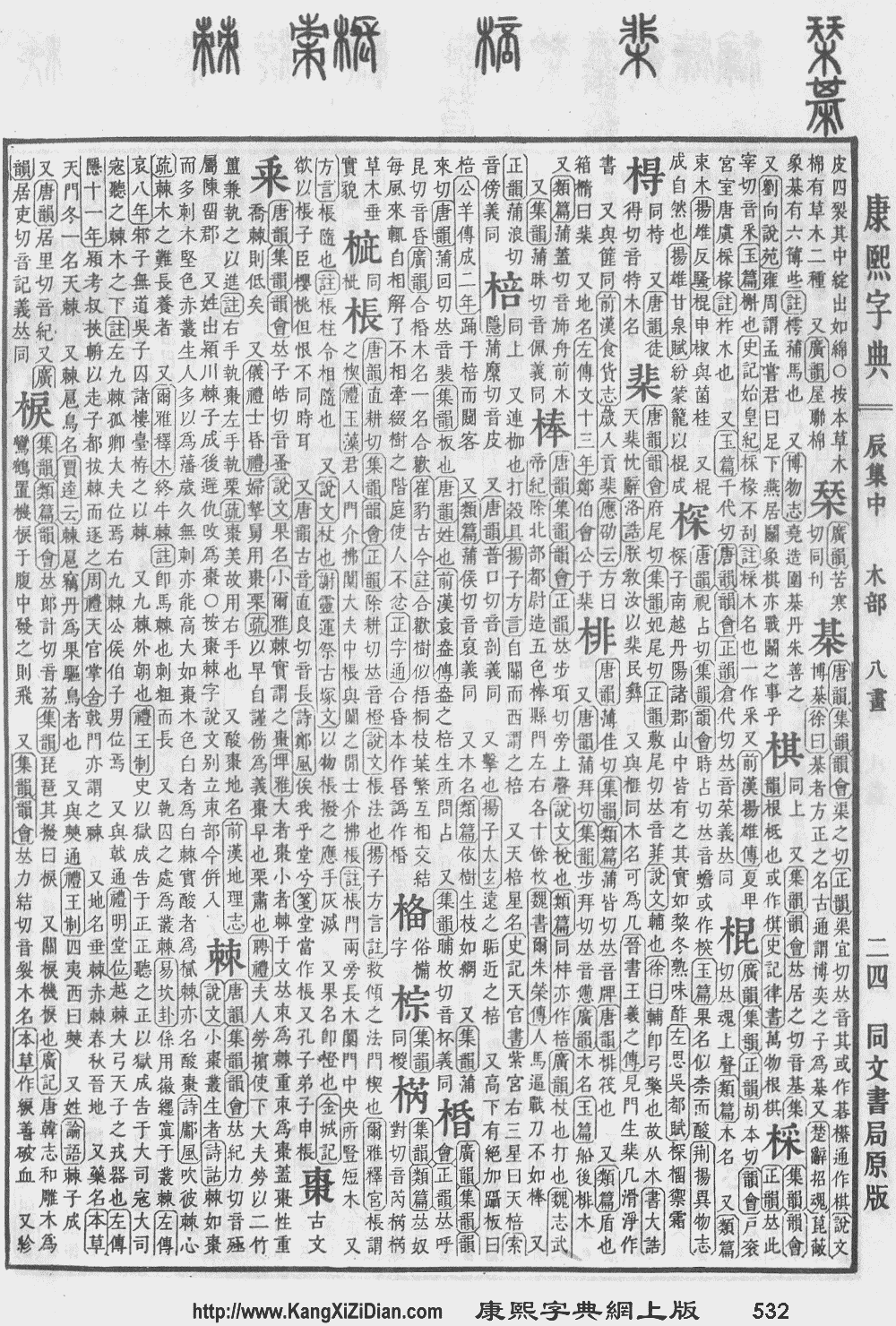
- Kangxi Dictionary: page 532, character 3
- Dai Kanwa Jiten: character 14922
- Dae Jaweon: page 920, character 11
- Hanyu Da Zidian (first edition): volume 2, page 1224, character 4
- Unihan data for U+68CB
Chinese
| simp. and trad. |
棋 | |
|---|---|---|
| alternative forms | ||
Glyph origin
| Historical forms of the character 棋 | |
|---|---|
| Shang | Shuowen Jiezi (compiled in Han) |
| Oracle bone script | Small seal script |
 |
 |
Characters in the same phonetic series (其) (Zhengzhang, 2003)
Phono-semantic compound (形聲/形声, OC *ɡɯ) : semantic 木 (“wooden”) + phonetic 其 (OC *kɯ, *ɡɯ).
Pronunciation 1
Definitions
棋
- board game, usually excluding those played with cards (牌 (pái))
- (figurative) strategy; plan
- (Cantonese, figurative) pawn; puppet (someone who is controlled by outside force) (Classifier: 隻/只 c)
Compounds
- 一步棋
- 一盤棋/一盘棋
- 一統棋/一统棋 (yītǒngqí)
- 下棋 (xiàqí)
- 中國象棋/中国象棋 (Zhōngguó xiàngqí)
- 五子棋 (wǔzǐqí)
- 五虎棋
- 儒棋
- 兵棋 (bīngqí)
- 博棋
- 回棋 (huíqí)
- 國棋/国棋
- 國際象棋/国际象棋 (guójì xiàngqí)
- 圍棋/围棋 (wéiqí)
- 圍棋段位/围棋段位
- 大棋 (dàqí)
- 大象棋
- 奕棋
- 宮棋/宫棋
- 對棋/对棋
- 屎棋
- 平棋
- 弈棋 (yìqí)
- 引繩棋布/引绳棋布
- 彈棋/弹棋
- 悔棋 (huǐqí)
- 打棋譜/打棋谱
- 抨棋
- 持棋
- 擺棋/摆棋
- 散棋
- 敲棋
- 數棋/数棋
- 方棋 (fāngqí)
- 星羅棋布/星罗棋布 (xīngluóqíbù)
- 暗棋 (ànqí)
- 朝鮮將棋/朝鲜将棋 (cháoxiān jiāngqí)
- 朝鮮象棋/朝鲜象棋 (cháoxiān xiàngqí)
- 枰棋
- 柯爛棋/柯烂棋
- 校棋
- 梟棋/枭棋
- 棋丸
- 棋仙
- 棋侶/棋侣
- 棋列
- 棋力
- 棋功
- 棋劫
- 棋勢/棋势
- 棋博
- 棋友
- 棋名
- 棋品
- 棋坐
- 棋奩/棋奁
- 棋子 (qízǐ)
- 棋客
- 棋家
- 棋射
- 棋局
- 棋峙
- 棋工
- 棋布
- 棋布星羅/棋布星罗
- 棋布星陳/棋布星陈
- 棋布錯峙/棋布错峙
- 棋師/棋师
- 棋戰/棋战
- 棋手 (qíshǒu)
- 棋敵/棋敌
- 棋枰
- 棋格
- 棋楠香
- 棋槊
- 棋法
- 棋流
- 棋炒
- 棋盤/棋盘 (qípán)
- 棋眼
- 棋社
- 棋童
- 棋筒
- 棋經/棋经
- 棋置
- 棋罫
- 棋羅星布/棋罗星布
- 棋聖/棋圣 (qíshèng)
- 棋聲/棋声
- 棋肆
- 棋藝/棋艺 (qíyì)
- 棋處/棋处
- 棋術/棋术
- 棋譜/棋谱 (qípǔ)
- 棋讎/棋雠
- 棋跱
- 棋路
- 棋輸先著/棋输先著
- 棋迷
- 棋逢對手/棋逢对手 (qíféngduìshǒu)
- 棋逢敵手/棋逢敌手 (qíféngdíshǒu)
- 棋錯/棋错
- 棋錯一著,滿盤皆輸/棋错一着,满盘皆输
- 棋鐘/棋钟 (qízhōng)
- 棋院
- 棋陸/棋陆
- 棋響/棋响
- 棋高一著
- 棋高一著/棋高一着
- 棋鼓
- 楸棋
- 槊棋
- 死棋 (sǐqí)
- 殘棋/残棋 (cánqí)
- 活棋
- 滿棋/满棋 (mǎnqí)
- 滿洲棋/满洲棋 (mǎnzhōuqí)
- 滿洲象棋/满洲象棋 (mǎnzhōu xiàngqí)
- 爭棋/争棋
- 琴棋書畫/琴棋书画 (qínqíshūhuà)
- 田棋
- 疊棋/叠棋
- 盲棋 (mángqí)
- 直棋
- 着棋 (zhuóqí)
- 矢棋
- 糞棋/粪棋
- 累棋
- 置棋不定
- 舉棋不定/举棋不定 (jǔqíbùdìng)
- 舉棋若定/举棋若定
- 著棋 (zhuóqí)
- 著棋/着棋 (zhuóqí)
- 落棋
- 蘋果棋/苹果棋 (píngguǒqí)
- 蝸角棋/蜗角棋
- 蠹居棋處/蠹居棋处
- 行棋 (xíngqí)
- 西洋棋 (xīyángqí)
- 西洋象棋 (xīyáng xiàngqí)
- 覆棋
- 謝傅棋/谢傅棋
- 謝安棋/谢安棋
- 象棋 (xiàngqí)
- 賭棋/赌棋
- 走棋
- 跳棋 (tiàoqí)
- 軍棋/军棋
- 迂棋 (yūqí)
- 長安棋局/长安棋局
- 電腦兵棋/电脑兵棋
- 霸王棋
- 靈棋經/灵棋经 (Língqíjīng)
- 韓國將棋/韩国将棋 (hánguó jiāngqí)
- 韓國象棋/韩国象棋 (hánguó xiàngqí)
- 高麗將棋/高丽将棋 (gāolì jiāngqí)
- 高麗象棋/高丽象棋 (gāolì xiàngqí)
- 鬥棋/斗棋
- 鬥獸棋/斗兽棋 (dòushòuqí)
- 黑白棋
- 鼎棋
Descendants
- → Lü: ᦌᦲᧉ (sii²)
Pronunciation 2
Compounds
- 根棋
Korean
Hanja
棋 • (gi) (hangeul 기, revised gi, McCune–Reischauer ki, Yale ki)
- This term needs a translation to English. Please help out and add a translation, then remove the text
{{rfdef}}.
Vietnamese
Han character
棋: Hán Nôm readings: cời, cờ, cơi, kè, kỳ, kì
- This term needs a translation to English. Please help out and add a translation, then remove the text
{{rfdef}}.
References
This article is issued from Wiktionary. The text is licensed under Creative Commons - Attribution - Sharealike. Additional terms may apply for the media files.