眾
| ||||||||
Translingual
| Traditional | 眾 |
|---|---|
| Simplified | 众 |
| Japanese | 衆 |
| Korean | 衆 |
Han character
眾 (Kangxi radical 109, 目+6, 11 strokes, cangjie input 田中人人人 (WLOOO), four-corner 27232, composition ⿱罒⿲人亻人)
Derived characters
- 潀, 𨖙, 𬌎, 𩅉
References
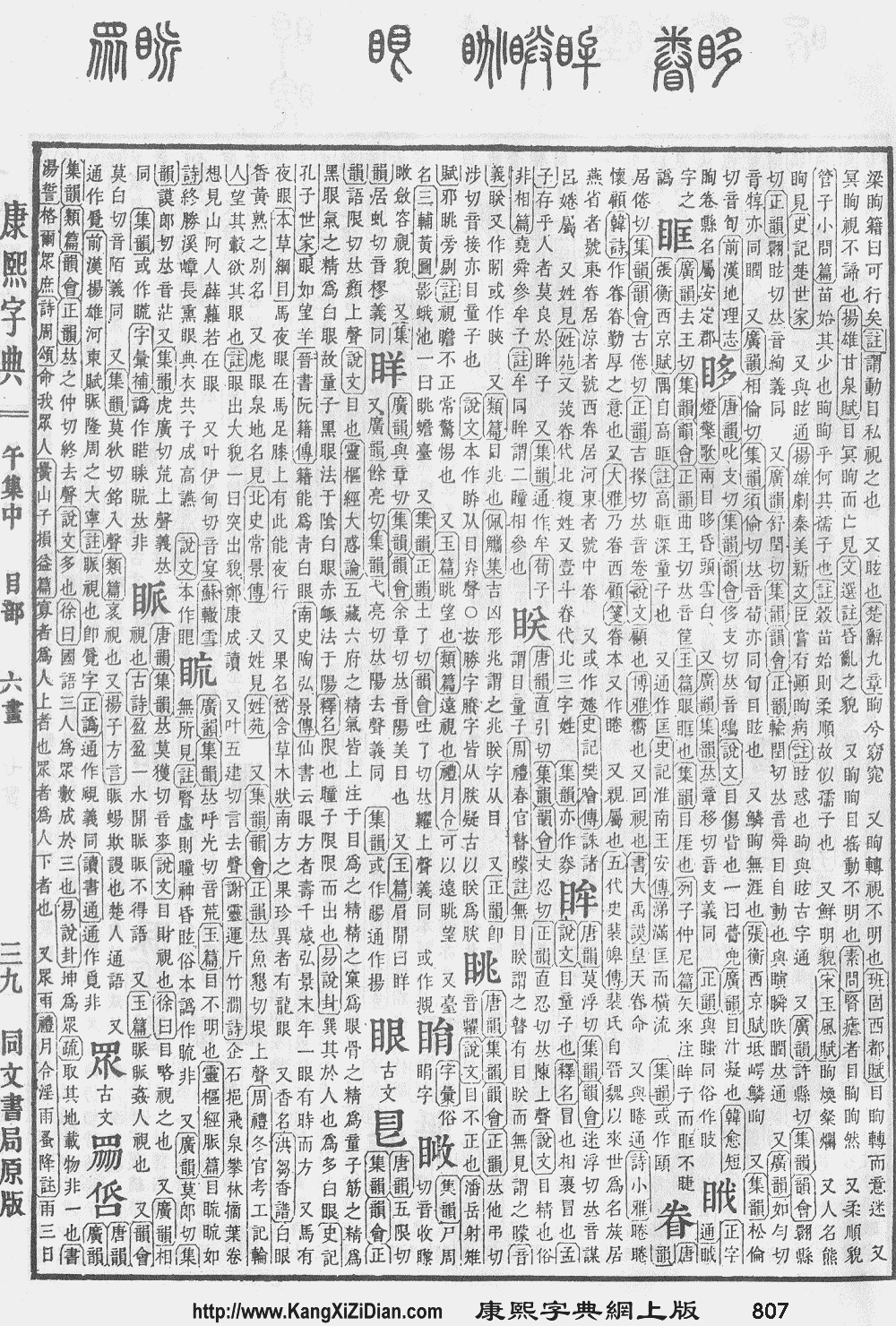
- Kangxi Dictionary: page 807, character 15
- Dai Kanwa Jiten: character 23321
- Dae Jaweon: page 1223, character 3
- Hanyu Da Zidian (first edition): volume 4, page 2917, character 4
- Unihan data for U+773E
Chinese
| trad. | 眾/衆 | |
|---|---|---|
| simp. | 众* | |
| alternative forms | ||
Glyph origin
| Historical forms of the character 眾 | |
|---|---|
| Shang | Western Zhou |
| Oracle bone script | Bronze inscriptions |
 |
 |
Pictogram (象形) : a sun (日) above three humans (㐺) – people gathered or working under the sun.
The top, originally 日 (“sun”) in oracle script has been modified, in bronze script resembling instead a horizontal eye (early form of 目) – reinterpreted as “a crowd under someone’s gaze”, and now resembles 罒.
The bottom, originally three figures (人人人), uses various forms of 人 and 亻, with variation depending on font.
Etymology 1
Possibly from Proto-Sino-Tibetan *s-toŋ (“thousand”) (Peiros and Starostin, 1996; STEDT); if so, cognate with Tibetan སྟོང (stong, “thousand”), Burmese ထောင် (htaung, “thousand”), Drung tu (“thousand”), Nuosu ꄙ (dur, “thousand”).
Alternatively, Schuessler (2007) compares this word with Classical Tibetan [script needed] (yong, “in all, at all times, ever before”) and Tibetan ཡོངས (yongs, “all, whole”).
Pronunciation
Definitions
眾
- masses; people; multitude; crowd; everyone
- † everything; all matters
- † all the government officials
- † soldier; army; troops
- † slave labour in agriculture
- (Buddhism) number of monks
- many; numerous
- 眾天使都站在寶座和眾長老並四活物的周圍,在寶座前,面伏於地,敬拜神 [MSC, trad.]
- From: 新標點和合本 (Chinese Union Version with New Punctuation), 啟示錄 (Revelation) 7:11
- Zhòng tiānshǐ dōu zhàn zài bǎozuò hé zhòng zhǎnglǎo bìng sì huówù de zhōuwéi, zài bǎozuò qián, miàn fú yú dì, jìngbài Shén [Pinyin]
- And all the angels stood round about the throne, and about the elders and the four beasts, and fell before the throne on their faces, and worshipped God
众天使都站在宝座和众长老并四活物的周围,在宝座前,面伏于地,敬拜神 [MSC, simp.]- 孟子曰:「廣土眾民,君子欲之,所樂不存焉。」 [Classical Chinese, trad.]
- From: Mencius, c. 4th century BCE
- Mèngzǐ yuē: “Guǎng tǔ zhòng mín, jūnzǐ yù zhī, suǒ yuè bù cún yān.” [Pinyin]
- Mencius said, 'Wide territory and a numerous people are desired by the superior man, but what he delights in is not here.'
孟子曰:「广土众民,君子欲之,所乐不存焉。」 [Classical Chinese, simp.]
- † majority
- † various; different
- † general; common
- 32nd tetragram of the Taixuanjing; "legion" (𝌥)
- a surname
Compounds
- 一不扭眾/一不扭众
- 一不拗眾/一不拗众
- 一傅眾咻/一傅众咻
- 一切眾生/一切众生
- 一眾/一众
- 不負眾望/不负众望 (bùfù-zhòngwàng)
- 人多勢眾/人多势众 (rénduōshìzhòng)
- 人才出眾/人才出众
- 人眾勝天/人众胜天
- 以寡擊眾/以寡击众
- 以寡敵眾/以寡敌众
- 以少克眾/以少克众
- 以眾克寡/以众克寡
- 伏眾/伏众
- 公眾/公众 (gōngzhòng)
- 公眾人物/公众人物 (gōngzhòng rénwù)
- 公眾傳播/公众传播
- 公眾參與/公众参与
- 公眾衛生/公众卫生
- 出眾/出众 (chūzhòng)
- 力排眾議/力排众议 (lìpáizhòngyì)
- 動眾勞師/动众劳师
- 勞師動眾/劳师动众 (láoshīdòngzhòng)
- 博施濟眾/博施济众
- 各眾/各众
- 合眾國/合众国 (hézhòngguó)
- 四眾/四众 (sì zhòng)
- 大庭廣眾/大庭广众 (dàtíngguǎngzhòng)
- 大眾/大众 (dàzhòng)
- 大眾傳播/大众传播 (dàzhòng chuánbō)
- 大眾公司/大众公司
- 大眾化/大众化 (dàzhònghuà)
- 大眾媒介/大众媒介
- 大眾文化/大众文化 (dàzhòng wénhuà)
- 大眾文學/大众文学
- 大眾社會/大众社会
- 大眾語/大众语
- 大眾運輸/大众运输
- 大眾部/大众部
- 妖術惑眾/妖术惑众
- 妖言惑眾/妖言惑众 (yāoyánhuòzhòng)
- 孚眾望/孚众望
- 安民恤眾/安民恤众 (ānmínxùzhòng)
- 寡不敵眾/寡不敌众 (guǎbùdízhòng)
- 小眾藝術/小众艺术
- 幾眾/几众
- 廣土眾民/广土众民 (guǎngtǔzhòngmín)
- 廣庭大眾/广庭大众
- 廣眾/广众 (guǎngzhòng)
- 廣眾大庭/广众大庭
- 彼眾我寡/彼众我寡 (bǐzhòngwǒguǎ)
- 徒眾/徒众 (túzhòng)
- 惑眾/惑众 (huòzhòng)
- 懲一儆眾/惩一儆众
- 截斷眾流/截断众流
- 敵眾我寡/敌众我寡 (dízhòngwǒguǎ)
- 斬首示眾/斩首示众
- 普度眾生/普度众生
- 普渡眾生/普渡众生
- 普濟眾生/普济众生
- 會眾/会众 (huìzhòng)
- 朝眾/朝众
- 梵眾/梵众
- 構詞惑眾/构词惑众
- 比眾不同/比众不同
- 民眾/民众 (mínzhòng)
- 民眾教育/民众教育
- 民眾運動/民众运动
- 法不責眾/法不责众 (fǎbùzézhòng)
- 流言惑眾/流言惑众
- 烏合之眾/乌合之众 (wūhézhīzhòng)
- 獨排眾議/独排众议
- 當眾/当众 (dāngzhòng)
- 百萬之眾/百万之众
- 眾人/众人 (zhòngrén)
- 眾位/众位 (zhòngwèi)
- 眾叛親離/众叛亲离 (zhòngpànqīnlí)
- 眾口一詞/众口一词 (zhòngkǒuyīcí)
- 眾口交攻/众口交攻
- 眾口交薦/众口交荐
- 眾口交譽/众口交誉
- 眾口同聲/众口同声
- 眾口如一/众口如一
- 眾口熏天
- 眾口稱善/众口称善
- 眾口紛紜/众口纷纭
- 眾口鑠金/众口铄金 (zhòngkǒushuòjīn)
- 眾口難調/众口难调
- 眾喣漂山/众喣漂山
- 眾喣飄山/众喣飘山
- 眾多/众多 (zhòngduō)
- 眾寡/众寡
- 眾寡不敵/众寡不敌
- 眾寡勢殊/众寡势殊
- 眾寡懸殊/众寡悬殊
- 眾寡莫敵/众寡莫敌
- 眾寡難敵/众寡难敌
- 眾少不敵/众少不敌
- 眾少成多/众少成多
- 眾川赴海/众川赴海
- 眾庶/众庶 (zhòngshù)
- 眾心如城/众心如城
- 眾心成城/众心成城
- 眾志成城/众志成城 (zhòngzhìchéngchéng)
- 眾怒/众怒 (zhòngnù)
- 眾怒難任/众怒难任
- 眾怒難犯/众怒难犯
- 眾所周知/众所周知 (zhòngsuǒzhōuzhī)
- 眾所熟知/众所熟知
- 眾所瞻望/众所瞻望
- 眾所矚目/众所瞩目
- 眾擎易舉/众擎易举
- 眾散親離/众散亲离
- 眾星拱北/众星拱北
- 眾星拱月/众星拱月 (zhòngxīnggǒngyuè)
- 眾星拱辰/众星拱辰
- 眾星捧月/众星捧月
- 眾望/众望 (zhòngwàng)
- 眾望所依/众望所依
- 眾望所歸/众望所归 (zhòngwàngsuǒguī)
- 眾望所積/众望所积
- 眾望攸歸/众望攸归
- 眾望有歸/众望有归
- 眾毀所歸/众毁所归
- 眾毛攢裘/众毛攒裘
- 眾生/众生 (zhòngshēng)
- 眾生相/众生相 (zhòngshēngxiàng)
- 眾目共睹/众目共睹
- 眾目共視/众目共视
- 眾目具瞻/众目具瞻
- 眾目所歸/众目所归
- 眾目昭彰/众目昭彰
- 眾目睽睽/众目睽睽 (zhòngmùkuíkuí)
- 眾盲摸象/众盲摸象
- 眾矢之的/众矢之的 (zhòngshǐzhīdì)
- 眾說/众说 (zhòngshuō)
- 眾說紛紜/众说纷纭 (zhòngshuō-fēnyún)
- 眾論/众论 (zhònglùn)
- 眾議/众议 (zhòngyì)
- 眾議成林/众议成林
- 眾議院/众议院 (zhòngyìyuàn)
- 眾醉獨醒/众醉独醒
- 示眾/示众 (shìzhòng)
- 萬眾一心/万众一心 (wànzhòngyīxīn)
- 稠人廣眾/稠人广众
- 糾眾/纠众
- 群眾/群众 (qúnzhòng)
- 群眾心理/群众心理
- 群眾路線/群众路线 (qúnzhòng lùxiàn)
- 群眾運動/群众运动 (qúnzhòng yùndòng)
- 群眾關係/群众关系
- 聚眾/聚众 (jùzhòng)
- 聚眾滋事/聚众滋事
- 聽眾/听众 (tīngzhòng)
- 與眾不同/与众不同 (yǔzhòngbùtóng)
- 興兵動眾/兴兵动众
- 興師動眾/兴师动众 (xīngshīdòngzhòng)
- 舉眾/举众
- 芸芸眾生/芸芸众生 (yúnyúnzhòngshēng)
- 行師動眾/行师动众
- 行軍動眾/行军动众
- 親離眾叛/亲离众叛
- 觀眾/观众 (guānzhòng)
- 訛言惑眾/讹言惑众
- 謠言惑眾/谣言惑众
- 譁眾取寵/哗众取宠 (huázhòngqǔchǒng)
- 警眾/警众
- 起兵動眾/起兵动众
- 起師動眾/起师动众
- 超群出眾/超群出众
- 身先士眾/身先士众
- 逞己失眾/逞己失众
- 造言惑眾/造言惑众
- 造謠惑眾/造谣惑众 (zàoyáo huòzhòng)
- 部眾/部众 (bùzhòng)
- 餘眾/余众 (yúzhòng)
Etymology 2
(This etymology is missing or incomplete. Please add to it, or discuss it at the Etymology scriptorium.)
Pronunciation
Japanese
Korean
Hanja
眾 • (jung) (hangeul 중, revised jung, McCune–Reischauer chung, Yale cwung)
- This term needs a translation to English. Please help out and add a translation, then remove the text
{{rfdef}}.