合
| ||||||||
Translingual
| Stroke order | |||
|---|---|---|---|
 | |||
Han character
合 (Kangxi radical 30, 口+3, 6 strokes, cangjie input 人一口 (OMR), four-corner 80601, composition ⿱亼口)
Derived characters
- 𫡥, 佮, 冾, 哈, 垥, 姶, 峆, 帢, 㢵, 㣛, 恰, 拾, 洽, 𪯤, 𰃣, 䏩, 㭘, 烚, 𬌗, 珨, 䢔, 䀫, 硆, 祫, 秴, 粭, 給 (给), 耠, 𦕲, 䑪, 蛤, 袷, 鿘, 詥, 𧳇, 䞩, 跲, 鉿 (铪), 鞈, 韐, 餄 (饸), 鿢, 𩩂, 𩳋, 鮯 (𫚗), 𪑇, 䶎, 𪘁, 㓣, 𪠁, 郃, 㧱, 敆, 㪉, 欱, 𤙖, 翖, 䧻, 頜 (颌), 鴿 (鸽), 搿
- 𣭝, 㝓, 峇, 𰂅, 𣆗, 荅, 䆟, 答, 𠷡, 䨐, 𩭆, 䶀, 𮯚, 鿖, 𡋛, 𪦻, 弇, 𢙅, 拿, 𤥓, 畣, 㿯, 盒, 𥅽, 翕, 搻, 樖, 盫, 龕 (龛), 𡄬, 匌, 匼, 㕉, 𢈈, 㾑, 閤 (𬮤), 𦒈, 𡇞
References
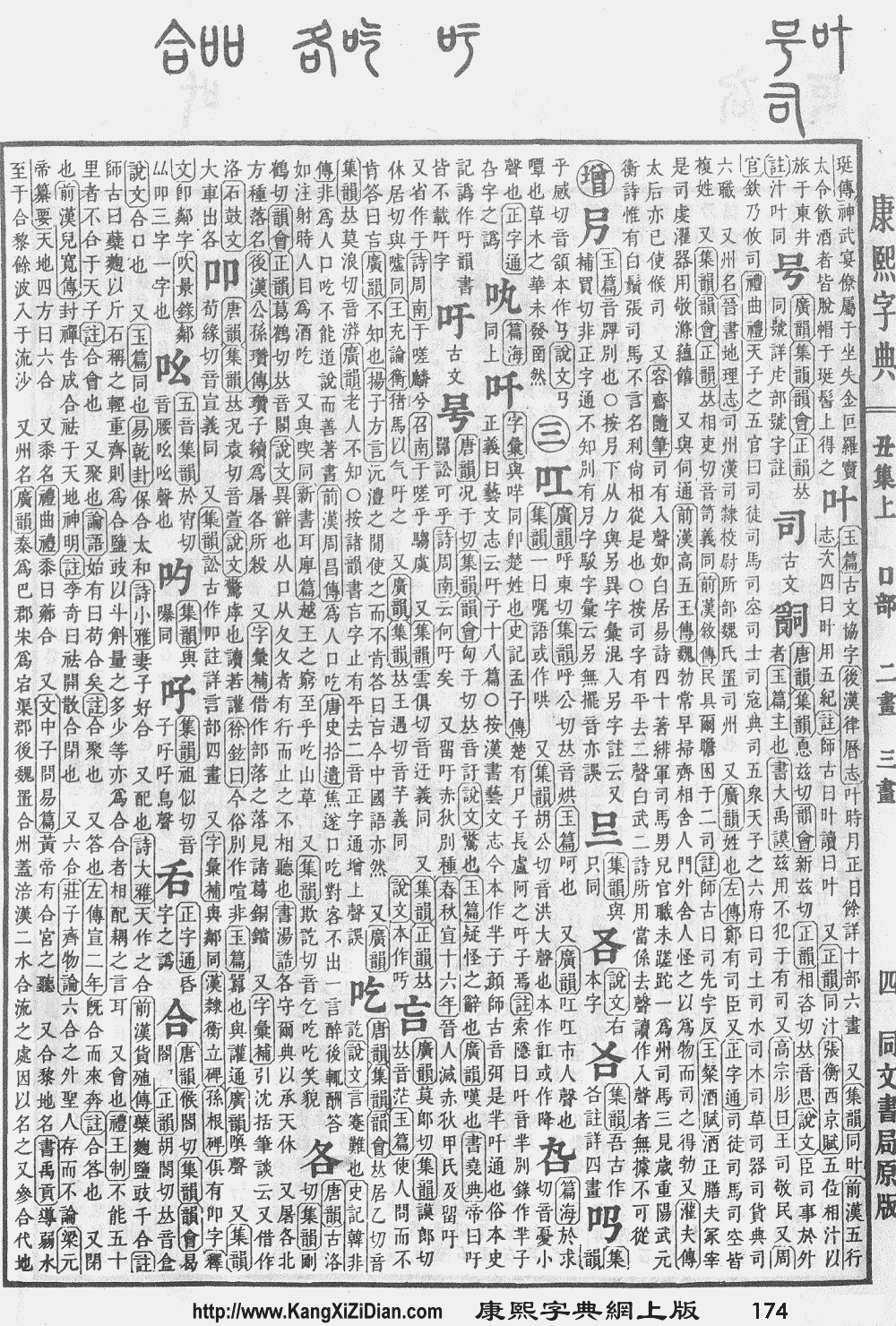
- Kangxi Dictionary: page 174, character 24
- Dai Kanwa Jiten: character 3287
- Dae Jaweon: page 387, character 17
- Hanyu Da Zidian (first edition): volume 1, page 581, character 1
- Unihan data for U+5408
Chinese
| simp. and trad. |
合 | |
|---|---|---|
Glyph origin
| Historical forms of the character 合 | |||||
|---|---|---|---|---|---|
| Shang | Western Zhou | Warring States | Shuowen Jiezi (compiled in Han) | Liushutong (compiled in Ming) | |
| Oracle bone script | Bronze inscriptions | Bronze inscriptions | Chu slip and silk script | Small seal script | Transcribed ancient scripts |
 |
 |
 |
 |
 |
 |
| Old Chinese | |
|---|---|
| 龕 | *kʰuːm |
| 媕 | *quːm, *qromʔ, *qɯːm, *qramʔ, *qɯːb |
| 頜 | *ɡuːmʔ, *kuːb |
| 答 | *tkuːb |
| 畣 | *tkuːb |
| 荅 | *tkuːb |
| 嗒 | *tuːb, *tʰoːb |
| 褡 | *tuːb, *toːb |
| 撘 | *tuːb |
| 搭 | *tuːb, *tʰoːb |
| 榙 | *tkuːb, *ɡuːb |
| 佮 | *tkʰuːb, *kuːb, *quːb, *quːb |
| 蛤 | *kuːb |
| 鴿 | *kuːb |
| 合 | *kuːb, *ɡuːb |
| 郃 | *kuːb, *ɡuːb |
| 匌 | *kuːb, *kʰuːb |
| 鉿 | *kuːb |
| 閤 | *kuːb |
| 鞈 | *kuːb, *kruːb |
| 韐 | *kuːb, *kruːb |
| 鮯 | *kuːb |
| 哈 | *ŋɡuːb |
| 姶 | *quːb, *quːb |
| 欱 | *qʰuːb, *qʰruːb |
| 盒 | *ɡuːb |
| 耠 | *ɡuːb |
| 詥 | *ɡuːb |
| 塔 | *tʰuːb |
| 鞳 | *tʰoːb |
| 劄 | *rtuːb |
| 跲 | *kruːb, *kob, *ɡob |
| 袷 | *kruːb, *ŋkob |
| 餄 | *kruːb |
| 恰 | *kʰruːb |
| 帢 | *kʰruːb |
| 洽 | *ɡruːb |
| 祫 | *ɡruːb |
| 珨 | *ɡruːb |
| 烚 | *ɡruːb |
| 歙 | *qʰjob, *qʰrub |
| 湁 | *tkʰub |
| 拾 | *ɡjub |
| 給 | *krub |
| 翕 | *qʰrub |
| 噏 | *qʰrub |
| 潝 | *qʰrub |
| 熻 | *qʰrub |
| 嬆 | *qʰrub |
| 翖 | *qʰrub |
| 闟 | *qʰrub |
Ideogrammic compound (會意/会意) : 亼 + 口 (“mouth”) : Two mouths speaking together.
Etymology 1
From Proto-Sino-Tibetan *gap ~ kap. Compare 蓋 (OC *kaːbs, *kaːb, *ɡaːb, “to cover”) and 盍 (OC *ɡaːb, “to unite”) (STEDT). Outside of Sinitic, possibly cognate with Burmese ကပ် (kap, “to approach”).
Pronunciation
Definitions
合
- to close; to shut
- 合上 ― héshàng ― close
- to join; to combine; to unite; to bring together
- to suit; to fit
- to have sexual intercourse
- to fight, to have a confrontation with
- to be equivalent to, to add up
- spouse
- whole; entire
- together
- † Alternative form of 盒 (hé, “box”)
- (games, battle) round
- (astronomy) conjunction
- (Hokkien) to get along well
- (Chinese phonetics) Short for 合口 (hékǒu, “closed-mouthed”).
- † Classifier for the number of fights.
- † to compound; to make up (medicine, etc.)
- 吾家葛巾娘子,手合鴆湯,其速飲! [Literary Chinese, trad.]
- From: 1740 CE, Pu Songling, Strange Stories from a Chinese Studio
- Wú jiā Gě Jīn niángzǐ, shǒu hé zhèntāng, qí sù yǐn! [Pinyin]
- (please add an English translation of this usage example)
吾家葛巾娘子,手合鸩汤,其速饮! [Literary Chinese, simp.]
- a surname
Compounds
- 三合 (Sānhé)
- 三合垸 (Sānhéyuàn)
- 三合會/三合会 (sānhéhuì)
- 三合院 (sānhéyuàn)
- 不合 (bùhé)
- 久合垸 (Jiǔhéyuàn)
- 九合 (jiūhé)
- 交合 (jiāohé)
- 付合
- 偶合 (ǒuhé)
- 公合
- 六合
- 切合 (qièhé)
- 分合 (fēnhé)
- 勘合
- 化合 (huàhé)
- 匡合
- 匯合/汇合 (huìhé)
- 印合
- 只合
- 合上
- 合下
- 合伙 (héhuǒ)
- 合作 (hézuò)
- 合併/合并 (hébìng)
- 合傳/合传
- 合兒/合儿
- 合刃
- 合券
- 合刻
- 合劑/合剂 (héjì)
- 合力 (hélì)
- 合十 (héshí)
- 合口 (hékǒu)
- 合同
- 合唱 (héchàng)
- 合圍/合围
- 合夥/合伙 (héhuǒ)
- 合奏 (hézòu)
- 合婚
- 合子
- 合宅
- 合宜 (héyí)
- 合家 (héjiā)
- 合局
- 合巹
- 合并 (hébìng)
- 合度
- 合式
- 合弦
- 合影 (héyǐng)
- 合後/合后 (héhòu)
- 合從/合从 (hézòng)
- 合心 (héxīn)
- 合意 (héyì)
- 合成 (héchéng)
- 合戰/合战
- 合手 (héshǒu)
- 合折
- 合拍 (hépāi)
- 合抱 (hébào)
- 合掌 (hézhǎng)
- 合撲/合扑
- 合擊/合击 (héjī)
- 合攏/合拢 (hélǒng)
- 合數/合数 (héshù)
- 合族
- 合昏
- 合是
- 合時/合时 (héshí)
- 合時宜/合时宜 (héshíyí)
- 合朔
- 合本
- 合板 (hébǎn)
- 合格 (hégé)
- 合機/合机
- 合款
- 合歡/合欢 (héhuān)
- 合殺/合杀
- 合氣/合气
- 合沓
- 合法 (héfǎ)
- 合注
- 合流 (héliú)
- 合浦 (Hépǔ)
- 合溜
- 合準/合准
- 合演
- 合火 (héhuǒ)
- 合照 (hézhào)
- 合營/合营 (héyíng)
- 合獨/合独
- 合理 (hélǐ)
- 合球
- 合璧 (hébì)
- 合生
- 合用 (héyòng)
- 合當/合当 (hédāng)
- 合眼 (héyǎn)
- 合租 (hézū)
- 合窆
- 合符
- 合算 (hésuàn)
- 合約/合约 (héyuē)
- 合縱/合纵 (hézòng)
- 合纖/合纤 (héxiān)
- 合群 (héqún)
- 合聲/合声 (héshēng)
- 合肥 (Héféi)
- 合股 (hégǔ)
- 合苦
- 合著
- 合葬 (hézàng)
- 合葉/合叶 (héyè)
- 合計/合计
- 合該/合该
- 合謀/合谋 (hémóu)
- 合變/合变
- 合谷
- 合資/合资 (hézī)
- 合身 (héshēn)
- 合轍/合辙 (hézhé)
- 合辦/合办 (hébàn)
- 合造
- 合遝
- 合適/合适 (héshì)
- 合醵
- 合金 (héjīn)
- 合鏡/合镜
- 合面
- 合音 (héyīn)
- 合頭/合头 (hétóu)
- 合體/合体 (hétǐ)
- 合髻
- 合龍/合龙 (hélóng)
- 吻合 (wěnhé)
- 吾合沙魯/吾合沙鲁 (Wúhéshālǔ)
- 和合 (héhé)
- 咬合 (yǎohé)
- 四合
- 回合 (huíhé)
- 固拉合瑪/固拉合玛 (Gùlāhémǎ)
- 場合/场合 (chǎnghé)
- 夜合
- 契合 (qìhé)
- 好合 (hǎohé)
- 媾合 (gòuhé)
- 密合 (mìhé)
- 寡合
- 對合/对合 (duìhé)
- 巧合 (qiǎohé)
- 布合
- 志同道合 (zhìtóngdàohé)
- 愈合 (yùhé)
- 成合
- 打合
- 折合 (zhéhé)
- 投合 (tóuhé)
- 拌合
- 拼合 (pīnhé)
- 捏合
- 捻合
- 接合 (jiēhé)
- 揉合
- 摻合/掺合
- 撮合 (cuōhé)
- 攙合/搀合
- 整合 (zhěnghé)
- 暌合
- 暗合 (ànhé)
- 會合/会合 (huìhé)
- 比合
- 沓合
- 混合
- 湊合/凑合
- 溶合
- 烏合/乌合 (wūhé)
- 熱合/热合
- 牉合
- 牽合/牵合
- 理合 (lǐhé)
- 瓦合
- 當合/当合
- 癒合/愈合 (yùhé)
- 百合 (bǎihé)
- 相合 (xiānghé)
- 砌合
- 符合
- 簇合
- 糅合 (róuhé)
- 糾合/纠合 (jiūhé)
- 索合
- 納合/纳合
- 組合/组合 (zǔhé)
- 統合/统合 (tǒnghé)
- 結合/结合 (jiéhé)
- 綜合/综合 (zōnghé)
- 綴合/缀合 (zhuìhé)
- 縫合/缝合 (fénghé)
- 縮合/缩合 (suōhé)
- 總合/总合 (zǒnghé)
- 耦合 (ǒuhé)
- 聚合 (jùhé)
- 聯合/联合 (liánhé)
- 苟合 (gǒuhé)
- 融合 (rónghé)
- 蟻合/蚁合
- 袂合 (bē ha̍h) (Min Nan)
- 複合/复合 (fùhé)
- 西合休 (Xīhéxiū)
- 訢合/䜣合
- 說合/说合 (shuōhé)
- 調合/调合 (tiáohé)
- 跑合
- 迎合 (yínghé)
- 迴合/回合
- 連合/连合 (liánhé)
- 遇合
- 適合/适合 (shìhé)
- 配合
- 重合 (chónghé)
- 野合
- 鈿合/钿合 (diànhé)
- 關合/关合
- 阿合雅 (Āhéyǎ)
- 集合 (jíhé)
- 離合/离合 (líhé)
- 鬥合/斗合
- 鳩合/鸠合 (jiūhé)
- 黏合 (niánhé)
- 齧合/啮合
Descendants
Pronunciation
Pronunciation
Definitions
合
Compounds
- 合尺
Pronunciation
Etymology 4
| For pronunciation and definitions of 合 – see 閤 (“to close, to shut; all of, whole of”). (This character is the simplified form of 閤). |
Notes:
|
Etymology 5
| For pronunciation and definitions of 合 – see 盒 (“box; case”). (This character is the second-round simplified form of 盒). |
Notes:
|
References
- “合”, in 漢語多功能字庫 (Multi-function Chinese Character Database), 香港中文大學 (the Chinese University of Hong Kong), 2014–
Japanese
Readings
From Middle Chinese 合 (MC hop); compare Mandarin 合 (hé, gě):
- Go-on: ごう (gō, Jōyō)←ごふ (gofu, historical)
- Kan-on: こう (kō)←かふ (kafu, historical)
- Kan’yō-on: かっ (ka', Jōyō †); がっ (ga', Jōyō); ごう (gō, Jōyō)←がふ (gafu, historical)
From Middle Chinese 合 (MC kop); compare Mandarin 合 (gě):
- Go-on: こう (kō)←こふ (kofu, historical)
- Kan-on: こう (kō)←かふ (kafu, historical)
From native Japanese roots:
- Kun: あう (au, 合う, Jōyō)←あふ (afu, 合ふ, historical); あわす (awasu, 合わす, Jōyō)←あはす (afasu, 合はす, historical); あわせる (awaseru, 合わせる, Jōyō)←あはせる (afaseru, 合はせる, historical); あい (ai, 合い)←あひ (afi, 合ひ, historical); あつまる (atsumaru, 合まる); あつめる (atsumeru, 合める); あわい (awai, 合)←あはひ (afafi, 合, historical); あわさる (awasaru, 合わさる)←あはさる (afasaru, 合はさる, historical); あわせ (awase, 合せ)←あはせ (afase, 合せ, historical)
- Nanori: あい (ai); あう (au); かい (kai); はる (haru); よし (yoshi)
Compounds
- 合憎 (ainiku, “unfortunately”)
- 連合 (rengō, “union, alliance, combination”)
- 総合 (sōgō, “synthesis, consolidation”)
Etymology 1
| Kanji in this term |
|---|
| 合 |
| ごう Grade: 2 |
| on’yomi |
Noun
Korean
Etymology
(This etymology is missing or incomplete. Please add to it, or discuss it at the Etymology scriptorium. Particularly: “Middle Korean readings, if any”)
Pronunciation
- (SK Standard/Seoul) IPA(key): [ha̠p̚]
- Phonetic hangul: [합]
Vietnamese
Han character
合: Hán Việt readings: hợp[1][2][3][4][5], hiệp[3][4][5], hạp[6][3], cáp[3][4]
合: Nôm readings: hợp[1][2][6], họp[1][2][6], hiệp[1][2], hạp[6], cáp[1], cóp[6], gộp[6], sáp[1]
References
- Nguyễn (2014).
- Nguyễn et al. (2009).
- Trần (1999).
- Nguyễn (1974).
- Thiều Chửu (1942).
- Trần (2004).