顯
| ||||||||
Translingual
| Traditional | 顯 |
|---|---|
| Shinjitai | 顕 |
| Simplified | 显 |
Han character
顯 (Kangxi radical 181, 頁+14, 23 strokes, cangjie input 日火一月金 (AFMBC), four-corner 61386, composition ⿰㬎頁)
Descendants
- 顕 (In Japanese shinjitai)
- 显 (In simplified Chinese)
References
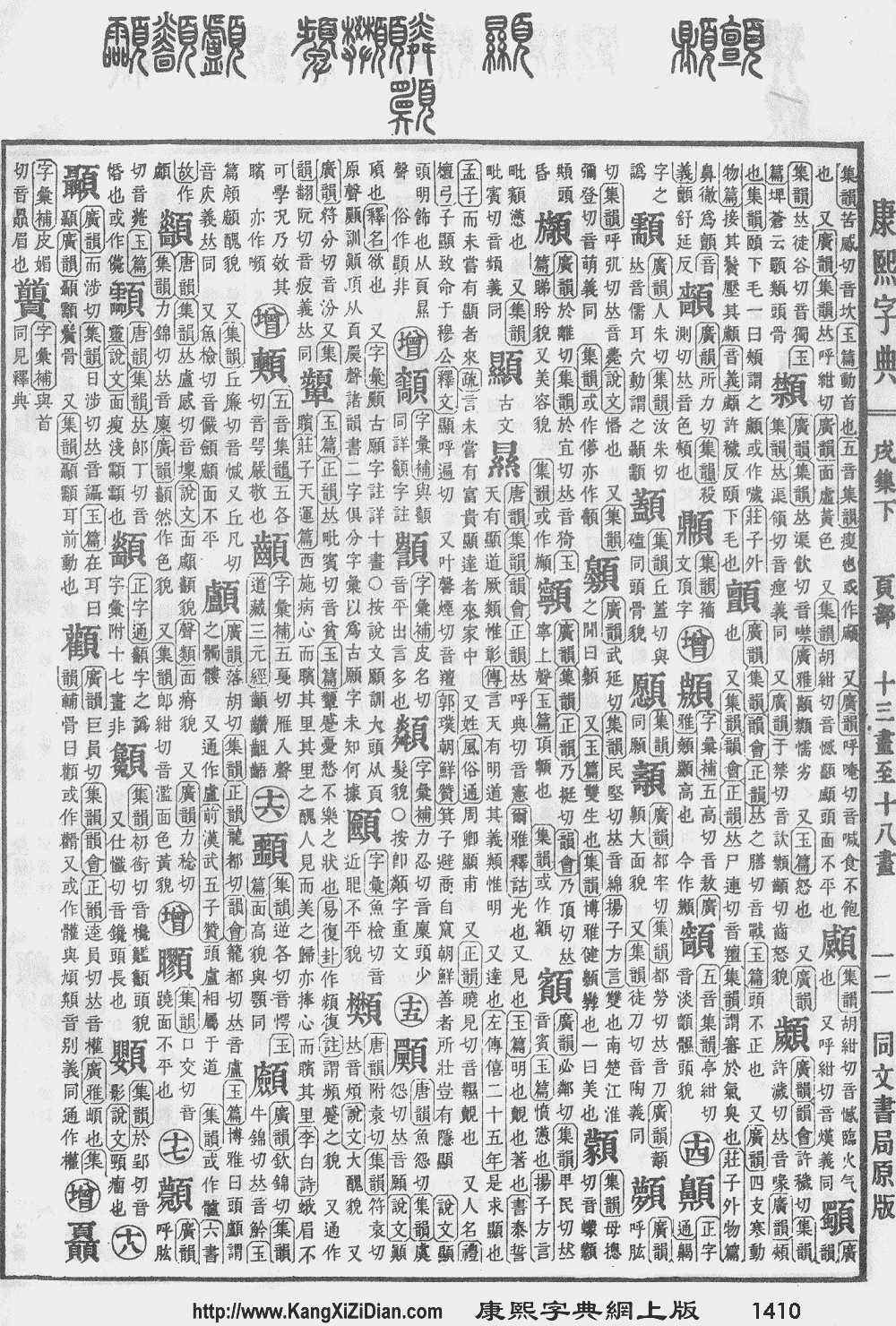
- Kangxi Dictionary: page 1410, character 21
- Dai Kanwa Jiten: character 43726
- Dae Jaweon: page 1929, character 13
- Hanyu Da Zidian (first edition): volume 7, page 4395, character 6
- Unihan data for U+986F
Chinese
| trad. | 顯 | |
|---|---|---|
| simp. | 显 | |
| alternative forms | 㬎 ancient form 𣊡 ancient form 𩔰 㫫 顕 | |
Glyph origin
| Historical forms of the character 顯 | ||
|---|---|---|
| Western Zhou | Shuowen Jiezi (compiled in Han) | Liushutong (compiled in Ming) |
| Bronze inscriptions | Small seal script | Transcribed ancient scripts |
 |
 |
 |
Ideogrammic compound (會意/会意) : 日 (“sun”) + 絲 (“silk”) + 頁 (“person's head”).
Pronunciation
Definitions
顯

顯考志昂鄧公府君...同合墓 (Meaning 4).
- prominent; conspicuous; visible
- to appear; to manifest; to display
- (prefix) phanero-
- (honorific) an honorific for deceased immediate family members
- (Wenzhounese) very
Synonyms
- (very):
Dialectal synonyms of 很 (“very”) [map]
Compounds
- 丕顯/丕显 (pīxiǎn)
- 再顯神通/再显神通
- 凸顯/凸显 (tūxiǎn)
- 名顯/名显
- 各顯神通/各显神通 (gèxiǎnshéntōng)
- 大顯威風/大显威风
- 大顯神通/大显神通 (dàxiǎnshéntōng)
- 大顯身手/大显身手 (dàxiǎnshēnshǒu)
- 夫榮妻顯/夫荣妻显
- 尊顯/尊显
- 展顯/展显
- 幽顯異途/幽显异途
- 揚名顯姓/扬名显姓
- 揚名顯親/扬名显亲
- 明顯/明显 (míngxiǎn)
- 昭顯/昭显
- 楊顯之/杨显之
- 榮顯/荣显
- 標顯/标显
- 權貴顯要/权贵显要
- 比顯興隱/比显兴隐
- 法顯/法显
- 深入顯出/深入显出
- 淺顯/浅显 (qiǎnxiǎn)
- 清顯/清显
- 淺顯易懂/浅显易懂
- 湯顯祖/汤显祖
- 爭強顯勝/争强显胜
- 盡顯/尽显 (jìnxiǎn)
- 矜張顯著/矜张显著
- 破邪顯正/破邪显正
- 突顯/突显 (tūxiǎn)
- 若隱若顯/若隐若显
- 莫顯/莫显
- 表顯/表显
- 貴顯/贵显 (guìxiǎn)
- 身顯名揚/身显名扬
- 通顯/通显
- 達官顯宦/达官显宦
- 達官顯要/达官显要 (dáguānxiǎnyào)
- 隱顯墨水/隐显墨水
- 靈顯/灵显
- 顯位/显位 (xiǎnwèi)
- 顯像/显像
- 顯像液/显像液
- 顯像管/显像管 (xiǎnxiàngguǎn)
- 顯出/显出 (xiǎnchū)
- 顯化/显化
- 顯士/显士
- 顯妣/显妣
- 顯姓揚名/显姓扬名
- 顯學/显学 (xiǎnxué)
- 顯官/显官 (xiǎnguān)
- 顯宦/显宦
- 顯弄/显弄
- 顯形/显形 (xiǎnxíng)
- 顯影/显影 (xiǎnyǐng)
- 顯得/显得 (xiǎnde)
- 顯微手術/显微手术 (xiǎnwēi shǒushù)
- 顯微書影/显微书影
- 顯微照相/显微照相
- 顯微鏡/显微镜 (xiǎnwēijìng)
- 顯德/显德
- 顯忠廟/显忠庙 (Xiǎnzhōngmiào)
- 顯性/显性 (xiǎnxìng)
- 顯應/显应
- 顯揚/显扬 (xiǎnyáng)
- 顯敞/显敞 (xiǎnchǎng)
- 顯明/显明 (xiǎnmíng)
- 顯晦/显晦
- 顯榮/显荣
- 顯然/显然 (xiǎnrán)
- 顯煥/显焕
- 顯父/显父
- 顯現/显现 (xiǎnxiàn)
- 顯生元/显生元
- 顯目/显目 (xiǎnmù)
- 顯眼/显眼 (xiǎnyǎn)
- 顯示/显示 (xiǎnshì)
- 顯示器/显示器 (xiǎnshìqì)
- 顯祖/显祖 (xiǎnzǔ)
- 顯祖妣/显祖妣
- 顯祖揚宗/显祖扬宗
- 顯祖榮宗/显祖荣宗
- 顯祖考/显祖考
- 顯秩/显秩
- 顯耀/显耀
- 顯考/显考
- 顯者/显者 (xiǎnzhě)
- 顯而易見/显而易见 (xiǎn'éryìjiàn)
- 顯聖/显圣 (xiǎnshèng)
- 顯色反應/显色反应
- 顯花植物/显花植物
- 顯著/显著 (xiǎnzhù)
- 顯融/显融
- 顯要/显要 (xiǎnyào)
- 顯見/显见 (xiǎnjiàn)
- 顯親/显亲
- 顯親揚名/显亲扬名
- 顯豁/显豁 (xiǎnhuò)
- 顯貴/显贵 (xiǎnguì)
- 顯赫/显赫 (xiǎnhè)
- 顯身手/显身手 (xiǎn shēnshǒu)
- 顯道/显道
- 顯達/显达 (xiǎndá)
- 顯露/显露 (xiǎnlù)
- 顯露原形/显露原形
- 顯露頭角/显露头角
- 顯靈/显灵 (xiǎnlíng)
- 顯章/显章 (xiǎnzhāng)
- 顯顯/显显
- 顯魂/显魂
- 高官顯爵/高官显爵
Japanese
| 顕 | |
| 顯 |
Kanji
顯
(“Jinmeiyō” kanji used for names, kyūjitai kanji, shinjitai form 顕)
- This term needs a translation to English. Please help out and add a translation, then remove the text
{{rfdef}}.
Korean
Hanja
顯 • (hyeon) (hangeul 현)
- This term needs a translation to English. Please help out and add a translation, then remove the text
{{rfdef}}.
Vietnamese
Han character
顯: Hán Nôm readings: hiển
- This term needs a translation to English. Please help out and add a translation, then remove the text
{{rfdef}}.
This article is issued from Wiktionary. The text is licensed under Creative Commons - Attribution - Sharealike. Additional terms may apply for the media files.