格
| ||||||||
Translingual
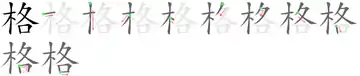
| Stroke order | |||
|---|---|---|---|
 | |||
Han character
格 (Kangxi radical 75, 木+6, 10 strokes, cangjie input 木竹水口 (DHER), composition ⿰木各)
References
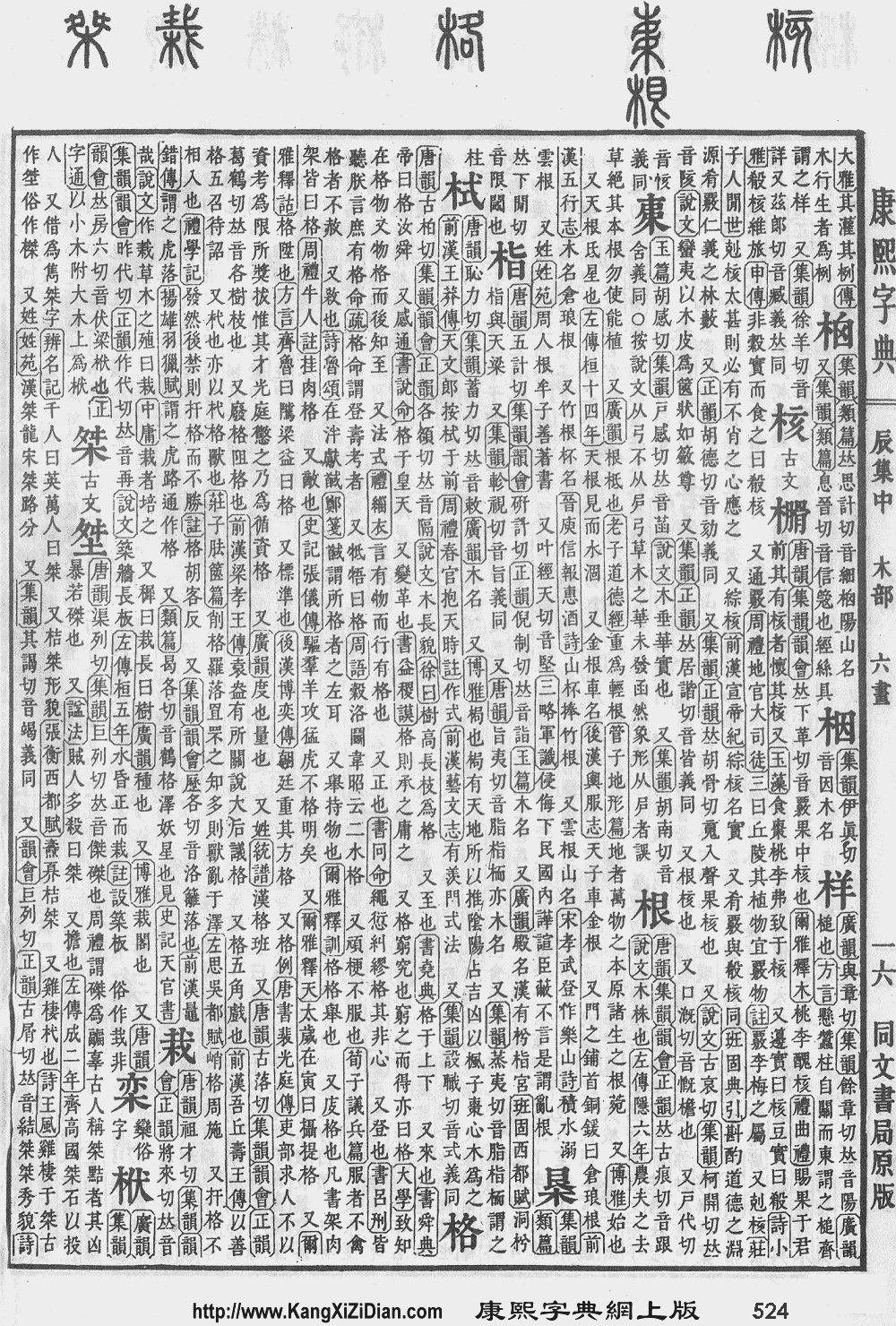
- Kangxi Dictionary: page 524, character 11
- Dai Kanwa Jiten: character 14749
- Dae Jaweon: page 912, character 13
- Hanyu Da Zidian (first edition): volume 2, page 1203, character 6
- Unihan data for U+683C
Chinese
| simp. and trad. |
格 | |
|---|---|---|
Glyph origin
| Historical forms of the character 格 | ||||
|---|---|---|---|---|
| Shang | Western Zhou | Warring States | Shuowen Jiezi (compiled in Han) | Liushutong (compiled in Ming) |
| Oracle bone script | Bronze inscriptions | Chu slip and silk script | Small seal script | Transcribed ancient scripts |
 |
 |
 |
 |
 |
Characters in the same phonetic series (各) (Zhengzhang, 2003)
| Old Chinese | |
|---|---|
| 髂 | *kʰraːɡs |
| 路 | *ɡ·raːɡs |
| 輅 | *ɡ·raːɡs |
| 賂 | *ɡ·raːɡs |
| 虂 | *ɡ·raːɡs |
| 露 | *ɡ·raːɡs |
| 潞 | *raːɡs |
| 鷺 | *raːɡs |
| 璐 | *raːɡs |
| 簬 | *raːɡs |
| 簵 | *ɡ·raːɡs |
| 洛 | *ɡ·raːɡ |
| 駱 | *ɡ·raːɡ |
| 絡 | *ɡ·raːɡ |
| 酪 | *ɡ·raːɡ |
| 烙 | *ɡ·raːɡ |
| 雒 | *ɡ·raːɡ |
| 珞 | *ɡ·raːɡ |
| 硌 | *ɡ·raːɡ |
| 袼 | *ɡ·raːɡ, *klaːɡ |
| 笿 | *ɡ·raːɡ |
| 鉻 | *ɡ·raːɡ, *kraːɡ |
| 鮥 | *ɡ·raːɡ |
| 鵅 | *ɡ·raːɡ, *kraːɡ |
| 挌 | *ɡ·raːɡ, *kraːɡ |
| 落 | *ɡ·raːɡ |
| 各 | *klaːɡ |
| 胳 | *klaːɡ |
| 閣 | *klaːɡ |
| 格 | *klaːɡ, *kraːɡ |
| 擱 | *klaːɡ |
| 恪 | *kʰlaːɡ |
| 愙 | *kʰaːɡ |
| 貉 | *ɡlaːɡ, *mɡraːɡ |
| 狢 | *ɡlaːɡ |
| 佫 | *ɡlaːɡ |
| 略 | *ɡ·raɡ |
| 茖 | *kraːɡ |
| 骼 | *kraːɡ |
| 觡 | *kraːɡ |
| 蛒 | *kraːɡ |
| 敋 | *kraːɡ |
| 客 | *kʰraːɡ |
| 喀 | *kʰraːɡ |
| 揢 | *kʰraːɡ |
| 額 | *ŋɡraːɡ |
| 峉 | *ŋɡraːɡ |
| 頟 | *ŋɡraːɡ |
| 詻 | *ŋɡraːɡ |
| 垎 | *ɡraːɡ |
| 楁 | *ɡraːɡ |
Phono-semantic compound (形聲/形声, OC *klaːɡ, *kraːɡ) : semantic 木 (“wood”) + phonetic 各 (OC *klaːɡ).
Etymology 1
- “to go; to come; to arrive”
- Possibly cognate to Tibetan འགྲོ་བ། ('gro ba, “to go, walk, travel”), འགྲོ་བ་པོ ('gro ba po, “traveler”), འགྲོན་པ ('gron pa, “to go, travel”), མགྲོན (mgron, “guest”), མགྲོན་ཁང (mgron khang, “inn”) (Geilich, 1994). If so, from Proto-Sino-Tibetan *grwat (“to go through, to travel”). However, STEDT does not compare this to Tibeto-Burman lexical items under *grwat.
- Baxter (1992) proposes that this is related to 路 (OC *ɡ·raːɡs, “road”). Compare 客 (OC *kʰraːɡ, “guest, visitor”), 旅 (OC *ɡ·raʔ, “travel, lodge”), and 行 (OC *ɡaːŋ, *ɡaːŋs, *ɡraːŋ, *ɡraːŋs, “to go”)
- “to obstruct; to hinder”
- (This etymology is missing or incomplete. Please add to it, or discuss it at the Etymology scriptorium.)
- “frame; square”
- (This etymology is missing or incomplete. Please add to it, or discuss it at the Etymology scriptorium.)
- “style; form; pattern; standard; personality; character”
- (This etymology is missing or incomplete. Please add to it, or discuss it at the Etymology scriptorium. Particularly: “Semantically derived from "square, frame" sense?”)
Pronunciation
Definitions
格
- (literary, or in compounds) pattern; standard; form; style
- square; frame
- (literary, or in compounds) special property; personality; character (Can we add an example for this sense?) (particularly for the "personality" in literary form)
- (grammar) case
- 共格 ― gònggé ― comitative case
- 益格 ― yìgé ― benefactive case
- (mathematics) lattice; grid; cross-hatch; checkers
- (literary) to beat; to lash; to strike; to hit
- (Cantonese) partitioned cell; cubicle
- † to come; to arrive; to go to
- 帝曰:「格,汝舜。詢事考言,乃言厎可績。」 [Classical Chinese, trad.]
- From: The Book of Documents, circa 4th – 3rd century BCE, translated based on James Legge's version
- Dì yuē: “Gé, rǔ Shùn. Xún shì kǎo yán, nǎi yán zhǐ kě jì.” [Pinyin]
- The Di said, "Come, you Shun. I have consulted you on affairs, and examined your words, and found that they can be carried into practice."
帝曰:「格,汝舜。询事考言,乃言厎可绩。」 [Classical Chinese, simp.]- 月正元日,舜格于文祖。 [Classical Chinese, trad. and simp.]
- From: The Book of Documents, circa 4th – 3rd century BCE, translated based on James Legge's version
- Yuèzhēng yuánrì, Shùn gé yú wénzǔ. [Pinyin]
- On the first day of the first month, Shun went to (the temple of) the Accomplished Ancestor.
- † to obstruct; to hinder
- † to investigate
- 22nd tetragram of the Taixuanjing; "resistance" (𝌛)
- (Hokkien) breed; body type (of certain poultry and livestock)
- (Hokkien) Classifier for graduation in a measuring container.
- (Mainland China Hokkien) to examine; to explore; to inspect; to check out (the reason, principle, etc.)
- (Mainland China Hokkien) to change the original structural layout (to increase number of spaces, etc.)
- (Taiwanese Hokkien) Used in place names to describe the topography of a watershed.
- (Zhangzhou Hokkien) to build by laying bricks or stones
- a surname
Compounds
- 三等九格
- 不合格
- 不夠格/不够格
- 不拘一格 (bùjūyīgé)
- 不變價格/不变价格 (bùbiàn jiàgé)
- 主格 (zhǔgé)
- 乃則爾巴格/乃则尔巴格 (Nǎizé'ěr Bāgé)
- 九宮格/九宫格 (jiǔgōnggé)
- 亞格拉/亚格拉
- 亞瓦格/亚瓦格 (yàwǎgé)
- 保留價格/保留价格
- 保證價格/保证价格
- 修辭格/修辞格
- 偏格
- 停格
- 做格
- 價格/价格 (jiàgé)
- 價格凍結/价格冻结
- 僻格剌子
- 優格/优格 (yōugé)
- 入格 (rùgé)
- 內格/内格
- 兩重人格/两重人格
- 公定價格/公定价格
- 共格
- 出格 (chūgé)
- 列寧格勒/列宁格勒 (Liènínggélè)
- 別具一格/别具一格 (biéjùyīgé)
- 別創新格/别创新格
- 到岸價格/到岸价格
- 募格
- 升格 (shēnggé)
- 反常人格
- 及格 (jígé)
- 古勒巴格 (Gǔlèbāgé)
- 句格 (jùgé)
- 古江巴格 (Gǔjiāngbāgé)
- 合格 (hégé)
- 吉格代加依 (Jígédàijiāyī)
- 合格賽/合格赛
- 品格 (pǐngé)
- 品格教育
- 品格清高
- 單位價格/单位价格
- 喀勒塔吐格曼 (Kālètǎtùgémàn)
- 單格臨書/单格临书
- 嚴格/严格 (yángé)
- 固定格式
- 國格/国格 (guógé)
- 國際人格/国际人格
- 圖格里克 (túgélǐkè)
- 培格索斯
- 夏馬勒巴格/夏马勒巴格 (Xiàmǎlèbāgé)
- 多來特巴格/多来特巴格 (Duōláitè Bāgé)
- 多重人格
- 多重性格
- 夠格/够格 (gòugé)
- 大格勒 (Dàgélè)
- 失格 (shīgé)
- 奎依巴格 (Kuíyībāgé)
- 奧依托格拉克/奥依托格拉克 (Àoyītuō Gélākè)
- 奪格/夺格 (duógé)
- 始格 (shǐgé)
- 定格 (dìnggé)
- 屍格/尸格
- 屬格/属格 (shǔgé)
- 巴格其 (Bāgéqí)
- 巴格艾日克 (Bāgé'àirìkè)
- 巴格達/巴格达 (Bāgédá)
- 布拉格 (Bùlāgé)
- 布格河
- 庫穆塔格/库穆塔格
- 引格
- 形格勢禁/形格势禁 (xínggéshìjìn)
- 影格
- 性格 (xìnggé)
- 性格悲劇/性格悲剧
- 恰爾巴格/恰尔巴格 (Qià'ěrbāgé)
- 感格
- 戰格/战格
- 所有格 (suǒyǒugé)
- 所格
- 扞格 (hàngé)
- 扞格不入
- 扞格不通 (hàngébùtōng)
- 托格日尕孜 (Tuōgérì Gǎzī)
- 批發價格/批发价格
- 拜什吐格曼 (Bàishí Tǔgémàn)
- 拆字格
- 捌格
- 捲簾格/卷帘格
- 擺格/摆格 (bǎigé)
- 文格
- 新英格蘭/新英格兰 (Xīn Yīnggélán)
- 方格
- 方格紙/方格纸
- 書格/书格
- 朗格的
- 李峪風格/李峪风格
- 架架格格
- 格但斯克 (Gédànsīkè)
- 格別烏/格别乌
- 格力
- 格古通今
- 格喳
- 格地地
- 格外 (géwài)
- 格子 (gézi)
- 格子布
- 格子眼
- 格子紙/格子纸
- 格局 (géjú)
- 格度
- 格式 (géshì)
- 格律 (gélǜ)
- 格心
- 格扇
- 格斃/格毙
- 格於成例/格于成例
- 格於環境/格于环境
- 格林 (Gélín)
- 格林威治 (Gélínwēizhì)
- 格林童話/格林童话
- 格格
- 格格不入 (gégébùrù)
- 格樣/格样
- 格正 (gézhèng)
- 格殺/格杀 (géshā)
- 格殺勿論/格杀勿论 (géshāwùlùn)
- 格爾木/格尔木 (Gé'ěrmù)
- 格牌
- 格物 (géwù)
- 格物窮理/格物穷理
- 格物致知
- 格瑞那達/格瑞那达 (Géruìnàdá)
- 格登
- 格登登
- 格目
- 格眼
- 格磔
- 格磴兒/格磴儿
- 格範/格范
- 格義/格义 (géyì)
- 格老子的
- 格致 (gézhì)
- 格言 (géyán)
- 格詩/格诗
- 格調/格调 (gédiào)
- 格里曆 (Gélǐlì)
- 格開/格开
- 格陵蘭/格陵兰 (Gélínglán)
- 格高意遠/格高意远
- 格鬥/格斗 (gédòu)
- 格魯派/格鲁派 (Gélǔpài)
- 標格/标格 (biāogé)
- 樣格/样格
- 欠格 (qiàngé)
- 正格
- 比西巴格 (Bǐxībāgé)
- 民族性格
- 治家格言
- 海格立斯
- 炮格
- 爬格子 (pá gézi)
- 爾格/尔格 (ěrgé)
- 獨具一格/独具一格 (dújùyīgé)
- 獨創一格/独创一格
- 獨樹一格/独树一格
- 產地價格/产地价格
- 皮格
- 益格
- 真格的
- 眼格
- 破格 (pògé)
- 祁曼塔格 (Qímàntǎgé)
- 空格兒/空格儿
- 窗格 (chuānggé)
- 等值價格/等值价格
- 筆格/笔格 (bǐgé)
- 考格
- 聊備一格/聊备一格 (liáobèiyīgé)
- 膩格格/腻格格
- 自成一格
- 與格/与格 (yǔgé)
- 色格孜庫勒/色格孜库勒 (Sègézī Kùlè)
- 色楞格河 (Sèlénggé Hé)
- 英巴格 (Yīngbāgé)
- 英格蘭/英格兰 (Yīnggélán)
- 華格納/华格纳 (Huágénà)
- 葉子格/叶子格
- 薩依巴格/萨依巴格 (Sàyībāgé)
- 蘇格蘭/苏格兰 (Sūgélán)
- 表格 (biǎogé)
- 裁格
- 規格/规格 (guīgé)
- 誠可格天/诚可格天
- 詩格/诗格
- 說真格的/说真格的
- 貝爾格勒/贝尔格勒 (Bèi'ěrgélè)
- 資格/资格 (zīgé)
- 賞格/赏格 (shǎnggé)
- 超格
- 輝格黨/辉格党
- 轆轤格/辘轳格
- 逾格
- 重置價格/重置价格
- 鉤輈格磔/钩辀格磔
- 闊什塔格/阔什塔格 (Kuòshítǎgé)
- 阿恰塔格 (Āqiàtǎgé)
- 阿拉哈格 (Ālāhāgé)
- 阿迪格 (Ādígé)
- 阿迪格語/阿迪格语 (ādígéyǔ)
- 降格 (jiànggé)
- 降格以求
- 降格仿諷/降格仿讽
- 雙重人格/双重人格
- 離格/离格 (lígé)
- 離格兒/离格儿
- 零售價格/零售价格
- 頂格/顶格 (dǐnggé)
- 風格/风格 (fēnggé)
- 香格里拉 (Xiānggélǐlā)
- 騰格里湖
- 骨格 (gǔgé)
- 骨格不凡
- 體格/体格 (tǐgé)
- 體格檢查/体格检查 (tǐgé jiǎnchá)
- 高格調/高格调
- 麗格海棠/丽格海棠
- 麻扎塔格 (Mázhātǎgé)
Etymology 2
Onomatopoeic.
Pronunciation
Compounds
- 格格 (gēgē)
- 格登
Etymology 3
From Proto-Sino-Tibetan *s-ka(:)k (“fork, branch, crotch”). Cognate with Apatani á-ha (“branch”), Mizo kâk (“fork of a tree”), Burmese အခက် (a.hkak, “tree branch”).
Attested since the Northern and Southern dynasties period. According to Schuessler (2007), the word may be much older as the graph already appeared in Zhou texts and was intended to mean "branch" (with 木 radical).
Pronunciation
Pronunciation
Definitions
格 (Wu)
Synonyms
Dialectal synonyms of 的 (“possessive particle”) [map]
Dialectal synonyms of 這 (“this”) [map]
References
- “格”, in 漢語多功能字庫 (Multi-function Chinese Character Database), 香港中文大學 (the Chinese University of Hong Kong), 2014–
Japanese
Readings
Compounds
Derived terms
- 価格 (kakaku): price
- 具格 (gukaku): instrumental
- 呼格 (kokaku): vocative
- 向格 (kōkaku): allative
- 斜格 (shakaku): oblique
- 主格 (shukaku): nominative
- 修飾格 (shūshokukaku): attributive
- 述格 (jukkaku): predicative
- 所有格 (shoyūkaku): possessive
- 人格 (jinkaku): personality
- 接格 (sekkaku): adessive
- 絶対格 (zettaikaku): absolutive
- 前置格 (zenchikaku): locative
- 造格 (zōkaku): instrumental
- 属格 (zokkaku): genitive
- 対格 (taikaku): accusative
- 奪格 (dakkaku): ablative
- 能格 (nōkaku): ergative
- 賓格 (hinkaku): objective
- 補格 (hokaku): supplement
- 目的格 (mokutekikaku): objective
- 与格 (yokaku): dative
- 連体格 (rentaikaku): adnominal
- 格助詞 (kakujoshi)
Korean
Etymology 1
From Middle Chinese 格 (MC kaek).
Vietnamese
This article is issued from Wiktionary. The text is licensed under Creative Commons - Attribution - Sharealike. Additional terms may apply for the media files.