賊
| ||||||||
Translingual
Han character
賊 (Kangxi radical 154, 貝+6, 13 strokes, cangjie input 月金戈十 (BCIJ), four-corner 63850, composition ⿰貝戎)
References
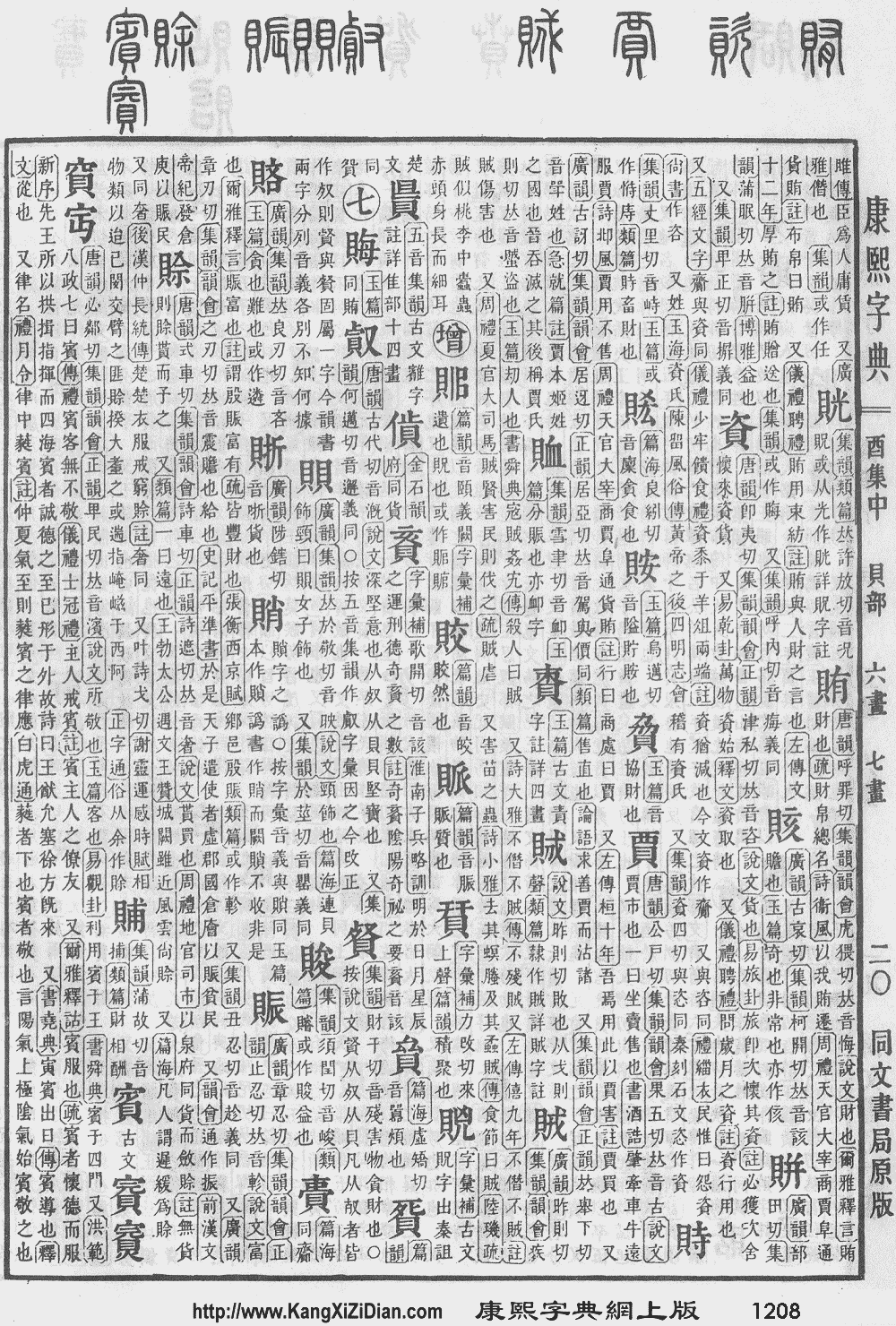
- Kangxi Dictionary: page 1208, character 14
- Dai Kanwa Jiten: character 36759
- Dae Jaweon: page 1672, character 10
- Hanyu Da Zidian (first edition): volume 6, page 3637, character 1
- Unihan data for U+8CCA
Chinese
| trad. | 賊 | |
|---|---|---|
| simp. | 贼 | |
| alternative forms | 𧵪 戝 | |
Glyph origin
| Historical forms of the character 賊 | |||
|---|---|---|---|
| Western Zhou | Warring States | Shuowen Jiezi (compiled in Han) | Liushutong (compiled in Ming) |
| Bronze inscriptions | Chu slip and silk script | Small seal script | Transcribed ancient scripts |
 |
 |
 |
 |
Phono-semantic compound (形聲/形声, OC *zɯːɡ) : phonetic 則 (OC *ʔsɯːɡ) + semantic 戈 (“weapon”).
This was later reinterpreted as a compound of 貝 (“money”) and 戎 (“weapon”) to produce the modern form.
Etymology 1
Possibly Sino-Tibetan; compare Tibetan ཇག (jag, “robbery”) (Coblin, 1986). Schuessler (2007) points out that a palatalized consonant in Tibetan does not usually correspond to an unpalatalized one in Chinese; instead, he compares it to Khmer ឆក់ (chɑk, “to snatch; to steal”).
Possibly cognate with 災 (OC *ʔslɯː, “natural disaster”) (Schuessler, 2007).
Based on evidence from early loans from Chinese, e.g. Lakkia kjak⁸ (“bandit”) and Rục kəcʌ́ːk (“bandit”), Baxter and Sagart (2014) reconstructs the Old Chinese with a *k preinitial.
Pronunciation
Definitions
賊
- † to damage; to corrupt; to ruin; to destroy
- † to harm; to injure
- † to slander
- † to murder
- 宣子驟諫,公患之,使鉏麑賊之。 [Classical Chinese, trad.]
- From: Commentary of Zuo, c. 4th century BCE
- Xuānzǐ zhòu jiàn, Gōng huàn zhī, shǐ Chú Ní zéi zhī. [Pinyin]
- Lord Xuan remonstrated with the Duke again and again. The Duke, troubled by his behaviour, sent Chu (or "Zhu") Ni to murder him.
宣子骤谏,公患之,使𬬺麑贼之。 [Classical Chinese, simp.]
- † murderer
- † harm; disaster
- thief; bandit; robber (Classifier: 個/个 m c)
- villain; traitor
- † to steal
- evil; wicked; treacherous
- † to restrain
- † ruthless; vicious
- (colloquial, dialectal) cunning; wily; sly
- † a kind of pest that eats the joints of a seedling
Usage notes
- Xiandai Hanyu Guifan Cidian (《现代汉语规范词典》) proscribes the use of the pronunciation zé.
Synonyms
Descendants
Others:
Pronunciation
Definitions
賊
- (formerly dialectal, including Northeastern Mandarin, increasingly informal) very; particularly; immensely; extremely
Synonyms
Compounds
- 亂臣賊子/乱臣贼子 (luànchénzéizǐ)
- 作賊心虛/作贼心虚 (zuòzéixīnxū)
- 併贓拿賊/并赃拿贼
- 內賊/内贼
- 六賊/六贼
- 剽賊/剽贼
- 匪賊/匪贼
- 反賊/反贼 (fǎnzéi)
- 國賊/国贼 (guózéi)
- 大眼賊/大眼贼
- 失賊/失贼
- 奸賊 (jiānzéi)
- 家賊/家贼 (jiāzéi)
- 家賊難防/家贼难防 (jiāzéinánfáng)
- 宿賊/宿贼
- 小毛賊/小毛贼
- 小賊/小贼
- 山賊/山贼 (shānzéi)
- 德賊/德贼
- 悍賊/悍贼
- 慣賊/惯贼
- 戕賊/戕贼
- 拿賊拿贓/拿贼拿赃
- 拿賊見贓/拿贼见赃
- 擒賊擒王/擒贼擒王 (qínzéiqínwáng)
- 擒賊擒首/擒贼擒首
- 木賊/木贼 (mùzéi)
- 殘賊/残贼 (cánzéi)
- 毛賊/毛贼 (máozéi)
- 民賊/民贼 (mínzéi)
- 水賊/水贼
- 海賊/海贼 (hǎizéi)
- 漏面賊/漏面贼
- 烏賊/乌贼 (wūzéi)
- 烏賊車/乌贼车
- 狂賊/狂贼
- 狗賊/狗贼
- 猾賊/猾贼
- 白拈賊/白拈贼
- 白日賊/白日贼
- 白賊/白贼 (báizéi)
- 白賊七/白贼七
- 盜賊/盗贼 (dàozéi)
- 盜賊四起/盗贼四起
- 盜賊蜂起/盗贼蜂起
- 盜馬賊/盗马贼 (dàomǎzéi)
- 真贓正賊/真赃正贼
- 破賊/破贼 (pòzéi)
- 禿賊/秃贼
- 積賊/积贼
- 竊賊/窃贼 (qièzéi)
- 老賊/老贼 (lǎozéi)
- 花賊/花贼
- 草賊/草贼 (cǎozéi)
- 蝥賊/蝥贼
- 蟊賊/蟊贼
- 討賊/讨贼 (tǎozéi)
- 認賊作父/认贼作父 (rènzéizuòfù)
- 認賊為子/认贼为子
- 賊人/贼人 (zéirén)
- 賊人心虛/贼人心虚
- 賊人膽虛/贼人胆虚
- 賊仔星/贼仔星
- 賊去關門/贼去关门
- 賊喊捉賊/贼喊捉贼 (zéihǎnzhuōzéi)
- 賊子/贼子
- 賊子亂臣/贼子乱臣
- 賊害/贼害
- 賊寇/贼寇
- 賊巢/贼巢 (zéicháo)
- 賊店/贼店
- 賊心/贼心 (zéixīn)
- 賊性/贼性
- 賊星/贼星 (zéixīng)
- 賊曹/贼曹
- 賊王八/贼王八
- 賊皮賊骨/贼皮贼骨
- 賊眉鼠眼/贼眉鼠眼
- 賊眼/贼眼
- 賊禿/贼秃
- 賊窩子/贼窝子
- 賊肉/贼肉
- 賊臣亂子/贼臣乱子
- 賊臣逆子/贼臣逆子
- 賊船/贼船 (zéichuán)
- 賊虐/贼虐
- 賊話兒/贼话儿
- 賊贓/贼赃 (zéizāng)
- 賊頭賊腦/贼头贼脑
- 賊頭鼠腦/贼头鼠脑
- 賊首/贼首 (zéishǒu)
- 賊驢/贼驴
- 賊骨頭/贼骨头
- 賊鬼/贼鬼
- 賊黨/贼党 (zéidǎng)
- 賣國賊/卖国贼 (màiguózéi)
- 逆子賊臣/逆子贼臣
- 逆臣賊子/逆臣贼子
- 逆賊/逆贼 (nìzéi)
- 附賊/附贼
- 陰賊/阴贼 (yīnzé)
- 雅賊/雅贼
- 飛賊/飞贼
- 馬賊/马贼 (mǎzéi)
- 鬧賊/闹贼
Japanese
| Shinjitai | 賊 |  |
| Kyūjitai [1][2] |
賊󠄁 賊+ 󠄁?(Adobe-Japan1) |
 |
| 賊󠄄 賊+ 󠄄?(Hanyo-Denshi) (Moji_Joho) | ||
| The displayed kanji may be different from the image due to your environment. See here for details. | ||
Readings
Compounds
- 賊魁 (zokukai)
- 賊害 (zokugai)
- 賊虐 (zokugyaku)
- 賊軍 (zokugun)
- 賊塞 (zokusai)
- 賊砦 (zokusai)
- 賊殺 (zokusatsu)
- 賊子 (zokushi)
- 賊首 (zokushu)
- 賊衆 (zokushū)
- 賊将 (zokushō)
- 賊情 (zokujō)
- 賊心 (zokushin)
- 賊臣 (zokushin)
- 賊勢 (zokusei)
- 賊巣 (zokusō)
- 賊地 (zokuchi)
- 賊徒 (zokuto)
- 賊盗 (zokutō)
- 賊党 (zokutō)
- 賊難 (zokunan)
- 賊匪 (zokuhi)
- 賊氛 (zokufun)
- 賊兵 (zokuhei)
- 賊民 (zokumin)
- 賊名 (zokumei)
- 賊塁 (zokurui)
- 賊姦 (zokkan)
- 烏賊 (ika): squid, cuttlefish
- 陰賊 (inzoku)
- 烏賊 (uzoku)
- 怨賊 (onzoku)
- 海賊 (kaizoku): pirate
- 猾賊 (katsuzoku)
- 姦賊 (kanzoku)
- 義賊 (gizoku)
- 逆賊 (gyakuzoku)
- 劫賊 (kyōzoku)
- 劇賊 (gekizoku)
- 険賊 (kenzoku)
- 寇賊 (kōzoku)
- 国賊 (kokuzoku)
- 山賊 (sanzoku)
- 残賊 (zanzoku)
- 夙賊 (shukuzoku)
- 小賊 (shōzoku)
- 戕賊 (shōzoku)
- 草賊 (sōzoku)
- 鼠賊 (sozoku)
- 盗賊 (tōzoku)
- 討賊 (tōzoku)
- 馬賊 (bazoku)
- 髪賊 (hatsuzoku)
- 匪賊 (hizoku)
- 詖賊 (hizoku)
- 蝥賊 (bōzoku)
- 民賊 (minzoku)
- 木賊 (mokuzoku)
- 乱賊 (ranzoku)
- 流賊 (ryūzoku)
- 倭賊 (wazoku)
References
- Haga, Gōtarō (1914) 漢和大辞書 [The Great Kanji-Japanese Dictionary] (in Japanese), Fourth edition, Tōkyō: Kōbunsha, , page 2026 (paper), page 1065 (digital)
- Shōundō Henshūjo, editor (1927), 新漢和辞典 [The New Kanji-Japanese Dictionary] (in Japanese), Ōsaka: Shōundō, , page 1160 (paper), page 593 (digital)
- Matsumura, Akira, editor (2006), 大辞林 [Daijirin] (in Japanese), Third edition, Tōkyō: Sanseidō, →ISBN
- NHK Broadcasting Culture Research Institute, editor (1998), NHK日本語発音アクセント辞典 [NHK Japanese Pronunciation Accent Dictionary] (in Japanese), Tōkyō: NHK Publishing, →ISBN
Korean
Etymology
From Middle Chinese 賊 (MC dzok). Recorded as Middle Korean 적〮 (cék) (Yale: cek) in Hunmong Jahoe (訓蒙字會 / 훈몽자회), 1527.