桀
| ||||||||
Translingual
Han character
桀 (Kangxi radical 75, 木+6, 10 strokes, cangjie input 弓手木 (NQD), four-corner 25904, composition ⿱舛木)
References
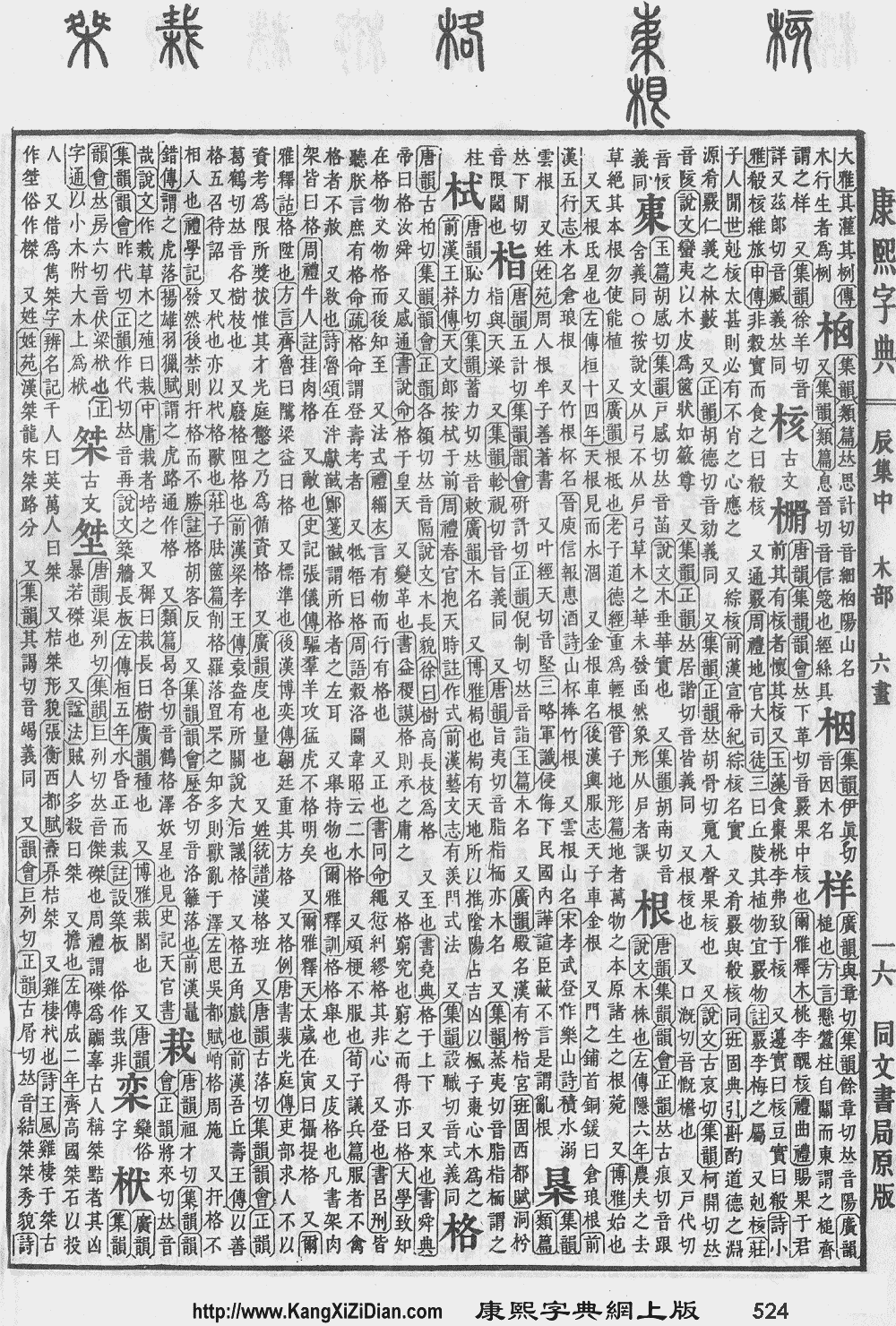
- Kangxi Dictionary: page 524, character 15
- Dai Kanwa Jiten: character 14753
- Dae Jaweon: page 913, character 3
- Hanyu Da Zidian (first edition): volume 2, page 1203, character 5
- Unihan data for U+6840
Chinese
Glyph origin
In Chu slips, Phono-semantic compound (形聲/形声, OC *ɡrad) : phonetic 匄 (OC *kaːds) + semantic 木. In the modern script, 匄 has corrupted into 舛.
Etymology 1
| trad. | 桀 | |
|---|---|---|
| simp. # | 桀 | |
According to Schussler (2007), 桀 (OC *ɡrad) and 傑 (OC *ɡrad) are the same word meaning "outstanding > hero"; insides Sinitic, it is cognate to 朅 (OC *kʰrad, “martial”); outsides Sinitic, it is related to either Mizo hrât (“valiant, resolute”) or Tibetan གྱད (gyad, “strength; champion, athlete”).
STEDT reconstructs Proto-Sino-Tibetan *gjat (“hero, champion”) for 傑 (OC) ~ 桀 (OC *ɡrad) and གྱད (gyad).
Pronunciation
Definitions
桀
- chicken roost
- 雞棲于桀、日之夕矣、羊牛下括。 [Pre-Classical Chinese, trad.]
- From: The Classic of Poetry, c. 11th – 7th centuries BCE, translated based on James Legge's version
- Jī qī yú jié, rì zhī xī yǐ, yáng niú xià kuò. [Pinyin]
- The fowls roost on their perches; and in the evening of the day, the goats and cows come down and home;
鸡栖于桀、日之夕矣、羊牛下括。 [Pre-Classical Chinese, simp.]
- Jie of Xia, an ancient emperor
- 韋顧既伐、昆吾夏桀。 [Pre-Classical Chinese, trad.]
- From: The Classic of Poetry, c. 11th – 7th centuries BCE, translated based on James Legge's version
- Wéi Gù jì fá, Kūnwú Xiàjié. [Pinyin]
- Having smitten [the princes of] Wei and Gu, [he smote] [the prince of] Kunwu, and with Jie of Xia.
韦顾既伐、昆吾夏桀。 [Pre-Classical Chinese, simp.]- 桀德,惟乃弗作往任,是惟暴德罔後。 [Classical Chinese, trad.]
- From: The Book of Documents, circa 7th – 4th centuries BCE
- Jié dé, wéi nǎi fú zuò wǎng rèn, shì wéi bàodé wǎng hòu. [Pinyin]
- Jie’s character was such that he did not follow precedents in making appointments, and therefore his character was violent and ruined the future [of his kingdom].
桀德,惟乃弗作往任,是惟暴德罔后。 [Classical Chinese, simp.]
- fierce; brutal; cruel
- 君不肖而側室賢,太子輕而庶子伉,官吏弱而人民桀,如此則國躁;國躁者,可亡也。 [Classical Chinese, trad.]
- From: Han Feizi, circa 2nd century BCE, translated based on W. K. Liao's version
- Jūn bùxiào ér cèshì xián, tàizǐ qīng ér shùzǐ kàng, guānlì ruò ér rénmín jié, rúcǐ zé guó zào; guó zào zhě, kěwáng yě. [Pinyin]
- If the ruler is unworthy but his half-brothers are worthy; if the heir apparent is powerless and the concubine's son surpasses him; or if the magistrates are weak and the people are fierce; then the state will be seized with a panic. And a panic-stricken state is liable to ruin.
君不肖而侧室贤,太子轻而庶子伉,官吏弱而人民桀,如此则国躁;国躁者,可亡也。 [Classical Chinese, simp.]
- to lift; to raise; to shoulder; to bear
- 齊高固入晉師,桀石以投人,禽之;而乘其車,繫桑本焉,以徇齊壘,曰:「欲勇者,賈余餘勇。」 [Classical Chinese, trad.]
- From: Commentary of Zuo, c. 4th century BCE, translation from Zuozhuan: Commentary on the "Spring and Autumn Annals" (2017), by Stephen Durrant, Wai-yee Li and David Schaberg
- Qí Gāo Gù rù Jìnshī, jié shí yǐ tóu rén, qín zhī; ér chéng qí chē, jì sāngběn yān, yǐ xùn Qí lěi, yuē: “Yù yǒng zhě, gǔ yú yúyǒng.” [Pinyin]
- Gao Gu of Qi entered the ranks of the Jin army, raised a stone and hurled it against a Jin man, took him captive; and then rode in his [the captive's] chariot, tying it to a mulberry trunk with its roots. He paraded around the Qi fortifications, saying, “Those who want valor can buy my surplus.”
齐高固入晋师,桀石以投人,禽之;而乘其车,系桑本焉,以徇齐垒,曰:「欲勇者,贾余余勇。」 [Classical Chinese, simp.]
- Alternative form of 傑/杰 (jié, “outstanding; hero”)
- 伯兮朅兮、邦之桀兮。 [Pre-Classical Chinese, trad. and simp.]
- From: The Classic of Poetry, c. 11th – 7th centuries BCE, translated based on James Legge's version
- Bó xī qiè xī, bāng zhī jié xī. [Pinyin]
- My noble husband is how martial-like! The hero of the country!
Usage notes
Barnwell (2013) proposes that the 桀 (jié, “hero”) mentioned in Classic of Poetry "Airs of Wey - Bo Xi" was indeed Jié of Xià (夏桀).[1]
Compounds
- 五桀
- 俊桀
- 傲桀
- 凶桀
- 助桀
- 助桀為惡/助桀为恶
- 助桀為暴/助桀为暴
- 助桀為虐/助桀为虐
- 口桀
- 喬桀/乔桀
- 夏桀 (Xiàjié)
- 大桀小桀
- 姦桀/奸桀
- 小桀
- 庶桀
- 暴桀
- 材桀
- 桀俊
- 桀健
- 桀傲
- 桀傲不恭
- 桀傲不馴/桀傲不驯
- 桀出
- 桀壁
- 桀士
- 桀奡
- 桀奴
- 桀宋
- 桀心
- 桀悍
- 桀惡/桀恶
- 桀慢
- 桀敖不馴/桀敖不驯
- 桀暴
- 桀木
- 桀桀
- 桔桀
- 桀橫/桀横
- 桀溺
- 桀然
- 桀犬
- 桀犬吠堯/桀犬吠尧
- 桀猾
- 桀異/桀异
- 桀畤
- 桀立
- 桀紂/桀纣 (jiézhòu)
- 桀虐
- 桀虜/桀虏
- 桀解
- 桀誖
- 桀豎/桀竖
- 桀貪驁詐/桀贪骜诈
- 桀賊/桀贼
- 桀起
- 桀跖
- 桀跱
- 桀逆
- 桀逆放恣
- 桀雄
- 桀駑/桀驽
- 桀駿/桀骏
- 桀驁/桀骜 (jié'ào)
- 桀驁不恭/桀骜不恭
- 桀驁不遜/桀骜不逊
- 桀驁不馴/桀骜不驯 (jié'àobùxùn)
- 桀驁自恃/桀骜自恃
- 桀驁難馴/桀骜难驯
- 桀黠
- 梟桀/枭桀
- 狡桀
- 秀桀
- 竦桀
- 英桀
- 豪桀 (háojié)
- 賢桀/贤桀
- 邦桀
- 陰桀/阴桀
- 雄桀
- 駿桀/骏桀
- 驍桀/骁桀
- 驕桀/骄桀
- 魁桀
- 黠桀
Pronunciation
Definitions
桀
- (Hokkien) to be not in harmony; to be incompatible; to be contrary
- (Hokkien) to impede; to obstruct; to hinder
- (Mainland China and Philippine Hokkien) to get stuck; to wedge
- (Mainland China Hokkien) to contradict (people)
- (Xiamen Hokkien) hard to get along with others
Pronunciation
Definitions
桀
- (Hokkien) to have estrangement; to be in conflict with each other (often reduplicated)
- (Xiamen Hokkien) to hit something
- (Quanzhou Hokkien) to have a crack (of a jar, vat, etc.)
References
- Barnwell, Scott A. (2013). "The Evolution of the Concept of De 德 in Early China" Sino-Platonic Paper, 235. p. 24-25, fn. 86
Japanese
Kanji
- This term needs a translation to English. Please help out and add a translation, then remove the text
{{rfdef}}.
Korean
Hanja
桀 (eum 걸 (geol))
- This term needs a translation to English. Please help out and add a translation, then remove the text
{{rfdef}}.