見
| ||||||||
| ||||||||
| ||||||||
Translingual
| Stroke order | |||
|---|---|---|---|
 | |||
| Stroke order | |||
|---|---|---|---|
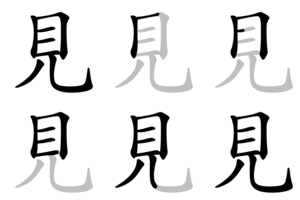 | |||
Han character
見 (Kangxi radical 147, 見+0, 7 strokes, cangjie input 月山竹山 (BUHU), four-corner 60210, composition ⿱目儿)
- Kangxi radical #147, ⾒.
Derived characters
Related characters
References
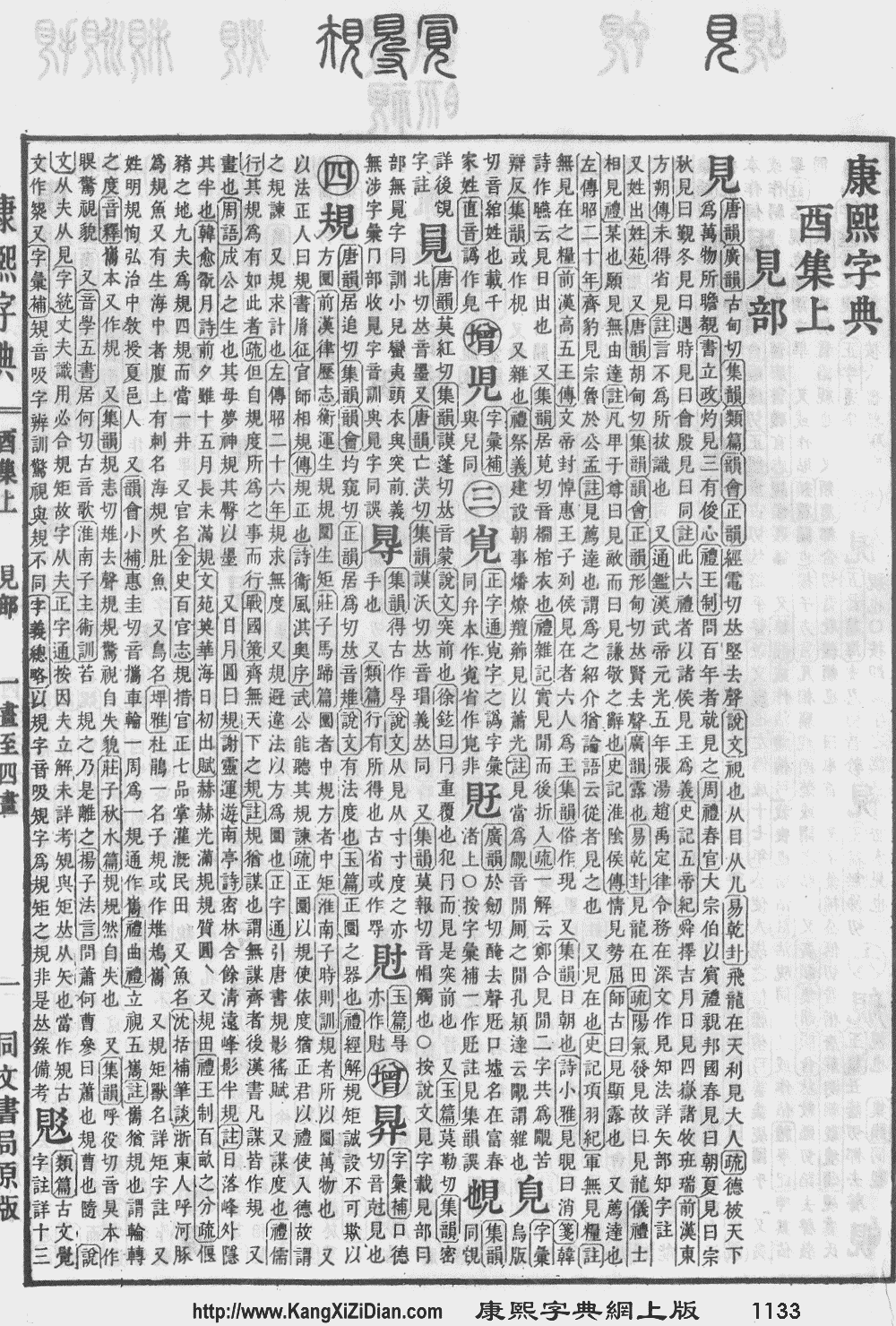
- Kangxi Dictionary: page 1133, character 1
- Dai Kanwa Jiten: character 34796
- Dae Jaweon: page 1599, character 8
- Hanyu Da Zidian (first edition): volume 6, page 3663, character 1
- Unihan data for U+898B
- Unihan data for U+FA0A
Chinese
| trad. | 見 | |
|---|---|---|
| simp. | 见 | |
Glyph origin
| Historical forms of the character 見 | ||||
|---|---|---|---|---|
| Shang | Western Zhou | Warring States | Shuowen Jiezi (compiled in Han) | Liushutong (compiled in Ming) |
| Oracle bone script | Bronze inscriptions | Chu slip and silk script | Small seal script | Transcribed ancient scripts |
 |
 |
 |
 |
 |
Characters in the same phonetic series (見) (Zhengzhang, 2003)
目 (“eye”) + 儿 (“human”) – an eye on a pair of legs. Originally a human figure with a large eye for a head.
Etymology
Pronunciation 1
Definitions
見
- to see
- 唔見有/唔见有 [Cantonese] ― m4 gin3 jau5 [Jyutping] ― (please add an English translation of this usage example)
- to meet; to see
- to meet with; to be exposed to
- to see; to refer to; vide
- to appear; to seem
- opinion, idea, view
- used after some verbs to indicate the result
- (literary, used before a verb) (to have something done) by (someone or something)
- Synonym: 被
- 盆成括見殺。門人問曰:「夫子何以知其將見殺?」 [Classical Chinese, trad.]
- From: Mencius, c. 4th century BCE
- Pén Chéngkuò jiàn shā. Ménrén wèn yuē: “Fūzǐ héyǐ zhī qí jiāng jiàn shā?” [Pinyin]
- Pen Cheng Kuo was killed. The disciples asked, "How did you know, Master, that he would be killed?'
盆成括见杀。门人问曰:「夫子何以知其将见杀?」 [Classical Chinese, simp.]
- (literary) used to before a verb to indicate the action towards the speaker
- (~母) (Chinese linguistics) the Middle Chinese initial of 見 (MC kenH)
Compounds
- 一偏之見/一偏之见 (yīpiānzhījiàn)
- 一孔之見/一孔之见 (yīkǒngzhījiàn)
- 一己之見/一己之见 (yījǐzhījiàn)
- 一得之見/一得之见
- 一般見識/一般见识 (yībānjiànshí)
- 一見傾心/一见倾心 (yījiànqīngxīn)
- 一見如故/一见如故 (yījiànrúgù)
- 一見如舊/一见如旧
- 一見鍾情/一见钟情 (yījiànzhōngqíng)
- 一針見血/一针见血 (yīzhēnjiànxiě)
- 一隅之見/一隅之见
- 不羞見/不羞见
- 不見/不见 (bùjiàn)
- 不見不散/不见不散 (bùjiànbùsàn)
- 不見世面/不见世面
- 不見人影/不见人影
- 不見便/不见便
- 不見則聲/不见则声
- 不見動靜/不见动静
- 不見圭角/不见圭角
- 不見天日/不见天日
- 不見得/不见得 (bùjiàndé)
- 不見怪/不见怪
- 不見經傳/不见经传 (bùjiàn-jīngzhuàn)
- 不見識面/不见识面
- 不見蹤影/不见踪影 (bùjiànzōngyǐng)
- 不見輕/不见轻
- 不見輸贏/不见输赢
- 不見面/不见面
- 世俗之見/世俗之见
- 且見/且见
- 中見/中见
- 主見/主见 (zhǔjiàn)
- 久見/久见 (kiú-kian)
- 乍見/乍见
- 也不見得/也不见得
- 井蛙之見/井蛙之见
- 互見/互见
- 五見/五见
- 代見/代见
- 伏見/伏见 (Fújiàn)
- 何以見得/何以见得 (héyǐjiàndé)
- 你知我見/你知我见
- 何見之晚/何见之晚
- 保見/保见
- 保見人/保见人
- 倨見/倨见
- 偏見/偏见 (piānjiàn)
- 傳見/传见
- 僻見/僻见
- 先入之見/先入之见 (xiānrùzhījiàn)
- 先見/先见 (xiānjiàn)
- 先見之明/先见之明 (xiānjiànzhīmíng)
- 八面見光/八面见光 (bāmiàn jiànguāng)
- 再見/再见 (zàijiàn)
- 刀刀見血/刀刀见血
- 利弊互見/利弊互见
- 別識別見/别识别见
- 前所未見/前所未见 (qiánsuǒwèijiàn)
- 創見/创见 (chuàngjiàn)
- 卑見/卑见
- 卓見/卓见 (zhuójiàn)
- 博聞多見/博闻多见
- 原始見終/原始见终
- 參見/参见 (cānjiàn)
- 可憐見/可怜见 (kěliánjiàn)
- 司空見慣/司空见惯 (sīkōngjiànguàn)
- 召見/召见 (zhàojiàn)
- 可見/可见 (kějiàn)
- 只見/只见 (zhǐjiàn)
- 叩見/叩见
- 可見一斑/可见一斑 (kějiànyībān)
- 可見度/可见度 (kějiàndù)
- 各執己見/各执己见 (gèzhíjǐjiàn)
- 各執所見/各执所见
- 各抒己見/各抒己见 (gèshūjǐjiàn)
- 各持己見/各持己见 (gèchíjǐjiàn)
- 同見同知/同见同知
- 吹糠見米/吹糠见米
- 喜聞樂見/喜闻乐见 (xǐwénlèjiàn)
- 四面見光/四面见光
- 因小見大/因小见大
- 因難見巧/因难见巧
- 固執己見/固执己见 (gùzhíjǐjiàn)
- 增廣見聞/增广见闻
- 增長見識/增长见识
- 夢見/梦见 (mèngjiàn)
- 天可憐見/天可怜见
- 奉見/奉见
- 孤行己見/孤行己见
- 定見/定见 (dìngjiàn)
- 宴見/宴见
- 寡聞少見/寡闻少见
- 寡見少聞/寡见少闻
- 察見淵魚/察见渊鱼
- 寡見鮮聞/寡见鲜闻
- 尋短見/寻短见 (xúnduǎnjiàn)
- 小兒之見/小儿之见
- 小見/小见
- 小見識/小见识
- 少見/少见 (shǎojiàn)
- 少見多怪/少见多怪 (shǎojiànduōguài)
- 屢見不鮮/屡见不鲜 (lǚjiànbùxiān)
- 常見/常见 (chángjiàn)
- 廟見/庙见
- 廝見/厮见
- 引見/引见 (yǐnjiàn)
- 待不見/待不见
- 待見/待见 (dàijiàn)
- 忽見/忽见 (hūjiàn)
- 恨相見晚/恨相见晚
- 愚見/愚见 (yújiàn)
- 意見/意见 (yìjiàn)
- 想見/想见 (xiǎngjiàn)
- 意見溝通/意见沟通
- 意見箱/意见箱 (yìjiànxiāng)
- 意見自由/意见自由
- 意見領袖/意见领袖
- 成見/成见 (chéngjiàn)
- 我見猶憐/我见犹怜
- 所見/所见 (suǒjiàn)
- 所見所聞/所见所闻 (suǒjiànsuǒwén)
- 所見略同/所见略同 (suǒjiànlüètóng)
- 拙見/拙见 (zhuōjiàn)
- 拜見/拜见 (bàijiàn)
- 拜見禮/拜见礼
- 拜見錢/拜见钱
- 拿賊見贓/拿贼见赃
- 捉奸見床
- 捉奸見雙/捉奸见双
- 捐棄成見/捐弃成见
- 接見/接见 (jiējiàn)
- 推見/推见 (tuījiàn)
- 推誠相見/推诚相见
- 撞見/撞见 (zhuàngjiàn)
- 撥雲見日/拨云见日 (bōyúnjiànrì)
- 政見/政见 (zhèngjiàn)
- 數見不鮮/数见不鲜 (shuòjiànbùxiān)
- 明心見性/明心见性
- 明見/明见
- 明見萬里/明见万里
- 時見/时见
- 晉見/晋见 (jìnjiàn)
- 晤見/晤见 (wùjiàn)
- 書生之見/书生之见
- 會見/会见 (huìjiàn)
- 有目共見/有目共见 (yǒumùgòngjiàn)
- 有見識/有见识
- 望見/望见 (wàngjiàn)
- 朝見/朝见 (cháojiàn)
- 未見/未见 (wèijiàn)
- 機見/机见
- 正見/正见
- 歧見/歧见 (qíjiàn)
- 歷歷可見/历历可见
- 殫見洽聞/殚见洽闻
- 殷見
- 水清石見/水清石见
- 求見/求见 (qiújiàn)
- 沒個見識/没个见识
- 沒見世面/没见世面
- 沒見識/没见识
- 沒見食面/没见食面
- 洽聞博見/洽闻博见
- 洞見/洞见 (dòngjiàn)
- 洞見癥結/洞见症结
- 活見鬼/活见鬼
- 清晰可見/清晰可见
- 深知灼見/深知灼见
- 淺而易見/浅而易见
- 淺見/浅见 (qiǎnjiàn)
- 淺見寡聞/浅见寡闻
- 淺見寡識/浅见寡识
- 淺見薄識/浅见薄识
- 灼見/灼见 (zhuójiàn)
- 灼見真知/灼见真知
- 無見/无见
- 獨到之見/独到之见
- 獨見/独见
- 生情見景/生情见景
- 略見一斑/略见一斑
- 略陳管見/略陈管见
- 白日見鬼/白日见鬼 (báirì-jiànguǐ)
- 的見/的见
- 目不見睫/目不见睫
- 目見/目见 (mùjiàn)
- 目見耳聞/目见耳闻
- 直抒己見/直抒己见
- 相形見絀/相形见绌 (xiāngxíngjiànchù)
- 相見/相见 (xiāngjiàn)
- 省見/省见
- 相見恨晚/相见恨晚 (xiāngjiànhènwǎn)
- 相見無日/相见无日
- 真知灼見/真知灼见 (zhēnzhīzhuójiàn)
- 真誠相見/真诚相见
- 眼力見兒/眼力见儿
- 眼見得/眼见得 (yǎnjiànde)
- 瞅不見/瞅不见
- 瞅見/瞅见 (chǒujiàn)
- 瞥見/瞥见 (piējiàn)
- 瞧見/瞧见 (qiáojiàn)
- 短見/短见 (duǎnjiàn)
- 短見薄識/短见薄识
- 碰見/碰见 (pèngjiàn)
- 視而不見/视而不见 (shì'érbùjiàn)
- 私見/私见 (sījiàn)
- 秋扇見捐/秋扇见捐
- 稟見/禀见
- 種族偏見/种族偏见
- 穴見/穴见
- 穴見小儒/穴见小儒
- 窺見/窥见 (kuījiàn)
- 窺見一斑/窥见一斑
- 立竿見影/立竿见影 (lìgānjiànyǐng)
- 管窺之見/管窥之见
- 管見/管见 (guǎnjiàn)
- 約見/约见 (yuējiàn)
- 綽見/绰见
- 罕見/罕见 (hǎnjiàn)
- 羞面見人/羞面见人
- 羹牆見堯/羹墙见尧
- 習見/习见 (xíjiàn)
- 老成之見/老成之见
- 老成見到/老成见到
- 老鼠見貓/老鼠见猫
- 耳聞目見/耳闻目见 (ěrwénmùjiàn)
- 聽見/听见 (tīngjiàn)
- 胸有定見/胸有定见
- 能見度/能见度 (néngjiàndù)
- 膚見/肤见
- 臆見/臆见 (yìjiàn)
- 自尋短見/自寻短见 (zìxúnduǎnjiàn)
- 興師見罪/兴师见罪
- 花見羞/花见羞
- 蒼蠅見血/苍蝇见血
- 螞蝗見血/蚂蝗见血
- 見不得/见不得 (jiànbudé)
- 見不得人/见不得人
- 見不長/见不长
- 見世面/见世面
- 見事風生/见事风生
- 見亮/见亮
- 見人/见人
- 見仁見智/见仁见智 (jiànrénjiànzhì)
- 見仁見知/见仁见知
- 見付/见付
- 見來/见来
- 見便/见便
- 見信/见信
- 見俏/见俏
- 見個情/见个情
- 見光/见光 (jiànguāng)
- 見光死/见光死 (jiànguāngsǐ)
- 見兔呼狗/见兔呼狗
- 見兔放鷹/见兔放鹰
- 見兔顧犬/见兔顾犬
- 見分曉/见分晓
- 見利忘義/见利忘义 (jiànlìwàngyì)
- 見利思義/见利思义
- 見到/见到 (jiàndào)
- 見前/见前
- 見危/见危
- 見危受命/见危受命
- 見危授命/见危授命
- 見危致命/见危致命
- 見原/见原 (jiànyuán)
- 見告/见告 (jiàngào)
- 見喜/见喜
- 見噎廢食/见噎废食
- 見地/见地 (jiàndì)
- 見報/见报 (jiànbào)
- 見堯於牆/见尧于墙
- 見外/见外 (jiànwài)
- 見多識廣/见多识广 (jiànduōshíguǎng)
- 見天/见天 (jiàntiān)
- 見天日/见天日 (jiàn tiānrì)
- 見好/见好
- 見好就收/见好就收 (jiàn hǎo jiù shōu)
- 見字/见字
- 見官/见官
- 見客/见客 (jiànkè)
- 見小/见小
- 見工/见工
- 見幾/见几
- 見幾而作/见几而作
- 見底/见底 (jiàndǐ)
- 見彈求鴞/见弹求鸮
- 見得/见得 (jiàndé)
- 見微知萌/见微知萌
- 見微知著/见微知著 (jiànwēizhīzhù)
- 見德思齊/见德思齐
- 見怪/见怪 (jiànguài)
- 見怪不怪/见怪不怪 (jiànguàibùguài)
- 見性成佛/见性成佛
- 見惠/见惠 (jiànhuì)
- 見愛/见爱 (jiàn'ài)
- 見慣不驚/见惯不惊
- 見慣司空/见惯司空
- 見憐/见怜
- 見所未見/见所未见 (jiànsuǒwèijiàn)
- 見效/见效 (jiànxiào)
- 見教/见教 (jiànjiào)
- 見新/见新
- 見方/见方
- 見於/见于
- 見旺/见旺
- 見景生情/见景生情
- 見智見仁/见智见仁
- 見本/见本 (kien-pún) (Hakka)
- 見棄/见弃 (jiànqì)
- 見樣學樣/见样学样
- 見機/见机 (jiànjī)
- 見機而作/见机而作
- 見機行事/见机行事
- 見步行步/见步行步
- 見死不救/见死不救 (jiànsǐbùjiù)
- 見溺不救/见溺不救
- 見獵心喜/见猎心喜 (jiànlièxīnxǐ)
- 見異思遷/见异思迁 (jiànyìsīqiān)
- 見疑/见疑 (jiànyí)
- 見真章/见真章 (jiànzhēnzhāng)
- 見短/见短
- 見破/见破
- 見示/见示
- 見神見鬼/见神见鬼
- 見禮/见礼
- 見稱/见称 (jiànchēng)
- 見笑/见笑 (jiànxiào)
- 見笑大方/见笑大方
- 見笑於人/见笑于人
- 見精識精/见精识精
- 見紅/见红 (jiànhóng)
- 見絀/见绌
- 見經識經/见经识经
- 見縫就鑽/见缝就钻
- 見縫插針/见缝插针 (jiànfèngchāzhēn)
- 見罪/见罪 (jiànzuì)
- 見義勇為/见义勇为 (jiànyì-yǒngwéi)
- 見習/见习 (jiànxí)
- 見習生/见习生 (jiànxíshēng)
- 見而色喜/见而色喜
- 見聞/见闻 (jiànwén)
- 見聞廣博/见闻广博
- 見聞習染/见闻习染
- 見肉生根/见肉生根
- 見背/见背 (jiànbèi)
- 見色忘友/见色忘友
- 見血封喉/见血封喉
- 見解/见解 (jiànjiě)
- 見諒/见谅 (jiànliàng)
- 見諭/见谕
- 見識/见识 (jiànshí)
- 見證/见证 (jiànzhèng)
- 見證人/见证人 (jiànzhèngrén)
- 見識淺短/见识浅短
- 見讓/见让
- 見貌辨色/见貌辨色
- 見財起意/见财起意
- 見責/见责 (jiànzé)
- 見賢不隱/见贤不隐
- 見賢思齊/见贤思齐 (jiànxiánsīqí)
- 見過世面/见过世面
- 見錢眼紅/见钱眼红
- 見錢眼開/见钱眼开 (jiànqiányǎnkāi)
- 見長/见长
- 見閻王/见阎王 (jiàn Yánwáng)
- 見陣/见阵
- 見難/见难
- 見面/见面 (jiànmiàn)
- 見面禮/见面礼 (jiànmiànlǐ)
- 見鞍思馬/见鞍思马
- 見頂/见顶 (jiàndǐng)
- 見風/见风
- 見風使帆/见风使帆
- 見風使舵/见风使舵 (jiànfēngshǐduò)
- 見風是雨/见风是雨
- 見風轉篷/见风转篷
- 見風轉舵/见风转舵 (jiànfēngzhuǎnduò)
- 見風駛船/见风驶船
- 見駕/见驾 (jiànjià)
- 見驥一毛/见骥一毛
- 見高低/见高低
- 見鬼/见鬼 (jiànguǐ)
- 見齒/见齿
- 覲見/觐见 (jìnjiàn)
- 觀見/观见
- 請見/请见 (qǐngjiàn)
- 謁見/谒见 (yèjiàn)
- 謬見/谬见 (miùjiàn)
- 證見/证见 (zhèngjiàn)
- 識見/识见 (shíjiàn)
- 贄見/贽见 (zhìjiàn)
- 贄見禮/贽见礼
- 起見/起见 (qǐjiàn)
- 足見/足见 (zújiàn)
- 路見不平/路见不平 (lùjiànbùpíng)
- 載見/载见
- 迂見/迂见
- 迭見雜出/迭见杂出
- 進見/进见 (jìnjiàn)
- 進見禮/进见礼
- 遇見/遇见 (yùjiàn)
- 達見水庫/达见水库
- 遠見/远见 (yuǎnjiàn)
- 遙見/遥见 (yáojiàn)
- 遠見卓識/远见卓识
- 避不見面/避不见面
- 鄙夫之見/鄙夫之见
- 鄙見/鄙见 (bǐjiàn)
- 重見天日/重见天日 (chóngjiàntiānrì)
- 重見複出/重见复出
- 針針見血/针针见血
- 錯見/错见 (cuòjiàn)
- 門戶之見/门户之见
- 開心見膽/开心见胆
- 開心見誠/开心见诚
- 開門見山/开门见山 (kāiménjiànshān)
- 開雲見日/开云见日
- 陋見/陋见
- 陛見/陛见
- 陳見/陈见
- 難得一見/难得一见
- 雲開見日/云开见日
- 面見/面见
- 面見江東/面见江东
- 預見/预见 (yùjiàn)
- 顯而易見/显而易见 (xiǎn'éryìjiàn)
- 顯見/显见 (xiǎnjiàn)
- 馬見愁/马见愁
- 騎牆之見/骑墙之见
- 高明遠見/高明远见
- 高見/高见 (gāojiàn)
- 高見遠識/高见远识
- 高識遠見/高识远见
- 鬼見愁/鬼见愁 (guǐjiànchóu)
- 黨見/党见 (dǎngjiàn)
Pronunciation 2
Definitions
見
- † Original form of 現/现 (xiàn, “to appear”).
- 軻既取圖奉之,發圖,圖窮而匕首見。 [Classical Chinese, trad.]
- From: Zhanguo Ce, circa 5th – 3rd centuries BCE
- Kē jì qǔ tú fèng zhī, fā tú, tú qióng ér bǐshǒu xiàn. [Pinyin]
- Jing Ke took the map scroll and presented it. He unrolled the map, and when it reached the end, the dagger appeared.
轲既取图奉之,发图,图穷而匕首见。 [Classical Chinese, simp.]
Compounds
- 圖窮匕見/图穷匕见 (túqióngbǐxiàn)
- 尸居龍見/尸居龙见
- 層出疊見/层出叠见 (céngchūdiéxiàn)
- 層見疊出/层见叠出 (céngxiàndiéchū)
- 情見乎言/情见乎言
- 情見乎辭/情见乎辞
- 情見力屈/情见力屈
- 情見勢屈/情见势屈
- 情見勢竭/情见势竭
- 捉襟肘見/捉襟肘见
- 捉襟見肘/捉襟见肘
- 掣襟肘見/掣襟肘见
- 時窮節乃見/时穷节乃见 (shíqióngjiénǎixiàn)
- 時隱時見/时隐时见
- 書讀百遍,其義自見/书读百遍,其义自见
- 氣充文見/气充文见
- 瑕瑜互見/瑕瑜互见
- 自見/自见
- 見世報/见世报
- 見在/见在 (xiànzài)
- 見在佛/见在佛
- 見意/见意
- 見成/见成
- 見糧/见粮
- 見錢/见钱
- 讀書百遍,其義自見/读书百遍,其义自见
- 踵決肘見/踵决肘见
Japanese
Kanji
見
Readings
Compounds
Etymology 1
| Kanji in this term |
|---|
| 見 |
| み Grade: 1 |
| kun’yomi |
⟨mi1⟩ → /mi/
From Old Japanese. Attested in the Man'yōshū, completed some time after 759 CE (see quotation below).
The 連用形 (ren'yōkei, “stem or continuative form”) of the verb 見る (miru, “to see; to look at”).[1][2][3] Ultimately cognate with 目 (ancient ma, modern me, “eye”).[1]
Pronunciation
- IPA(key): [mʲi]
- Generally only found in compounds in modern Japanese, where the pitch accent depends on the entire term.
Noun
見 • (mi)
Etymology 2
| Kanji in this term |
|---|
| 見 |
| けん Grade: 1 |
| on’yomi |
From Middle Chinese 見 (MC kenH, “to see; to seem; opinion”).
Noun
見 • (ken)
- seeing, looking
- a view, perspective, thought, or opinion about something
- (noh) the visual impact the performers have on the audience
- window-shopping
- a window-shopper
Synonyms
References
- Shōgaku Tosho (1988) 国語大辞典(新装版) [Unabridged Dictionary of Japanese (Revised Edition)] (in Japanese), Tōkyō: Shogakukan, →ISBN
- Matsumura, Akira, editor (2006), 大辞林 [Daijirin] (in Japanese), Third edition, Tōkyō: Sanseidō, →ISBN
- Matsumura, Akira (1995) 大辞泉 [Daijisen] (in Japanese), First edition, Tōkyō: Shogakukan, →ISBN
Korean
Etymology 1
From Middle Chinese 見 (MC kenH).
| Historical readings |
|---|
|
Pronunciation
- (SK Standard/Seoul) IPA(key): [kjɘ(ː)n]
- Phonetic hangul: [견(ː)]
- Though still prescribed in Standard Korean, most speakers in both Koreas no longer distinguish vowel length.
Compounds
Compounds
- 의견 (意見, uigyeon)
- 발견 (發見, balgyeon)
- 견해 (見解, gyeonhae)
- 편견 (偏見, pyeon'gyeon)
- 견문 (見聞, gyeonmun)
- 이견 (異見, igyeon)
- 회견 (會見, hoegyeon)
- 참견 (參見, chamgyeon)
- 견각 (見却, gyeon'gak)
- 식견 (識見, sikgyeon)
- 예견 (豫見, yegyeon)
- 견식 (見識, gyeonsik)
- 견학 (見學, gyeonhak)
- 단견 (短見, dan'gyeon)
- 외견 (外見, oegyeon)
- 견습 (見習, gyeonseup)
- 소견 (所見, sogyeon)
- 견본 (見本, gyeonbon)
- 주견 (主見, jugyeon)
- 접견 (接見, jeopgyeon)
- 정견 (政見, jeonggyeon)
- 아견 (我見, agyeon)
- 망견 (望見, manggyeon)
- 사견 (私見, sagyeon)
- 견책 (見責, gyeonchaek)
- 고견 (高見, gogyeon)
- 일견 (一見, ilgyeon)
- 상견 (相見, sanggyeon)
- 상견례 (相見禮, sanggyeollye)
- 후견인 (後見人, hugyeonin)
- 일가견 (一家見, ilgagyeon)
- 선입견 (先入見, seonipgyeon)
- 선입지견 (先入之見, seonipjigyeon)
Etymology 2
From Middle Chinese 見 (MC henH).
| Historical readings |
|---|
|
Pronunciation
- (SK Standard/Seoul) IPA(key): [çɘ(ː)n]
- Phonetic hangul: [현(ː)]
- Though still prescribed in Standard Korean, most speakers in both Koreas no longer distinguish vowel length.
Hanja
Vietnamese
Han character
This article is issued from Wiktionary. The text is licensed under Creative Commons - Attribution - Sharealike. Additional terms may apply for the media files.