背
See also: 揹
| ||||||||
Translingual
| Stroke order | |||
|---|---|---|---|
 | |||
| Stroke order | |||
|---|---|---|---|
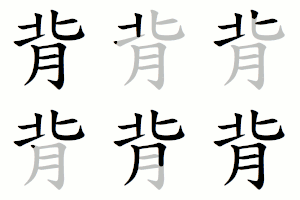 | |||
Han character
背 (Kangxi radical 130, 肉+5, 9 strokes, cangjie input 中心月 (LPB), four-corner 11227, composition ⿱北月(GJK) or ⿱北⺼(HT))
References
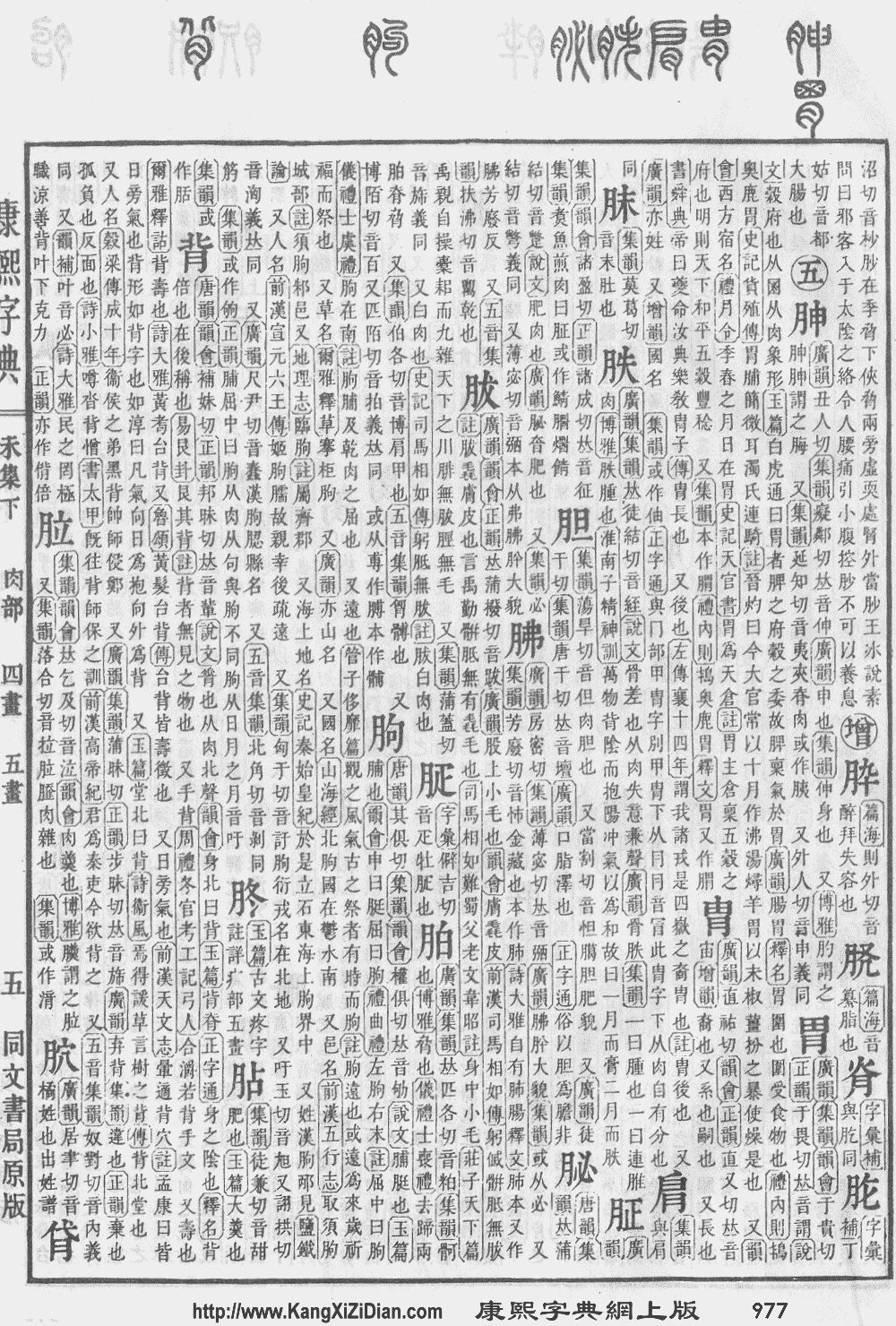
- Kangxi Dictionary: page 977, character 21
- Dai Kanwa Jiten: character 29363
- Dae Jaweon: page 1429, character 11
- Hanyu Da Zidian (first edition): volume 3, page 2058, character 4
- Unihan data for U+80CC
Chinese
Glyph origin
| Historical forms of the character 背 |
|---|
| Shuowen Jiezi (compiled in Han) |
| Small seal script |
 |
Characters in the same phonetic series (北) (Zhengzhang, 2003)
Phono-semantic compound (形聲/形声, OC *pɯːɡs, *bɯːɡs) : phonetic 北 (OC *pɯːɡ) + semantic 月 (“meat”). Originally written as 北, semantic 肉 was added to be distinguished from the derived meaning of 北 (“north”).
Etymology
From Proto-Sino-Tibetan *ba (“to carry (on back), shoulder”).
Two pronunciations were distinguished in Middle Chinese: puʌiH (“back”), buʌiH (“to turn one's back to; to betray”).
Definitions
背
- (anatomy) back
- back; backside; reverse side
- to leave; to abandon
- to back onto
- to betray
- to do something behind one's back; to hide something from someone
- to deviate; to go contrary to; to violate
- to memorize; to recite
- unlucky; out of luck
- hard of hearing
- remote; out-of-the-way
- (Cantonese) isolated; out of touch; out of the loop; ignorant of what is happening; uninformed of the latest news; not up to speed
- 2003 February 17, 杜依翹, “D場天后張茵再戰歌壇”, in 《東方日報》 [Oriental Daily News]:
- 諗極都諗唔通,於是走去問個喺D場做DJ嘅老友,佢竟然話:「乜你咁背㗎!嗰首咪係而家唱到行晒,由DJ Lorry同張茵合唱嘅《上一個不愛回家的人.下一個》囉!」 [Cantonese, trad.]
- nam2 gik6 dou1 nam2 m4 tung1, jyu1 si6 zau2 heoi3 man6 go3 hai2 di1 coeng4 zou6 di1 zhei1 ge3 lou5 jau5, keoi5 ging2 jin4 waa6: “mat1 nei5 gam3 bui6 gaa3! go2 sau2 mai6 hai6 ji4 gaa1 coeng3 dou3 hang4 saai3, jau4 DJ Lorry tung4 zoeng1 jan1 hap6 coeng3 ge3 “soeng6 jat1 go3 bat1 oi3 wui4 gaa1 dik1 jan4. haa6 jat1 go3” lo1!” [Jyutping]
- (please add an English translation of this quotation)
谂极都谂唔通,于是走去问个喺D场做DJ嘅老友,佢竟然话:「乜你咁背㗎!嗰首咪系而家唱到行晒,由DJ Lorry同张茵合唱嘅《上一个不爱回家的人.下一个》啰!」 [Cantonese, simp.]
- (swimming) Short for 背泳 (bèiyǒng, “backstroke”).
Synonyms
Dialectal synonyms of 背 (“back (of the body)”) [map]
Compounds
- 亞肩疊背/亚肩叠背
- 倒背剪
- 倒背如流 (dàobèirúliú)
- 偏背
- 冷背
- 刀背 (dāobèi)
- 分背
- 刮書背/刮书背
- 力透紙背/力透纸背
- 勾肩搭背
- 包背裝/包背装
- 反背
- 向聲背實/向声背实
- 向背 (xiàngbèi)
- 啣口墊背/衔口垫背
- 回背
- 墊背/垫背 (diànbèi)
- 墊背錢/垫背钱
- 壓肩疊背/压肩叠背
- 夾背心子/夹背心子
- 崙背鄉/仑背乡
- 弓背
- 弓腰曲背
- 彎腰駝背/弯腰驼背
- 後背/后背 (hòubèi)
- 忘恩背義/忘恩背义
- 手背 (shǒubèi)
- 手背朝下
- 打背
- 打背公
- 打背弓
- 打背花
- 扼吭拊背
- 扼喉撫背/扼喉抚背 (èhóufǔbèi)
- 拊背扼喉
- 拱肩縮背/拱肩缩背
- 挨肩搭背
- 挨肩擦背
- 挨肩疊背/挨肩叠背
- 捐背
- 捱肩擦背
- 捶背
- 推背圖/推背图
- 掉背臉/掉背脸
- 控背躬身
- 揩背
- 搤肮拊背
- 搭背
- 搶背/抢背
- 搔背 (sāobèi)
- 搔背爬
- 撫背扼喉/抚背扼喉
- 擦背
- 曝背
- 曲背
- 書背/书背
- 望其肩背
- 望其項背/望其项背 (wàngqíxiàngbèi)
- 棄義背理/弃义背理
- 棄背/弃背
- 正點背畫/正点背画
- 死背 (sǐbèi)
- 民意向背
- 水過鴨背/水过鸭背 (shuǐguòyābèi)
- 汗流洽背
- 汗流浹背/汗流浃背 (hànliújiābèi)
- 流汗浹背/流汗浃背
- 浹背/浃背
- 灼背燒頂/灼背烧顶
- 炙背
- 熊腰虎背
- 發背/发背
- 白背飛蝨/白背飞虱
- 相背
- 睟面盎背
- 笞背
- 紙背/纸背 (zhǐbèi)
- 紫背草
- 羊背石
- 老背悔
- 老背晦
- 耳背 (ěrbèi)
- 聯肩疊背/联肩叠背
- 肩背相望
- 背世
- 背主 (bèizhǔ)
- 背主賣友/背主卖友
- 背了時/背了时
- 背井離鄉/背井离乡 (bèijǐnglíxiāng)
- 背人 (bèirén)
- 背信 (bèixìn)
- 背信忘義/背信忘义
- 背信棄義/背信弃义 (bèixìnqìyì)
- 背信罪
- 背光 (bèiguāng)
- 背光性
- 背前背後/背前背后
- 背剪 (bèijiǎn)
- 背叉
- 背反 (bèifǎn)
- 背叛 (bèipàn)
- 背哈喇子
- 背囊 (bēináng)
- 背地 (bèidì)
- 背地裡/背地里 (bèidìlǐ)
- 背城一戰/背城一战 (bèichéng-yīzhàn)
- 背城借一 (bèichéng-jièyī)
- 背多分
- 背密
- 背山起樓/背山起楼
- 背工
- 背巷
- 背弓
- 背影 (bèiyǐng)
- 背後/背后 (bèihòu)
- 背心 (bèixīn)
- 背恩 (bèi'ēn)
- 背恩忘義/背恩忘义
- 背悔
- 背抄手
- 背搭
- 背斜層/背斜层
- 背旨
- 背時/背时 (bèishí)
- 背時鬼/背时鬼
- 背晦 (bèihui)
- 背景 (bèijǐng)
- 背景輻射/背景辐射 (bèijǐng fúshè)
- 背景音樂/背景音乐 (bèijǐng yīnyuè)
- 背暗投明
- 背書/背书 (bèishū)
- 背本爭末/背本争末
- 背本趨末/背本趋末
- 背梁骨
- 背棄/背弃 (bèiqì)
- 背槽拋糞/背槽抛粪
- 背氣/背气 (bèiqì)
- 背水
- 背水一戰/背水一战 (bèishuǐ-yīzhàn)
- 背水陣/背水阵 (bèishuǐzhèn)
- 背淨/背净
- 背熟
- 背理法 (bèilǐfǎ)
- 背生兒子/背生儿子
- 背生芒刺
- 背空子
- 背篼 (bēidōu)
- 背簍/背篓 (bēilǒu)
- 背約/背约 (bèiyuē)
- 背紫腰金
- 背繩墨/背绳墨
- 背義/背义 (bèiyì)
- 背聽/背听
- 背肌
- 背脊 (bèijǐ)
- 背膠布/背胶布
- 背臨/背临
- 背興/背兴 (bèixìng)
- 背花
- 背若芒刺
- 背袋
- 背褾
- 背襯/背衬
- 背誦/背诵 (bèisòng)
- 背譜/背谱
- 背路
- 背躬
- 背逆
- 背道 (bèidào)
- 背運/背运 (bèiyùn)
- 背道而馳/背道而驰 (bèidào'érchí)
- 背部 (bèibù)
- 背陰/背阴 (bèiyīn)
- 背離/背离 (bèilí)
- 背面 (bèimiàn)
- 背風坡/背风坡
- 背風面/背风面
- 背馬/背马
- 背馳/背驰 (bèichí)
- 背鰭/背鳍 (bèiqí)
- 脊背 (jǐbèi)
- 腳背/脚背 (jiǎobèi)
- 腹背
- 腹背之毛
- 腹背受敵/腹背受敌 (fùbèishòudí)
- 膝癢搔背/膝痒搔背
- 芒刺在背 (mángcìzàibèi)
- 落背弓
- 虎背熊腰 (hǔbèixióngyāo)
- 蜂腰削背
- 表背 (biǎobèi)
- 袒胸露背 (tǎnxiōnglùbèi)
- 裝背/装背
- 裱背 (biǎobèi)
- 褾背 (biǎobèi)
- 見背/见背 (jiànbèi)
- 貼背/贴背
- 赤背 (chìbèi)
- 走背運/走背运
- 趨末背本/趋末背本
- 轉背/转背
- 辜恩背義/辜恩背义
- 逆天背理
- 違信背約/违信背约
- 違背/违背 (wéibèi)
- 鄙背
- 闊背肌/阔背肌
- 陰山背後/阴山背后
- 難望項背/难望项背
- 離鄉背井/离乡背井 (líxiāngbèijǐng)
- 離鄉背土/离乡背土
- 靠背 (kàobèi)
- 面譽背毀/面誉背毁
- 鞭背
- 項背相望/项背相望
- 駘背/骀背 (táibèi)
- 駝背/驼背 (tuóbèi)
- 騁強背理/骋强背理
- 鮐背/鲐背 (táibèi)
- 黃髮鮐背/黄发鲐背 (huángfàtáibèi)
- 鼇背負山/鳌背负山
- 龜背芋/龟背芋
Definitions
背
Synonyms
Dialectal synonyms of 背負 (“to carry on the back”) [map]
| Variety | Location | Words |
|---|---|---|
| Classical Chinese | 負 | |
| Formal (Written Standard Chinese) | 背負 | |
| Mandarin | Beijing | 背 |
| Taiwan | 背 | |
| Jinan | 背 | |
| Xi'an | 背 | |
| Wuhan | 背, 馱 | |
| Chengdu | 背 | |
| Yangzhou | 背, 馱 | |
| Hefei | 背, 馱 | |
| Cantonese | Guangzhou | 孭 |
| Hong Kong | 孭 | |
| Yangjiang | 孭 | |
| Gan | Nanchang | 馱, 背 |
| Hakka | Meixian | 背, 揹 |
| Jin | Taiyuan | 背 |
| Northern Min | Jian'ou | 騎, 邁 |
| Eastern Min | Fuzhou | 邁 |
| Southern Min | Xiamen | 背, 揹, 偝 |
| Zhangzhou | 揹, 偝 | |
| Taipei | 揹, 偝 | |
| Chaozhou | 背 | |
| Wu | Suzhou | 背 |
| Wenzhou | 背, 擐 | |
| Xiang | Changsha | 背 |
| Shuangfeng | 背 | |
References
- “背”, in 漢語多功能字庫 (Multi-function Chinese Character Database), 香港中文大學 (the Chinese University of Hong Kong), 2014–
Japanese
Readings
Korean
Etymology
From Middle Chinese 背 (MC bwojH|pwojH). Recorded as Middle Korean ᄇᆡ〯 (pǒy) (Yale: pǒy) in Hunmong Jahoe (訓蒙字會 / 훈몽자회), 1527.
Pronunciation
- (SK Standard/Seoul) IPA(key): [pɛ(ː)] ~ [pe̞(ː)]
- Phonetic hangul: [배(ː)/베(ː)]
- Though still prescribed in Standard Korean, most speakers in both Koreas no longer distinguish vowel length.
Compounds
Vietnamese
This article is issued from Wiktionary. The text is licensed under Creative Commons - Attribution - Sharealike. Additional terms may apply for the media files.