大
| ||||||||
| ||||||||
Translingual
| Stroke order | |||
|---|---|---|---|
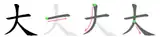 | |||
| Stroke order | |||
|---|---|---|---|
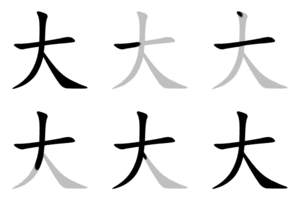 | |||
Han character
大 (Kangxi radical 37, 大+0, 3 strokes, cangjie input 大 (K), four-corner 40030 or 40800, composition ⿻一人 or ⿸𠂇㇏)
- Kangxi radical #37, ⼤.
Derived characters
- Appendix:Chinese radical/大
- 达, 庆 (Simplified from 達, 慶)
- 㐲, 𫥰, 𠯈, 𡉑, 𡚻, 𢁖, 𫸥, 㣕, 忕, 𢪂, 汏, 𫔺, 𫻨, 𭥏, 杕, 𣧂, 𬌚, 𪼳, 𭾚, 𮀋, 𥝛, 𮕨, 𬚓, 𦨐, 𮗹, 軑(轪), 釱, 𭖯, 𮌙, 馱(驮), 䲦, 𬵃(𬶃), 𪐝, 𠏥, 𠧭, 䲪
- 犬, 矢, 㕦, 尖, 𢎴, 芖, 𠛇, 戻, 旲, 𬋻, 㺯, 𡭟, 𥝚, 𥤮, 𦉼, 𬺛, 𡧠, 类, 美, 耎, 𦤀, 𬟧, 䙲, 𠧵, 𩵋, 𡟗, 𦳣, 䯨, 𥈀, 𮮰, 𪉗, 𥮯, 𣊖, 樊, 𫂎, 𩃙, 𤳦, 𤾪, 𪚔, 𧹈
- 冭, 厺, 圶, 㞭, 𪩣, 𪵪, 𤆍, 𬉵, 𤯗, 𭀢, 㭐, 羍, 𦏷, 耷, 𧈹, 牵, 𧥢, 𩇩, 𣫵, 𥆗, 𩡱, 𩾪, 𪐡, 𬹞, 𡗜, 爽, 㻎, 𥇛, 𠾖, 𨳓, 因, 輋(𪨶)
References
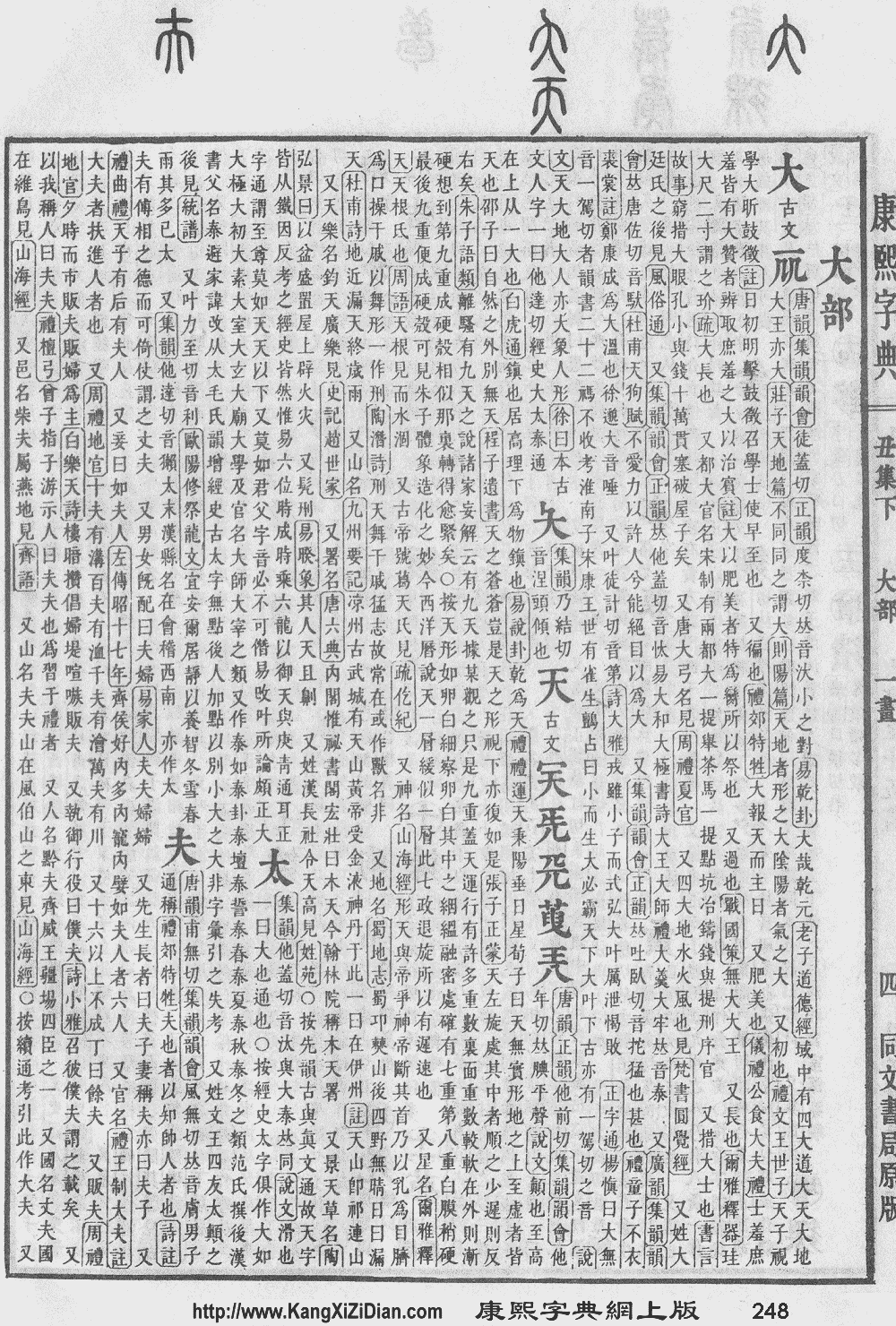
- Kangxi Dictionary: page 248, character 1
- Dai Kanwa Jiten: character 5831
- Dae Jaweon: page 492, character 25
- Hanyu Da Zidian (first edition): volume 1, page 520, character 1
- Unihan data for U+5927
Chinese
| simp. and trad. |
大 | |
|---|---|---|
| alternative forms | 亣 ancient 𠘲 | |
Glyph origin
| Historical forms of the character 大 | |||||||||||
|---|---|---|---|---|---|---|---|---|---|---|---|
| Shang | Western Zhou | Spring and Autumn | Warring States | Shuowen Jiezi (compiled in Han) | Liushutong (compiled in Ming) | Libian (compiled in Qing) | |||||
| Bronze inscriptions | Oracle bone script | Bronze inscriptions | Oracle bone script | Bronze inscriptions | Bronze inscriptions | Chu slip and silk script | Qin slip script | Shizhoupian script | Small seal script | Transcribed ancient scripts | Clerical script |
 |
 |
 |
 |
 |
 |
 |
 |
 |
 |
 |
 |
Ideogram (指事) : a person 人 with arms stretched out as far as possible, implying the meaning of big/great/large.
Compare with 尢, which is a man with bent legs.
Compare also 文, which is a man with arms outstretched and a crest or tattoo on his chest, and to 夭, which is a man with arms outstretched and leaning to side (running).
Etymology
Cognate with 太 (OC *tʰaːds, “too, excessively”), 泰 (OC *tʰaːds, “big”). Wang (1982) also lists 誕 (OC *l'aːnʔ, “big, magniloquent, ridiculous”) as a cognate, which Schuessler (2007) suggests is cognate with 延 (OC *lan, *lans, “to extend”) instead. There are no unambiguous Tibeto-Burman cognates. Proto-Tibeto-Burman *taj (“big”), from which came Written Tibetan མཐེ་བོ (mthe bo, “thumb”), Anong tʰɛ (“big, large, great”), Mikir tʰè, ketʰè (“big, large, great”), Burmese တယ် (tai, “very”), is often compared with. There is no final –s in the Tibeto-Burman words, but a –y, which, according to James Matisoff, “indicates emergent quality in stative verbs”. Also compare Chinese 多 (OC *ʔl'aːl, “many, much”), 都 (OC *taː, “all”).
Pronunciation 1
Definitions
大
- of great size; big; large; huge
- big; great
- great of its kind
- in an extreme manner; greatly
- 大哭 ― dà kū ― to cry violently
- 大吃一驚/大吃一惊 ― dàchīyījīng ― to be greatly shocked
- 大不相同 ― dà bù xiàngtóng ― to be greatly different
- 你可不知道,他昨兒過來大折騰了一場。好家伙,差點兒沒把這兒拆嘍! [dialectal Mandarin, trad.]
- Nǐ kě bù zhīdào, tā zuór guòlai dà zhēteng le yī chǎng. Hǎojiāhuo, chàdiǎnr méi bǎ zhèr chāi lou! [Pinyin]
- You don't even know, yesterday he came over and wildly stirred up trouble. Oh my God, he almost tore this place apart!
你可不知道,他昨儿过来大折腾了一场。好家伙,差点儿没把这儿拆喽! [dialectal Mandarin, simp.]
- main; major
- Antonym: 小 (xiǎo)
- well-known; successful (only applied to some occupations)
- mature; grown up
- (of a place) greater (together with the surrounding area pertaining to it)
- (Cantonese) to grow up
- (Cantonese) to be older than
- (dialectal) father
- (dialectal) father's elder or younger brother
- (Cantonese, slang) to intimidate; to threaten
- (Cantonese) only so big
- (Cantonese, euphemistic) number two
- Short for 大學/大学 (dàxué, “university”). Used only in the abbreviation of the name.
- 北大 ― Běidà ― Peking University
- 45th tetragram of the Taixuanjing; "greatness" (𝌲)
- a surname
Synonyms
Compounds
- 一元大武
- 一大三大
- 一大二小
- 一大半
- 一大早 (yīdàzǎo)
- 一大溜
- 一大郎當/一大郎当
- 七大八小
- 七大死罪
- 三大球 (sāndàqiú)
- 三大發明/三大发明
- 三大節/三大节
- 不大 (bùdà)
- 中大 (Zhōngdà)
- 乘亂坐大/乘乱坐大
- 乘機坐大/乘机坐大
- 九七大限
- 九大行星
- 九鼎大呂/九鼎大吕
- 二哥大
- 五大 (wǔdà)
- 五大建設/五大建设
- 五花大綁/五花大绑
- 些娘大
- 亞特蘭大/亚特兰大 (yàtèlándà)
- 伴大夜
- 保大
- 倒大
- 倒大來/倒大来
- 做大
- 偉大/伟大 (wěidà)
- 元惡大奸
- 元惡大憝/元恶大憝
- 光大 (guāngdà)
- 兩頭做大/两头做大
- 兩頭大/两头大
- 八大人覺/八大人觉
- 八大八
- 八大八小
- 八大山人
- 八大胡同
- 八大錘/八大锤
- 六六大順/六六大顺
- 六大六
- 六大洲 (Liùdàzhōu)
- 兵家大忌
- 出大差
- 出大恭 (chū dàgōng)
- 到大來/到大来
- 力大無窮/力大无穷
- 加拿大 (Jiānádà)
- 勾大引小
- 北大 (Běidà)
- 北大荒 (Běidàhuāng)
- 北方大港
- 十大建設/十大建设
- 十大弟子
- 半大不小 (bàndàbùxiǎo)
- 博大 (bódà)
- 吃大項/吃大项
- 呆木大
- 呼呼大睡
- 命大 (mìngdà)
- 噶大克
- 四大 (sìdà)
- 因小失大 (yīnxiǎoshīdà)
- 因小見大/因小见大
- 國大/国大
- 圓面大耳/圆面大耳
- 地大 (Dìdà)
- 地大物博 (dìdàwùbó)
- 地大物豐/地大物丰
- 坐大
- 壯大/壮大 (zhuàngdà)
- 多大
- 大ㄎㄚ (dàkā)
- 大三元 (dàsānyuán)
- 大丈夫
- 大三弦
- 大三通
- 大不了 (dàbùliǎo)
- 大不列顛/大不列颠 (Dàbùlièdiān)
- 大不如前 (dàbùrúqián)
- 大不安
- 大不應是/大不应是
- 大不敬 (dàbùjìng)
- 大不易
- 大不是
- 大不相同
- 大不自在
- 大不過/大不过
- 大中 (Dàzhōng)
- 大中人
- 大丹狗
- 大主教 (dàzhǔjiào)
- 大主考
- 大乘 (Dàchéng)
- 大亂/大乱 (dàluàn)
- 大亂子/大乱子
- 大事 (dàshì)
- 大五金
- 大亨 (dàhēng)
- 大人 (dàrén)
- 大人物 (dàrénwù)
- 大仁 (dàrén)
- 大令
- 大仙 (dàxiān)
- 大件
- 大伙 (dàhuǒ)
- 大任
- 大仿
- 大似
- 大伯 (dàbó)
- 大佛 (dàfó)
- 大位 (dàwèi)
- 大作 (dàzuò)
- 大伯子
- 大作家
- 大佩
- 大佬 (dàlǎo)
- 大來大往/大来大往
- 大來歷/大来历
- 大來頭/大来头
- 大俠/大侠 (dàxiá)
- 大便 (dàbiàn)
- 大侵
- 大信不約/大信不约
- 大保國/大保国
- 大俗賣/大俗卖
- 大修 (dàxiū)
- 大倉/大仓 (Dàcāng)
- 大個/大个
- 大倫/大伦
- 大個子/大个子
- 大借款
- 大做文章 (dàzuòwénzhāng)
- 大傳統/大传统
- 大僚
- 大價錢/大价钱
- 大儒 (dàrú)
- 大儺/大傩
- 大元帥/大元帅 (dàyuánshuài)
- 大兄
- 大先生
- 大內/大内 (dànèi)
- 大全 (dàquán)
- 大全張/大全张
- 大八丈
- 大八成
- 大公 (dàgōng)
- 大公橋/大公桥 (Dàgōngqiáo)
- 大公館/大公馆
- 大兵 (dàbīng)
- 大兵團/大兵团
- 大典 (dàdiǎn)
- 大冤
- 大冢宰
- 大冶 (Dàyě)
- 大凡 (dàfán)
- 大凶
- 大出喪/大出丧
- 大出手
- 大出血 (dàchūxuè)
- 大出鋒頭/大出锋头
- 大出風頭/大出风头
- 大刀 (dàdāo)
- 大分 (dàfèn)
- 大刑 (dàxíng)
- 大別/大别
- 大剌剌 (dàlàlà)
- 大前天 (dàqiántiān)
- 大前年 (dàqiánnián)
- 大前提 (dàqiántí)
- 大副 (dàfù)
- 大劈棺
- 大力 (dàlì)
- 大功 (dàgōng)
- 大劫
- 大勇
- 大勇若怯
- 大務/大务 (dàwù)
- 大動亂/大动乱
- 大動作/大动作
- 大動干戈
- 大動肝火/大动肝火 (dàdònggānhuǒ)
- 大動脈/大动脉 (dàdòngmài)
- 大勝/大胜 (dàshèng)
- 大勢/大势 (dàshì)
- 大包小包 (dàbāoxiǎobāo)
- 大化 (Dàhuà)
- 大化革新
- 大北
- 大匠
- 大千 (dàqiān)
- 大千世界 (dàqiānshìjiè)
- 大半 (dàbàn)
- 大半天 (dàbàntiān)
- 大半年
- 大半拉
- 大半生 (dàbànshēng)
- 大半輩子/大半辈子
- 大卡 (dàkǎ)
- 大卸八塊/大卸八块
- 大原則/大原则
- 大厲/大厉
- 大去
- 大受
- 大叔 (dàshū)
- 大叔于田
- 大口 (Dàkǒu)
- 大可 (dàkě)
- 大叱
- 大可不必 (dàkěbùbì)
- 大司客
- 大司徒
- 大司空
- 大司馬/大司马 (dàsīmǎ)
- 大吉 (dàjí)
- 大名 (dàmíng)
- 大吃
- 大同 (dàtóng)
- 大吏
- 大合唱 (dàhéchàng)
- 大吆小喝
- 大吳/大吴
- 大呂/大吕
- 大君 (dàjūn)
- 大吼
- 大吹
- 大吵一頓/大吵一顿
- 大吵大鬧/大吵大闹 (dàchǎodànào)
- 大含細入/大含细入
- 大咖 (dàkā)
- 大周 (Dàzhōu)
- 大命 (dàmìng)
- 大呼 (dàhū)
- 大呼小叫 (dàhūxiǎojiào)
- 大呼小喊
- 大和尚
- 大和民族
- 大和繪/大和绘
- 大呼過癮/大呼过瘾
- 大呼隆
- 大咸
- 大品般若
- 大哭 (dàkū)
- 大哥 (dàgē)
- 大員/大员 (dàyuán)
- 大唐之歌
- 大哥大 (dàgēdà)
- 大啖一番
- 大喬/大乔
- 大喜 (dàxǐ)
- 大喊 (dàhǎn)
- 大喝 (dàhè)
- 大喏
- 大喪/大丧
- 大喫一驚/大吃一惊 (dàchīyījīng)
- 大喜事
- 大單于
- 大喇叭 (dàlǎba)
- 大喉嚨/大喉咙 (dàhóulóng)
- 大喊大叫 (dàhǎndàjiào)
- 大嗓門/大嗓门
- 大嘴巴
- 大器 (dàqì)
- 大嚷大叫
- 大四喜 (dàsìxǐ)
- 大回
- 大回朝
- 大國/大国 (dàguó)
- 大圈仔
- 大圍山/大围山 (Dàwéishān)
- 大圓/大圆 (dàyuán)
- 大園/大园 (Dàyuán)
- 大圓滿/大圆满 (Dàyuánmǎn)
- 大團圓/大团圆 (dàtuányuán)
- 大團白臉/大团白脸
- 大團結/大团结 (dàtuánjié)
- 大圜
- 大地 (dàdì)
- 大坵 (Dàqiū)
- 大型 (dàxíng)
- 大垸 (Dàyuàn)
- 大埔
- 大堆
- 大埤 (Dàpí)
- 大堂 (dàtáng)
- 大堰 (Dàyàn)
- 大堰壋/大堰垱 (Dàyàndàng)
- 大堖寨/大垴寨 (Dànǎozhài)
- 大堰角 (Dàyànjiǎo)
- 大場面/大场面
- 大塊/大块 (dàkuài)
- 大壑
- 大壞/大坏
- 大士 (dàshì)
- 大壽/大寿 (dàshòu)
- 大夏 (dàxià)
- 大多 (dàduō)
- 大多數/大多数 (dàduōshù)
- 大夜
- 大夜班
- 大夥/大伙 (dàhuǒ)
- 大夢/大梦
- 大夢初醒/大梦初醒
- 大大咧咧
- 大大法法
- 大大落落
- 大夫
- 大天亮
- 大天后宮
- 大天白亮
- 大天白日 (dàtiānbáirì)
- 大失人望
- 大失所望 (dàshīsuǒwàng)
- 大奇
- 大奸
- 大好 (dàhǎo)
- 大奸似忠
- 大好河山 (dàhǎohéshān)
- 大好老
- 大妙 (dàmiào)
- 大妝/大妆
- 大妗子
- 大姓 (dàxìng)
- 大姆
- 大姐 (dàjiě)
- 大姊
- 大姑 (dàgū)
- 大姑娘 (dàgūniang)
- 大姆子
- 大姑子
- 大姊頭/大姊头
- 大姨 (dàyí)
- 大姦似忠/大奸似忠
- 大姨子 (dàyízi)
- 大娘 (dàniáng)
- 大婦/大妇
- 大婦小妻/大妇小妻
- 大媒
- 大嫂 (dàsǎo)
- 大媽/大妈 (dàmā)
- 大媳婦/大媳妇
- 大媽媽/大妈妈
- 大嬸/大婶 (dàshěn)
- 大字 (dàzì)
- 大學/大学 (dàxué)
- 大孺人
- 大安 (dà'ān)
- 大安溪
- 大宋 (Dàsòng)
- 大宋小宋
- 大定 (Dàdìng)
- 大宛 (Dàyuān)
- 大宗 (dàzōng)
- 大官 (dàguān)
- 大宗師/大宗师
- 大客車/大客车 (dàkèchē)
- 大家
- 大宴
- 大害
- 大宴小酌
- 大宴賓客/大宴宾客
- 大富
- 大寒 (Dàhán)
- 大富大貴/大富大贵 (dàfùdàguì)
- 大富翁 (Dàfùwēng)
- 大寨 (Dàzhài)
- 大寮 (Dàliáo)
- 大寫/大写 (dàxiě)
- 大寬轉/大宽转
- 大寶/大宝 (dàbǎo)
- 大專/大专 (dàzhuān)
- 大將/大将 (dàjiàng)
- 大將軍/大将军 (dàjiāngjūn)
- 大對/大对
- 大對決/大对决
- 大小 (dàxiǎo)
- 大少爺/大少爷 (dàshàoye)
- 大尾
- 大局 (dàjú)
- 大局已定
- 大屈
- 大屋
- 大展 (dàzhǎn)
- 大屠殺/大屠杀 (dàtúshā)
- 大山小山
- 大岩桐
- 大峪 (Dàyù)
- 大峽谷/大峡谷 (Dàxiágǔ)
- 大嶝 (Dàdèng)
- 大嶺/大岭 (Dàlǐng)
- 大川 (dàchuān)
- 大工 (dàgōng)
- 大工告成
- 大巧若拙
- 大巫嫗/大巫妪
- 大差
- 大巴 (dàbā)
- 大布
- 大市
- 大布棚
- 大帝 (dàdì)
- 大帥/大帅 (dàshuài)
- 大師/大师
- 大師傅/大师傅
- 大師兄/大师兄
- 大帶/大带
- 大帳/大帐
- 大帶型/大带型
- 大帽子
- 大幅度 (dàfúdù)
- 大幫/大帮
- 大年 (dànián)
- 大年初一 (dànián chūyī)
- 大年夜 (dàniányè)
- 大年日
- 大年節/大年节
- 大幸 (dàxìng)
- 大序
- 大庇
- 大府 (Dàfǔ)
- 大底
- 大度 (dàdù)
- 大庭
- 大庭廣眾/大庭广众 (dàtíngguǎngzhòng)
- 大庾嶺/大庾岭
- 大廈/大厦 (dàshà)
- 大廉價/大廉价
- 大廚/大厨 (dàchú)
- 大廟/大庙
- 大廝/大厮
- 大廳/大厅 (dàtīng)
- 大建 (dàjiàn)
- 大弟
- 大張其詞/大张其词
- 大張撻伐/大张挞伐
- 大張旗鼓/大张旗鼓 (dàzhāngqígǔ)
- 大張聲勢/大张声势
- 大彬壺/大彬壶
- 大後天/大后天 (dàhòutiān)
- 大後年/大后年 (dàhòunián)
- 大後方/大后方 (dàhòufāng)
- 大循環/大循环
- 大德 (dàdé)
- 大徹大悟/大彻大悟 (dàchèdàwù)
- 大志 (dàzhì)
- 大忌 (dàjì)
- 大忙人 (dàmángrén)
- 大忠 (Dàzhōng)
- 大快
- 大怨
- 大恭 (dàgōng)
- 大恩
- 大恚
- 大悟 (dàwù)
- 大悅/大悦
- 大悲 (dàbēi)
- 大惡/大恶 (dà'è)
- 大惑
- 大惑不解 (dàhuòbùjiě)
- 大意 (dàyì)
- 大愛/大爱 (dà'ài)
- 大愈
- 大愚不靈/大愚不灵
- 大慈大悲 (dàcídàbēi)
- 大慈岩 (Dàcíyán)
- 大慰
- 大慟/大恸 (dàtòng)
- 大慶/大庆 (Dàqìng)
- 大憝
- 大憲章/大宪章 (Dà Xiànzhāng)
- 大戈壁
- 大戎
- 大成 (dàchéng)
- 大成殿
- 大我 (dàwǒ)
- 大戮
- 大戰/大战 (dàzhàn)
- 大戴
- 大戲/大戏 (dàxì)
- 大戶/大户 (dàhù)
- 大房
- 大才 (dàcái)
- 大手印
- 大手大腳/大手大脚 (dàshǒudàjiǎo)
- 大手段
- 大手筆/大手笔 (dàshǒubǐ)
- 大手腳/大手脚
- 大打出手 (dàdǎchūshǒu)
- 大把 (dàbǎ)
- 大批 (dàpī)
- 大抵 (dàdǐ)
- 大招 (dàzhāo)
- 大拜
- 大抬其槓/大抬其杠
- 大拇哥 (dàmǔgē)
- 大招寺
- 大拜拜
- 大拇指 (dàmǔzhǐ)
- 大拇指頭/大拇指头 (dàmǔzhǐtou)
- 大拉翅
- 大拍賣/大拍卖
- 大拍頭/大拍头
- 大挑
- 大指 (dàzhǐ)
- 大拿 (dàná)
- 大括弧
- 大振 (dàzhèn)
- 大掠
- 大捷 (dàjié)
- 大捧
- 大排場/大排场
- 大排行 (dàpáiháng)
- 大排長龍/大排长龙 (dàpáichánglóng)
- 大掃除/大扫除 (dàsǎochú)
- 大掾史
- 大提琴 (dàtíqín)
- 大換血/大换血
- 大搖大擺/大摇大摆 (dàyáodàbǎi)
- 大搶購/大抢购
- 大搬風/大搬风
- 大摺兒/大折儿
- 大撈一票/大捞一票
- 大撈一筆/大捞一笔
- 大撫臺/大抚台
- 大擋手的/大挡手的
- 大擺褶子/大摆褶子
- 大支坪 (Dàzhīpíng)
- 大放光明
- 大放厥詞/大放厥词 (dàfàngjuécí)
- 大放厥辭/大放厥辞
- 大放悲聲/大放悲声
- 大政方針/大政方针
- 大放異彩/大放异彩 (dàfàngyìcǎi)
- 大放異采
- 大放盤/大放盘
- 大敗/大败 (dàbài)
- 大敗虧輸/大败亏输
- 大散關/大散关
- 大數/大数 (dàshù)
- 大數定律/大数定律 (dàshù dìnglǜ)
- 大數法則/大数法则 (dàshù fǎzé)
- 大敵當前/大敌当前 (dàdídāngqián)
- 大斂/大敛 (dàliàn)
- 大文衡
- 大文豪
- 大斗
- 大斗小秤
- 大料 (dàliào)
- 大斧 (dàfǔ)
- 大斧劈
- 大方 (dàfāng)
- 大族 (dàzú)
- 大旨 (dàzhǐ)
- 大早
- 大旱雲霓/大旱云霓 (dàhànyúnní)
- 大明 (Dàmíng)
- 大昌 (Dàchāng)
- 大昏
- 大明星
- 大春
- 大是
- 大是不同
- 大春元
- 大是大非 (dàshìdàfēi)
- 大星殞落/大星殒落
- 大晒
- 大晟府 (Dàshèngfǔ)
- 大智 (dàzhì)
- 大暑 (Dàshǔ)
- 大暮
- 大曆/大历
- 大曲 (dàqǔ)
- 大書/大书 (dàshū)
- 大書特書/大书特书 (dàshūtèshū)
- 大會/大会 (dàhuì)
- 大月 (dàyuè)
- 大月氏
- 大有 (dàyǒu)
- 大木廠/大木厂 (Dàmùchǎng)
- 大札 (dàzhá)
- 大本 (dàběn)
- 大本營/大本营 (dàběnyíng)
- 大村 (dàcūn)
- 大束 (Dàshù)
- 大杖則走/大杖则走
- 大材小用 (dàcái-xiǎoyòng)
- 大板
- 大林 (Dàlín)
- 大東/大东 (Dàdōng)
- 大板車/大板车 (dàbǎnchē)
- 大柳 (Dàliǔ)
- 大柄
- 大柱史
- 大柳樹/大柳树 (Dàliǔshù)
- 大格勒 (Dàgélè)
- 大根腳/大根脚
- 大梁 (Dàliáng)
- 大梵天
- 大棋 (dàqí)
- 大楷 (dàkǎi)
- 大業/大业 (dàyè)
- 大概 (dàgài)
- 大楊樹/大杨树 (Dàyángshù)
- 大槓/大杠
- 大槐安國/大槐安国
- 大槐宮/大槐宫
- 大樣/大样 (dàyàng)
- 大樓/大楼 (dàlóu)
- 大模大樣/大模大样 (dàmúdàyàng)
- 大模廝樣/大模厮样 (dàmúsīyàng)
- 大橋/大桥 (dàqiáo)
- 大樹/大树 (dàshù)
- 大橋/大桥 (dàqiáo)
- 大樹將軍/大树将军
- 大權/大权 (dàquán)
- 大欲
- 大歌劇/大歌剧
- 大正
- 大步流星 (dàbùliúxīng)
- 大武 (Dàwǔ)
- 大武壠族/大武垅族 (Dàwǔlóngzú)
- 大歸/大归
- 大殮/大殓 (dàliàn)
- 大殺/大杀 (dàshā)
- 大殺風景/大杀风景
- 大殿 (dàdiàn)
- 大殿選/大殿选
- 大母
- 大比
- 大比之年
- 大比之期
- 大毛
- 大氅 (dàchǎng)
- 大氣/大气
- 大水 (dàshuǐ)
- 大水沖溺/大水冲溺
- 大水牯
- 大汗
- 大江 (dàjiāng)
- 大汗涔涔
- 大沖/大冲
- 大法 (dàfǎ)
- 大沽 (Dàgū)
- 大河 (dàhé)
- 大沽口 (Dàgūkǒu)
- 大法官 (dàfǎguān)
- 大法小廉
- 大法師/大法师
- 大法螺
- 大洋 (dàyáng)
- 大流士 (Dàliúshì)
- 大洞果
- 大洪水 (dàhóngshuǐ)
- 大洋洲 (Dàyángzhōu)
- 大洋盆地
- 大流行病 (dà liúxíngbìng)
- 大海 (dàhǎi)
- 大浪 (dàlàng)
- 大清律
- 大清早 (dàqīngzǎo)
- 大清早上
- 大清早起
- 大清會典/大清会典
- 大清河
- 大淩河/大凌河
- 大湖 (Dàhú)
- 大渡 (Dàdù)
- 大減價/大减价 (dàjiǎnjià)
- 大渾家/大浑家
- 大溪 (Dàxī)
- 大溪地 (Dàxīdì)
- 大漆
- 大漢/大汉
- 大漠 (dàmò)
- 大漲小回/大涨小回
- 大滷麵/大卤面 (dàlǔmiàn)
- 大潭 (Dàtán)
- 大潮 (dàcháo)
- 大火 (dàhuǒ)
- 大災/大灾
- 大災難/大灾难
- 大炮 (dàpào)
- 大為受用/大为受用
- 大為失望/大为失望
- 大烹
- 大烹五鼎
- 大無畏/大无畏 (dàwúwèi)
- 大煙/大烟 (dàyān)
- 大煞
- 大煠八塊/大煠八块
- 大煠蟹 (dàzháxiè)
- 大煞風景/大煞风景 (dàshāfēngjǐng)
- 大熊星座
- 大熟
- 大爆冷門/大爆冷门
- 大爆滿/大爆满
- 大爵
- 大父 (dàfù)
- 大爹
- 大爺/大爷
- 大牌 (dàpái)
- 大牙 (dàyá)
- 大牢 (dàláo)
- 大特寫/大特写
- 大犬星座
- 大猷
- 大猩猩 (dàxīngxing)
- 大獃
- 大猾
- 大獎/大奖 (dàjiǎng)
- 大獄/大狱
- 大獲全勝/大获全胜 (dàhuòquánshèng)
- 大率 (dàshuài)
- 大玩偶
- 大班 (dàbān)
- 大理 (dàlǐ)
- 大球
- 大環境/大环境
- 大用
- 大甲 (Dàjiǎ)
- 大田 (dàtián)
- 大男
- 大男大女
- 大男小女
- 大略 (dàlüè)
- 大異其趣/大异其趣
- 大疏脫/大疏脱
- 大症
- 大病 (dàbìng)
- 大痊
- 大瘡/大疮
- 大發/大发 (dàfā)
- 大登殿
- 大白 (dàbái)
- 大白天 (dàbáitiān)
- 大白臉/大白脸
- 大皇
- 大盆地
- 大盜/大盗 (dàdào)
- 大盡/大尽 (dàjìn)
- 大盤/大盘 (dàpán)
- 大盤大碗/大盘大碗
- 大直若屈
- 大相國寺/大相国寺
- 大相徑庭/大相径庭 (dàxiāngjìngtíng)
- 大盼盼
- 大相矛盾
- 大相逕庭/大相迳庭 (dàxiāngjìngtíng)
- 大眾/大众 (dàzhòng)
- 大眼賊/大眼贼
- 大睹是
- 大瞧瞧
- 大破大立
- 大破慳囊/大破悭囊
- 大碗公
- 大碑落
- 大礙/大碍 (dà'ài)
- 大社 (Dàshè)
- 大祀
- 大神通
- 大祭
- 大祥
- 大祭司
- 大福 (dàfú)
- 大禍/大祸 (dàhuò)
- 大福不再
- 大禮/大礼
- 大禹 (Dà Yǔ)
- 大秋 (dàqiū)
- 大科
- 大秋元
- 大秦 (Dàqín)
- 大稔
- 大穢/大秽
- 大突破
- 大窪/大洼 (Dàwā)
- 大端 (dàduān)
- 大竹 (Dàzhú)
- 大笑 (dàxiào)
- 大筆/大笔 (dàbǐ)
- 大筆如椽/大笔如椽
- 大節/大节 (dàjié)
- 大節夜/大节夜
- 大節目/大节目
- 大管是
- 大篆 (dàzhuàn)
- 大篷車/大篷车
- 大米 (dàmǐ)
- 大約/大约 (dàyuē)
- 大紅/大红 (dàhóng)
- 大紅人/大红人
- 大紅大紫/大红大紫 (dàhóngdàzǐ)
- 大紅大綠/大红大绿
- 大紅日子/大红日子
- 大紅袍/大红袍 (dàhóngpáo)
- 大索
- 大細路/大细路
- 大統/大统 (dàtǒng)
- 大經/大经
- 大經元/大经元
- 大綬/大绶
- 大綱/大纲 (dàgāng)
- 大練/大练 (Dàliàn)
- 大總戎/大总戎
- 大總統/大总统 (dàzǒngtǒng)
- 大總腦/大总脑
- 大纛
- 大罵/大骂 (dàmà)
- 大羅天/大罗天
- 大羅神仙/大罗神仙
- 大羚羊
- 大義/大义 (dàyì)
- 大翅鯨/大翅鲸
- 大考 (dàkǎo)
- 大老 (dàlǎo)
- 大考中心
- 大老婆 (dàlǎopo)
- 大老官
- 大老爹
- 大老爺/大老爷
- 大老粗 (dàlǎocū)
- 大老遠/大老远 (dàlǎoyuǎn)
- 大老闆/大老板
- 大耋
- 大而化之 (dà'érhuàzhī)
- 大而無當/大而无当 (dà'érwúdàng)
- 大耳朵
- 大聖/大圣 (dàshèng)
- 大聲/大声 (dàshēng)
- 大肆 (dàsì)
- 大肚 (dàdù)
- 大肚子 (dàdùzi)
- 大肚溪
- 大肚漢/大肚汉
- 大肚魚/大肚鱼
- 大股東/大股东
- 大能 (dànéng)
- 大胸肌
- 大脖子 (dàbózi)
- 大腔當/大腔当
- 大腦/大脑 (dànǎo)
- 大腳/大脚 (dàjiǎo)
- 大腸/大肠 (dàcháng)
- 大腳三/大脚三
- 大腳丫/大脚丫
- 大腹便便 (dàfùpiánpián)
- 大腳力/大脚力
- 大腳婆娘/大脚婆娘
- 大腹賈/大腹贾 (dàfùgǔ)
- 大腿 (dàtuǐ)
- 大膽/大胆 (dàdǎn)
- 大臠/大脔
- 大臣 (dàchén)
- 大自然 (dàzìrán)
- 大至
- 大致 (dàzhì)
- 大致上 (dàzhìshang)
- 大致說來/大致说来
- 大臺/大台 (dàtái)
- 大臼齒/大臼齿 (dàjiùchǐ)
- 大舅 (dàjiù)
- 大舅子 (dàjiùzi)
- 大興/大兴 (dàxīng)
- 大舉/大举 (dàjǔ)
- 大舌頭/大舌头 (dàshétou)
- 大舍
- 大舜
- 大船
- 大花
- 大花臉/大花脸
- 大花邊/大花边
- 大花面
- 大英 (dàyīng)
- 大苦
- 大茅埔
- 大荒 (dàhuāng)
- 大草原
- 大茶壺/大茶壶
- 大著
- 大菜 (dàcài)
- 大落
- 大葉合歡/大叶合欢
- 大落落
- 大蒜 (dàsuàn)
- 大蒜效應/大蒜效应
- 大蔥/大葱 (dàcōng)
- 大蕊
- 大藏經/大藏经 (Dàzàngjīng)
- 大蘇打/大苏打 (dàsūdǎ)
- 大處/大处
- 大處著眼/大处著眼
- 大處落墨/大处落墨 (dàchùluòmò)
- 大號/大号 (dàhào)
- 大蜀
- 大蜡
- 大蟲/大虫 (dàchóng)
- 大行
- 大行人
- 大行其道 (dàxíngqídào)
- 大行政區/大行政区 (dàxíngzhèngqū)
- 大行星
- 大行院
- 大街 (dàjiē)
- 大街小巷 (dàjiēxiǎoxiàng)
- 大衝/大冲 (dàchōng)
- 大衛王/大卫王
- 大衣 (dàyī)
- 大衾長枕/大衾长枕
- 大袖
- 大補帖/大补帖
- 大褂 (dàguà)
- 大製作/大制作
- 大褂兒/大褂儿 (dàguàr)
- 大襟 (dàjīn)
- 大西北 (Dàxīběi)
- 大西洋 (Dàxīyáng)
- 大要 (dàyào)
- 大規模/大规模 (dàguīmó)
- 大覺/大觉
- 大覺醒/大觉醒
- 大觀/大观 (dàguān)
- 大解 (dàjiě)
- 大解八塊/大解八块
- 大言 (dàyán)
- 大言不慚/大言不惭 (dàyánbùcán)
- 大言相駭/大言相骇
- 大言非夸
- 大計/大计 (dàjì)
- 大設設/大设设
- 大話/大话 (dàhuà)
- 大語/大语 (dàyǔ)
- 大調/大调 (dàdiào)
- 大課/大课 (dàkè)
- 大請大受/大请大受
- 大諫/大谏
- 大諫章/大谏章
- 大謬不然/大谬不然 (dàmiùbùrán)
- 大議會/大议会
- 大變/大变 (dàbiàn)
- 大豆 (dàdòu)
- 大豐收/大丰收
- 大豐簋/大丰簋
- 大象 (dàxiàng)
- 大財主/大财主
- 大貨車/大货车 (dàhuòchē)
- 大費周折/大费周折
- 大費周章/大费周章 (dàfèizhōuzhāng)
- 大費神思/大费神思
- 大費脣舌/大费唇舌
- 大賈/大贾 (dàgǔ)
- 大賓/大宾
- 大賢/大贤 (dàxián)
- 大賢大德/大贤大德
- 大賢虎變/大贤虎变
- 大質量弱相互作用粒子/大质量弱相互作用粒子 (dà zhìliàng ruò xiānghù zuòyòng lìzǐ)
- 大贏家/大赢家
- 大赦 (dàshè)
- 大赦天下
- 大走
- 大起
- 大起大落 (dàqǐdàluò)
- 大足 (Dàzú)
- 大足石刻
- 大足石窟
- 大跌小漲/大跌小涨
- 大路 (dàlù)
- 大踏步 (dàtàbù)
- 大躍進/大跃进 (Dàyuèjìn)
- 大車/大车 (dàchē)
- 大軍/大军 (dàjūn)
- 大軍機/大军机
- 大軸子/大轴子 (dàzhòuzi)
- 大輅/大辂
- 大較/大较
- 大轉彎/大转弯
- 大辟 (dàpì)
- 大辣酥
- 大辯不言/大辩不言
- 大辯若訥/大辩若讷
- 大農/大农
- 大巡行
- 大迎枕
- 大近視眼/大近视眼
- 大迦葉/大迦叶
- 大逆 (dànì)
- 大逆不孝
- 大逆不道 (dànìbùdào)
- 大逃亡
- 大逆無道/大逆无道 (dànìwúdào)
- 大通 (dàtōng)
- 大造
- 大連/大连 (Dàlián)
- 大通之年
- 大通套
- 大通年
- 大通河
- 大連灣/大连湾 (Dàliánwān)
- 大通銀行/大通银行
- 大進/大进 (dàjìn)
- 大週摺/大周折
- 大進擊/大进击
- 大過/大过 (dàguò)
- 大運/大运
- 大道 (dàdào)
- 大運河/大运河 (Dàyùnhé)
- 大遠景/大远景
- 大選/大选 (dàxuǎn)
- 大選區/大选区
- 大邊/大边
- 大邑
- 大邑商 (Dàyìshāng)
- 大邦 (dàbāng)
- 大邱 (Dàqiū)
- 大郎
- 大部 (dàbù)
- 大部分 (dàbùfèn)
- 大都
- 大都來/大都来
- 大都會/大都会 (dàdūhuì)
- 大都會區/大都会区
- 大都護/大都护
- 大酋
- 大酺
- 大醉
- 大醇小疵 (dàchúnxiǎocī)
- 大醜/大丑
- 大采
- 大里 (Dàlǐ)
- 大量 (dàliàng)
- 大金川
- 大金髮苔/大金发苔
- 大鈔/大钞
- 大鈞/大钧
- 大銜/大衔
- 大銀幕/大银幕 (dàyínmù)
- 大錢/大钱 (dàqián)
- 大錯特錯/大错特错 (dàcuòtècuò)
- 大鍋/大锅 (dàguō)
- 大鍵琴/大键琴 (dàjiànqín)
- 大鎮國/大镇国
- 大鑒/大鉴 (dàjiàn)
- 大鑼/大锣
- 大長公主/大长公主
- 大長日子/大长日子
- 大門/大门 (dàmén)
- 大閆各莊/大闫各庄 (Dàyángèzhuāng)
- 大開/大开
- 大開眼界/大开眼界 (dàkāiyǎnjiè)
- 大閘蟹/大闸蟹 (dàzháxiè)
- 大閱/大阅
- 大闊/大阔
- 大關/大关 (dàguān)
- 大阮 (dàruǎn)
- 大阪 (Dàbǎn)
- 大阿哥
- 大阿姐
- 大限 (dàxiàn)
- 大院 (dàyuàn)
- 大陣仗/大阵仗 (dàzhènzhàng)
- 大除夕
- 大陸/大陆 (dàlù)
- 大陪審團/大陪审团 (dà péishěntuán)
- 大陸架/大陆架 (dàlùjià)
- 大陰脣/大阴唇 (dàyīnchún)
- 大隊/大队 (dàduì)
- 大隱朝市/大隐朝市
- 大雁 (dàyàn)
- 大雅 (dàyǎ)
- 大雄 (Dàxióng)
- 大雅可觀/大雅可观
- 大雅君子
- 大雄寶殿/大雄宝殿 (dàxióng bǎo diàn)
- 大雜燴/大杂烩 (dàzáhuì)
- 大雜院/大杂院 (dàzáyuàn)
- 大難/大难 (dànàn)
- 大雨 (dàyǔ)
- 大雪 (dàxuě)
- 大雷雨
- 大青
- 大青年
- 大靜脈/大静脉 (dàjìngmài)
- 大面
- 大面兒上/大面儿上
- 大面皮兒/大面皮儿
- 大面神 (tōa-bīn-sîn) (Min Nan)
- 大韓民國/大韩民国 (Dàhán Mínguó)
- 大音希聲/大音希声 (dàyīnxīshēng)
- 大音階/大音阶 (dàyīnjiē)
- 大頂風/大顶风
- 大順/大顺
- 大頑/大顽
- 大頭/大头 (dàtóu)
- 大頭菜/大头菜 (dàtóucài)
- 大額/大额
- 大題小作/大题小作
- 大題目/大题目
- 大顛/大颠
- 大顙/大颡
- 大顯威風/大显威风
- 大顯神通/大显神通 (dàxiǎnshéntōng)
- 大顯身手/大显身手 (dàxiǎnshēnshǒu)
- 大風/大风 (dàfēng)
- 大風暴/大风暴
- 大食 (dàshí)
- 大飯店/大饭店
- 大飽口福/大饱口福
- 大飽眼福/大饱眼福 (dàbǎoyǎnfú)
- 大飽私囊/大饱私囊
- 大餅/大饼 (dàbǐng)
- 大餐 (dàcān)
- 大館/大馆 (Dàguǎn)
- 大饗/大飨
- 大馬/大马 (Dàmǎ)
- 大馬士革/大马士革 (Dàmǎshìgé)
- 大馬步掛/大马步挂
- 大馬金刀/大马金刀
- 大駕/大驾 (dàjià)
- 大駭/大骇
- 大驚/大惊 (dàjīng)
- 大體/大体 (dàtǐ)
- 大鬍子/大胡子
- 大魁
- 大魚大肉/大鱼大肉 (dàyúdàròu)
- 大鯢/大鲵 (dàní)
- 大鵬/大鹏 (dàpéng)
- 大鹽/大盐 (dàyán)
- 大麗花/大丽花 (dàlìhuā)
- 大麥/大麦 (dàmài)
- 大麴/大曲 (dàqū)
- 大麻 (dàmá)
- 大黃魚/大黄鱼 (dàhuángyú)
- 大鼓 (dàgǔ)
- 大齊/大齐
- 大齒輪/大齿轮
- 天來大/天来大
- 天大 (tiāndà)
- 天大地大
- 奇大無比/奇大无比
- 奇恥大辱/奇耻大辱 (qíchǐdàrǔ)
- 女大難留/女大难留
- 女大須嫁/女大须嫁
- 好大喜功 (hàodàxǐgōng)
- 妄自尊大 (wàngzìzūndà)
- 姜家大被
- 宋四大書/宋四大书
- 宏大 (hóngdà)
- 寬大/宽大 (kuāndà)
- 寬大為懷/宽大为怀
- 尊大君
- 導引大全/导引大全
- 小受大走
- 小大由之
- 小屈大伸
- 小廉大法
- 小往大來/小往大来
- 小怯大勇
- 小懲大誡/小惩大诫
- 小材大用
- 小枉大直
- 小題大做/小题大做 (xiǎotídàzuò)
- 小黠大痴
- 屁大
- 尾大不掉 (wěidàbùdiào)
- 尾大難掉/尾大难掉
- 居其大半
- 居大不易
- 屠門大嚼/屠门大嚼
- 工程大 (Gōngchéngdà)
- 巨大 (jùdà)
- 師範大學/师范大学 (shīfàn dàxué)
- 平頭大臉/平头大脸
- 序大 (sī-tōa) (Min Nan)
- 度長絜大/度长絜大
- 廣大/广大 (guǎngdà)
- 廣法大秤/广法大秤
- 龐大/庞大 (pángdà)
- 龐然大物/庞然大物 (pángrándàwù)
- 弔者大悅/吊者大悦
- 張大/张大
- 強大/强大 (qiángdà)
- 張大其事/张大其事
- 張大其詞/张大其词
- 彌天大罪/弥天大罪 (mítiāndàzuì)
- 彌天大謊/弥天大谎 (mítiāndàhuǎng)
- 心大心細/心大心细
- 心腹大患 (xīnfùdàhuàn)
- 志大心高
- 志大才疏 (zhìdàcáishū)
- 志大才短
- 怕不大
- 惇大
- 才大難用/才大难用
- 才疏志大
- 托大
- 拉大片
- 抱大足桿/抱大足杆
- 拿大 (nádà)
- 拽大拳
- 拿大頂/拿大顶 (nádàdǐng)
- 措大
- 搗大/捣大
- 搝大索 (khiú-tōa-soh) (Min Nan)
- 撫膺大慟/抚膺大恸
- 擴大/扩大 (kuòdà)
- 放大 (fàngdà)
- 文化大革命 (Wénhuà Dà Gémìng)
- 斗大
- 斥大
- 斯事體大/斯事体大
- 斯大林 (Sīdàlín)
- 方面大耳
- 昌大
- 明效大驗/明效大验
- 春秋大夢/春秋大梦 (chūnqiūdàmèng)
- 智小言大
- 智小謀大/智小谋大
- 有容乃大
- 望門大嚼/望门大嚼
- 木大 (mùdà)
- 末大不掉
- 本大利寬/本大利宽
- 末大必折
- 朵頤大嚼/朵颐大嚼
- 材大難用/材大难用
- 材疏志大
- 棄大就小/弃大就小
- 椎輪大輅/椎轮大辂
- 樹大招風/树大招风 (shùdàzhāofēng)
- 樹大有枯枝/树大有枯枝 (shù dà yǒu kūzhī)
- 欺大壓小/欺大压小
- 正大 (zhèngdà)
- 此事體大/此事体大
- 步大汗
- 母大蟲/母大虫
- 民大 (Míndà)
- 氣高樣大/气高样大
- 水大魚多/水大鱼多
- 水廣魚大/水广鱼大
- 沒大沒小/没大没小 (méidàméixiǎo)
- 波哥大 (Bōgēdà)
- 法國大革命/法国大革命 (fǎguó Dàgémìng)
- 泥多佛大
- 洪大 (hóngdà)
- 浩大 (hàodà)
- 深仇大恨 (shēnchóudàhèn)
- 滔天大禍/滔天大祸
- 滔天大罪 (tāotiāndàzuì)
- 滿頭大汗/满头大汗 (mǎntóudàhàn)
- 澳大利亞/澳大利亚 (Àodàlìyà)
- 濃眉大眼/浓眉大眼 (nóngméi dà yǎn)
- 火大 (huǒdà)
- 為小失大/为小失大
- 無傷大雅/无伤大雅 (wúshāngdàyǎ)
- 無千大萬/无千大万
- 特哥大
- 特大 (tèdà)
- 犖犖大者/荦荦大者
- 狗竇大開/狗窦大开
- 猥當大任/猥当大任
- 獨大/独大 (dúdà)
- 王大橋/王大桥 (Wángdàqiáo)
- 現大洋/现大洋 (xiàndàyáng)
- 生殺大權/生杀大权 (shēngshādàquán)
- 甩大鞋
- 疾聲大呼/疾声大呼
- 登大寶/登大宝
- 皆大歡喜/皆大欢喜 (jiēdàhuānxǐ)
- 盛大 (shèngdà)
- 目大不睹
- 眼大
- 知小謀大/知小谋大
- 碩大/硕大 (shuòdà)
- 積小成大/积小成大
- 空大
- 窮大失居/穷大失居
- 粗大 (cūdà)
- 粗枝大葉/粗枝大叶 (cūzhīdàyè)
- 粗眉大眼
- 紡大/纺大 (Fǎngdà)
- 細大不捐/细大不捐
- 細大不逾/细大不逾
- 細大無遺/细大无遗
- 罪大惡極/罪大恶极 (zuìdà'èjí)
- 罪莫大焉
- 美大
- 義大利/义大利 (Yìdàlì)
- 老大 (lǎodà)
- 老大哥 (lǎodàgē)
- 老大難/老大难
- 老老大大
- 聲名大噪/声名大噪 (shēngmíngdàzào)
- 聯大/联大 (Liándà)
- 聲威大震/声威大震 (shēngwēidàzhèn)
- 肥大 (féidà)
- 肥頭大耳/肥头大耳 (féitóudà'ěr)
- 腫大/肿大 (zhǒngdà)
- 膨大 (péngdà)
- 膽大/胆大 (dǎndà)
- 臉大/脸大
- 自大 (zìdà)
- 自高自大 (zìgāozìdà)
- 至大
- 臺大/台大 (Táidà)
- 茲事體大/兹事体大
- 莫大 (mòdà)
- 荷花大少
- 裝大/装大
- 褒大
- 言大而夸
- 託大/托大
- 許大/许大
- 誇大/夸大 (kuādà)
- 豆大
- 豐亨豫大/丰亨豫大
- 豬毋大,大對狗去/猪毋大,大对狗去 (ti m̄ tōa, tōa tùi káu khì) (Min Nan)
- 財大氣粗/财大气粗 (cáidàqìcū)
- 貪小失大/贪小失大
- 跳大神 (tiàodàshén)
- 車大炮/车大炮
- 軒然大波/轩然大波 (xuānrándàbō)
- 迷天大罪
- 通都大邑
- 遠大/远大 (yuǎndà)
- 都大
- 醋大
- 重大
- 重大過失/重大过失
- 重責大任/重责大任
- 量大
- 金門大捷/金门大捷
- 鋸大缸/锯大缸
- 鑄成大錯/铸成大错 (zhùchéngdàcuò)
- 長大/长大 (zhǎngdà)
- 長天大日/长天大日
- 長枕大被/长枕大被
- 長篇大論/长篇大论 (chángpiāndàlùn)
- 門戶大開/门户大开
- 門裡大/门里大
- 闊大/阔大 (kuòdà)
- 關節腫大/关节肿大
- 阿大 (ādà)
- 陣腳大亂/阵脚大乱
- 隙大牆壞/隙大墙坏
- 隨大流/随大流 (suídàliú)
- 隨大溜/随大溜 (suídàliù)
- 雄大
- 集大成 (jídàchéng)
- 雲夢大澤/云梦大泽
- 電大/电大 (diàndà)
- 面圓耳大/面圆耳大
- 響天大日/响天大日
- 頭大/头大 (tóudà)
- 顧小失大/顾小失大
- 食指大動/食指大动
- 餓死事小,失節事大/饿死事小,失节事大 (èsǐ shì xiǎo, shījié shì dà)
- 馬大哈/马大哈 (mǎdàhā)
- 體大思精/体大思精
- 高大 (gāodà)
- 高官大祿/高官大禄
- 高才大德
- 高文大冊/高文大册
- 高牙大纛
- 高自驕大/高自骄大
- 高談大論/高谈大论
- 高頭大馬/高头大马
- 魏大 (Wèidà)
- 鳴鼓大噪/鸣鼓大噪
- 鹼大/碱大
- 黃鐘大呂/黄钟大吕
- 齊大非偶/齐大非偶 (qídàfēi'ǒu)
- 齊大非耦/齐大非耦
Descendants
Others:
Pronunciation 2
Definitions
大
Pronunciation 3
Pronunciation 4
| For pronunciation and definitions of 大 – see 太 (“too; so; etc.”). (This character is an ancient form of 太). |
| For pronunciation and definitions of 大 – see 泰 (“big; large; great; extensive; etc.”). (This character is an ancient form of 泰). |
References
- “大”, in 漢語多功能字庫 (Multi-function Chinese Character Database), 香港中文大學 (the Chinese University of Hong Kong), 2014–
- Dictionary of Chinese Character Variants (教育部異體字字典), A00848
Japanese
Readings
- Go-on: だ (da); だい (dai, Jōyō)
- Kan-on: た (ta); たい (tai, Jōyō)
- Kun: おお (ō, 大, Jōyō)←おほ (ofo, 大, historical); おおきい (ōkii, 大きい, Jōyō)←おほきい (ofokii, 大きい, historical); おおいに (ōini, 大いに, Jōyō)←おほいに (ofoini, 大いに, historical)
- Nanori: うふ (ufu); お (o); た (ta); たかし (takashi); とも (tomo); はじめ (hajime); ひろ (hiro); ひろし (hiroshi); ふとし (futoshi); まさ (masa); まさる (masaru); もと (moto); ゆたか (yutaka); わ (wa)
Etymology 1
| Kanji in this term |
|---|
| 大 |
| だい Grade: 1 |
| on’yomi |
| Alternative spelling |
|---|
| die |
From Middle Chinese 大 (MC dajH).
Prefix
大 • (dai-)
Suffix
大 • (-dai)
- Abbreviation of 大学 (daigaku, “university”).
- 東大 ― Tōdai ― Tokyo Univ.
- 阪大 ― Handai ― Osaka Univ.
- 北大 ― Hokudai ― Hokkaido Univ.
- 北陸大 ― Hokurikudai ― Hokuriku Univ.
Usage notes
This is often the second half of the two-character shorthand name of universities, for example 東大 (Tōdai, “Tokyo University”). Reading of first character often changes from kun'yomi to on'yomi.
Derived terms
- 大陰唇 (daiinshin, “labia majora”)
- 大家族 (daikazoku, “extended family”)
- 大学 (daigaku, “university”)
- 大寒 (daikan, “midwinter”)
- 大規模 (daikibo, “large-scale”)
- 大工 (daiku, “carpenter”)
- 大黒天 (daikokuten, “god of wealth”)
- 大根 (daikon, “daikon”)
- 大罪 (daizai, “serious crime”)
- 大事 (daiji, “important; serious”)
- 大小 (daishō, “various sizes; large and small; a pair of swords worn together”)
- 大丈夫 (daijōbu, “all right; okay; safe”)
- 大臣 (daijin, “cabinet minister”)
- 大前庭腺 (daizenteisen, “Bartholin's gland”)
- 大胆 (daitan, “bold; daring”)
- 大動脈 (daidōmyaku, “aorta”)
- 大同小異 (daidōshōi, “with only minor differences”)
- 大統領 (daitōryō, “president”)
- 大脳 (dainō, “brain”)
- 大名 (daimyō, “feudal lord”)
- 大理石 (dairiseki, “marble”)
- 大主教 (daishukyō, “archbishop”)
- 大天使 (daitenshi, “archangel”)
- 大安 (taian, “lucky day”)
- 大意 (taii, “schema”)
- 大河小説 (taiga shōsetsu, “saga novel”)
- 大火 (taika, “large fire”)
- 大会 (taikai, “convention; rally”)
- 大海 (taikai, “ocean”)
- 大観 (taikan, “broad overview”)
- 大気 (taiki, “atmosphere”)
- 大儀 (taigi, “state ceremony”)
- 大義 (taigi, “justice”)
- 大逆 (taigyaku, “high treason”)
- 大挙 (taikyo, “in force”)
- 大虚 (taikyo, “Taikyo”)
- 大局 (taikyoku, “general situation”)
- 大群 (taigun, “large herd; large flock; large crowd”)
- 大軍 (taigun, “large army”)
- 大系 (taikei, “compendium”)
- 大言壮語 (taigensōgo, “boasting; bragging”)
- 大綱 (taikō, “fundamental principals; general outline”)
- 大佐 (taisa, “colonel; navy captain”)
- 大差 (taisa, “great difference”)
- 大使 (taishi, “ambassador”)
- 大志 (taishi, “ambition”)
- 大樹 (taiju, “huge tree”)
- 大衆 (taishū, “general public”)
- 大暑 (taisho, “midsummer's day”)
- 大将 (taishō, “general; admiral”)
- 大食 (taishoku, “gluttony”)
- 大西洋 (taiseiyō, “Atlantic Ocean”)
- 大切 (taisetsu, “important; valuable”)
- 大戦 (taisen, “great battle; great war”)
- 大洋 (taiyō, “ocean”)
- 大陸 (tairiku, “continent”)
- 大量 (tairyō, “a large amount”)
Etymology 2
| Kanji in this term |
|---|
| 大 |
| おお Grade: 1 |
| kun’yomi |
/opo/ → /ofo/ → /owo/ → /oː/
From Old Japanese 大 (opo), from Proto-Japonic *əpə.
Derived terms
- 大きい (ōkī, “big, large, broad, immense”)
- 大きな (ōkina, “big, large”)
- 多く (ōku, “mostly, a lot, majority”)
- 大字 (ōaza, “larger section of a village”)
- 大穴 (ōana, “large hole, deficit”)
- 大-海原 (ō-unabara)
- 大海 (ōumi, “ocean; fabric pattern”)
- 大火事 (ō-kaji, “big fire”)
- 大河 (ōkawa, “river”)
- 大君 (ōkimi, “emperor; king”)
- 大口 (ōguchi, “large amount; big mouth; big talk”)
- 大喧嘩 (ō-genka, “big fight”)
- 大阪 (Ōsaka)
- 大騒ぎ (ō-sawagi)
- 大潮 (ōshio, “spring or flood tide”)
- 大地震 (ō-jishin, “huge earthquake”)
- 大関 (ōzeki, “second highest sumo rank”)
- 大掃除 (ō-sōji, “through cleanups”)
- 大騒動 (ō-sōdō, “huge mess”)
- 大道具 (ō-dōgu, “stage settings”)
- 大幅 (ōhaba, “full-width; drastic”)
- 大判 (ōban, “big size”)
- 大様 (ōyō, “large-hearted; generous”)
- 大業 (ōwaza, “great feat”)
References
- Matsumura, Akira, editor (2006), 大辞林 [Daijirin] (in Japanese), Third edition, Tōkyō: Sanseidō, →ISBN
- NHK Broadcasting Culture Research Institute, editor (1998), NHK日本語発音アクセント辞典 [NHK Japanese Pronunciation Accent Dictionary] (in Japanese), Tōkyō: NHK Publishing, →ISBN
Korean
Etymology
From Middle Chinese 大 (MC dajH).
| Historical Readings | ||
|---|---|---|
| Dongguk Jeongun Reading | ||
| Dongguk Jeongun, 1448 | 땡〮 (Yale: ttáy) | |
| Middle Korean | ||
| Text | Eumhun | |
| Gloss (hun) | Reading | |
| Sinjeung Yuhap, 1576 | 크다 (Yale: khuta) | 대 (Yale: tay) |
Pronunciation
- (in 大口, 大邱, 大斗, 大文, and 大田):
- (SK Standard/Seoul) IPA(key): [tɛ] ~ [te̞]
- Phonetic hangul: [대/데]
- (big; main; etc.):
- (SK Standard/Seoul) IPA(key): [tɛ(ː)] ~ [te̞(ː)]
- Phonetic hangul: [대(ː)/데(ː)]
- Though still prescribed in Standard Korean, most speakers in both Koreas no longer distinguish vowel length.
Compounds
- 대량 (大量, daeryang, “large quantity”)
- 대가 (大家, daega, “expert”)
- 대인 (大人, daein, “adult”)
- 대학 (大學, daehak, “college; university”)
- 대사 (大使, daesa, “ambassador”)
- 대음순 (大陰脣, daeeumsun, “labia majora”)
- 대통령 (大統領, daetongnyeong, “president”)
- 방대 (厖大, bangdae, “vastness”)
- 적소성대 (積小成大, jeoksoseongdae)
- 전권대사 (全權大使, jeon'gwondaesa)
Okinawan
Compounds
Pronunciation
- IPA(key): /deː/
Etymology 2
From Proto-Ryukyuan *opo, from Proto-Japonic *əpə.
Pronunciation
- IPA(key): /ʔuɸu/
Vietnamese
Han character
大: Hán Việt readings: đại (
大: Nôm readings: đại[1][2][3][4], đài[1][2], dãy[3][5], dảy[3], đẫy[3]
References
- Nguyễn (2014).
- Nguyễn et al. (2009).
- Trần (2004).
- Taberd & Pigneau de Béhaine (1838).
- Hồ (1976).